MindMap Gallery Risk Control and Crisis Management
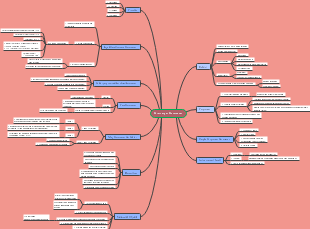
This is a mind map about risk control and crisis management. Risk refers to the uncertainty of the occurrence of adverse events to the organization, including the possibility of the event occurring and the magnitude of the consequences.
Edited at 2024-10-30 21:48:28Chronische Herzinsuffizienz ist nicht nur ein Problem der Geschwindigkeit der Herzfrequenz! Es wird durch die Abnahme der Myokardkontraktion und der diastolischen Funktion verursacht, was zu unzureichendem Herzzeitvolumen führt, was wiederum Staus im Lungenzirkulation und Stau der systemischen Zirkulation verursacht. Aus den Ursachen sind die pathophysiologischen Prozesse der Herzinsuffizienz für Kompensationsmechanismen komplex und vielfältig. Durch die Kontrolle von Ödemen, die Reduzierung der Vorder- und Nachlast des Herzens, die Verbesserung der Herzkomfortfunktion und die Verhinderung und Behandlung grundlegender Ursachen können wir auf diese Herausforderung effektiv reagieren. Nur durch das Verständnis der Mechanismen und klinischen Manifestationen von Herzinsuffizienz und Beherrschung der Präventions- und Behandlungsstrategien können wir die Herzgesundheit besser schützen.
Ischämie-Reperfusionsverletzung ist ein Phänomen, dass sich die Zellfunktion und Stoffwechselstörungen und strukturelle Schäden verschlimmern, nachdem Organe oder Gewebe die Blutversorgung wiederhergestellt werden. Zu den Hauptmechanismen gehören eine erhöhte Erzeugung des freien Radikals, die Kalziumüberladung sowie die Rolle von mikrovaskulären und Leukozyten. Das Herz und das Gehirn sind häufige beschädigte Organe, die sich als Veränderungen des Myokardstoffwechsels und ultrastrukturelle Veränderungen, verringerte Herzfunktion usw. manifestieren usw. umfassen die Entfernung von freien Radikalen, die Verringerung der Kalziumüberlastung, die Verbesserung des Stoffwechsels und die Kontrolle von Reperfusionsbedingungen, z.
Stress ist ein unspezifischer Schutzmechanismus, der im Körper unter interner und externer Umweltstimulation auftritt, aber übermäßiger Stress kann zu internen Umweltstörungen und -krankheiten führen. Die Stressreaktion beinhaltet mehrere Systeme wie neuroendokrine, zelluläre und körperliche Flüssigkeiten, und seine Hauptmanifestationen umfassen emotionale Reaktionen, Veränderungen der kognitiven Fähigkeiten und Veränderungen des sozialen Verhaltens. Übermäßige Konzentration von Katecholamin ist einer der Hauptmechanismen des Stresses, die körperliche Erkrankungen wie Herz -Kreislauf -Erkrankungen, Stressgeschwüre und psychische Probleme wie traumatische Belastungsstörungen verursachen können. Das Verständnis des Stadiums und des Aufprallmechanismus von Stress kann dazu beitragen, Stress besser zu bewältigen und die körperliche und psychische Gesundheit aufrechtzuerhalten.
Chronische Herzinsuffizienz ist nicht nur ein Problem der Geschwindigkeit der Herzfrequenz! Es wird durch die Abnahme der Myokardkontraktion und der diastolischen Funktion verursacht, was zu unzureichendem Herzzeitvolumen führt, was wiederum Staus im Lungenzirkulation und Stau der systemischen Zirkulation verursacht. Aus den Ursachen sind die pathophysiologischen Prozesse der Herzinsuffizienz für Kompensationsmechanismen komplex und vielfältig. Durch die Kontrolle von Ödemen, die Reduzierung der Vorder- und Nachlast des Herzens, die Verbesserung der Herzkomfortfunktion und die Verhinderung und Behandlung grundlegender Ursachen können wir auf diese Herausforderung effektiv reagieren. Nur durch das Verständnis der Mechanismen und klinischen Manifestationen von Herzinsuffizienz und Beherrschung der Präventions- und Behandlungsstrategien können wir die Herzgesundheit besser schützen.
Ischämie-Reperfusionsverletzung ist ein Phänomen, dass sich die Zellfunktion und Stoffwechselstörungen und strukturelle Schäden verschlimmern, nachdem Organe oder Gewebe die Blutversorgung wiederhergestellt werden. Zu den Hauptmechanismen gehören eine erhöhte Erzeugung des freien Radikals, die Kalziumüberladung sowie die Rolle von mikrovaskulären und Leukozyten. Das Herz und das Gehirn sind häufige beschädigte Organe, die sich als Veränderungen des Myokardstoffwechsels und ultrastrukturelle Veränderungen, verringerte Herzfunktion usw. manifestieren usw. umfassen die Entfernung von freien Radikalen, die Verringerung der Kalziumüberlastung, die Verbesserung des Stoffwechsels und die Kontrolle von Reperfusionsbedingungen, z.
Stress ist ein unspezifischer Schutzmechanismus, der im Körper unter interner und externer Umweltstimulation auftritt, aber übermäßiger Stress kann zu internen Umweltstörungen und -krankheiten führen. Die Stressreaktion beinhaltet mehrere Systeme wie neuroendokrine, zelluläre und körperliche Flüssigkeiten, und seine Hauptmanifestationen umfassen emotionale Reaktionen, Veränderungen der kognitiven Fähigkeiten und Veränderungen des sozialen Verhaltens. Übermäßige Konzentration von Katecholamin ist einer der Hauptmechanismen des Stresses, die körperliche Erkrankungen wie Herz -Kreislauf -Erkrankungen, Stressgeschwüre und psychische Probleme wie traumatische Belastungsstörungen verursachen können. Das Verständnis des Stadiums und des Aufprallmechanismus von Stress kann dazu beitragen, Stress besser zu bewältigen und die körperliche und psychische Gesundheit aufrechtzuerhalten.
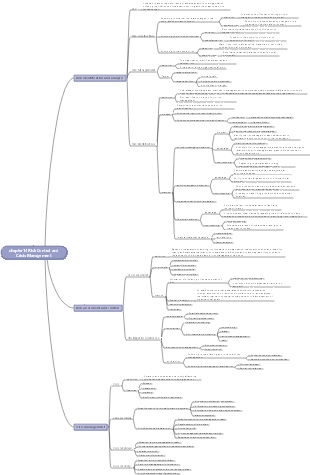
Risk Control and Crisis Management
Risk identification and analysis
Risks and their classification
The meaning of risk
Risk refers to the uncertainty of the occurrence of adverse events to the organization, including the likelihood of the event occurring and the magnitude of its consequences.
Classification of risks
Static risk and dynamic risk
Static risk refers to the possibility of loss when the economic environment does not change, usually caused by natural objective factors or people's mistakes or misconduct.
Dynamic risks are caused by changes in the organization's external environment, and the possibility of loss is usually caused by changes in macroeconomic industrial organization production methods, production technology, and consumers.
Pure risk versus speculative risk
Pure risks refer to those risks where there is only the possibility of loss but no chance of profit.
Speculative risks refer to risks that involve both the possibility of loss and the opportunity for profit.
Basic risks and specific risks
Basic risks, also called major risks, refer to risks that cannot be prevented or controlled by specific social individuals.
Specific risks refer to risks that are causally related to specific social individuals.
Risk management objectives
The meaning and characteristics of risk management
Risk management refers to the management activities in which an organization strives to provide safety guarantee for the realization of organizational goals at the minimum economic cost through the identification, measurement and treatment of risks.
Risk management is a goal-oriented organizational work.
The distinction between risk management
target before loss
Before a risk accident occurs, the purpose of risk management is to eliminate, reduce or transfer the occurrence of risk accidents as much as possible and ensure the normal operation of the organization. Pre-loss goals of risk management include: economic goals, legality goals, and social responsibility goals.
target after loss
Once a risk accident occurs, the organization should strive to reduce the impact of the risk accident and take necessary measures. Return to normal operations as soon as possible. The post-loss goals of risk management include: survival goals, going concern goals, income stability goals, and social responsibility goals.
risk identification process
The meaning of risk identification
Risk identification refers to managers using relevant knowledge and methods to comprehensively, systematically and continuously discover and describe the various risks, risk causes and potential consequences faced by the organization.
The sequence of unfolding risk identification
Determine the content and scope of risk identification
The main content includes the risk factors that exist inside and outside the organization, possible risk accidents, the possible scope of impact of risk accidents, the direct or indirect consequences of the risk, and the possible chain reactions or superimposed effects after the risk occurs.
Choose the right risk identification tool
An appropriate identification method should be selected based on the risk characteristics of the identification object, the risk environment, existing risk management resources and other factors, as well as the differences between organizational goals and organizational resource capabilities, so as to make the identification work more accurate.
Conduct comprehensive risk identification
risk factors
There are material risk factors, moral risk factors, psychological risk factors and legal risk factors, which are divided into four categories according to the severity of the consequences of risk accidents. The first category is risk factors that have accident consequences and can be ignored and no control measures can be taken. Category 2 refers to risk factors where the consequences of the accident are relatively minor and cannot cause casualties or property losses for the time being. Control measures should be considered. Category 3 is a risk factor that can cause serious casualties and system damage and requires immediate measures to be controlled. Category 4 is a risk accident that can cause catastrophic consequences. Risk factors that must be eliminated immediately
risk accident
Risk accidents are the cause of losses. Usually different risk factors may produce the same risk accident, causing financial losses to businesses or individuals.
Risk identification methods
on-site investigation method
The on-site investigation method is an effective method to understand the actual operation of the organization and obtain first-hand information. Generally, the risk manager goes to the site to observe the operations of various departments and inspect various equipment and equipment in the organization. operations performed to gain a deeper understanding of organizational activities and behavior in order to identify potential risks
Sufficient preparations must be made before the investigation so that the investigation can be targeted; during the investigation, attention must be paid to communicating with front-line staff, using flexibility and creativity, and maintaining a keen awareness of potential risks. Maximize the role of on-site investigations; take prompt action after the investigation, summarize and organize the investigation results, identify and analyze potential risks, and take corresponding measures
The advantage is that risk managers can obtain first-hand information, which is helpful for risk managers to establish and maintain good relationships with managers in various departments and grassroots personnel. The disadvantage is that this method requires a lot of time and is relatively expensive. At the same time, regular on-site investigations may cause others to ignore risk identification or be exhausted from investigation work.
audit form survey method
It is an alternative to the on-site investigation method. The relevant person in charge fills in a pre-designed questionnaire, and then identifies and analyzes based on the content of the form.
The advantage is that it is broad and applicable, can obtain a large amount of information, and the cost is low. The disadvantage is that the production of tables requires high professional requirements and rich practical experience. Due to factors such as different qualities of fillers, inaccurate filling, and non-objectivity, it is difficult for some general questionnaires to reveal the particularity of an organization.
organizational structure diagram
It is a risk identification method based on desk work. It identifies the areas and scope where risks may occur by drawing and analyzing an organizational structure chart.
flow chart method
It is to draw organizational activities into flow charts according to internal logical connections, and identify and analyze risk factors, risk accidents and possible loss consequences for each link in the process, especially key links and weak links.
There are many classification standards for flow charts and there are many types of them.
The advantage is that it can divide a problem into several manageable problems, which is conducive to risk identification. It is relatively concise and clear, and can basically reveal the entire production and operation process, which is conducive to identifying risks in each link. The disadvantage is that it takes a lot of time, from understanding the production process to drawing the flow chart, and also analyzing the flow chart and identifying potential risks. The whole process is time-consuming. And the flow chart only emphasizes the consequences of the accident and cannot evaluate the possibility of the accident.
financial statement analysis
It is a method of using financial statement data to evaluate the financial status, operating results and future prospects of an organization, thereby analyzing and identifying potential risks faced by the organization.
There are three main methods for identifying risks using the balance sheet, profit and loss statement and cash flow statement: trend analysis, ratio analysis and factor analysis.
The advantage is that the materials required for risk identification are easy to obtain, reliable and objective. And the results of the research are mainly compiled in the form of accounting accounts, which is easy to identify hidden potential risks and can nip them in the bud. However, the disadvantages are that it is highly professional and lacks financial management. Professional knowledge cannot identify potential risks to the organization, and when financial statements are unrealistic, it is difficult to accurately identify potential risks to the organization.
Risk assessment and control
Risk assessment criteria
risk assessment methods
Strategies to control risk
crisis management
Crisis and its characteristics
Crisis warning
Crisis response and recovery management