MindMap Gallery B2C low-cost marketing system
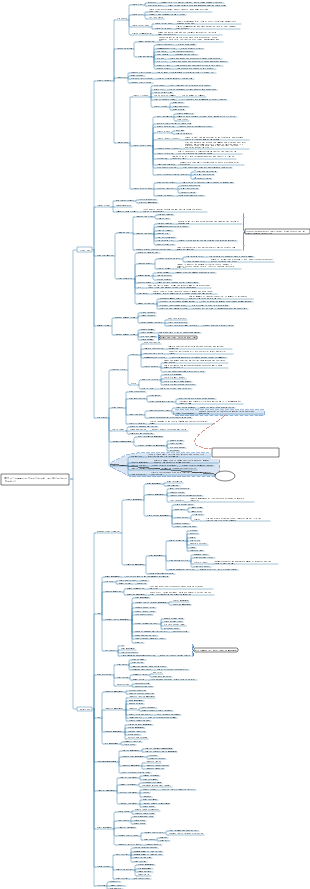
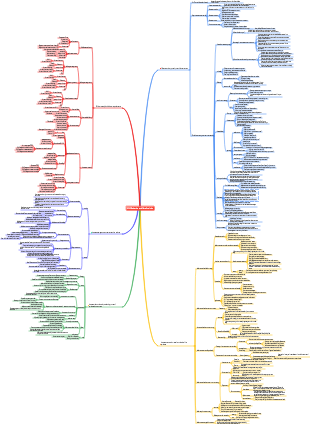
The B2C low-cost marketing system includes: five transaction principles, five sales steps, five transaction elements, nine basic methods, and the performance doubling principle.
Edited at 2022-03-30 12:43:21This is a mind map about bacteria, and its main contents include: overview, morphology, types, structure, reproduction, distribution, application, and expansion. The summary is comprehensive and meticulous, suitable as review materials.

This is a mind map about plant asexual reproduction, and its main contents include: concept, spore reproduction, vegetative reproduction, tissue culture, and buds. The summary is comprehensive and meticulous, suitable as review materials.
This is a mind map about the reproductive development of animals, and its main contents include: insects, frogs, birds, sexual reproduction, and asexual reproduction. The summary is comprehensive and meticulous, suitable as review materials.
This is a mind map about bacteria, and its main contents include: overview, morphology, types, structure, reproduction, distribution, application, and expansion. The summary is comprehensive and meticulous, suitable as review materials.
This is a mind map about plant asexual reproduction, and its main contents include: concept, spore reproduction, vegetative reproduction, tissue culture, and buds. The summary is comprehensive and meticulous, suitable as review materials.
This is a mind map about the reproductive development of animals, and its main contents include: insects, frogs, birds, sexual reproduction, and asexual reproduction. The summary is comprehensive and meticulous, suitable as review materials.
B2C low-cost marketing system
Five trading principles
Customer needs priority principle
Put customer needs before own needs
Fall in love with your customers rather than your product or company
value for money principle
Make transaction claims irresistible
Make the deal proposition impeccable
idea formation
Penetrate into customers’ dreams
Cultivate customers’ spending habits
Teach customers the knowledge of consumption
Tell customers to enjoy product benefits
Let customers recognize the benefits of the product
principles of building trust
Experience the results in advance for free without asking for anything in return. Continuously experience the results and status of the relationship.
Think about what you give rather than what you say. Every transaction is a positive experience. Only earn 1% of what you should earn on the first transaction. Make each transaction an irresistible proposition.
Risk elimination principle
Financial risk
Initial costs and expenses, financial losses if the transaction fails
Emotional risk
Purchases, commitments failed or the desired results were not achieved
Effect risk
Do the benefits provided have real benefits for customers?
Can this impact be measured?
Back-end profit principles
Win customers by reducing profits in the early stage and gain profits in the later stage
Five steps to sales
Develop broad channels
Develop consulting clients
Develop first-time customers
Develop repeat customers
Lifetime customer development
potential customer list
Customer recommendation Purchase Share cooperation Free cooperation
Five major transaction factors
product
Shape value and results
Create value for products, tell customers background knowledge they don’t know, tell customers how to enjoy products and services more effectively, and emphasize the results that products bring to customers.
sell scarcity
accept fixed quota
Scarcity creates a feeling of loss, and the so-called hunger marketing method falls into this category.
Sell a sense of urgency
Limited time: promotion will stop after the 10th
Urgency is related to scarcity
Used to deal with human procrastination and give him reasons not to procrastinate
Not making up lies but actually doing it
Delivery terms
On-site pickup is the most attractive
Express delivery within XX days and inform the name of the courier company
Installment payment: Inform customers when and what company will deliver the goods in six months to reduce customer worries.
price
You should not negotiate price until others recognize the value of your products and services
Price is the yardstick for delivering value
The best sales is to answer all the questions in the customer's mind
If you want to sell it cheaply, you must have reasonable reasons to believe it.
Win customers by reducing profits in the early stage and gain profits in the later stage
Promotional special measures
give freebies
Aligned with core products, the purpose is to help customers easily take action that produces results
Even gifts need to create value, and the value needs to be real, not fabricated.
Don’t just give away one freebie, at least 2-3
Don’t give away things you can’t sell.
The greatest power comes when combined with a zero-risk commitment
The best gifts don’t cost much to themselves
Payment Terms
Paying cash all at once kills your chances of closing the deal
The buying action you ask the other person to take should match the level of trust between you.
Level up your requirements for others and divide your goals into stages
Trust is the "important currency" for your transaction
Installment payment, pay while earning, benefit first and pay later
Zero risk commitment
Focus Clarity Affirmative Suggestive Language
Horse sale case
Pony sales: The first one is $500 and you can take it immediately; the second one is $750 and you can try riding it for a month. Prepare fodder and teach how to feed and take care of the horse once a week to get familiar with the horse.
Sales course case
Before purchasing, customers are given 5,000 yuan of materials to encourage them and teach them how to use them. They can cancel their registration and keep one-third of the materials. If they are not satisfied with the three-day training, they can leave at any time.
various applications
30 days refund 60 days refund 90 days refund
Twice your money back Original price refund Guaranteed exceptional results
The quality of personnel
Enhance employees’ sales skills
explain the reason
Why is "scarcity, urgency, giving gifts, high or low price, zero risk" so generous? You need to give the other party a reason
Nine categories of basic methods
Leverage broad channels
principle
Leverage the relationship between channels and customers to let them guide customers to trade with us
Broad channel = upstream, downstream, complementary, substitute, new entrant, media, different industries
Develop customers without spending money and reduce sales expenses
Key: Give benefits to channels
The doctor tells others: Introducing a patient to him for the first time is free
Introduction fee: 20% of the transaction amount in return
step
Find generalized channels, negotiate and request cooperation, contact product information and channel customers
Broad channels = people who can bring potential customers, consulting customers and real customers
application
Customer recommendation system
sales letter
Ten points
Title, subtitle, transition, paragraph, emphasis, sentence fragmentation, punctuation, white space, font, color
five step equation
Grab attention (unique in color, shape)
Arouse customer interest (target customer needs or his value)
Build trust (real people customer testimonials)
Stimulate desire (generally at least 10 paragraphs or more "focus" on the benefits that potential customers need most, and the most important thing is "depicting the results")
urge the other party to take action
eight keys
deal proposition
what is for sale
What is your deal proposal?
What kind of zero-risk commitment is there?
What's your giveaway?
What are your delivery terms?
what are your payment terms
Sales Process
What do you want the other party to do?
what can you give
Do others trust you to this extent?
Do you have time to draw up your blueprint?
Zero risk commitment
You can record first, then copy and finally adjust again and again.
Price and value confirmation
Why is your product worth the price?
Why would someone spend so much money on your product?
scarcity and urgency
Quantity and time limits
Build through giveaways
specific actions
Call XXXXXXXXX and tell XXX to reserve a questionnaire for you.
Welcome to request a questionnaire (wrong demonstration)
end
The sole purpose is to get customers to take action
Don't be sloppy, be neat and tidy
special reminder
You can continue to strengthen the "scarcity" and "urgency" of your product
Strengthen the value of your product and summarize the value of your product
The purpose is to get customers to act, act quickly!
Telephone
Send the development letter first
There are many preferential terms in the letter
SPIN question strategy
Most calls are to get a meeting
respond to calls
Have a happy attitude and show that you understand the needs. If it is not convenient, make an appointment at another time. We are not just selling things.
Provide advice and professional guidance and try to guide actions
What to do, when to do it and how to do it?
The purpose is to satisfy his needs
online sale
Three Things: Product Website Link
The title is crucial: Reasons to stay
The Internet is the world’s cheapest printing press
Virtual community: interact and share with customers
barter
Three-party transactions: easier to complete transactions
Becoming an intermediary: Leveraging
generalized permutation theory
Case: Magazines are exchanged for air tickets and then sold at a discount
Case: The TV station exchanged advertisements for cars and then sold them to employees at a discount
Cases: Courier service coupons from express companies, cash from barter companies, TV advertisements, other companies that require express delivery services
Contact old customers
Reasons why old customers stop buying
Something happened that has nothing to do with you
I've had trouble with you before
Circumstances change and the customer is no longer able to benefit from your product
Contact steps
Re-contact them and tell them why they haven’t visited in a long time.
Ask sincerely what is not good enough or what you did wrong.
Take measures to remedy the causes
Skill
Comes with bonuses (feedback)
Attach a voucher directly
Lawyer: Provide 2 and a half hours of free consultation
Air conditioning: Free inspections available
other
Advertising Event Information Public Relations
The principle of performance multiplication
Overview
an important point
Customer philosophy
Equality both ways
Do what others want, do what you want
Do to others what you want to do to yourself
Repeat customers are real customers
Customer classification
purchase behaviour
Returns and referrals
Buy as you like
Complaints and silence
profit contribution
profit
small profit
Loss
Calculate customer lifetime value
Calculate your average sales volume and average profit
Calculate the added value of a customer: number of visits
Calculate the cost of one customer: budget divided by number of new customers
Calculate potential customers in the same way
Calculate how much business comes from potential customers
Calculate the net marginal value of a customer
Four basic methods
Describe the blueprint
New product research and development
Repurchase
Increase sales
sales reduction
resale
Cross-selling
tying
Bundling
free sale
lock pin
Stay connected and continue to provide value
Three backends leverage
Represent other people’s mature products
OEM
cooperative development projects
Five keys to speed up
Use ICT to increase transaction rates through various transaction methods. Introduce new products (research and development or cooperation). Sell or OEM other people’s products. Front-end profit sharing.
Front-end profit sharing
New customers, pond owners, old customers, third parties, sales staff
Use information and communications technology
Realize a streamlined, standardized, systematic and automated marketing management system
Greatly improve marketing management level
Reduce corporate communication costs and increase sales performance
Expand
Increase customer retention
Communicate and communicate again
Think about how to communicate with different customers
Telephone
visit
greeting card
Have a meal
Contact frequency
Contact information
How to do
Perform it regularly and do it enthusiastically
Provide customers with unexpected, higher service levels
Increase average transaction value
principle
What customers want is not the product, but the ultimate benefits brought by the product.
These benefits = psychological benefits instrumental benefits for achieving psychological benefits
Personalized solutions bring more benefits to customers than a single product
The realization of personalized solutions requires a combination of various products.
method
Add products and services
Allow customers to purchase additional related products to increase customer satisfaction or produce more complete, convenient and effective results
Case: car tires audio sunroof telephone
Case: Printer A will make computer B perform better
Increase quantity and time options
Give customers at least 3 quantity combinations, and 80% of customers will agree
The premise of overweighting is not to lose profits but to increase profits.
Application: Provide customers with 1 month/6 months/1 year/lifetime service
Application: Provide customers with four products and charge three of them.
Application: Let customers buy on time and in bulk
Add combination
Giving customers the opportunity to purchase a package package in a one-time purchasing decision can help them achieve better results
Up-selling Cross-selling Promotion of sales terminals
Case: McDonald's set meal, super full meal
Case: Write words such as "Auction" and "Buy two get one free" on the windows facing the street.
Increase repurchase frequency
Develop replacement products so you can further engage with your customers
Communicate personally with customers (by phone, letter) to maintain positive and beneficial relationships
Offer products from other manufacturers on your list
Conduct special events such as "closed door sales," limited product previews, etc.
Conduct price inducements and increase sales frequency
Continuous testing
principle
We don’t have the right to decide in advance what the market wants
All that remains to be done is to broadly assess the effectiveness of various approaches
method
ad testing
Title Channel Appeal Point Packaging Concept Price Discount Response Method Subject Position Media Play Time
Different openers Advertising effectiveness Cost per lead Business volume per customer Lead conversion rate Average profit on deals
Customer recommendation system
What are the characteristics of your customers?
Income Status Age Gender Race Neighborhood Geographic Region
Type of business Marital status Religion Hobbies Political views
Societies Types of cars Magazines and TV subscriptions Educational background
Investment Types Physical Health Mental Health Healthy Hobbies
Smoker or non-smoker Alcohol consumption Vacations Shopping habits
Company Title Career Trend Any Demographic Group Applicable to the Industry
Who can refer clients to you?
Vendors Customers Employees Competitors Relatives Potential customers
Unconverted customers Neighbors and friends Church members Members
Other business people and professionals in the field or outside the field that your potential clients trust
Your potential customers look up to, respect, and trust leaders or celebrities
Magazine Editors Reporters Special Interest Groups (Hobbies) Government Agencies
Set the stage for recommendations and introductions
Decide on a good product or service, respect your own business, and have different positioning
Xunwei customers show concern and provide a valuable service even if the customer does not purchase.
Give them legitimate reasons to recommend Provide incentives to recommend (money or morals or donations)
There are special discounts for those recommended by the channel. Ask the channel to contact the customer.
Ask how you can reach the recommended customers. Close connections with past channels.
Ask for referrals when customers are most receptive Thank you
Who should the channels that help you recommend you to?
usually come and go
Vendors Customers Employees Competitors Friends Special Interest Groups
Relatives Potential customers Unconverted customers Neighbors Church members Group members
Other business people and professionals in the field or outside the field that your potential clients trust
Your potential customers look up to, respect, and trust leaders or celebrities
Encountered by chance, under special circumstances
People who come to your office, people you meet in professional meetings, people who are retired, people who are married or planning to get married.
Those who have children or plan to have children, those who are divorced, those who have bought something, those who have sold something
Those who want to sell something, those who want to buy something, those who have just moved, those who have just renovated their house.
Children who have grown up and moved out of the home A death in the family Others who can offer advice