MindMap Gallery Revenue, expenses and profits
The content of Chapter 7 of Elementary Accounting Practice on revenue, expenses and profits is crucial to understanding the foundation and principles of corporate accounting.
Edited at 2024-03-13 14:53:57This is a mind map about bacteria, and its main contents include: overview, morphology, types, structure, reproduction, distribution, application, and expansion. The summary is comprehensive and meticulous, suitable as review materials.

This is a mind map about plant asexual reproduction, and its main contents include: concept, spore reproduction, vegetative reproduction, tissue culture, and buds. The summary is comprehensive and meticulous, suitable as review materials.
This is a mind map about the reproductive development of animals, and its main contents include: insects, frogs, birds, sexual reproduction, and asexual reproduction. The summary is comprehensive and meticulous, suitable as review materials.
This is a mind map about bacteria, and its main contents include: overview, morphology, types, structure, reproduction, distribution, application, and expansion. The summary is comprehensive and meticulous, suitable as review materials.
This is a mind map about plant asexual reproduction, and its main contents include: concept, spore reproduction, vegetative reproduction, tissue culture, and buds. The summary is comprehensive and meticulous, suitable as review materials.
This is a mind map about the reproductive development of animals, and its main contents include: insects, frogs, birds, sexual reproduction, and asexual reproduction. The summary is comprehensive and meticulous, suitable as review materials.
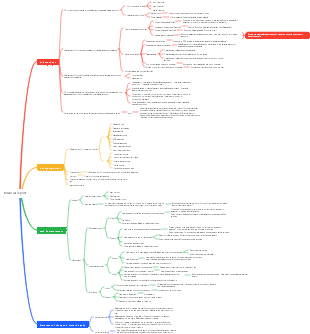
Revenue, expenses and profits
income
Revenue recognition and measurement
Revenue recognition principles
The enterprise should recognize revenue when it fulfills its performance obligations in the contract, that is, when the customer obtains control of the relevant goods; For performance obligations performed at a certain point in time, the enterprise shall recognize revenue at the point when the customer obtains control of the relevant goods.
Prerequisites for revenue recognition
The contract clarifies the rights and obligations of the parties in relation to the transferred goods
The contract has clear payment terms related to the transferred goods
All parties to the contract have approved the contract and promised to perform their respective obligations
The contract is of a commercial nature
The consideration to which the enterprise is entitled for transferring goods to customers is likely to be recovered
Rights and obligations payment approved Commercial consideration is likely
Revenue recognition measurement steps
Identify contracts entered into with customers
Identify individual performance obligations in a contract
Determine transaction price
Allocate transaction price to various performance obligations
Revenue is recognized when each individual performance obligation is fulfilled.
Sales revenue accounting
Sales with different settlement methods
Debit: bank deposit (transfer check, bank draft) Accounts receivable (entrusted collection, completed collection) Notes receivable (commercial bills) Credit: Main business income Taxes payable Borrow: Main business costs Inventory impairment Credit: Inventory goods
The seller pays for the buyer
Debit: accounts receivable Loan: bank deposit
Seller's burden
Borrow: sales expenses Taxes payable Loan: bank deposit
Sales on credit: contract assets
Delivery of product A
Borrow: contract assets Credit: Main business income Borrow: Main business costs Credit: Inventory goods
No tax recognized
Delivery of product B
Debit: accounts receivable Credit: Contract Asset (A) Main business income (B) Taxes payable (A B) Borrow: Main business costs Credit: Inventory goods
Received AB payment
Debit: bank deposit Credit: Accounts Receivable
Consignment sales
Client
release products
Debit: Issue goods (cost) Credit: Inventory goods
Does not meet the conditions for revenue recognition
Receive consignment list
Debit: accounts receivable Credit: Main business income Taxes payable Borrow: Main business costs Credit: Send out goods Debit: Sales expenses (including payment expenses) Taxes payable Credit: Accounts Receivable
Collection
Debit: bank deposit Credit: Accounts Receivable
Trustee
sales materials
Confirm sales revenue
Debit: bank deposit Credit: Other business income Taxes payable
Carry forward cost of sales
Borrow: other business costs Credit: raw materials
sales return
Offset and return current sales revenue
Borrow: Main business income Taxes payable Loan: bank deposit
Write down cost of sales
Borrow: Inventory items Credit: Main business costs
sales discount
Offsetting discounts to current income
Borrow: Main business income Taxes payable Loan: bank deposit
price protection
If there is variable consideration in the contract, the enterprise should value the variable consideration included in the transaction price. The enterprise should determine the best estimate of the variable consideration based on the expected value or the most likely amount.
Debit: accounts receivable Credit: Main business income (best expected value) Taxes payable (original selling price * tax rate) Borrow: Main business cost (cost of goods) Credit: Inventory goods
Discount
Commercial discounts (discounts on goods)
Debit: accounts receivable Loan: Main business income (transaction price = selling price * (1-commercial discount rate) Taxes payable
Cash discount (pay later, pay less)
Debit: accounts receivable Loan: Main business income (transaction price*(1-most likely cash discount rate)
carry forward costs
Borrow: Main business cost (cost of goods) Credit: Inventory goods
Period sales revenue
Period sales revenue measurement
The progress of contract performance can be reasonably determined
Total transaction price*Performance progress-Accumulated revenue recognized in previous accounting periods
cannot be reasonably determined
When the progress of contract performance cannot be reasonably determined, if the costs incurred by the enterprise are expected to be compensated, revenue shall be recognized based on the amount of costs incurred until the progress of contract performance can be reasonably determined.
contract acquisition cost
Pay the contract fee
If the incremental costs incurred by the enterprise to obtain the contract are expected to be recovered, they should be recognized as an asset as the contract acquisition cost.
Debit: Contract acquisition cost (sales commission) Administrative expenses (travel expenses, legal fees, bidding fees) Loan: bank deposit
Amortization commission on sales revenue recognized monthly
Borrow: sales expenses Credit: Contract acquisition cost
Contract fulfillment costs
Costs directly related to the contract (direct materials, direct labor, manufacturing overhead or similar expenses) Other costs incurred solely as a result of the contract Clarify the costs borne by the customer
Actual labor costs incurred
Borrow: contract performance costs Loan: Employee compensation payable
Revenue and costs are recognized according to the progress of contract performance
Debit: bank deposit Credit: Main business income (total income * contract performance progress - recognized income) Taxes payable Borrow: Main business costs Credit: Contract performance costs
Pre-sale membership fee
Debit: bank deposit Credit: Contract liabilities (price excluding tax) Taxes payable-output tax to be transferred
Recognition of labor income at the end of the period
Borrow: contract liability Taxes payable Credit: Main business income Taxes payable
cost
Operating cost
Main business costs
Actual costs incurred in selling goods and providing services
Other operating costs
sell
Sales material cost
The cost of packaging is priced separately when sold with the product.
rent
Depreciation amount of leased fixed assets
Amortization of rental intangible assets
Cost of renting packaging
Depreciation provided for investment real estate under cost model measurement
Other operating income
Taxes and surcharges
5There is a teacher
property tax
Travel tax
land holding tax
Land value-added tax (real estate company)
stamp duty
Debit: taxes and surcharges Loan: bank deposit
Debit: taxes and surcharges Credit: taxes payable
5 good students
Consumption tax (sales)
Resource tax (sales)
Urban maintenance and construction tax
Education fee surcharge
environmental protection tax
Debit: taxes and surcharges Credit: taxes payable
Third, taxes on acquiring assets are included in asset cost, income tax, and value-added tax.
Expenses for the period
sales expense
sales department
Employee compensation, repair expenses, depreciation expenses
Pre-sale On sale After-sales
Advertising fees, exhibition fees Transportation fees, insurance fees Product maintenance fees, estimated product quality warranty losses
Consignment sales
Handling fee paid by the client
Management costs
management department
Employee compensation, repair expenses, depreciation expenses, board of directors fees
Preparatory period
Start-up fee
Unified burden
Technology transfer fees, research fees, business entertainment fees, consulting fees, agency fees, litigation fees
Financial expenses
Interest expenses on short-term borrowings (interest income offsets financial expenses) Interest expenses during the operating period of long-term borrowings (not eligible for capitalization)
Bank handling fees and discount interest expenses for handling bank acceptance bills
Exchange losses (exchange gains offset financial expenses)
profit
Profit calculation
Operating profit =
Operating income (main business income other business income) -
Operating costs (main business costs, other business costs)
Taxes and surcharges
sales expense
Management costs
R&D expenses
Financial expenses
Asset impairment losses
Credit impairment loss
Other income
Investment income (loss-)
Gains from changes in fair value (loss -)
Asset disposal income (loss -)
Net exposure hedging gain (loss -)
Total profit = operating profit non-operating income – non-operating expenses
Net profit = total profit – income tax expense
Non-operating profit
Non-operating income
Damage and scrapping of non-current assets
Donation Proceeds
Profit from the order - only cash from the order profit
Government subsidies not related to daily activities
Accounts payable that cannot be paid
Operating expenses
Losses due to damage or scrapping of non-current assets
Donation expenditure
Loss of inventory - loss of fixed assets
fine payment
Extraordinary loss (natural disaster)
Income tax expense
Current income tax
=taxable income×tax rate (25%) = (total profits, fines, excessive expenses - interest income from government bonds - unmade losses - dividend income from long-term equity investments among resident enterprises) × 25%
Debit: income tax expense Credit: Taxes Payable – Income Tax Payable
Deferred income tax
= Deferred income tax liabilities (ending amount - beginning amount) - deferred income tax assets (ending amount - beginning amount)