 Wondershare EdrawMind
MindMap Gallery Sports training
- 34
Sports training
Sports training is a course that studies the universal laws of the sports training process. It aims to train through scientific methods and improve various qualities of the human body. Friends who want to take the postgraduate entrance examination can refer to it!
Edited at 2024-03-13 13:46:09
- bacteria
This is a mind map about bacteria, and its main contents include: overview, morphology, types, structure, reproduction, distribution, application, and expansion. The summary is comprehensive and meticulous, suitable as review materials.
- Plant asexual reproduction
This is a mind map about plant asexual reproduction, and its main contents include: concept, spore reproduction, vegetative reproduction, tissue culture, and buds. The summary is comprehensive and meticulous, suitable as review materials.
- Reproductive development of animals
This is a mind map about the reproductive development of animals, and its main contents include: insects, frogs, birds, sexual reproduction, and asexual reproduction. The summary is comprehensive and meticulous, suitable as review materials.
Sports training
- bacteria
This is a mind map about bacteria, and its main contents include: overview, morphology, types, structure, reproduction, distribution, application, and expansion. The summary is comprehensive and meticulous, suitable as review materials.
- Plant asexual reproduction
This is a mind map about plant asexual reproduction, and its main contents include: concept, spore reproduction, vegetative reproduction, tissue culture, and buds. The summary is comprehensive and meticulous, suitable as review materials.
- Reproductive development of animals
This is a mind map about the reproductive development of animals, and its main contents include: insects, frogs, birds, sexual reproduction, and asexual reproduction. The summary is comprehensive and meticulous, suitable as review materials.
- Recommended to you
- Outline
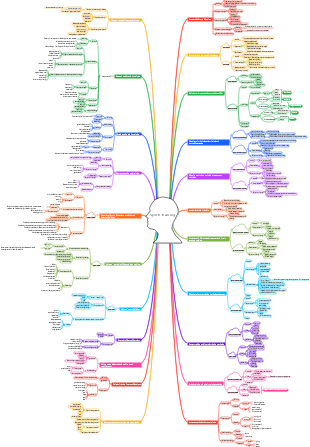

Sports training
Chapter 1 Competitive Sports and Sports Training
Exam syllabus 1.1: Introduction to competitive sports; sports training and its theoretical system; sports performance and competitive ability.
Section 1 Introduction to Competitive Sports
1. The formation and development of competitive sports
1. Competitive sports: Competitive sports are an important part of sports. They are social sports activities with sports competition as the main feature and the main goal of creating excellent sports results and winning competitions.
2. Basic motivations for the formation and development of competitive sports
One is biological factors, that is, people create and develop competitive sports activities in order to better improve their own activity ability.
The second is psychological factors. People's "instinct to win and fight" and the motivation of "pursuing to outperform their opponents" promote the formation of competitive sports;
The third is sociological factors. People fully realize the important value of competitive sports in promoting economic and social development. Participating in and watching competitive sports has become an indispensable part of human social life, thus effectively promoting the development of competitive sports.
The basic motivations for the formation and development of competitive sports are diverse.
3. A century-old review of the development of modern competitive sports
1. Competitive sports are widely carried out around the world
2. Established a relatively complete management mechanism
3. Sports competitions are increasingly active
4. The level of sports competition and the scientific level of sports training continue to improve.
5. Professionalization and commercialization trends in the development of competitive sports
2. The composition of competitive sports
From the perspective of different practical processes, competitive sports includes four components: athlete selection, sports training, sports competition and competitive sports management.
1.Athlete selection
2. Sports training
3.Sports competition
4. Competitive sports management
3. Basic characteristics of competitive sports
Fierce competition Fierce competition is one of the most essential features that distinguishes competitive sports from other sports.
extensive social Competitive sports activities are group behaviors composed of several athletes. Only a certain number of athletes must participate at the same time before it is possible to organize competitive activities. The cluster nature of competitive sports activities is also reflected in the relationship between athletes and their sports collectives and other collectives or individuals.
high level of fairness Competition in competitive sports should be conducted under highly fair conditions. In order to ensure fair and fair competition, organizers of competitive sports have formulated strict standards or codes of conduct for competition items, time, location, venue equipment, qualifications, competition organization and participants.
Unique ornamental value Competitive sports originally developed from game activities with entertainment as the main purpose. The increasing competitiveness of modern competitive sports has greatly enhanced its viewing value.
huge utility Competitive sports, a social activity, has attracted great attention from the public and also contains huge utilitarian value. The huge market value of competitive sports will inevitably bring huge benefits to its practitioners.
endless pursuit Continuously improving the level of competition is the pursuit of all athletes. The result of athletes' efforts is to focus on competing to win and challenge records. Athletes' pursuit of setting new records is endless.
As a social activity for human beings, competitive sports has its own distinctive characteristics
4. The modern social value of competitive sports
Modern social values that inspire mankind The competitiveness cultivated by competitive athletes in sports training and displayed in sports competitions is also an important quality that human beings should possess for survival and development.
Promote moral education on competition and cooperation Modern society is a competitive society, and competitive sports activities are a vivid and effective moral education for its participants and appreciators to cultivate and enhance their competitive spirit and cooperative awareness.
Improve the taste of life in modern society The continuous improvement of the level of competitive sports meets people's ever-increasing needs for sports viewing and is an important function of competitive sports.
Promote public participation in sports The development of competitive sports has promoted the development of mass sports activities. In turn, the development of mass activities has also created a good social environment for the development of competitive sports, thus greatly promoting the development of modern sports.
Show the comprehensive strength of the country and social groups The outcome of competitive sports competitions not only involves the honor of individual athletes, but also the honor of a country (region) and social groups. Many countries and social groups have paid great attention to and invested heavily in competitive sports.
Promote rapid economic and social development Holding large-scale sports competitions can not only directly obtain economic benefits, but also promote the development of related industries. Competitive sports have become an important part of the sports industry.
Resolve the negative emotions of social members Participating in sports training and sports competitions or watching sports competitions not only helps people's physical health, but also helps to resolve many bad thoughts and mental states, and guide good social behavioral norms and mental outlook.
Section 2 Sports Training and Its Theoretical System
1. Sports training: Sports training is an important part of competitive sports activities. It is a planned sports activity specially organized under the guidance of coaches to improve athletes' competitive ability and sports performance.
2. The relationship between sports training and various components of competitive sports
Sports training is the main component in competitive sports Whether from the perspective of activity time, activity capacity, or investment, among the various components of competitive sports, sports training is the most important. Only through long-term, systematic and scientific training can athletes' competitive ability reach a high level and show excellent sports results in complex and changeable competitions.
The relationship between sports training and athlete selection An athlete's competitive ability includes two parts: innate genetic competitive ability and acquired competitive ability through acquired training. Scientific selection selects talents with superior innate genetic abilities. On this basis, scientific training must be carried out to effectively develop the athletes' competitive abilities and fully demonstrate the athletes' innate and genetic competitive abilities. . Material selection provides an important prerequisite for successful training; but without scientific training, no matter how good the materials are, it is impossible to become an excellent player.
The relationship between sports training and sports competition Participating in competitions and winning in competitions is the ultimate goal of athlete training. The content and arrangement of sports training should strive to comply with the characteristics of each sport and the requirements of competition rules. Sports achievements can only be recognized by society when they are shown in specially organized competitions. An athlete's competition performance is the best test of his training effect.
3. Sports training: It is the science that studies the laws of sports training and the behavior of effectively organizing sports training activities.
4. Main research tasks and subject characteristics of sports training
Main tasks: Reveal the universal laws of sports training activities, guide the training practices of various special sports, base the training activities of various special sports on the basis of scientific training theory, and strive to improve the scientific level of training.
Origin, comprehensiveness and practicality are the main disciplinary characteristics of sports training.
5. Theoretical system of sports training
The basic content of sports training research includes five sections: "sports training principles", "sports training content", "sports training load", "sports training methods" and "sports training arrangements"
According to the fields covered by theoretical research, sports training theory can be divided into three levels: general training theory, event group training theory and special training theory.
From the perspective of theoretical learning, sports training usually refers to a super-specialized theoretical system that clarifies the basic theories of sports training and common and universal issues in the training process, that is, general training theory. A theoretical system that clarifies the common features of a group of sports with similar competitive characteristics and training requirements, that is, event group training theory. There is a close connection between general sports training theory, event group training theory and special training theory. General sports training originates from special training theory and is based on special training theory. From each special training theory, it is summarized with widely applicable common laws of nature, and elevate it to a theory with universal guiding significance for sports training activities in different projects.
Chapter 2 The main body of sports training theory
Section 1 Sports Performance and Competitive Ability
1. Sports performance: It is the result of athletes participating in the competition. It is a comprehensive evaluation of the performance of the athletes and their opponents' competitive abilities in the competition based on specific evaluation behaviors.
2. Competitive level: The performance of an athlete’s competitive ability in the game is called competitive level.
3. Determinants of sports performance
The level of competition an athlete performs in competition
The level of competition displayed by the opponent during the game
The behavior of judging the results of the competition
The performance of any competitive event is determined by three factors: the athlete's performance in the game, the opponent's performance in the game, and the evaluation behavior of the competition results. Among them, the performance of the athletes themselves and their opponents in the game is determined by their competitive ability and the degree of performance in the game; and the evaluation behavior of the game results includes the competition rules, evaluation methods, and the moral level and professionalism of the referees Level three aspects.
4. Components and performance of athletes’ competitive ability
Competitive ability refers to an athlete’s ability to compete. It is composed of physical fitness, skills, tactical abilities, sports intelligence and psychological abilities with different expressions and different functions, and is comprehensively expressed in the process of special competition.
An athlete's physical fitness level is concentrated in the three basic sports qualities of strength, speed, and endurance, as well as the development level of various combined sports qualities between the three. The shape and functional state of the human body are the basic conditions that determine their sports quality.
An athlete's skill level can be judged from two aspects: technical rationality and stability.
Tactical ability is manifested in three parts: striving to make excellent use of one's own functions, skills and psychological abilities, interfering with the opponent's competitive ability within the scope permitted by the rules, and exerting legal influence on the evaluation of competition results.
Highly developed coordination ability is an important prerequisite for athletes to master reasonable sports techniques; in addition to the technical foundation, athletes' intellectual status and general and professional knowledge levels have an important impact on the development and improvement of their tactical abilities.
Athletes' psychological abilities cover a wide range of fields, and in competitions they are concentrated on their emotions and will to compete.
5. The importance of status diagnosis and goal establishment
The important role of status diagnosis in training
The important role of establishing goals in training
Second session exercise training load
Sports training load: refers to the physiological and psychological training stimulation exerted by various exercises on athletes during sports training activities.
Composition of exercise training load
Basic unit of training load
There is an exercise load, a set of exercise loads, a training session load, a day, a week, a month, a year, a multi-year training load, etc.
load intensity
Meaning: refers to the depth of stimulation of the athlete's body by the load
Load intensity is the core element of exercise load
Evaluation index of exercise load intensity
training indicators
Biological indicators
Load capacity
Load volume: refers to the measure of the stimulation of the athlete's body by the load.
Load volume is the basic element of exercise load
The application and change of load amount are the basis for changes in load intensity
The application and change of load need to be gradual and cumulative
The improvement of athletes' competitive ability depends largely on the biological transformation of various systems and organs of the human body. The biological transformation of the human body cannot be achieved overnight.
There is a limit to the training load that the human body can withstand in a training unit. The athlete's body can only accept the stimulation of any specific intensity load for a certain number of times or for a certain period of time at a time. Then, the athlete waits for the body's natural response in a resting state. Recover or take artificial measures to promote recovery. When the recovery reaches a certain level, load it again to continue to start the body's adaptive development process. Repeated so many times, through a gradual and cumulative process, the human body's competitive ability is gradually improved.
Within a certain range, the greater the amount of external stimulation an athlete receives, the stronger the body's responsiveness will be, resulting in more obvious changes in the body's adaptability. After timely and sufficient recovery, the athlete's competitive ability will improve. will achieve more significant improvements
Evaluation index of exercise load
training indicators
Various manifestations of exercise training load
practice time
Practice times
Displacement distance
Load weight
Different evaluation indicators for special loads of different projects
Physical fitness-oriented category
Skill-oriented category
Skill and mental ability dominate
Skill and combat ability dominate
Control of exercise training load
The necessity of exercise load control
Basic concepts of exercise training load control
Establish appropriate load growth targets
Exercise training load should be increased gradually
Grasp the different characteristics of training loads for developing different competitive abilities
Master the different arrangements of athletes’ training load arrangements at different training stages
Implement scientific monitoring of exercise training load
Section 3 Sports Training Methods and Means
Exam syllabus 1.3: Overview of sports training methods and means; evolution of sports training methods; sports training method system and application; sports training method system and application.
Section 1 Overview of Sports Training Methods and Means
1. Sports training methods: It is the way and method to improve the competitive level of athletes and complete training tasks in sports training activities.
2. The role of exercise training methods
3. Sports training methods: refers to the specific exercises used in the sports training process to improve a certain competitive sports ability and complete a certain training task.
4. The role of sports training methods
5. The relationship between sports training methods and sports training methods
Section 2 Evolution of Sports Training Methods
1. The development stage of modern sports training methods
2. The development direction of modern sports training methods
3. Ways to innovate sports training methods
Section 3 Sports training method system and application
1. Basic structure of sports training methods
2. Sports training method system
1. Modern sports training methods
2. Sports training control method
3. Basic methods of sports training
4. Group training method
3. Application of sports training methods
1. Application of macro control methods
pattern training method
procedural training method
2. Application of specific control methods
Breakdown training method
Complete training method
repetition training method
interval training
continuous training method
transformation training method
circuit training method
game training method
Section 4 Sports training method system and application
1. Commonly used methods of sports training
Periodic single exercise method
Mixed multi-exercise methods
Fixed combination practice methods
Variation combination practice methods
2. Application of sports training methods
Section 4 Sports Training Process
Sports training process and its components
The meaning of sports training process: it is the performance of sports training activities in the time dimension, and it is the steps and procedures for sports training activities.
The basic structure of the sports training process
Athletes’ reality diagnosis: the starting point for a complete sports training process
Training goal establishment: It is to establish a target state for the sports training process, so that the entire sports training process can proceed. It is also the standard for checking and evaluating the development status of the sports training process.
Develop a training plan: A sports training plan formulated based on factors such as the athlete's actual state, determined training goals, and training conditions. It is a theoretical design in advance for the entire sports training process and the path for the transfer of the real state.
Implement the training plan: Put this pre-made theoretical design into practice and test it
Inspect and evaluate: Inspect and evaluate the training effect, compare the evaluation results with the target state of the training, find out the differences, and make necessary adjustments and corrections to the corresponding links.
Achieve training goals: to achieve satisfactory results in sports training and achieve predetermined training goals
Diagnosis of initial state of exercise training
The important role of athlete diagnosis in training
Establish an objective and accurate starting point for the sports training process
Timely inspection and evaluation of fair training effectiveness
An important prerequisite for implementing effective training control
Basic content of initial status diagnosis
Sports performance diagnosis
Competitive ability diagnosis
Training load diagnostics
athlete training goals
The important role of training goals in the training process
Motivational effects of exercise training goals
The guiding role of sports training goals
The ruler function of sports training goals
Basic content of training objectives
sports performance indicators
Competitive ability indicators
training load indicator
Suitability of exercise training goals
appropriate training goals
Too high training goals
Training goals that are too low
Development and implementation of sports training plans
Exercise training programs and their effects
A sports training plan is a theoretical design of training activities before the start of the sports training process. It is based on state diagnosis. The state transfer path selected to achieve the training goals can unify all participants in the training activities. Understand and act so that you can effectively control the athletic training process
Classification of exercise training programs
Classified according to different stages in the training process
multi-year training plan
annual training plan
Large cycle training plan
Weekly training plan
lesson training plan
Classification by number of training subjects
personal training plan
Team training plan
Classified by training tasks and content
Organization, implementation and inspection and evaluation of operational training plans
preparatory part
instructive part
Implementation part
control part
Chapter 3 Basic Principles of Sports Training
Exam syllabus 1.2: Competitive needs and directional development principles; systematic training and periodic arrangement principles; cluster training and differentiated treatment principles; appropriate load and timely recovery principles; directional incentives and effective control principles.
introduction
1. Sports training principles: They are the basic principles that must be followed in organizing sports training based on the objective laws of sports training activities. They are a reflection of the objective laws of sports training activities and have universal guiding significance for sports training practice.
2. Sports training rules: refers to the essential structural and functional connections and inevitable trends in development between the internal components of the sports training system and between them and related factors outside the system.
Section 1 Competitive needs and directional development principles
Meaning: It refers to the training principle of scientifically arranging the phase division of the training process and the content, methods, means, load and other factors of the training based on the characteristics of the event and the needs of athletes to obtain satisfactory sports performance in the competition, starting from actual combat.
scientific basis
Orientation of training goals and tendency of training content
Specificity of competitive needs and specificity of training behavior
The hierarchy of competitive ability and the selectivity of training methods
Key points of training
Scientifically set long-term and staged training goals
Determine the content of training based on the structural characteristics of special abilities
Select training methods and means based on training tasks and training content
Arrange training load according to game characteristics
Section 2 System Training and Periodic Arrangement Principles
Meaning: It refers to the training principle of organizing the training process systematically, continuously and periodically based on the characteristics of sports training structure, the characteristics of competitive state and the arrangement of major events.
scientific basis
The long-term nature of human biological adaptation
The continuity of competitive ability formation and the instability of training effects
The cyclical nature of the human body’s biological adaptation process
Key points of training
Improve the multi-level training system to provide a strong guarantee for athletes to achieve systematic training for many years
Implementation of the training process of the segmented organization system
Handle the combination of fixed factors and variable factors in training arrangements
Section 3 Cluster training and the principle of differential treatment
Meaning: It refers to the training principle that athletes train together in groups and teams, and at the same time make different training arrangements according to different sports, individual characteristics, training tasks, training conditions, training stages, etc.
scientific basis
The clustering requirements of human social life
Diversity and variability in athletic training practices
The unity of opposites between athletes’ commonality and individuality
Key points of training
Combining mutual improvement with individual development
Combining common content with individual arrangements
Section 4 Principles of Appropriate Load and Timely Recovery
Meaning: It refers to giving a corresponding amount of load during training based on the actual possibilities of athletes and the training adaptation rules of human body functions, as well as the need to improve athletes' competitive ability. After the load, the fatigue generated by athletes during training is promptly eliminated, and through biological adaptation process, training principles to improve physical ability and achieve ideal training results.
scientific basis
Adaptive mechanisms of human body functional capabilities
Deterioration of the body under the influence of overload
Training adjustment timing and recovery time limit requirements
Key points of training
Correctly understand the properties of exercise load
Accurately grasp the evaluation methods of exercise load and exercise fatigue
Scientifically explore the critical value of load measurement
Actively take appropriate measures to speed up the body’s recovery
Section 5 Guided Incentives and Effective Control Principles
Meaning: It refers to the training principle that uses a variety of methods and approaches to stimulate athletes' motivation and behavior to actively engage in hard training, and to implement active and effective control of sports training activities.
scientific basis
The long-term and arduous nature of sports training requires continuous motivation of athletes to participate in training.
The variability and dynamics of the training process require accurate implementation of effective control
Key points of training
Strengthen the purpose of training and correct outlook on life, world view and values education
Give full play to athletes’ main role and subjective initiative in training
Pay attention to the collection and application of athletes' subjective reactions, actual performance and training information
The unity of training plan principles and flexibility
Chapter 4 Athletes’ physical fitness and training
Examination outline 1.4: Overview of athletes' physical training; body shape and training; strength quality and training; speed quality and training; endurance quality and training.
Section 1 Overview of Athletes’ Physical Training
1. Physical fitness: It is the athletic ability expressed through the work of skeletal muscles based on the three major functional systems of the human body as the basis of energy metabolism activities. Physical fitness is the basic athletic ability of athletes and an important component of their competitive ability.
2. The significance of physical training
Physical training is an important part of sports training
Athletes in different sports strive to use various effective training methods and methods to transform their body shape, improve functional levels, develop sports quality, and improve sports performance during sports training.
Physical training is closely related to technical training, tactical training, psychological training and intelligence training.
Physical training is divided into general physical training and special physical training. General physical training is the basis of special physical training.
3. Basic requirements for physical training
Properly arrange general physical training and special physical training
Physical training should be organically combined with technical, tactical, psychological and intelligent training
The main content of physical training is the training of sports quality
Strengthen education for athletes
Section 2 Body Shape and Training
1. Body shape: refers to the external and internal shape characteristics of the human body
2. Morphological characteristics of athletes in different sports groups
Physical fitness dominant speed event group
Physical fitness-oriented endurance sports group
Physically dominant strength event group
Skill-oriented category performance is difficult to beautify the group
Skill and mental ability-dominated performance accuracy item group
Directly confrontational item group with dominant skills and combat ability
Skills and combat can lead the group of similar events in the same field.
Skills and combat can dominate the group of adversarial items in the class separation network
3. Body shape training methods
Various methods of physical training are meaningful to the body shape, and corresponding training methods can be used according to needs.
Many special training methods are effective in developing the body shape in the direction of special needs. The body shape training of athletes in almost all sports is basically achieved through special training methods.
Hand-held light equipment training method
dance training method
4. Basic requirements for body shape training
Arrange body shape training according to morphological characteristics of different growth and development stages
Arrange body shape training according to the characteristics of different specialties
Body shape training should pay attention to the influence of genetic factors
Use various methods to improve body shape
Section 3 Strength Quality and Training
1. Strength quality: refers to the ability of human muscles to overcome resistance when working. When the human body moves, it will be hindered by various external forces such as body gravity, air or water resistance, heavy loads, and opposition from competitive opponents, as well as internal forces such as muscle viscosity and antagonistic muscle traction. This requires relying on the human body. Muscle contraction generates force to overcome various resistances and complete scheduled physical activities.
2. Strength training methods
1. Maximum Strength Training Methods
Maximum strength: refers to the maximum force exerted by human muscles during voluntary contraction. Its force value can only be accurately measured when resisting resistance that exceeds the maximum capacity of the muscle.
1. Factors that determine maximum muscle strength
The morphological characteristics and physiological and biochemical characteristics of the muscle system are the material basis for ensuring muscle contraction.
The degree of participation of various subsystems within the muscle system and the motivation for muscle work are the conditions for muscle contraction to work.
The rationality of exercise technique is also one of the factors that affects the maximum strength of muscles.
2. The main ways to develop maximum strength
Increase muscle cross-section
Increase creatine phosphate (CP) reserves in muscles to speed up ATP synthesis during work
Improve coordination between muscles and muscle fibers
Improve and perfect movement skills
3. Common methods for developing maximum strength
Repeated practice method
Stepped ultimate force method
static exercise method
Develop the contraction patterns and load characteristics of different muscles for maximum strength
2. Quick Strength Training Methods
Rapid strength: refers to the ability of muscles to exert as much force as possible in the shortest possible time.
1. Factors that determine rapid power
Quick strength emphasizes completing movements in the shortest possible time to demonstrate maximum strength. Therefore, in addition to having the same requirements as the determinants of maximal force, the speed at which the movement is completed is an important factor in determining the magnitude of rapid force. In addition, because quick strength has special characteristics, special attention must be paid to whether the correct technique is met when completing the movement.
2. The main ways to develop rapid power
Improve maximum strength
Reduce the time required to demonstrate maximum strength
3. Common methods for developing rapid strength
Unloading exercises: refer to exercises that reduce external resistance (weight-bearing weight) or provide assistance. For example, throwing exercises with light equipment are commonly used by throwing athletes.
First add and then reduce the load exercise: first increase the weight of the load so that it exceeds the resistance that needs to be overcome during the competition. When the body has basically adapted, then reduce the load to the normal level. This can effectively increase the speed at which athletes complete actions under standard resistance.
3. Strength and endurance training methods
Strength endurance: refers to the ability of athletes to maintain muscle tension of corresponding intensity for a long time during static work, or to complete muscle contraction of corresponding intensity multiple times during dynamic work. The former is called static strength endurance, and the latter is called dynamic strength endurance.
1. Determinants of strength and endurance
Athletes' strength endurance has the dual characteristics of strength and endurance. It requires muscles to have greater strength and to be able to work for a long time. Therefore, the determinants of strength endurance are twofold.
2. Main ways to develop strength and endurance
To develop strength endurance, we must first carefully analyze what kind of strength endurance is needed based on the characteristics of the specific event. Then choose the training method and determine the basic requirements for training load.
3. Common methods for developing strength and endurance
continuous training method
interval training
circuit training method
repetition training method
3. Basic requirements for strength training
Pay attention to the corresponding development of different muscle strengths
According to the needs of special sports, while focusing on developing the strength of athletes' large muscle groups and main muscle groups, great attention should also be paid to the strength training of small muscle groups, distal muscle groups and deep muscle groups.
Choose effective training methods
Effective training methods should be correctly selected based on the needs to complete training tasks, and correct action requirements should be standardized and clarified. For example, to develop the strength of the quadriceps, you can choose the weight-bearing half-squat exercise, which requires athletes to stand with their feet parallel or slightly buckled during the exercise to effectively develop the strength of the quadriceps.
Handle the relationship between load and recovery
(1) In a training phase, the load arrangement should be a combination of large, medium and small, and the load measurement should be increased step by step
(2) In small period training, strength training of various types should be carried out alternately. For example, training sessions focused on developing explosive power or maximum strength can be arranged on Mondays, Wednesdays, and Fridays of each week.
(3) During each set of repeated exercises, pay attention to the rest between sets. Generally speaking, athletes with lower training levels need longer rest periods between sets.
(4) After strength training, pay special attention to relaxing the muscles. Muscles will feel sore after strength training. Muscle soreness is a reflection of muscle fiber thickening and is also inevitable for strength growth. However, active measures should be taken to eliminate muscle soreness to help reduce energy consumption and maintain muscle elasticity.
Pay attention to stimulate interest in practice
The size of muscle working force is closely related to the intensity of nerve impulses emitted by the central nervous system. The greater the intensity of the nerve impulse, the more muscle fibers are involved in the work, the more concentrated the nerve impulse is, the higher the degree of synchronization of the work of the motor units, and the greater the power displayed. Therefore, during sports training, attention should be paid to consciously increasing athletes' interest and enthusiasm in practicing, in order to improve the effect of strength training. Explosive training requires higher levels of nervous system excitability.
Things you should pay attention to when doing strength training for children and teenagers
(1) Grasp the trend of children's strength development in order to arrange strength training scientifically.
(2) The skeletal system of young children has more soft tissue, more water and organic matter in the bone tissue, and less inorganic salts. The bones have good elasticity and are not easy to break; but they have poor stability and are easy to bend. Therefore, children and young children should not engage in high-intensity training. During this period, you should do more training to develop strength and endurance. Through small loads, especially exercises to overcome your own body weight, such as push-ups, sit-ups, repeated squats, etc., you can develop the muscle strength of the whole body and increase the capillaries in the muscles. and the amount of myoglobin, improving oxygen transport function.
(3) Children's strength training should focus on dynamic exercises and use less or no static exercises. In particular, breath-holding movements should be avoided as much as possible to avoid sudden changes in intrathoracic pressure that may affect the normal development of the heart.
(4) For children’s strength training, do not prematurely emphasize the combination of special sports techniques, but should focus on strength training for the overall development of the body.
Section 4 Speed Quality and Its Training
1. Speed quality: refers to the ability of the human body to move quickly, that is, the ability of the human body or a certain part of the human body to move quickly, complete actions quickly, and make quick motor reactions.
2. Types of speed quality: According to the different performance characteristics of athletes' speed quality during exercise, speed quality can be divided into reaction speed, action speed (including action frequency) and displacement speed in periodic movements.
reaction speed
Action speed
Moving speed
3. Factors affecting speed quality
Reaction speed: mainly depends on the characteristics of human receptors (vision, hearing) and other analyzers, as well as the coordination relationship between the central nervous system and neuromuscles. Reaction speed quality is greatly affected by genetic effects, and it is difficult to significantly improve it through training. Factors such as different signal stimulations, different action preparations, different functional conditions, different intensities, and different numbers of receptors receiving stimulation will all affect the performance of athletes' reaction speed.
Action speed and moving speed: affected by the conversion speed of excitation and inhibition of the central nervous system and the nerve-muscle coordination. Of all the influencing factors, the percentage of fast-twitch muscle fibers in the muscle tissue plays an important role.
Moving speed: It is related to step length and step frequency, but does not entirely depend on the corresponding relationship between step length and step frequency. The movement speed mainly depends on the action frequency, that is, the number of action cycles completed per unit time, and the displacement amplitude of each action cycle in a specific movement direction.
4. The importance of speed quality
Speed quality is an important part of athletes' sports quality, and its development level has an important impact on the overall competitive ability of athletes.
Good speed qualities have a positive impact on the development of other athletic qualities. Rapid muscle contraction can produce greater force, and highly developed speed qualities can provide greater space for the development of endurance qualities.
Most of the technical movements in competitive sports require rapid completion. Good speed quality helps athletes better master reasonable and effective sports skills.
In different sports, speed quality plays an important role.
5. Training methods for speed quality
(1) Training methods and key points for reaction speed
The speed of reaction depends on four aspects: the athlete's perceptual ability (that is, the ability to receive signals), the selective analysis of signals, the speed of signal transmission along the reflex arc, and the speed and ability of muscle responsive contraction. Because it is closely related to signals and must start with receiving signals, signal stimulation is a basic training method to improve reaction speed.
Pay attention to improving athletes' ability to focus on the occurrence of signals: forming highly sensitive alert points in the central nervous system and corresponding sensory centers, actively searching for possible signals, and reacting quickly once the signals appear.
According to the competitive characteristics of different events, different types of stimulation signals are given in a targeted manner during training to effectively improve athletes' ability to respond to such signals.
While training mainly focuses on the main signals that often appear in competitions, it should also be appropriately coordinated to provide diversified signal stimulation, which can help increase the interest and effect of practice.
Determine the load of signal stimulation training according to project characteristics
(2) Training methods and key points of movement speed
The speed of movement of any part of an athlete's body mainly depends on the function of the central nervous system and the strength of the muscles that cause the movement of that part. During training, different methods need to be used to increase the athlete's movement speed accordingly. High-intensity repetitive training is the most important training method to improve athletes' movement speed.
Exercises must be completed quickly
Special movements or exercises similar in structure and force form to special movements should be selected.
Exercises should be selected that can be completed proficiently and preferably can be automated
Practice using the assist method
Use pre-hardened methods to practice
The number or duration of exercises should be based on the ability to maintain the maximum movement speed.
When repeating exercises, the time interval between each two exercises should be to ensure that the ATP consumed in the working muscles is resynthesized and replenished, and at the same time, the nervous system still maintains the necessary level of excitement.
Muscles must be prepared for activity before exercise
(3) Training methods and key points of moving speed
Moving speed is measured by the distance displaced per unit time, which is the same as the meaning of speed in physics. Periodic racing events and non-periodic racing events have different requirements for athletes' movement speed, and training methods and means also have different characteristics.
Training points: The moving speed of periodic racing events mainly depends on the frequency of action throughout the entire process (that is, the number of action cycles completed per unit time), and the displacement amplitude of each action cycle in a specific direction of motion.
The first way to increase the frequency of action is to increase the speed of excitation-inhibition conversion of the central nervous system, and the second is to enhance the contraction strength and relaxation ability of muscles.
The first way to increase the range of motion is to improve muscle strength; the second is to improve the movement technique; and the third is to improve the flexibility of the sports equipment.
The development of movement speed is mainly carried out through high-intensity repetitive training methods.
Various exercises to improve fast muscle contraction strength
The basic principle of exercise load should be to ensure that it can be completed at maximum speed.
Key points of training for movement speed in periodic racing events
In non-periodic competitive events, the performance of athletes' movement speed has the characteristics of one-time or intermittent or multiple and multi-directional characteristics.
In various ball games, gymnastics, skills and other competitions, athletes often pause in place or change to slower movements before moving quickly, and their body displacements occur in an intermittent manner.
Unlike athletes in cyclical racing events who always move in the same direction, athletes in many non-periodic racing events constantly move forward, backward, sideways, up and down in multiple directions during competition.
In competitions involving equipment, displacement phenomena of various natures will also occur, such as in basketball, athletes' running, direction changes, emergency stops, shooting, etc.
Key points of training for movement speed in non-periodic competitive events
6. Issues that should be paid attention to in terms of speed quality (basic requirements)
Establish a training guiding ideology that attaches great importance to speed
Speed training must be closely integrated with special characteristics and competition requirements
Reasonably arrange the order and time of speed training
Reasonably arrange the load of speed training
Convert capabilities effectively
Section 5 Endurance quality and training
1. Endurance quality: refers to the ability of an organism to maintain a specific intensity load or movement quality for a long period of time. It is one of the basic sports qualities of the human body. Endurance quality has an important impact on people's living ability and athletic ability.
2. Factors affecting endurance quality: Endurance quality is closely related to other qualities of athletes. It is a multi-element ability. In addition to the innate body tissue structure, such as the composition ratio of red and white muscle fibers and nervous system characteristics, factors that affect endurance include:
Personality and psychological characteristics of athletes
The ability of an organism to obtain and exchange energy during activity
Stability of organism function
Economy of functions, perfection of coordination and rational distribution of forces of the organism
3. Training methods for endurance training
(1) Training methods to develop general endurance
Factors Determining General Endurance Levels
The quality of general endurance depends on four aspects: the athlete's aerobic metabolism ability, the storage of energy substances in the body, the ability to support the sports organs to withstand long-term work, as well as the athlete's psychological control and tolerance to fatigue.
Basic ways and methods to develop general endurance
Improve athletes' oxygen uptake, oxygen delivery and oxygen use capabilities, Maintain appropriate glycogen and fat storage in athletes’ bodies, Improve the ability of muscles, joints, ligaments and other supporting sports organs to withstand long-term loads, And strengthen athletes’ ability to regulate and control their psychology, Improve athletes' ability to fully mobilize their body's potential under fatigue, Adhere to the self-motivation mechanism to continue working, It is the basic way to develop general endurance in athletes.
Long duration and low intensity are the basic characteristics of developing general endurance training loads.
The commonly used training methods for developing general endurance are mainly continuous training and interval training.
Common means of developing general endurance
(1) Long-term single-sport practice: such as cross-country running for 20-120 minutes; cycling for 40-80 minutes, etc.
(2) Various transformations and combinations of endurance exercises: for example, during running, alternate walking and running, alternating fast and slow, each segment is of different lengths, and has different requirements, etc.
(3) Endurance exercises completed on various exercise machines: such as exercise on a treadmill, etc.
Precautions when performing general endurance training
(1) The content of general endurance exercises is relatively simple. It is best to organize group exercises to avoid monotony.
(2) Pay attention to safety during outdoor activities and training, and carry a small amount of drinks, health supplies, money and other necessary supplies.
(3) When exercising on an empty stomach in the morning, if you are training to develop general endurance, the amount and intensity of the load should be controlled to avoid damaging your health.
(2) Training methods to develop specific endurance
Factors Determining Specific Endurance Levels
Just like general endurance, an athlete's specific endurance level is also determined by the storage and supply capacity of energy substances, the function of supporting sports organs, and the athlete's psychological tolerance to fatigue, but all aspects show distinctive special characteristics.
Basic ways and methods to develop special endurance
(1) The special ability of athletes in the physical fitness-oriented fast strength sports group: mainly manifested in the ability to repeatedly complete competition actions with maximum intensity. Therefore, the training content and methods for developing special endurance should be based on repeated completion of competition actions or special exercises close to competition requirements. In practice, extreme or extreme intensity is used to complete the load.
(2) Physical fitness-oriented cycle racing events: Athletes’ special abilities include endurance and speed. The specific endurance requirement for athletes in endurance events is to pass the entire race at the highest possible average speed. Except for ultra-long distances, the main form of energy supply for special endurance is glycolysis and anaerobic metabolism, and its main training methods are high-intensity interval training, repetitive training, and competition training. The main characteristics of the load are: training at supra-individual lactate threshold intensities up to supra-race intensities in shorter segments. The main form of energy supply in speed sports is phosphate metabolism, and repetitive training and competition training are mainly used to improve specific endurance.
(3) Special endurance of athletes in performance sports dominated by technical and mental abilities: expressed as the ability to repeatedly complete competition actions with the best technology
(4) Special endurance of athletes in skill-oriented confrontational events: The competition time of skill-oriented confrontational events is longer, requiring athletes to continue to show their best skills and physical fitness throughout the entire competition.
4. Basic requirements for endurance quality training
Endurance training should be combined with the cultivation of athletes' will and quality, the cultivation of ideological style and the training and regulation of psychology.
Endurance training should pay attention to the characteristics of the special event and develop special endurance based on the needs of the special event. For example, wrestling and judo athletes need to develop strength endurance and cardiovascular endurance.
Pay attention to the scientific nature of breathing during endurance training
While developing anaerobic endurance, attention should be paid to the coordinated development of aerobic endurance.
Endurance training should pay attention to the systematic arrangement throughout the year
5. Issues that should be paid attention to when handling the relationship between aerobic and anaerobic endurance
Correctly distinguish the types of endurance and master the time range of endurance. 3 minutes of work is the time limit between aerobic and anaerobic work.
Correctly determine the proportional relationship between the development of different energy sources in different sports and various endurance training methods, so that the proportion of energy in the selected endurance training methods and sports activities corresponds to and coordinates with each other.
Correctly understand the proportional relationship between the body's oxygen metabolism under different load intensities, so that the selected exercise methods and the development energy ratio of the load intensity can correspond and coordinate with each other.
During endurance training, attention should be paid to strengthening medical supervision, taking various recovery measures to eliminate fatigue, paying attention to weight loss, and trying to eliminate excess fat in the muscles.
Chapter 5 Athletes’ Technical Abilities and Training
Exam syllabus 1.5: Sports technology and athlete technical ability; coordination ability is an important basis for technical ability; common methods of technical training; basic requirements for sports technical training; key points of technical training for sports groups.
Section 1 Sports Technology and Athletes’ Technical Abilities
1. Sports technology is the method of completing sports actions and is also an important factor in determining the level of athletes' competitive ability.
2. The composition of sports technology
Action elements
Body posture: refers to the state of the body or body parts during the movement and the positional relationship of the body parts in space. It can be divided into starting posture, posture during the action and ending posture.
Action trajectory: refers to the route that the body or a certain part of the body moves when performing an action. Including trajectory shape, trajectory direction and trajectory amplitude.
Action time: refers to the time required to complete the action
Movement speed: refers to the distance the body or a part of the body moves per unit time
Action strength: refers to the amount of force used by the body or a certain part of the body to overcome resistance when completing an action. It is the result of the interaction between the human body's internal force and external force.
Action rate: refers to the number of times the same action is repeated per unit time
Action rhythm: refers to the time characteristics during the completion of an action
Technical structure
The basic structure of action: consists of the basic links of the action and the sequence between the links
Technology combination: a collection composed of several independent technical actions.
3. Basic characteristics of sports technology
The inseparability of sports technology: The inseparability of sports technology and athletes’ human bodies is the most significant feature that distinguishes sports technology from other technologies. Sports skills can only be expressed through the body movements of athletes.
The inevitability of the continuous development of sports technology: At any given moment, the normative requirements of sports technology are relative and temporary. With the continuous improvement of athletes' physical and mental quality and the continuous improvement of sports equipment and equipment, sports technology is also constantly developing, that is, it is in a process of dynamic change.
The relative stability and timely adaptability of sports technology: Sports technology should have a relatively stable action structure. During the game, strive to maintain this structure. At the same time, as the competition environment and opponents change, effective sports techniques should be able to adapt to these changes.
Individual differences in sports technology: No matter what kind of sports technology, it must comply with scientific principles and have the normative nature of sports and recognized action specifications. However, because athletes have different personal characteristics in many aspects such as body shape and athletic quality, sports techniques also have individual differences. For each specific athlete, the most reasonable technical movements will not be exactly the same. Has distinct personal characteristics.
4. Principles of sports technology
What principles should sports technology comply with?
biological principles
Physiological principles: At present, it is generally believed that the physiological mechanism of exercise technology is a temporary neural connection of exercise conditioned reflexes, which is based on cerebral cortex movement. The physiological essence of learning and mastering sports techniques is to establish sports conditioned reflexes.
Biomechanical principles: Sports biomechanics believes that the biomechanical principles of sports technology are the result of reasonable and appropriate matching of the basic elements of the body.
Principles of psychology
The psychological mechanism of sports technology has attracted widespread attention. For example, the psychological abilities required for the learning and formation of sports techniques, the formation and development of cognitive psychology,
sociological principles
Movement technology is subject to aesthetic principles. In the technical training of skill-oriented categories with difficult performance and beauty, the requirements for technical beauty are particularly strict.
5. Determinants and evaluation of athletes’ technical abilities
(1) Determining factors
1. Subject factors
Mechanical characteristics of human body structure: Sports technology must be expressed in body movements, and body movement performance is based on human anatomy.
Sensory abilities: Athletes require the participation of various senses when completing technical movements. Among them, muscle movement sensation plays an important role. Athletes can clearly perceive their movements, making their movements highly accurate and coordinated. The level of an athlete's perceptual ability is, in many cases, closely related to his or her technical level.
The number of stored movement skills: The greater the number of stored movement skills of an athlete, the more smoothly he can establish new conditioned reflexes and master new technical movements.
The development level of sports qualities: The development level of movement speed, strength, flexibility and other sports qualities directly affects the time and space, rhythm characteristics and the coordination and cooperation of various muscles in the process of technical completion. The development of an athlete's skills depends largely on the level of development of the relevant athletic qualities.
Athletes' personality and psychological characteristics: The quality of athletes learning, mastering and completing technical movements is directly related to psychological qualities such as attention, thinking, confidence and will. In particular, the mastery of difficult technical movements is greatly affected by these psychological qualities.
2. Object factors
Competition rules: directly restrict the development direction and speed of sports technology. Any sports technology can only exist and develop within the scope allowed by the competition rules.
Technical environment: refers to the overall technical level of the relevant groups surrounding the athlete (team). A good technical environment plays an important role in athletes learning, mastering and applying sports techniques.
Equipment and venues: Under certain circumstances, whether the equipment and equipment used by athletes is advanced or not is an important factor that determines the level of their sports skills and even their sports performance.
(2) Objective evaluation
1. Purpose, tasks and basic standards of sports technology evaluation
Purpose and task: Sports technology evaluation refers to activities that describe and evaluate the mastery or completion status of sports technology. Under the guidance of scientific evaluation theory, evaluators use modern scientific and technological means or based on their own experience to discover, describe and evaluate athletes' technical problems, and provide guidance and suggestions for athletes to achieve ideal or satisfactory technical status. The task of technical evaluation is to help athletes master movements as quickly as possible, improve technical quality, explore new technologies and demonstrate the feasibility and scientificity of innovative technologies, so as to achieve the purpose of improving their sports level.
Basic standards: Effectiveness evaluation and rationality and economic evaluation are the two basic standards for sports technology evaluation.
2. Indicators for sports technology evaluation
Biological and sociological indicators: Evaluating sports technology can be done from different perspectives from the natural and social sciences.
Quality and quantity indicators: The quantity of sports techniques reflects the comprehensiveness and diversity of technical movements mastered by athletes. The quality of sports technology can be evaluated by two sets of internal and external indicators. The internal indicators refer to whether the technical actions are reasonable and economical; the external indicators refer to whether the technical actions are "effective". Most of today's technical evaluations are quality evaluations.
3. Commonly used methods for sports technology evaluation
Qualitative and quantitative evaluation
Qualitative evaluation. It is an evaluation of the qualitative characteristics of sports technology. This evaluation uses observation as the main method.
Quantitative evaluation. It is an evaluation of the characteristics of sports technology. This kind of evaluation mainly relies on various instruments and equipment to quantitatively describe and evaluate various biological characteristics of athletes' sports skills.
Kinematic evaluation and kinetic evaluation
Kinematic evaluation. Including the description and evaluation of the spatial characteristics, temporal characteristics of technical movements and the spatio-temporal characteristics contained in both.
Kinetic evaluation. Including the description and evaluation of the inertial characteristics, dynamic characteristics and motion energy characteristics of the human body
Multidimensional testing and comprehensive evaluation
Multidimensional testing refers to the use of various means, especially modern scientific and technological means, to test sports technology from various angles
Characteristics of sports technology evaluation in different sports
Different sports techniques have their own characteristics and have different requirements for their evaluation.
Section 2 Coordination ability is an important foundation for technical ability
1. Coordination ability: The rationality of sports technology depends on the degree of coordination of the muscle groups participating in the action, and this degree of coordination depends on the reasonable and precise control of the muscles by the nervous system, that is, coordination ability.
Section 3 Common methods of technical training
In order to complete technical training tasks, coaches and athletes must adopt effective training methods. Whether technical training is successful and whether the training effect is significant depends to a large extent on the advancement of technical training methods and the correctness of their application.
Intuitive method and linguistic method
The intuitive method refers to a commonly used training method in technical training that uses the athletes' various sensory organs to establish a representation of the practice, gain perceptual understanding, and use the athletes' correct thinking, mastering and improvement of sports technical level.
The language method refers to the training method that uses various forms of language to guide athletes to learn and master technical movements in technical training. Its main function is to help athletes clarify the concepts of technical movements with the help of words, correct wrong movements, and improve their technical level. The language method uses "explanation" as the main method. When explaining, you should strive to have a clear purpose, be easy to understand, concise, concise, and inspiring, and pay attention to the timing of explanation. For high-level elite athletes, the language method can be used more appropriately.
Complete method and decomposition method
The complete method refers to a training method in which athletes practice completely from the starting position to the ending position of technical movements to master the technique. Its advantage is that it allows athletes to establish a complete concept of technical movements from the beginning without affecting the structure of the movements and the connection between the various parts. It is mostly used to learn simple technical movements or more complex technical movements that cannot be broken down.
The decomposition method refers to a training method that divides complete technical movements into several relatively independent parts according to their basic links, so that athletes can practice them separately. Its advantage is that it can reduce the difficulty for athletes to start learning. After mastering several relatively independent parts of a complete technical movement, complete exercises can be performed, thereby improving the efficiency of learning and enhancing the confidence in mastering the movements. It is mainly used in complete sets of technical movement exercises for more complex techniques and skill-oriented difficult-to-beauty items. It can also be used when improving movements and improving movement quality.
Imagination and Representation
The imagination method refers to a training method that leaves technical "traces" in the cerebral cortex through imagining technical essentials before practice, and then activates this trace during practice to make technical movements more smoothly and correctly completed. .
The representational method, also known as the telekinesis method, refers to a training method in which athletes recall and reproduce the correct technical movements completed in the past in their minds to evoke a sense of presence.
Difficulty-reducing method and difficulty-increasing method
Difficulty reduction method refers to a method of training at a difficulty level lower than the specific requirements in technical training.
The increasing difficulty method refers to the method of training with a difficulty higher than the special requirements in technical training.
Section 4 Basic Requirements for Sports Technical Training
1. Basic requirements for sports technical training
Handle the relationship between basic technology and difficult technology
Handle the relationship between specialty technology and comprehensive technology
Handle the relationship between standardization and individual differences
Deal with the relationship between gradual progress and difficulty first
Handle the relationship between reasonable internal mechanisms and correct external forms
Pay close attention to the cultivation of technical style
Handle the relationship between "learning" and "training" well
Improve the basic structure of movements and improve the level of technical combinations
Pay attention to the foresight of sports technology innovation and technological development
2. The purpose of sports technology innovation
Directly improve athletic performance
Introduce winning factors or improve the individual level of winning factors and the level of combinations between factors
Effectively restrict existing sports technology
Meet the needs of tactical development
Unleash human potential more effectively
The main factors that constitute the competitive strategy of sports events
3. The definition and characteristics of continuous innovation in sports technology
Section 5 Key points of technical training for sports groups
(1) Key points of technical training for skill-oriented performance-difficult sports groups
"Difficulty, novelty, beauty and stability" are still the main trends in the development of sports technology
Handle the relationship between technical difficulties and humanistic care
Attaching great importance to sports technology innovation
Pay more attention to the combination of sports technology and art
Technical details increasingly influence athletic performance
Changes in rules have an overall impact on technological development
(2) Skills and combat skills can dominate the key points of technical training for group sports in isolated net confrontation sports.
The technical status of "serve and return of serve" is extremely important
Pay great attention to the training of "fine techniques"
The interaction between technology and play style
Alternate development of offensive techniques and tactics and defensive techniques and tactics
Factors affecting the evolution of technology and play styles
(3) Skills and combat skills can dominate the group of similar events on the same field.
Pay great attention to physical confrontation techniques and the use of other techniques in strong physical confrontations
Reasonably handle the relationship between "comprehensive technology" and "location technology"
Pay more attention to "combination technology"
Coaches are required to arrange training content according to the characteristics of the event group as close as possible to the real competition situation. At the same time, athletes are also required to have the ability to adapt to changes and make quick and correct judgments and take actions in complex environments.
(4) Key points of technical training for physical fitness-oriented sports groups
Sports technology has occupied an extremely important position in training concepts
Extreme emphasis on individual differences in sports skills
Consider both rationality and economy while considering effectiveness
Technological development takes quality improvement as the main approach
The modern scientific and technological content of technology has a trend of increasing
Chapter Six Athletes’ Tactical Ability and Training
Exam syllabus 1.6
Section 1 Competitive Technology and Athletes’ Tactical Ability
1. Competitive tactics: refers to the strategies and actions taken to defeat the opponent or to demonstrate the expected competitive level in the game.
2. The composition of competitive tactics
tactical concept
It refers to the concepts generated by understanding and thinking about the concepts of game tactics, tactical value and effectiveness, and sports conditions.
Tactical guiding ideology
It refers to the activity guidelines for tactical application based on the specific conditions of the game under the influence of tactical concepts. Tactical guiding ideology is the core of tactical activities.
tactical awareness
Also known as tactical literacy. Refers to the thinking process of athletes deciding their own tactical behavior in order to achieve specific tactical goals during the game.
tactical knowledge
It refers to the knowledge about the theory and practical application of game tactics. It has two forms: empirical knowledge and theoretical knowledge, including understanding of the principles and forms of special tactics, the development trend of tactics, and the constraints of game rules on the use of tactics. and degree of certainty.
tactical form
Refers to a relatively stable form and structure of action in tactical activities
tactical action
Refers to actions, action systems or action combinations used to achieve specific tactical purposes.
3. Tactical ability: refers to the ability of athletes (teams) to master and use tactics, which is an important component of the overall competitive ability level of athletes (teams).
4. Classification of tactics
Section 2 Tactical training methods
Decomposition and complete training methods
The decomposition tactical training method refers to a method of dividing a complete tactical combination process into several relatively independent parts, and then practicing the parts separately.
The complete tactical training method refers to the method of conducting complete tactical combination exercises.
Difficulty reduction and difficulty training methods
Difficulty-reduced training method refers to a method of training at a level lower than the difficulty required by the competition.
Difficult training method refers to a method of training that is higher than the difficulty requirements of the competition.
virtual reality training method
The virtual reality training method refers to a training method that uses high-tech equipment to "virtualize" possible future competition scenarios on the computer screen in advance, thereby helping athletes improve their ability to foresee and use tactics flexibly and effectively in various situations.
Imagination training method
Imagination training method is a psychological training method. This method is to recall tactical images under the guidance of the internal language and formulas of the athletes' brains, which can help athletes establish rich and accurate tactical sports images in their brains.
procedural training method
The procedural training method is a training method introduced from the teaching field in recent years.
Simulation training method
The simulation training method refers to a method that enables athletes to acquire special tactical abilities based on obtaining accurate intelligence information, through sparring with partners who imitate the characteristics of their main opponents in major competitions, and through practicing in an environment similar to competition conditions. A highly targeted training method.
Practical methods
Practical combat method refers to the method of cultivating tactical ability in the game.
Section 3 Formulation of Tactical Plans
1. Basic contents of the tactical plan
Tactical missions and specific objectives
Anticipate your opponent’s tactical intentions
Determine tactical principles
one's own tactical actions
Predict possible situations and contingency measures during the game
Measures to adapt to the competition environment
Arrangements for pre-game tactical training
Confidentiality requirements for this plan and pre-match concealment work
2. Things to note when formulating tactical plans
Collect timely and accurate intelligence
Handle the relationship between strategic decision-making and tactical decision-making
Consider the impact of the competition environment
Take advantage of contest rules
Combining planning with variability
Section 4 Basic Requirements for Tactical Training
Deeply grasp the rules for winning projects
Grasp the core link of cultivating tactical awareness
Focus on cultivating athletes’ tactical ability
Handle the relationship between individual tactical behavior and collective tactical coordination
Pay attention to tactical combinations
Strengthen research on tactical innovation
Chapter 7 Athletes’ psychological abilities and sports intelligence and their training
Exam syllabus 1.7
Section 1 Athletes’ psychological abilities and their training
1. Athletes’ psychological ability: refers to the individual psychological characteristics of athletes related to training and competition, as well as the ability to grasp and adjust the psychological process according to the needs of training and competition. It is an important part of athletes’ competitive ability.
2. The relationship between athletes’ psychological ability and physical fitness, skills and tactical ability
Athletes' psychological abilities are closely related to their physical and technical and tactical abilities. They are interdependent, mutually restrictive, mutually reinforcing and complementary.
Good personality qualities and necessary psychological skills can effectively promote athletes' physical training and improve their technical and tactical levels. They are also the prerequisite and guarantee for athletes to perform normally or exceptionally in competitions.
The characteristics of athletes' psychological processes also have a huge impact on their training and competition behaviors. Players with keen observation are good at seizing opportunities in the game; players with rich imagination are more creative; and players who can concentrate highly He showed perseverance in training and competition.
In turn, physical fitness, skills, and tactical abilities are the carrier and material basis of psychological abilities. Psychological training must be combined with physical training and technical and tactical training to achieve good results.
3. Commonly used psychological training methods
goal setting skills
imagination skills
relaxation skills
Pay attention to skills
Will quality training
Section 2 Sports Intelligence and its Training
1. Sports intelligence: It is a type of intelligence. It refers to the ability of athletes to participate in sports training and sports competitions based on general intelligence and use multi-disciplinary knowledge including sports theory. It is an important component of the overall competitive ability of athletes. part.
2. The important role of sports intelligence
Competitive athletes with high athlete intelligence have a deeper grasp of the characteristics and rules of this specialized competition, and have a more accurate understanding and experience of training theories and methods.
Competitive players with high sports intelligence can more accurately grasp the essence and essence of sports tactics, and are good at using tactics flexibly and flexibly in competitions; they are good at mobilizing and controlling their own psychological activities, thereby ensuring that they are better in competition. Give full play to the existing competitive level and show higher overall competitive ability.
3. Basic methods of sports intelligence training
(1) Training of general intelligence
The improvement of sports intelligence is based on general intelligence, and improving athletes' observation, attention and thinking imagination is the basis for improving sports intelligence.
Observation training
The most basic way to cultivate athletes' observation skills is to frequently assign observation tasks, teach observation methods, and cultivate observation habits during competitions and training.
memory training
Ways to develop memory include: frequently assigning memory tasks; converting sensory memory into short-term and long-term memory in a timely manner; learning memory methods and mastering memory techniques.
Thinking and imagination training
Methods to exercise thinking skills include: (1) Thinking training in study and work: Learning knowledge is an ideal way to train thinking. (2) Carry out in daily life: There are many forms of daily life, and it is also one of the ways to exercise your thinking. (3) Carry out while solving problems: You can choose corresponding problems according to your own needs for purposeful and directional training.
(2) Training of sports intelligence
The main approach to sports intelligence training is to impart knowledge, master skills and develop intelligence
Improve the professional theoretical knowledge level of athletes
(1) General methods for learning cultural theoretical knowledge: self-study through reading, teacher explanation and guidance, group discussion, completion of homework, special research, etc.
(2) Combined with training practice to learn theoretical knowledge of sports majors
(3) Extensive study of scientific knowledge in related disciplines
Improve athletes' ability to apply knowledge
(1) Improve the consciousness of applying theoretical knowledge
(2) Carry out special research carefully
Section 3 Issues related to athletes’ psychological training and intelligence training
Several issues that should be paid attention to in the psychological training of athletes
Complete the leap from perceptual to rational understanding and put psychological training into practice
Change from spontaneous use to conscious use
From individual and scattered applications to system applications
Persevere, integrate and develop in an all-round way
Chapter 8 Athletes’ Knowledge and Abilities and Their Cultivation
Athletes’ knowledge and ability meaning
Sports knowledge and ability: It is an important part of their competitive ability. It refers to the ability of athletes to master and use sports knowledge to improve their competitive sports level.
Three aspects of understanding
First of all, from the perspective of the characteristics of human sports knowledge itself, sports knowledge is the sports-related knowledge and experience that people obtain in practice.
Secondly, from the perspective of the ways to obtain sports knowledge, the individual knowledge structure of athletes needs to be continuously improved.
Third, from the perspective of the way sports knowledge works, knowledge itself will not generate power. Only the rational application of knowledge will reflect the value of knowledge.
The Importance of Knowledge and Abilities for Athletes
It is helpful for athletes to grasp the characteristics and rules of special competitive ability.
Conducive to the formation and development of athletes' special competitive abilities
The composition of sports knowledge
human physiology
Psychology and Education
Humanities and Social Sciences
Other fields of science
Program movement knowledge
declarative motor knowledge
Explicit motor knowledge
Invisible sports knowledge
Acquisition and application of sports knowledge
acquisition of knowledge
Teaching and guidance from coaches
Coach's demonstration
Coach’s language tips
From athletes’ own sports practices
Tacit sport knowledge that comes directly from practice
Processing from own tacit knowledge
Teachings from scientific and educational workers
Learning from social contexts
Learning from the living environment
Learning from school education
Application of sports knowledge
First, athletes constantly summarize their own experiences and use new experiences in subsequent training and competitions.
Secondly, apply the practical experience of others to your own training and competition processes
Third, apply the research results of professionals to sports training and competitions
Cultivation of athletes’ knowledge and ability
Improve the professional theoretical knowledge level of athletes
General methods for learning cultural theoretical knowledge
Combined with training practice to learn sports professional theoretical knowledge
Learn a wide range of scientific knowledge in related disciplines
Acquisition of physical fitness, skills, tactical abilities, and psychological abilities
Improve athletes' ability to apply knowledge
Improve the consciousness of applying theoretical knowledge
Carefully conduct pre-match analysis and post-match summary
positive reflection
Basic requirements for cultivating knowledge and ability
Improve athletes' understanding of the significance of learning theoretical knowledge and developing knowledge and abilities, mobilize their positive thinking, and inspire them to improve their awareness of knowledge and abilities.
To improve knowledge and ability, the content should be selected according to the actual situation of the object, and the method and weight should be determined.
Tasks to improve knowledge and ability should be included in the training plan and should occupy a certain proportion in the plan
A system for measuring and evaluating knowledge and ability should be gradually established
Chapter 9 Formulation and implementation of multi-year training plans for athletes
Section 1: The Structure of Athletes’ Years of Training Process
Stages of the multi-year training process
years of training
Comprehensive years of training
Basic training stage
Special improvement stage
Best competitive stage
high level maintenance phase
It refers to the entire process of athletes starting from participating in competitive training, reaching their personal competitive peak through systematic training and training, and finally retiring.
Interval multi-year training
It refers to a multi-year training process with specific tasks and stages in the overall multi-year training process, which generally lasts 2 to 6 years.
De-meeting link model over the course of many years of training
Link intervals over many years of training
Nested chaining model for full multi-year training process
Section 2: Formulation and implementation of the full multi-year training plan
The need for a multi-year training plan
Long-term requirements for the development of athletes’ competitive abilities
Staged requirements for athletes’ competitive ability development
The content arrangement of the comprehensive multi-year training (handouts)
Load Arrangement for a Comprehensive Multi-Year Training Plan (Handout)
Section 3: Formulation and Implementation of Interval Multi-Year Training Plan
Interval multi-year training plan for the basic training stage
Interval multi-year training plan for special improvement stage
Interval multi-year training plan for the best competitive stages
Interval multi-year training plan for high-level maintenance phase
Section 4: Training arrangements for three link intervals in the multi-year training process
The role of linking zone 1 training arrangements
The role of training arrangements in linking the second zone
The role of training arrangements linking the three zones
Chapter 10: Formulation and Implementation of Annual Training Plan for Athletes
Section 1 Annual competition arrangements for athletes and types of annual training plans
Annual competition arrangements for athletes
Number of games
Competition classification and arrangement
Competitive competition: create ideal results and achieve training goals
Training competition: Under competition conditions, to cultivate and develop certain abilities or comprehensive abilities required by athletes for their special events.
Inspection competition: Check the proficiency and stability level of technical mastery, the development of special qualities, the suitability of lineup arrangement, the value of tactical design and the proficiency of coordination
Adaptable competition: Improve athletes’ ability to adapt to various conditions such as venues, climate, opponents, spectators and referees in important competitions
Division of competition stages
There should be 2 to 3 competition stages arranged in one competition period. The duration of each stage is limited to 3 to 6 weeks. There should be a certain time interval between each competition stage.
Controlling the number of games played by outstanding players
Annual training plan structure type and arrangement characteristics
Types of annual training plans
improve
Keep
decline
Arrangement characteristics of different types of annual training plans
Annual single cycle
annual double cycle
Annual multiple cycles
Selection of annual training plan cycle type
Selection of annual training plan cycle types for athletes with different training levels
Selection of annual training plan cycle types for athletes in different sports groups
Section 2 The basic composition of the large-cycle training plan
Determination of training cycle time
Meaning: It is designed with the goal of successfully participating in 1 or 2 major competitions. The time is usually determined by a "countdown" filling method that embodies the idea of target control. The main competition date is used as the calibration point, and the time is determined sequentially in the return direction. Main competition phases and competition periods, as well as complete training cycles
step
Determine key match dates
Determine the main competition stages
Determine the competition period
Determine the entire training cycle
Key points of large period training plan
Preparatory training plan
Training tasks and time
Training methods, means and load characteristics
Training plan during competition
Training tasks and time
Training methods, means and load characteristics
Recovery training plan
Training tasks and time
Training methods, means and load characteristics
Conventional macrocycle and miniature macrocycle (lecture notes)
Training arrangements for short- and medium-term training before the third quarter
The structure and load characteristics of short- and medium-term training plans
Differentiated treatment during pre-game, medium and short-term training sessions
Differential treatment of different types of training team members
Differential treatment of different training team members
Section 4 Standardized Form for Annual Training Plan
Formulation and implementation of the training plan for Chapter 11
The formulation and implementation of the first weekly training plan
Basic training week planning and organization
Main tasks of the basic training week plan
It is to enable athletes to master and become proficient in specific techniques and tactics through specific procedures and repeated exercises, and to induce new biological adaptation phenomena through load changes to achieve the improvement of various competitive abilities.
Structural characteristics of training content during the basic training week
Theoretical basis for alternating different contents in the weekly training plan
Various training contents place different demands on different physiological systems and psychological processes of the body. Therefore, after accepting the load of a certain content, the responses of different physiological systems and psychological processes of the body are different, and the recovery time required is also different. No, in various sports, the level of participation of the three functional systems in the work is also different. We can arrange a load of another nature on the day after one load, and alternately arrange different training contents in the weekly training plan. , which can not only comprehensively and comprehensively develop the various competitive abilities required by athletes, but also avoid over-training caused by excessive load concentration.
Characteristics of event groups with alternating training content in weekly training plans
Structural Characteristics of Basic Training Weekly Load
Class schedule for basic training week
Changes in load during basic training week
Planning and organization of training during the pre-game training week
Main tasks of training during the pre-match training week
Through the arrangement of the pre-match training week, we strive to adapt the athletes' bodies to the requirements and conditions of the competition, and focus all aspects of competitive abilities acquired in the long-term training process in the direction required for special competitions.
Adaptation to game pace
Pre-match training content
Training session load control
Game week training planning and organization
Main tasks during game week training
It is a direct preparation and final adjustment for athletes to cultivate their best competitive state in all aspects, participate in competitions, and strive to create excellent results.
Characteristics of training content and load structure during game week
Excessive recovery collection arrangement
Anaerobic metabolism training, speed training, strength training, high-intensity special training, etc. should be arranged in the training 3 to 5 days before the game, while restorative aerobic metabolism training and low-to-moderate general training should be arranged in the training. It is carried out 1 to 3 days before the game, so that the highest points of the change curves of the athletes' multiple competitive abilities intersect on the game day, and they are in the best competitive state both physically and psychologically, so that they can improve their competitive abilities obtained through hard training. , can be fully developed and reflected
Features of consecutive game week arrangements
Preparatory activities before the game
Planning and organization of training weeks between games
Main tasks of training during the training week between games
Characteristics of training content and load structure during inter-match training weeks
Recovery week training planning and organization
Main tasks of recovery week training
It is to eliminate the physical and psychological fatigue of athletes by reducing the training load and taking various recovery measures, in order to achieve the regeneration of energy substances as soon as possible and promote the emergence of excessive recovery.
Characteristics of training content and load structure during the recovery week
The arrangement often adopts the method of reducing load intensity and load volume. During the recovery week, the load intensity and load volume are usually greatly reduced, or appropriately maintained at a certain level. If the load during the competition week is very small, the load can also be increased appropriately during the recovery week.
Planning and organization of the second training session
Different types and requirements of training sessions
Types and characteristics of training sessions
physical training class
Technical and tactical training course
Comprehensive training course
Lessons for quizzes, examinations and competitions
Requirements for different task training courses
Physical training class requirements
Requirements for technical and tactical training courses
Comprehensive training course requirements
Quizzes, Examinations and Competition Lesson Requirements
Training session structure
Preparatory part
Basic part
Essential parts of a single content training session
Essential parts of a comprehensive content training course
end part
Training session load
Clear load attributes are an important prerequisite for measuring load size
Structural properties of training loads
Functional properties of training loads
Individual properties of training load
Specific properties of training load
Classification of training session load measurement levels
Determine the large and small levels of training session load based on the training volume of the main training methods
Determine the large and small levels of the training session load measurement based on the state of recovery after the training session.