MindMap Gallery basic laws of education
The combination of Shanxiang courses and super-qualified courses, comprehensive mind mapping, pedagogy, exam editing, and teaching qualifications, friends in need hurry up and collect it!
Edited at 2024-03-13 10:12:40This is a mind map about bacteria, and its main contents include: overview, morphology, types, structure, reproduction, distribution, application, and expansion. The summary is comprehensive and meticulous, suitable as review materials.

This is a mind map about plant asexual reproduction, and its main contents include: concept, spore reproduction, vegetative reproduction, tissue culture, and buds. The summary is comprehensive and meticulous, suitable as review materials.
This is a mind map about the reproductive development of animals, and its main contents include: insects, frogs, birds, sexual reproduction, and asexual reproduction. The summary is comprehensive and meticulous, suitable as review materials.
This is a mind map about bacteria, and its main contents include: overview, morphology, types, structure, reproduction, distribution, application, and expansion. The summary is comprehensive and meticulous, suitable as review materials.
This is a mind map about plant asexual reproduction, and its main contents include: concept, spore reproduction, vegetative reproduction, tissue culture, and buds. The summary is comprehensive and meticulous, suitable as review materials.
This is a mind map about the reproductive development of animals, and its main contents include: insects, frogs, birds, sexual reproduction, and asexual reproduction. The summary is comprehensive and meticulous, suitable as review materials.
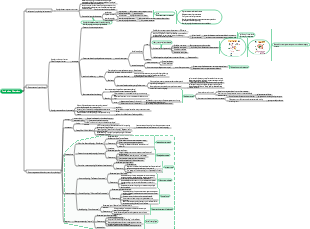
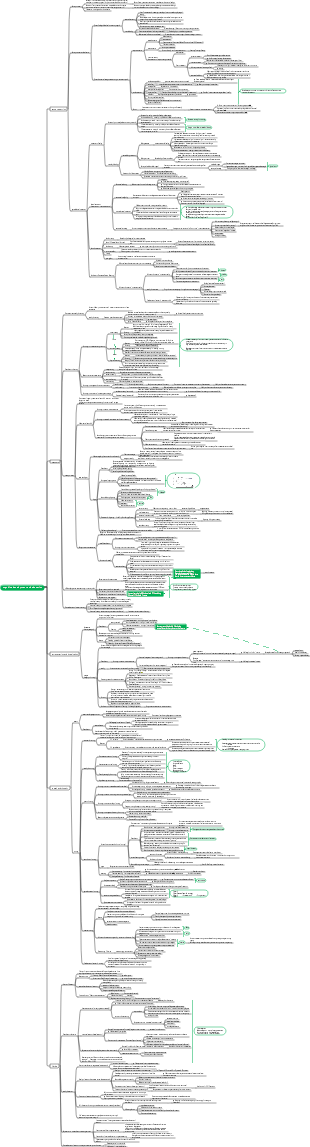
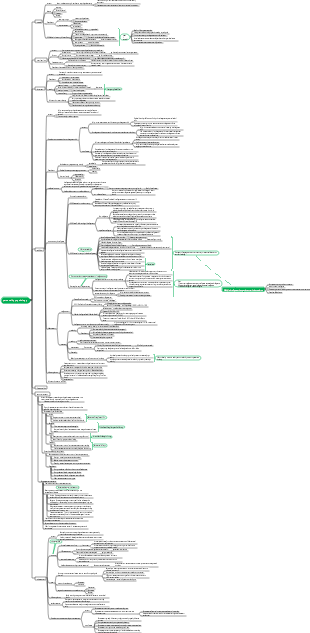
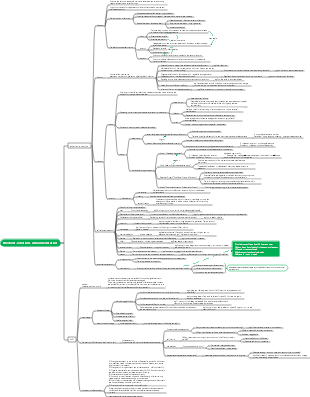
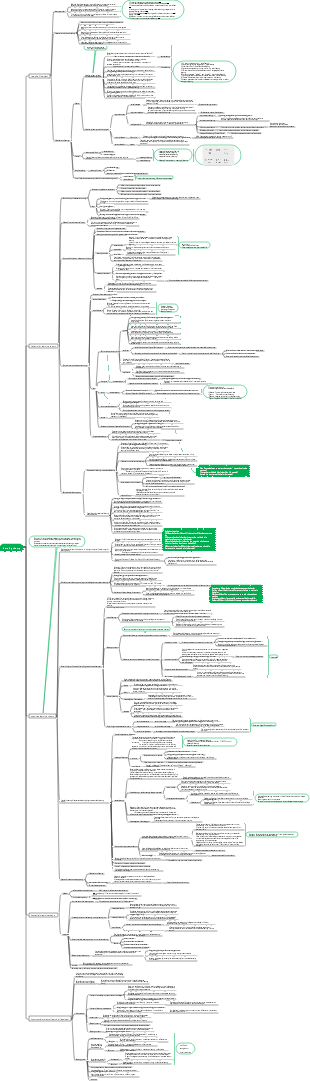
basic laws of education
Education and social development (external laws)
Political Economy and Education
Political and economic constraints on education
directly determines the nature of education
full insider system
Two rights, educational constitution, educational content selection, educational purpose, educational system
The political function of education
People think about fish
Cultivate needed talents, promote the democratization process, spread ideas and form public opinion
social productivity and education
Productivity impacts constraint education
Fundamentally determine the nature of education
Checkout at the counter
Professional settings, scale and speed of educational development, content methods and means, changes in educational structure
economic function of education
two reproductions
Education reproduces the labor force (potential simple physical strength is transformed into actual complex mental strength, so that it can develop in an all-round way, improve quality, and get rid of the one-sided division of labor) Education reproduces scientific knowledge (produces and researches new science and technology, spreads scientific knowledge to improve production efficiency and promotes the development of productivity)
science technology and education
Science and technology influence and restrict education
The fundamental driver of current educational development is scientific and technological progress - (dynamic effect)
Observation of numbers and internal knowledge
Change the educator's concept, the quantity and quality of the educated, determine the educator's knowledge level structure, educational content, methods and means, and affect educational technology
Science and Technology Function of Education
limb research and development
Complete knowledge reproduction, promote scientific institutionalization, have scientific research functions, and promote the development and application of scientific and technological achievements.
Culture and Education
Cultural influence restricts education
The dual cultural attributes of education (education is both a cultural component and a means of deepening and improving cultural transmission)
Visual observation course
It affects the establishment of educational purposes, the value orientation of educational concepts, content selection, method adaptation, and the quality of course structure.
cultural function of education
Two transmissions and two creations
Inherit, transmit and preserve culture (eg books, the most basic function), spread, exchange and integrate culture (Confucius Institute One Belt, One Road) Transform culture (choose to organize and improve, take the essence and abandon the dross), update and create culture (the most fundamental function)
Population and Education
Demographic influence restricts education
Arbor Day
The quality of population affects the quality of education, the quantity of population affects the scale of education and investment in education, and the structure of population affects the structure of education.
Impact of education on population
Before Arbor Day
Improve population quality, control population quantity, rationalize population structure, and promote population migration
relative independence of education
Education has historical inheritance
The unbalanced development of education is mutually restricted by the political and economic system and productivity.
Education is parallel to other social forms/Education is qualitatively prescriptive (educating people)/Education is a transformation activity
Ecological Function of Education
① Establish the concept of building ecological civilization ② Popularize knowledge about ecological civilization and improve national quality ③ Guide activities to build ecological civilization
Education priority development
① Advance investment ② Advance development
Improving the teaching staff is the key to the priority development of education
Main theories on the relationship between education and society
On the Independence of Education (Cai Yuanpei)
Administration, content, scholarship, funding, separation from religion
omnipotence of education
Almighty Edward Lowe
Helvetius, Kant, Watson, Locke
Human Capital Theory (Schultz, USA)
Human capital is capital with economic value, and the income from human capital is greater than the income from physical capital.
Education can improve academic qualifications and abilities. Education is not only consumption but also investment. Education contributes 33% to economic growth.
It is the theoretical basis for education first
Screening Hypothesis Theory/Diploma Theory (Spenth, Throw, Smith)
Education cannot improve personal abilities, it is just a diploma, a signal for job placement (one-sided)
There is a negative correlation between education cost and ability, and there is a positive correlation between education and salary.
Labor market theory (Pilio, Dollinger)
Educational qualifications have nothing to do with education level
Primary labor market (brain) and secondary labor market (brain)
Dual labor market, disagree with human capital theory
Socialization Theory (Bowers, Gintis, USA)
The fundamental function of education is not to improve people's productivity, but to create different personalities and make them more humane
Education and human development (internal rules)
Personal mind and body development concept
From birth to death, body + psychology develop in a positive direction
Individual physical and mental development motivations
endogenous theory
Viewpoint: Heredity plays a decisive role (natural maturation wheel/preformation theory/biological genetic determinism)
representative figure
Mencius - The four ends and all things are all prepared for me, and they are inherent in me.
Wilson - gene duplication
Gersey - the "mature mechanism" of twins climbing stairs
Hall - The genetics of one or two, the germline determination of human evolution "re-evaluation"
Galton - "the originator", eugenics, genetically determined environmental triggers, "hereditary genius"
Freud - the fundamental driving force of human development driven by sexual instinct
Rousseau - Everything from the Creator is good "negative education"
Inner Mongolia Sulf
Theory of Foreign Affairs
Viewpoint: Development relies on external environmental education (environmental determinism/external plasticity theory/empirical theory)
representative figure
Xunzi - Human nature is inherently evil, and nature can become false
Mozi - Susi theory of human nature
Locke - Blank Slate
Skinner - behaviorism
Watson - give me a dozen babies
Go out looking for golden peanuts
two factor theory
Wu Weishi (Woodworth) - Genetics × Environment
Stellen - genetics + environment
Apply Wu Cheng
multiple factors interact
is correct, materialist dialectics, Piaget
Factors affecting individual physical and mental development
genetics
It is the prerequisite for human physical and mental development, provides possibilities for human development, and cannot determine human development.
Use it or lose it, it shows a weakening trend, and it is restricted by mature mechanisms, which is one of the reasons for individual differences.
environment
It provides a variety of possibilities for individual development, making genetic possibilities a reality and cannot determine human development.
The external driving force that promotes people's physical and mental development, people's response to the environment is active
school education
Education plays a leading and promoting role in human development
dominant reason
Three haves, teachers, comprehensiveness, control
School education is a purposeful, planned and organized way to cultivate people
The school has teachers who are specifically responsible for education. It is relatively effective.
The impact of school education on people is relatively comprehensive, systematic and profound.
School education can effectively coordinate and control various factors that affect student development
dominant performance
Socialization, personalization, even delayed acceleration of development
Make social norms for individual development
Develop individual special talents and develop personality functions
Immediate and delayed value
Accelerate individual development
omnipotence of education
almighty edward row
Helvetius, Kant, Watson, Locke
The futility of education
Galton, Plato
individual subjective initiative
It is the internal driving force for personal physical and mental development and the decisive factor that promotes individual development from potential and possible states to actual states.
Subjective initiative: consciousness, independence, creativity (highest level)
From an activity level perspective
Physiological activities, psychological activities, social practice activities (the highest level)
Individual physical and mental development rules
sequentiality
Directionality, from low level to high level, irreversible overcoming
Requirements: proceed step by step and follow the rules
stage
Different ages + different characteristics
Requirements: Education in stages, cannot be one size fits all, and preschool education cannot be made into primary schools.
Imbalance
Within an individual (different speeds in the same aspect, asynchronous in different aspects)
Requirements: The critical period, the sensitive period, the best period, the Austrian Lorenz duckling recognizes its mother, animal stereotype learning
complementarity
The same individual, physiology and physiology, psychology and psychology
Requirements: Make good use of strengths and avoid weaknesses, use good qualities to save losses
individual differences
Individuals and individuals, groups and groups, different aspects and different degrees
Requirements: Teach students in accordance with their aptitude, flexible teaching, and targeted
Wholeness
Cognition and non-cognition, consciousness and subconsciousness, science and art
stability and variability