MindMap Gallery Clinical Medicine Undergraduate Pathiology Rickettsia
About clinical medicine undergraduate etiology mind map, a category that uses arthropods as the transmission medium, Prokaryotic microorganisms that are strictly intracellular parasites.
Edited at 2024-03-08 10:17:12This is a mind map about bacteria, and its main contents include: overview, morphology, types, structure, reproduction, distribution, application, and expansion. The summary is comprehensive and meticulous, suitable as review materials.

This is a mind map about plant asexual reproduction, and its main contents include: concept, spore reproduction, vegetative reproduction, tissue culture, and buds. The summary is comprehensive and meticulous, suitable as review materials.
This is a mind map about the reproductive development of animals, and its main contents include: insects, frogs, birds, sexual reproduction, and asexual reproduction. The summary is comprehensive and meticulous, suitable as review materials.
This is a mind map about bacteria, and its main contents include: overview, morphology, types, structure, reproduction, distribution, application, and expansion. The summary is comprehensive and meticulous, suitable as review materials.
This is a mind map about plant asexual reproduction, and its main contents include: concept, spore reproduction, vegetative reproduction, tissue culture, and buds. The summary is comprehensive and meticulous, suitable as review materials.
This is a mind map about the reproductive development of animals, and its main contents include: insects, frogs, birds, sexual reproduction, and asexual reproduction. The summary is comprehensive and meticulous, suitable as review materials.
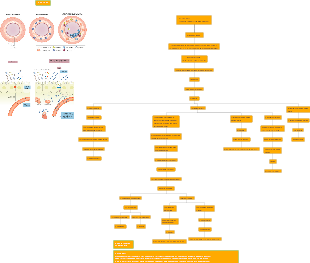
Rickettsia
Overview
A type of prokaryotic microorganism that uses arthropods as the medium of transmission and is strictly parasitic within living cells.
Biological traits
Morphological staining
Various shapes, mainly club-shaped or rod-shaped
Gram stain is negative, but not easy to stain. Giemsa staining, Gimenez staining or Macchiavello staining are commonly used.
structure
Similar to general G-bacteria, without flagella and pili
Has a cell wall, containing peptidoglycan and lipopolysaccharide (Orientia, Ehrlichia, and Anaplasma do not contain peptidoglycan)
Periplasmic space is important in material transport
There is a microcapsule-like protein layer containing OmpA and OmpB, which has adhesion and anti-phagocytic effects.
Cultivation characteristics
The enzyme system is imperfect and lacks organelles, so it must grow within living cells; it reproduces by binary fission.
Growth is slow, generation time is 9~12 hours, optimal temperature is 34℃
Culture methods: cell culture, chicken embryo yolk sac inoculation, animal inoculation (guinea pigs and mice are commonly used)
Antigen structure
Lipopolysaccharide (heat-resistant) is a group-specific antigen, and outer membrane protein (heat-labile) constitutes a species-specific antigen.
subtopic
resistance
It has weak resistance and is inactivated in 30 minutes at 56°C. It is sensitive to commonly used disinfectants.
It can be stored at -20°C or freeze-dried for about half a year, and can survive in arthropod feces for several months.
Sensitive to chloramphenicol and tetracycline antibiotics, but sulfa drugs can promote their growth and reproduction
Pathogenicity
popular link
In the life cycle of rickettsiae, at least one stage is parasitic on an arthropod host, including ticks, mites, lice, fleas or other insects. It can be transmitted through eggs and infect vertebrate hosts using arthropods as the vector. Among them Odontids often serve as parasitic hosts and storage hosts.
Disease caused
Pathogenic mechanism
Immunity
Relies on specific anti-rickettsial immunity, including T cell-mediated cellular immunity, cytokine activation and enhanced killing of phagocytes, and the production of specific antibodies.
Major pathogenic rickettsiae
Rickettsia prowazekii (R. prowazekii)
Biological traits
Morphology and staining
Cultivation characteristics
Antigen structure
Genome
resistance
Pathogenicity
popular link
Patients are reservoirs and sources of infection for Rickettsia prowazekii, and human disorder (body disorder) is the vector of transmission.
Pathogenic substances
Disease caused
epidemic typhus
The incubation period is about two weeks, and the main symptoms are acute high fever, severe headache and myalgia, and rash appears in 4 to 7 days. Some are accompanied by damage to the nervous system, cardiovascular system or other organs. It is a life-threatening rickettsia. sick.
Immunity
Cellular immunity is the main component, and humoral immunity is the supplement.
CTL kills vascular endothelial cells infected with Rickettsia, and Thl cells release the cytokine IFN-y to enhance the phagocytosis and killing functions of macrophages;
Rickettsia typhus (R. typhi)
Biological traits
Morphology and staining
Cultivation characteristics
Antigen structure
Genome
resistance
Pathogenicity
popular link
The main source of infection and reservoir host are rodents (mainly rats)
Rat fleas and rat lice are the main vectors and are transmitted from rat to rat through rat fleas and rat lice
Pathogenic substances
Disease caused
Immunity
Orientia tsutsugamushi (0. tsutsugamushi)
Biological traits
Morphology and staining
Cultivation characteristics
Antigen structure
Genome
resistance
Pathogenicity
popular link
Pathogenic substances
Disease caused
scrub typhus
After an incubation period of 7 to 10 days or longer
The main clinical features are burns or ulcers at the bite site, fever, rash, lymphadenopathy, hepatosplenomegaly, and leukopenia in peripheral blood.
Immunity