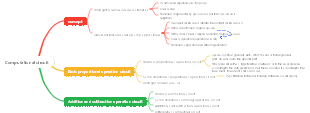
MindMap Gallery Circuit Chapter 1
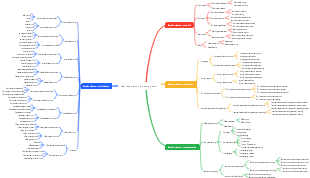
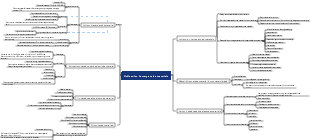
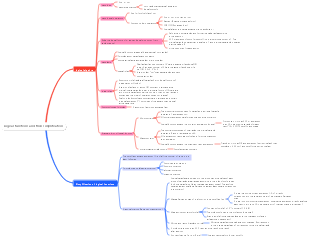
The mind map of the first chapter of "Basics of Circuit Theory" in college is already relatively clear, and future chapters will continue to be updated... Welcome to like and collect~
Edited at 2024-03-07 21:08:36This is a mind map about bacteria, and its main contents include: overview, morphology, types, structure, reproduction, distribution, application, and expansion. The summary is comprehensive and meticulous, suitable as review materials.

This is a mind map about plant asexual reproduction, and its main contents include: concept, spore reproduction, vegetative reproduction, tissue culture, and buds. The summary is comprehensive and meticulous, suitable as review materials.
This is a mind map about the reproductive development of animals, and its main contents include: insects, frogs, birds, sexual reproduction, and asexual reproduction. The summary is comprehensive and meticulous, suitable as review materials.
This is a mind map about bacteria, and its main contents include: overview, morphology, types, structure, reproduction, distribution, application, and expansion. The summary is comprehensive and meticulous, suitable as review materials.
This is a mind map about plant asexual reproduction, and its main contents include: concept, spore reproduction, vegetative reproduction, tissue culture, and buds. The summary is comprehensive and meticulous, suitable as review materials.
This is a mind map about the reproductive development of animals, and its main contents include: insects, frogs, birds, sexual reproduction, and asexual reproduction. The summary is comprehensive and meticulous, suitable as review materials.
Chapter 1 Circuit Components and Basic Laws of Circuits
1.1 Current, voltage and electrical power
associated reference direction
The reference direction of voltage and current on a component is the same
current
Unit: Ampere, A
Direction: The direction in which positive charges move
Formula: i=
Voltage
Unit: Volt, V
Direction: from high potential to low potential
formula:
electromotive force
Definition: The value of the electromotive force of the power supply is equal to the work done to move the unit positive charge from the negative pole to the positive power supply through the inside of the power supply.
Direction: Opposite to the positive direction of voltage
Formula: e=
Electric power
definition:
Absorbed power
Conversion of electrical energy into other forms of energy
p=ui>0
emit power
Conversion of other forms of energy into electrical energy
p=ui<0
Energy absorbed/emitted:
1.2 Resistive element
Resistance/Conductance
resistance
Unit: Ohm,
formula:
Conductance
Unit: Siemens, S
formula:
Interrelationship: RG=1
power:
Joule's law:
1.3 Capacitive components
Unit: Farad, F
formula
Capacitance calculation formula:
Current formula:
The relationship formula between current and voltage:
Total energy absorbed by the capacitor:
1.4 Inductive components
magnet link
Definition: The sum of the magnetic flux linked to each turn of the coil, recorded as
Unit: Weber, Wb
Linear/Nonlinear Inductor
Linear inductance: The magnetic field of the coil exists in a linear medium
Nonlinear inductance: the magnetic field of the coil exists in a nonlinear medium
Inductance
Marked as L
Unit: Henry, H
The relationship between magnetic linkage and current:
The relationship between the port voltage and the port current of the linear inductor:
Absorbed energy / stored magnetic field energy:
1.7 Kirchhoff’s Laws
Circuit configuration
Branch: each two-terminal element
Node: the connection point of several branches
Loop: closed path
Kirchhoff's Current Law (KCL)
content
In a lumped parameter circuit, the algebraic sum of the branch currents flowing out (or flowing into) any node at any time is equal to zero, that is
Generalized Kirchhoff's current law
In a lumped parameter circuit, the algebraic sum of the branch currents flowing out (or flowing into) any closed boundary at any time is equal to zero.
reference direction
When outflowing a node, take the " " sign
When flowing into a node, take the "-" sign
If there are n nodes and one is designated as a reference node, n-1 independent KCL equations can be listed
Kirchhoff's Voltage Law (KVL)
content
In a lumped parameter circuit, the algebraic sum of the voltages along any branch of any loop at any time is equal to zero, that is
promotion
Along any loop, the algebraic sum of voltage drops in each branch is equal to the algebraic sum of voltage rises, that is
reference direction
When the reference direction is the same as the loop direction, take the " " sign
When the reference direction is opposite to the loop direction, take the "-" sign
If there are b branches and n nodes, then b-n 1 independent KVL equations can be listed
1.6 Controlled power supply
Definition: A power source whose source voltage or current is controlled by a voltage or current elsewhere in the circuit.
Classification
Voltage controlled voltage source VCVS
Current controlled voltage source CCVS
Voltage controlled current source VCCS
Current Controlled Current Source CCCS
1.5 Independent power supply
power source
Port characteristics:
Power (taking non-correlated reference direction):
Power supply/charging status
Power supply status: p>0
Charging state: p<0
Battery
Port characteristics:
power:
Power supply/charging status
Power supply status: p>0
Charging state: p<0