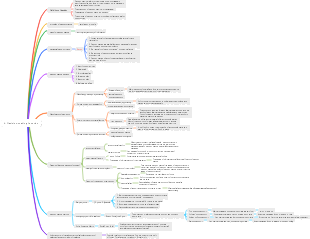
MindMap Gallery Self-Study on Business Administration Human Resource Management I Chapter 2 Employee Motivation
Self-Study in Business Administration, Human Resources Management Major, Human Resources Management 1. Important test points and short-answer questions throughout the chapter. The case questions have been marked to simplify the complex ones. Each chapter will take several hours to sort out to help you pass every exam.
Edited at 2024-03-07 19:16:15This is a mind map about bacteria, and its main contents include: overview, morphology, types, structure, reproduction, distribution, application, and expansion. The summary is comprehensive and meticulous, suitable as review materials.

This is a mind map about plant asexual reproduction, and its main contents include: concept, spore reproduction, vegetative reproduction, tissue culture, and buds. The summary is comprehensive and meticulous, suitable as review materials.
This is a mind map about the reproductive development of animals, and its main contents include: insects, frogs, birds, sexual reproduction, and asexual reproduction. The summary is comprehensive and meticulous, suitable as review materials.
This is a mind map about bacteria, and its main contents include: overview, morphology, types, structure, reproduction, distribution, application, and expansion. The summary is comprehensive and meticulous, suitable as review materials.
This is a mind map about plant asexual reproduction, and its main contents include: concept, spore reproduction, vegetative reproduction, tissue culture, and buds. The summary is comprehensive and meticulous, suitable as review materials.
This is a mind map about the reproductive development of animals, and its main contents include: insects, frogs, birds, sexual reproduction, and asexual reproduction. The summary is comprehensive and meticulous, suitable as review materials.
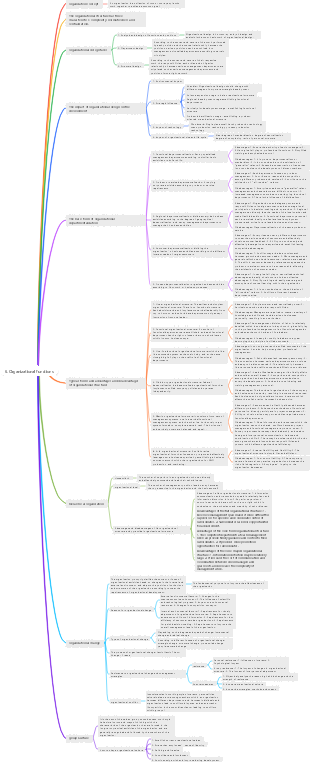
2Employee motivation
Motivational Overview
The meaning of motivation
Systematic activities in which an organization inspires, guides, maintains and naturalizes the behavior of organizational members by designing appropriate forms of external rewards and work environments, and using certain behavioral norms and punitive measures to effectively achieve the personal goals of the organization and its members.
Types of incentives
Material incentives: physiological aspects - material needs Mental stimulation: psychological aspects-spiritual needs
Positive incentives: meet the needs of the organization → reward → encourage → continue and promote Negative incentives: do not meet the needs of the organization → sanction → restrain → reduce or eliminate
Intrinsic motivation: internal reward - the stimulation of the work task itself - the sense of satisfaction gained during the work process Extrinsic motivation: extrinsic reward - the satisfaction gained after completing work tasks or outside the workplace
Basic principles of motivation
(1) Principle of goal integration: embody organizational goals and employee requirements at the same time (2) The principle of combining material incentives and spiritual incentives: material incentives are the basis, and spiritual incentives are the foundation. (3) The principle of combining positive incentives and negative incentives (4) Principle of clarity: clear; open; intuitive (5) Guiding principle: external incentives → conscious will of the motivated person (6) Principle of rationality: incentive measures must be appropriate; rewards and punishments must be fair (7) Principle of timeliness: “Send help when it’s time” √ “Send umbrella after rain”× (8) On-demand incentive principle
The role of motivation
■Helps attract outstanding talents ■Helps retain outstanding talents ■Conducive to unleashing the talents of employees ■Contributes to creating a healthy competitive environment
motivation process
Motivation includes three basic factors: need, motivation, and behavior (the three elements of need, motivation, and behavior are interrelated and inseparable)
motivation theory
▼Content-based motivation theory
1. Content-based motivation theory is a theory that studies the specific content of the reasons for motivation and the factors that play a motivating role. 2. This theory focuses on the content that satisfies people's needs, that is, what people need is satisfied, thereby stimulating people's motivation. 3. Content-based motivation theory focuses on the study of incentives that stimulate motivation, including:
Maslow's "Hierarchy of Needs Theory"
1. Physiological needs, safety needs, social needs, esteem needs, self-actualization needs
2. The basic viewpoints of the hierarchy of needs theory: (1) The five types of needs are like a ladder, rising step by step from low to high. When the needs of one level are relatively satisfied, they will develop to the next higher level. (2) The need structure is very complex. At every moment, there are many levels of needs affecting people's actions, rather than a single need dominating people's actions. (3) The five needs can be divided into high and low-level needs, among which physiological needs, safety needs and social needs are all low-level needs, which can be satisfied through external conditions; The need for esteem and the need for self-actualization are advanced needs (4) The hierarchy of needs of the majority of people in a country is directly related to the country’s economic development level, scientific and technological development level, culture and people’s education level.
Herzberg’s “two-factor theory”
●Also called "health-motivation theory", proposed by American psychologist Frederick Herzberg
●Viewpoint: (1) Not all needs that are met can motivate people. Only those needs that are motivating factors can be met to mobilize people's enthusiasm. Does not have Preparing health factors will cause a lot of dissatisfaction, but having them does not necessarily arouse strong enthusiasm. (2) When motivating factors are present, they will cause strong enthusiasm and satisfaction, but when they are lacking, they will not cause great dissatisfaction. (3) Herzberg also clearly pointed out that in the absence of hygienic factors, motivational factors have little effect.
Alderfer’s “ERG theory”
Divide human needs into three categories: (1) E-Existence needs: related to the existence or survival of the body (2) R-Relationship needs: This refers to the need to develop interpersonal relationships (3) G-Growth needs: personal self-development and self-improvement needs
Characteristics of ERG theory: (1) It does not emphasize the order of need levels. It believes that a certain need affects behavior within a certain period of time, and when this need is satisfied, It may be to pursue higher-level needs, or there may not be such an upward trend. (2) When higher-level needs are frustrated, they may settle for the next best. (3) After a certain need is basically satisfied, its intensity will not weaken, but may also increase, which is inconsistent with Maslow's point of view
McClelland's "Achievement Needs Theory"
The basic contents of achievement needs theory: (1) Power needs: (personal power; positional power) (2) Friendship needs (3) Achievement needs
The main features of achievement needs theory: (1) Achievement needs theory focuses more on the study of managers in high-level management. (2) It has great practical significance for scientific research management and managerial personnel management other than enterprise management.
Evaluation of Need for Achievement Theory: Need for Achievement Theory has important implications for modern management: (1) In the selection and placement of personnel, measuring and evaluating the characteristics of a person's motivation system is of great significance in how to assign work and arrange positions; (2) Different motivation methods should be adopted for people with different needs; (3) Motivation can be trained and stimulated. Managers can train and improve employees’ achievement motivation and improve labor productivity.
▼Process motivation theory
Process motivation theory: focuses on the psychological process from the generation of motivation to taking action
• Vroom’s “expectancy theory”
1. American psychologist Victor Vroom, mid-1960s 2. Basic viewpoints How motivating an activity is for someone depends on: ①The value that the result of this activity brings to this person; ②The possibility of achieving this result The formula can be expressed as: M (motivation force) = V (valence) · E (expected value)
• Adams’ “Equity Theory”
1. Equity theory: Also known as social comparison theory, American psychologist John Stashey Adams proposed: It studies the relationship between human motivation and perception, focusing on the impact of pay fairness and rationality on employee motivation. 2. Evaluation of fairness theory: (1) Factors that affect the incentive effect include not only the absolute value of remuneration, but also the relative value of remuneration; (2) We should strive to be fair when incentivizing, so that the equation can be established objectively, and even if there are errors in subjective judgment, it will not cause a serious sense of unfairness. (3) During the incentive process, attention should be paid to guiding the fair psychology of the motivated people so that they can establish a correct concept of fairness. .
• Locke’s “Goal Setting Theory”
Locke first proposed the "goal setting theory", believing that goals themselves have a motivating effect. Goals can transform people's needs into motivations, make people work in a certain direction, and align their behavioral results with established goals. Compare and make timely adjustments and corrections to achieve your goals
Key points of goal setting theory: (1) Goal difficulty: the challenge of the goal and the degree of effort required to achieve the goal (2) Goal clarity: the content and direction of work tasks, deadlines for completion, and performance standards that should be achieved, etc. (3) Self-efficacy: people’s self-perception of their ability to effectively achieve specific behavioral goals (4) Moderating variables: other factors that affect the relationship between goal setting and performance
▼Consequence-based motivation theory
Behavioral consequence-based motivation theory: It takes behavioral consequences as the object and studies how to provide subsequent incentives for behavior.
Skinner's reinforcement theory
Classification: (1) Positive reinforcement: Also known as positive reinforcement, when people take a certain behavior, they can get some pleasant result from others, which in turn becomes a force that promotes people to tend to or repeat this behavior. . (2) Negative reinforcement: Also known as negative reinforcement, it refers to the unpleasant consequences caused by a certain behavior that does not meet the requirements, and the behavior is negated. (3) Natural extinction: also known as attenuation, refers to the withdrawal of the previously acceptable reinforcement of a certain behavior. Without reinforcement within a certain period of time, the behavior will naturally decline and gradually subside. Summary: Positive reinforcement is used to strengthen desired personal behaviors, while negative reinforcement and natural extinction are used to reduce and eliminate undesirable behaviors.
Hyde's attribution theory
(1) There are two types of causes of events: 1) Internal factors, such as emotions, attitudes, personality, abilities, etc. 2) External factors: such as external pressure, weather, situations, etc. Most people tend to make character attributions when explaining the behavior of others; when explaining their own behavior, they tend to make situational attributions. (2) When making attributions, people often use two principles: the principle of covariation and the principle of exclusion.
People's analysis of the reasons for success or failure of behavior can be summarized into the following six factors: (1) Ability (2) Effort (3) Physical and mental state (4) Task difficulty (5) Luck (6) Other factors
Main arguments: (1) A person’s personality differences and experience of success or failure affect his attribution; (2) A person’s attribution of previous achievements will affect his expectations, emotions and effort level for the next achievement behavior; (3) Personal expectations, emotions and effort levels have a great impact on achievement behavior
Incentives
The meaning of incentive mechanism
Based on organizational goals and on the basis of analyzing the needs and motivations of those being managed, we formulate necessary monitoring methods and implementable and executable systems to form a long-term It is a relatively fixed and standardized series of systems and work standards that motivate the thoughts and behaviors of managers over a long period of time.
The content of the incentive mechanism
(1) Inducement factor set: Inducement factors are various reward resources used to mobilize employee enthusiasm. (2) Behavior-oriented system: It is the organization's regulations on the direction of efforts, behavioral methods and values that should be followed by its members. (3) Behavior amplitude system: a control rule for the intensity of behavior inspired by inducing factors. (4) Behavioral time and space system: the provisions of the reward system in terms of time and space. (5) Behavioral naturalization system: Assimilate members into the organization and punish and educate members who violate behavioral norms or fail to meet requirements.
Incentive mode steps
Two-way communication ---> Individual choice of behavior ---> Phased evaluation ---> Year-end evaluation and reward distribution ---> Comparison and re-communication
Motivational methods
material incentives
(1) Basic income incentive: It is the basic source of employees’ living expenses, of which salary is the most important part. (2) Bonus incentive: theoretically a reward for excess labor (3) Welfare incentives (4) Other material incentives
Mental stimulation
(1) Growth incentives (training, learning, further education) (2) Caring and motivation (3) Image motivation (image of manager) (4) Honor incentives (5) Promotion incentives (6) Goal motivation (set goals → mobilize enthusiasm → sense of achievement) (7) Incentives from a community of shared future