MindMap Gallery Management-Organizational functions mind map
Regarding the management-organizational function mind map, an organization is a collection of two or more people acting together to achieve a common goal.
Edited at 2024-03-04 12:59:49This is a mind map about bacteria, and its main contents include: overview, morphology, types, structure, reproduction, distribution, application, and expansion. The summary is comprehensive and meticulous, suitable as review materials.

This is a mind map about plant asexual reproduction, and its main contents include: concept, spore reproduction, vegetative reproduction, tissue culture, and buds. The summary is comprehensive and meticulous, suitable as review materials.
This is a mind map about the reproductive development of animals, and its main contents include: insects, frogs, birds, sexual reproduction, and asexual reproduction. The summary is comprehensive and meticulous, suitable as review materials.
This is a mind map about bacteria, and its main contents include: overview, morphology, types, structure, reproduction, distribution, application, and expansion. The summary is comprehensive and meticulous, suitable as review materials.
This is a mind map about plant asexual reproduction, and its main contents include: concept, spore reproduction, vegetative reproduction, tissue culture, and buds. The summary is comprehensive and meticulous, suitable as review materials.
This is a mind map about the reproductive development of animals, and its main contents include: insects, frogs, birds, sexual reproduction, and asexual reproduction. The summary is comprehensive and meticulous, suitable as review materials.
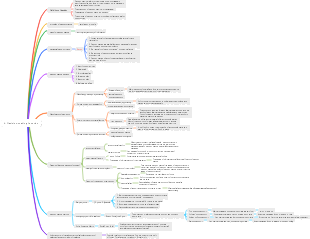
6. Organizational functions
organization concept
An organization is a collection of two or more people who work together to achieve a common goal.
The organizational structure has three characteristics: complexity, normativeness and centralization.
organizational design tasks
1. Analysis and design of functions and positions
Organizational design is bottom-up, and job design and analysis is the most basic work of organizational design.
2. Department design
According to the content and nature of the work performed by each position and the mutual relationship between the positions, various positions can be combined into management units called departments according to certain principles.
3. Structural design
According to the content and nature of their respective work, the responsibilities, authorities and obligation relationships between various management departments are stipulated so that various management departments and positions form a tight network
The impact of organizational design on the environment
1. Environmental impact
2. Strategic influence
Chandler: Organizational design should change with different stages of corporate strategic development
Volume expansion stage - single organizational structure
Regional development stage-establishing functional departments
Vertical joint development stage - establishing functional structure
Product diversification stage - establishing a product-oriented organizational structure
3. Impact of technology
Woodward: Single piece small batch production technology, mass production technology, process production technology
4. Impact of organizational size and life cycle
Blau: degree of standardization, degree of centralization, degree of complexity, ratio of personnel structure
The basic form of organizational departmentalization
1. Functional departmentalization: Set up specialized management departments according to similar basic activities or similar skills.
Advantages: 1. Ensure the authority of senior managers. 2. Able to give full play to professional functions. 3. Simplified training and emphasized control
Disadvantages: 1. It is prone to departmentalism or standardism. 2. It is not conducive to the cultivation of "generalist" talents. 3. Excessive concentration of resources is not conducive to the development of distant markets.
2. Product or service departmentalization: Grouping corporate activities according to product or service requirements
Advantages: 1. Each department focuses on product management. 2. Contribute to reasonable competition among different products and services. 3. Contribute to the cultivation of “all-rounder” talents.
Disadvantages: 1. Enterprises need more "generalist" talent management and these talents are difficult to control. 2. Increased management costs due to overlapping functional departments. 3. There is the influence of individualism.
3. Regional departmentalization: divide enterprise business activities according to the degree of geographical decentralization, and set up management departments to manage their business activities
Advantages: 1. Organizations can delegate powers and responsibilities to local governments and encourage local participation in decision-making and operations. 2. Regional managers can directly face the needs of the local market and make flexible decisions. 3. Functional department personnel can be recruited locally to alleviate local employment pressure and strive for a relaxed business environment.
Disadvantages: Departmentalization of the same product or service
4. Customer departmentalization: dividing the organization’s business activities according to the different interest needs of target customers
Advantages: 1. Enterprises can set up different departments to meet the various needs of customers and effectively obtain customer feedback. 2. Ability to continuously and effectively leverage its core expertise and establish lasting competitive advantages.
Disadvantages: 1. Conflict may arise due to mismatch between growth and customer needs. 2. More managers and general staff who can handle customer relations are needed. 3. The shift in customer demand preferences may cause the product or service structure to be unreasonable, affecting the satisfaction of customer needs.
5. Process departmentalization: organize business activities according to flow work or business processes
Advantages: 1. It can give full play to centralized technical advantages and easily obtain more obvious collective advantages. 2. Simplify training and easily create a good atmosphere of mutual learning within the organization
Disadvantages: 1. It is not conducive to the cultivation of "all-rounder" talents. 2. Conflicts of interest between departments arise.
Typical forms and advantages and disadvantages of organizational structures
1. Linear organizational structure: The earliest and simplest organizational structure. There is no functional structure. Each administrative unit implements vertical leadership from top to bottom, and subordinate departments only accept instructions from one leader.
Advantages: 1. Simple structure and centralized power. 2. Vertical connection and clear responsibilities.
Disadvantages: Managers are required to master a variety of knowledge and skills and handle various businesses personally, resulting in an overburden.
2. Functional organizational structure: A number of functional departments are established, and each functional department has the right to issue orders to subordinates within its own business scope.
Advantages: The management division of labor is relatively detailed, which is conducive to in-depth work, gives full play to the professional management role of functional agencies, and reduces the work burden of line leaders.
Disadvantages: It is easy for multiple leaders to appear, destroying the principle of unified command.
3. Line-line functional organizational structure: with the line-line command system as the main body, and at the same time giving full play to the staff role of functional departments
Advantages: It not only ensures the unified command of the organization, but also helps strengthen professional management.
Disadvantages: 1. Subordinates lack necessary autonomy. 2. The connections between various departments are not close and easy to be disconnected. 3. The relationship between line personnel and staff is sometimes difficult to coordinate.
4. Division-type organizational structure: Federal decentralization is a decentralized organizational form that implements unified company policies and operates independently.
Advantages: 1. Head office leaders can get rid of daily affairs and consider overall issues. 2. Comparison and competition among various business departments are conducive to enterprise development. 3. Conducive to cultivating and training management personnel.
Disadvantages: The functional organizations of the company and business units overlap, resulting in a waste of resources. Each business unit only considers its own interests, which affects the collaboration between business units.
5. Matrix organizational structure: It consists of two sets of management systems, one is a vertical functional management system, and the other is a horizontal project system formed to complete a certain task. The horizontal and vertical powers are balanced and equal. .
Advantages: 1. Resources can be flexibly allocated between different products. 2. Enhance the enthusiasm of functional personnel to directly participate in project management. 3. Ability to obtain various support activities required across functional departments
Disadvantages: 1. Once information and resources within the organization cannot be shared, conflicts between project managers and functional managers are prone to occur. 2. Some project members accept dual leadership and need to have good interpersonal communication, balance and coordination skills. 3. There may be unclear task distribution among members and inconsistent responsibilities and powers, which affects organizational efficiency.
6. Grid organizational structure: A collaborative organizational form that focuses on projects and effectively leverages core business expertise by establishing a business contract network with other organizations for R&D, production, and marketing.
Advantages: 1. Greater flexibility and flexibility. 2. The organizational structure is simple, flat and efficient.
Disadvantages: 1. Poor controllability. 2. The temporary nature of external cooperative organizations increases the risk of disintegration. 3. Employees’ loyalty to the organization decreases.
hierarchical organization
tissue width
The number of superiors in an organization who can directly and effectively command and lead their subordinates
organizational level
The number of management position levels set up between the top executive in the organization and the business staff
Advantages and disadvantages of flat organizational structure and pyramidal organizational structure
Advantages of a flat organizational structure: 1. Information communication and transmission speed is relatively fast, and information distortion is low. 2. Superior supervisors’ control over subordinates will not be too rigid, which is conducive to the enthusiasm and creativity of subordinates.
Disadvantages of the flat organizational structure: 1. Excessive management span makes it more difficult for supervisors to supervise and coordinate control of subordinates. 2. Subordinates lack more opportunities for advancement.
Advantages of the cone-form organizational structure: 1. The competent departments at each management level can provide timely guidance and control to their subordinates. 2. It provides more promotion opportunities for subordinates.
Disadvantages of the cone-shaped organizational structure: 1. Information distortion may be relatively large. 2. It increases the cost of communication and coordination between senior managers and grassroots, and increases the complexity of management work.
organizational change
The organization promptly clarifies the content or focus of organizational activities based on changes in the internal and external environment, and adjusts the positions, institutions and structures of the organization accordingly to meet the requirements of organizational development.
The fundamental purpose is to improve the effectiveness of the organization
Reasons for organizational change
External environmental factors: 1. Changes in the macroeconomic environment. 2. The influence of scientific and technological progress. 3. Impact on environmental resources. 4. Changes in competition concepts.
Internal environmental factors: 1. Requirements for timely adjustment of organizational structures. 2. Requirements to ensure smooth flow of information. 3. Requirements for low efficiency of customer service organizations. 4. Requirements for quick decision-making. 5. Requirements to improve the overall management level of the organization.
Types of organizational change
Depending on the degree and speed of change: incremental change and radical change
According to different focuses of organizational change: strategic change, structural change, process-led change, people-centered change
The process of organizational change: Lewin/Lewin Thaw – Change – Freeze
Resistance to organizational change and management strategies
resistance
Personal resistance: 1. Influence on interests. 2. Psychological impact
Group resistance: 1. The impact of changes in organizational structure. 2. The impact of interpersonal adjustment
Countermeasures
1. Objectively analyze the reasoning behind change and the strength of resistance
2. Innovate organizational culture
3. Innovative strategies, methods and means
organizational conflict
Inconsistencies in working styles, interests, personalities, cultural values, etc. among members within an organization, between different departments, and between individuals and organizations lead to conflicts, disputes, and even attacks. (Competition is the most direct factor leading to conflicts within groups)
group Culture
It is the sum of the values, group consciousness, work style, behavioral norms and ways of thinking with the characteristics of the organization that are formed in the long-term practical activities of the organization and are generally recognized and followed by the members of the organization.
How to shape organizational culture
1. Establish correct organizational values
2. Strengthen employees’ sense of identity
3. Refining and freezing
4. Consolidate and implement
5. Continuously enrich and improve during development