MindMap Gallery Care for women during pregnancy
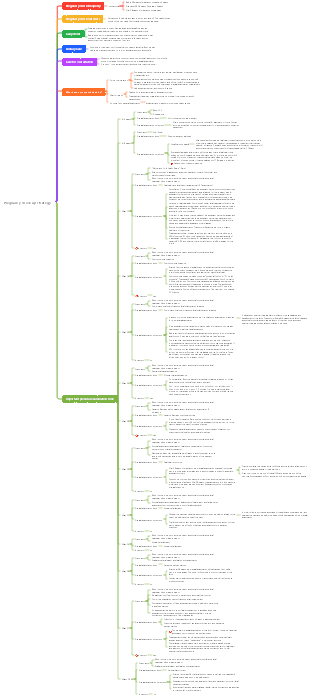
A mind map on nursing care for pregnant women, which introduces pregnancy diagnosis, Pregnancy management, pregnancy care, maternal changes during pregnancy, etc.
Edited at 2023-12-03 09:48:01This is a mind map about bacteria, and its main contents include: overview, morphology, types, structure, reproduction, distribution, application, and expansion. The summary is comprehensive and meticulous, suitable as review materials.

This is a mind map about plant asexual reproduction, and its main contents include: concept, spore reproduction, vegetative reproduction, tissue culture, and buds. The summary is comprehensive and meticulous, suitable as review materials.
This is a mind map about the reproductive development of animals, and its main contents include: insects, frogs, birds, sexual reproduction, and asexual reproduction. The summary is comprehensive and meticulous, suitable as review materials.
This is a mind map about bacteria, and its main contents include: overview, morphology, types, structure, reproduction, distribution, application, and expansion. The summary is comprehensive and meticulous, suitable as review materials.
This is a mind map about plant asexual reproduction, and its main contents include: concept, spore reproduction, vegetative reproduction, tissue culture, and buds. The summary is comprehensive and meticulous, suitable as review materials.
This is a mind map about the reproductive development of animals, and its main contents include: insects, frogs, birds, sexual reproduction, and asexual reproduction. The summary is comprehensive and meticulous, suitable as review materials.
Care for women during pregnancy
pregnancy care
Pregnancy: Counting from the 1st day of the last menstrual period, the gestation period is approximately 40 weeks (280 days)
Fertilization: Within 12 hours after ovulation, usually no more than 24 hours
Implantation of fertilized egg: starts on 6-7 days after fertilization and ends on 10-12 days Implantation site: anterior wall, posterior wall, lateral wall of the uterus
Implantation conditions
1.Zona pellucida disappears
2. The blastocyst trophoblast differentiates into syncytiotrophoblast cells
3. The blastocyst and endometrium develop synchronously and coordinate their functions
4. Pregnant women have enough estrogen and progesterone in their bodies
The uterus has a very short window period to allow the fertilized egg to implant, usually on the 20th-24th day of the menstrual cycle.
Formation and function of fetal appendages
Fetal appendages: placenta, fetal membranes, umbilical cord and amniotic fluid
Placenta: formed around the end of 12th week of pregnancy
structure
Full-term placenta is thick in the middle and thin at the edge
Composed of amnion, chorion foliaceus, and decidua basalis
Divided into fetal surface (smooth, with the umbilical cord in the center or slightly to the side) and maternal surface (rough)
Function
gas exchange
Nutrient supply
Excrete fetal metabolites
defense
Various viruses can invade the fetus through the placenta
IgG in the mother can pass through the placenta, allowing the fetus to obtain antibodies
synthesis and immunity
Synthesize various hormones and enzymes
1. Human chorionic gonadotropin (hCG)
It can be measured about 10 days after fertilization.
Diagnosing early pregnancy
Secretion reaches its peak at 8-10 weeks of pregnancy
Nutritional corpus luteum to maintain early pregnancy
2. Human placental lactogen (hPL): Promotes mammary gland alveolar development and protein synthesis
3. Estrogen and progesterone: synthesized by the placenta after the 8th to 10th week of pregnancy
Fetal membranes: chorion (outer layer), amniotic membrane (inner layer)
umbilical cord
Umbilical cord length at term is 30-100cm
One umbilical vein and two umbilical arteries
amniotic fluid
Early pregnancy: maternal serum; late pregnancy: fetal urine is an important source of amniotic fluid
It reaches the peak at 38 weeks of pregnancy and can reach 1000ml, and normal term is about 800ml.
Colorless and clear liquid in early pregnancy; amniotic fluid at term is slightly turbid and opaque
Neutral or weakly alkaline, ph7.2; protects mother and fetus
Development of the embryo and fetus
Embryo: Within 8 weeks after fertilization (10th week of pregnancy)
Fetus: From the 9th week after fertilization (11th week of pregnancy)
feature
Weekend 8: Ultrasound results show that the heart is pulsating and prone to deformity.
Weekend 16: Some pregnant women have fetal movements
Weekend 20: Fetal heart sound
Weekend 28: Susceptible to respiratory distress syndrome
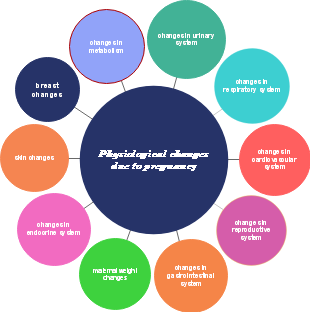
Maternal changes during pregnancy
reproductive system
Uterus
uterine body
enlarge and soften
At 12 weeks of pregnancy, the upper part of the pubic symphysis is palpable
Advanced uterine mild dextrorotation
Full term pregnancy, volume 5000ml, size 35✖️25✖️22, weight 1100g
Uterine isthmus is 7-10cm long during labor
The cervix appears enlarged, purple-blue, with thick mucus plugs
Ovary: After 10 weeks of pregnancy, the function of the corpus luteum is replaced by the placenta
Fallopian tube: flattened mucosal epithelial cells
Vagina: Thickening of mucous membranes, increased wrinkles, softer connective tissue, increased stretchability, and pasty secretions
Vulva: Pigmentation
Breasts: Nipple enlargement, blackening, easy erection, areola discoloration, Montessori nodules
blood system
Blood volume reaches peak at 32-34 weeks
Plasma increases more than red blood cells, hemodilution, physiological anemia
Increased red blood cells, increased white blood cells, decreased platelets, increased coagulation factors (blood hypercoagulability), and decreased plasma proteins
circulatory system
heart
Shift left, up, forward
Heart rate increases by 10-15 beats per minute
A soft blowing systolic murmur is heard
cardiac output and blood volume
Cardiac output reaches its peak at 32-34 weeks (second stage of labor, significant)
Combined with heart disease, prevent heart failure during 32-34 weeks of pregnancy, delivery, and the first 3 days of the puerperium.
blood pressure
Supine hypotension syndrome, relieved in lateral decubitus position
venous pressure
Hemorrhoids, vulva, varicose veins of lower limbs
urinary system
Pay attention to the identification of physiological diabetes
Prone to pyelonephritis (more common on the right side)
Respiratory system: upper respiratory tract infection
Digestive system: early pregnancy symptoms (around 6 weeks after menopause), nausea, vomiting, greasy aversion, and prone to constipation
Weight: Full-term pregnancy, average weight gain of 12.5kg
pregnancy diagnosis
period
Early pregnancy: Week 13
Second term: 14-28 weeks
Late stage: after 28 weeks
Early diagnosis
Menopause (the earliest and most important), early pregnancy symptoms (menopause about 6 weeks), frequent urination
examine
Gynecological examination
In the 6th to 8th week of pregnancy, the vaginal mucosa and cervix are congested, blue-purple
Black plus sign: The uterine isthmus is extremely soft, and the uterine body and cervix do not seem to be connected.
At 8 weeks of pregnancy, the uterus is approximately twice as large as when not pregnant, and at 12 weeks of pregnancy, the uterus is approximately 3 times as large as when not pregnant.
Pregnancy test (diagnoses early pregnancy)
Testing hCG in blood or urine
Ultrasound examination (confirmation)
On the 35th day after menopause, the gestational sac can be seen
At 6 weeks of pregnancy, the embryo and heartbeat indicate a live fetus.
At 11-13 weeks of pregnancy, measure the fetal crown-rump length and estimate the gestational age.
Fetal nuchal translucency, screening for chromosomal diseases in early pregnancy
Late stage diagnosis
The uterus gradually enlarges
Fetal movement
Starting from 18-20 weeks of pregnancy, more than or equal to 10 times/2h
Fetal heart sounds
18-20 weeks of pregnancy, 110-160 times
Systematic examination at 20-24 weeks of pregnancy to screen for malformations
Fetal pattern, fetal presentation, fetal position
fetal position
Parallel-vertical production
Vertical-horizontal production type
cross-biased
fetal presentation
Longitudinal delivery: cephalad presentation, buttock presentation
Transverse delivery: shoulder first
Tire position
Occipital presentation - occipital bone; Facial presentation - mental bone; Hip presentation - sacrum; Shoulder presentation - scapula
Normal and easy delivery: pillow left and front, pillow right and front
pregnancy management
Prenatal care
Check every 4 weeks before 28 weeks of pregnancy
Check every 2 weeks after 28 weeks of pregnancy
Check once a week after 36 weeks of pregnancy
Estimated due date
Starting from the first day of the last menstrual period, the month is subtracted by 3 or added by 9, and the date is added by 7