MindMap Gallery Pharmacology-antihypertensive drugs mind map
This is a mind map about pharmacology-antihypertensive drugs. Any drugs that can lower blood pressure and are used to treat hypertension are called antihypertensive drugs or antihypertensive drugs.
Edited at 2023-12-02 21:29:47This is a mind map about bacteria, and its main contents include: overview, morphology, types, structure, reproduction, distribution, application, and expansion. The summary is comprehensive and meticulous, suitable as review materials.

This is a mind map about plant asexual reproduction, and its main contents include: concept, spore reproduction, vegetative reproduction, tissue culture, and buds. The summary is comprehensive and meticulous, suitable as review materials.
This is a mind map about the reproductive development of animals, and its main contents include: insects, frogs, birds, sexual reproduction, and asexual reproduction. The summary is comprehensive and meticulous, suitable as review materials.
This is a mind map about bacteria, and its main contents include: overview, morphology, types, structure, reproduction, distribution, application, and expansion. The summary is comprehensive and meticulous, suitable as review materials.
This is a mind map about plant asexual reproduction, and its main contents include: concept, spore reproduction, vegetative reproduction, tissue culture, and buds. The summary is comprehensive and meticulous, suitable as review materials.
This is a mind map about the reproductive development of animals, and its main contents include: insects, frogs, birds, sexual reproduction, and asexual reproduction. The summary is comprehensive and meticulous, suitable as review materials.
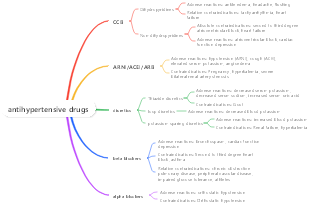
antihypertensive drugs
Overview
antihypertensive drugs
Any drugs that can lower blood pressure and are used to treat high blood pressure are called antihypertensive drugs or antihypertensive drugs.
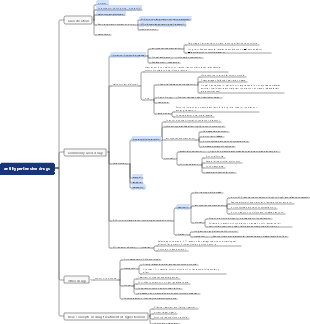
Classification of antihypertensive drugs
1. Diuretics 2. Sympatholytic drugs 3. Vasodilators 4. Renin-angiotensin system inhibitors 5. Calcium channel blockers
blood pressure
Factors affecting blood pressure
cardiac output
Heart rate, myocardial contractility, blood return volume, etc.;
peripheral resistance
The length of blood vessels, the radius of blood vessels, and the viscosity of blood, etc.
Regulation of blood pressure by the neuro-humoral system
First-line antihypertensive drugs
Diuretics, calcium antagonists, beta blockers, ACEI, ARB
Commonly used antihypertensive drugs
Common features: ①Oral administration ②Mild disease: Use alone Moderate and severe cases: combined medication ③Cause hypotension
diuretics
Electrolyte imbalance, indapamide (reverses remodeling, No significant changes in blood lipids and blood sugar)
Basic (first-line) antihypertensive drugs Thiazide medium-effective diuretics are the most commonly used, with mild and long-lasting antihypertensive effects and no obvious tolerance for long-term use.
Features
1. The effect is weak, reducing blood pressure by an average of 10% 2. Most patients will see results within 2 to 3 weeks after taking the medicine. 3. Can be used for various types of hypertension (basic antihypertensive drugs) 4. Mild cases - single use, moderate and severe cases - combined use 5. Can cause the morbidity and mortality of stroke and left heart failure in elderly patients with hypertension
Pharmacological effects and Mechanism
Early stage of medication
Diuretics reduce extracellular fluid volume and cardiac output
long term medication
Reduce vascular resistance
Na⁺↓ in the body, Na⁺↓⇨ intracellular Ca²⁺↓⇨ in smooth muscle. The reactivity of vascular smooth muscle to vasoconstrictor substances is weakened.
Clinical application
Thiazide diuretics are the most commonly used class of diuretic and antihypertensive drugs. Hydrochlorothiazide is most commonly used When using thiazide diuretics alone for antihypertensive treatment, the dose should be as small as possible Long-term use of thiazide diuretics alone ⇨ combined use of potassium-sparing diuretics/ACEI ⇨ reduction of K⁺ excretion For patients with azotemia/uremia ⇨ the highly effective diuretic furosemide
Hydrochlorothiazide
first line medication Can be used alone to treat mild hypertension Combined with other antihypertensive drugs to treat moderate and severe hypertension. Diuretics combined with ACEI or ARB are the most common compound preparations.
Indapamide
Features
Long-acting, take once a day; Long-term application can reverse ventricular remodeling and is clinically used in patients with type I and II hypertension. It has no significant effect on blood lipids and blood sugar metabolism. Patients with hyperlipidemia can replace thiazide diuretics.
effect
It has diuretic and calcium antagonistic effects. Because the diuretic effect is very weak, it is not used as a diuretic. However, its antihypertensive effect is strong and lasts long. 1. Directly dilates arterioles, decreases blood vessel wall tension, decreases responsiveness to pressurizing substances, blocks calcium influx, decreases intracellular calcium, and causes calcium antagonism. 2. Promote the production of EDRF in vascular endothelium and resist cardiac hypertrophy, etc.
beta blockers
Suitable for hypertension with cardiac output ↑ or renin ↑, Coronary heart disease, cerebrovascular disease and hypertension
propranolol
Pharmacological effects
antihypertensive mechanism
Blocking cardiac receptors - weakened myocardial contractility, slowed heart rate, reduced cardiac output Block the juxtaglomerular β1 receptor ⇨ reduce renin secretion Block β2 receptors in the presynaptic membrane ⇨ Inhibit positive feedback and reduce NA secretion Blocking central receptors ⇨ Reducing peripheral sympathetic nerve tone and vascular resistance Increase prostacyclin synthesis
1. Non-selective beta-blockers 2. Oral administration has slow onset of action and mild antihypertensive effect. 3. Does not cause orthostatic hypotension 4. It is not easy to develop tolerance after long-term application
Clinical application
The blood concentration of the drug varies greatly among individuals, and it is also secreted in breast milk Can be used alone or in combination with other medicines It is used for various degrees of essential hypertension, and is suitable for high BP accompanied by angina pectoris and cerebrovascular disease. Those with partial cardiac output and nephrotoxic activity are better treated
Adverse reactions
Long-term use of beta-blocking drugs, sudden discontinuation of the drug ⇨ rebound increase in blood pressure
Propranolol is contraindicated in patients with asthma, sick sinus syndrome, and atrioventricular block.
atenolol
The antihypertensive mechanism is the same as propranolol, but it is more selective for cardiac β₁ receptors
Orally administered to treat various degrees of hypertension. Antihypertensive effect lasts longer
labelore
It antagonizes beta receptors and also antagonizes alpha receptors.
Suitable for various degrees of hypertension and hypertensive emergencies, gestational hypertension, pheochromocytoma, hypertension during anesthesia or surgery
carvedilol
a. β-blockers
Used to treat patients with mild and moderate hypertension accompanied by renal insufficiency and diabetes.
Does not affect blood lipid metabolism
calcium channel blockers
Reversal remodeling, anti-atherosclerosis
third generation medicine
First generation: nifedipine, verapamil, diltiazem First-line cardiovascular drugs for the treatment of mild to moderate hypertension Verapamil treats supraventricular tachycardia, nifedipine has strong coronary expansion effect, and treats coronary heart disease, etc. Features: The efficacy is certain, but the stability is poor
Second generation: Representative drugs: Nimodipine - strong dilation of cerebral blood vessels; Nitrendipine - strong dilation of renal blood vessels; Features: High selectivity for vascular smooth muscle, stable properties, and precise efficacy
Third generation: representative drug: amlodipine-long-acting Features: High selectivity for vascular smooth muscle and long half-life
nifedipine
Pharmacological effects
1. The degree of blood pressure reduction is highly positively correlated with original hypertension and has no significant antihypertensive effect on normal blood pressure. 2. Easy to absorb when taken orally, fast onset of action, short-acting drug 3. Nifedipine acts on cell membrane L-type calcium channels, intracellular Ca²⁺↓, dilation of arterioles, peripheral vascular resistance↓⇨ and lowers blood pressure. 4. Peripheral blood vessels dilate, causing sympathetic nerve activity and reflex enhancement ⇨ accelerated heart rate
Clinical application
Nifedipine has antihypertensive effects on mild, moderate and severe hypertension, and is also suitable for patients with angina pectoris or kidney disease, diabetes, asthma, hyperlipidemia and malignant hypertension. Use sustained-release tablets to reduce reflex sympathetic activity caused by rapid blood pressure lowering↑
Adverse reactions
Long-term use causes gum hyperplasia
Niqun Diping
Moderately effective calcium channel blocker ⇨ Mild and long-lasting antihypertensive effect, suitable for all types of hypertension
amlodipine
The antihypertensive effect is gentler than that of nifedipine, and its duration is significantly longer than that of nifedipine. It is the only drug of its kind that can be used safely by patients with congestive heart failure Also has anti-atherosclerotic effects
Lacidipine
It is a potent calcium antagonist that can significantly and selectively act on calcium ion channels in vascular smooth muscle. Its main function is to dilate peripheral arteries, reduce peripheral vascular resistance, thereby lowering blood pressure and making it less likely to cause reflex tachycardia and increased cardiac output. Anti-atherosclerotic effect For mild to moderate hypertension
Renin-angiotensin system inhibitors
antihypertensive mechanism
ACEI
Renal blood flow ↑, reverse remodeling, ↓ blood lipids, ↓ blood glucose, First-line drug for HF, acute myocardial infarction, hyperkalemia
ACEI reduces the production of Ang II and the degradation of bradykinin⇨ dilate blood vessels and lower blood pressure
Captopril
Pharmacological effects
Inhibits ACE, Ang II↓⇨ relaxes blood vessels; Ang II↓⇨ inhibits cardiovascular remodeling; aldosterone↓⇨ facilitates sodium excretion; bradykinin↑⇨ inhibits sympathetic
Clinical application
Suitable for all types of hypertension. Currently one of the first-line drugs for antihypertensive treatment ACEI diuretics ⇨ effective in 95% of patients It is especially suitable for patients with diabetes and insulin resistance, left ventricular hypertrophy, heart failure, and hypertensive patients after acute myocardial infarction.
Functional characteristics
1. It is effective when taken orally, with fast onset of action and moderate to strong antihypertensive effect; 2. It is not accompanied by reflex heart rate acceleration, is not tolerated by long-term use, and is not likely to cause electrolyte imbalance; 3. It has good effect on renal hypertension and can also treat refractory heart failure.
Adverse reactions
1. Hypotension 2. Cough 3. Hyperkalemia 4. Effect on fetus 5. Long-term use can reduce blood zinc 6. Occasionally, neutropenia, glycosuria, hepatotoxicity, angioedema, and impaired renal function may occur. 7. Disabled in patients with renal artery stenosis
AT₁ receptor blockers (ARBs)
Good results for gout patients
AT₁ receptor: vascular smooth muscle, myocardium, brain, kidney and adrenal gland zona glomerulosa cells that secrete aldosterone - regulates the stability of cardiovascular function.
Losartan
Can be used for all stages of hypertension
Functional characteristics
1. Rapid onset of action when taken orally 2. The effect is long-lasting: it lowers blood pressure steadily for 24 hours, and reaches the maximum effect after 3 to 6 weeks.
Adverse reactions
Less than ACEI: Less likely to cause dry cough and angioedema; However, it can still cause hypotension and hyperkalemia. Contraindicated in pregnant patients.
Other classic antihypertensive drugs
Centrally acting antihypertensive drug—clonidine
Pharmacological effects
The antihypertensive effect of clonidine is moderate to strong. Inhibit gastrointestinal secretion and movement; inhibit central nervous system Inhibition of sympathetic ⇨ peripheral blood vessel opening ⇨ antihypertensive effect
Clinical application
It is suitable for the treatment of moderate hypertension. It is often used for the long-term treatment of hypertension when other drugs are ineffective. It has a synergistic effect when combined with diuretics and is used for severe hypertension. It is taken orally to prevent migraines or as a detoxification drug to treat addiction to morphine-type analgesics. Solution eye drops⇨Treatment of open-angle glaucoma
Adverse reactions
dry mouth, constipation
drug interactions
Strengthen the effects of other central nervous system depressants
α₁ receptor blockers
Selective α₁ receptor blocking effect ⇨ Reduce arterial vascular resistance, renin activity ↑ After long-term use, the vasodilatory effect still exists and renin activity is normal. It has a clear effect on mild and moderate hypertension. It can be used in combination with diuretics and beta-blockers to enhance the antihypertensive effect. Main adverse reactions: first dose effect (hypotension) Representative drug: pazosin
Vascular smooth muscle dilator—sodium nitroprusside
Pharmacological effects
Directly relaxes arteriolar and venous smooth muscle Metabolism produces NO ⇨ powerful dilation of vascular smooth muscle
Clinical application
Suitable for the treatment of hypertensive emergencies and controlled hypotension during surgical anesthesia
Noradrenergic nerve ending blocking drugs
Pharmacological effects
Mainly produces antihypertensive effects by affecting the storage and release of catecholamines
Representative medicine
Reserpine (reserpine), guanethidine
potassium channel opener
eg: pinacidil, milodil
K⁺ outflow↑, cell membrane hyperpolarization, Ca²⁺ inflow↓⇨ vascular smooth muscle relaxes, blood pressure decreases
Ganglion blocking drugs—eg: mecamylamine
first dose phenomenon
Symptoms include severe orthostatic hypotension, palpitations, and syncope when pazosin is used for the first time. The reason may be that the drug blocks the vasoconstrictive effect of sympathetic nerves, dilates veins, and reduces the amount of blood returned to the heart. Avoid first dose symptoms by halving the first dose and taking it at bedtime Generally, the phenomenon will disappear after taking the first dose several times in a row.
Doctors must be benevolent and explain necessary precautions to patients when diagnosing and treating them. For example, antihypertensive drugs need to be taken for life to achieve the best therapeutic effect. Doctors must always be patient-centered and must never collect kickbacks or red envelopes for their own personal gain. Otherwise, the person's medical license may be revoked, and the person's medical license may be revoked, and the person who seriously may be punished by law. Doctors are faced with fresh lives, and there is no room for sloppiness and mistakes. As medical students, we should seize the time, study hard, and lay a solid foundation for future work so that we can better serve patients in the future.
The dose must be gradually reduced when discontinuing the drug