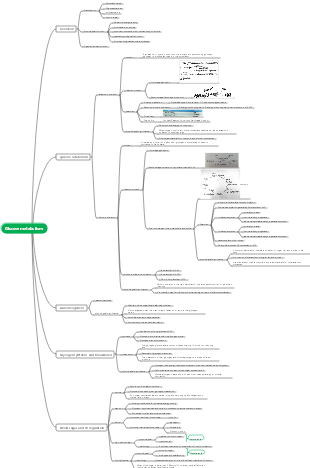
MindMap Gallery Biochemistry Chapter 5 Sugar Metabolism Mind Map
Biochemistry Chapter 5 Sugar Metabolism Mind Map, with detailed introduction and comprehensive description, I hope it can be helpful to interested friends.
Edited at 2023-12-02 09:38:35This is a mind map about bacteria, and its main contents include: overview, morphology, types, structure, reproduction, distribution, application, and expansion. The summary is comprehensive and meticulous, suitable as review materials.

This is a mind map about plant asexual reproduction, and its main contents include: concept, spore reproduction, vegetative reproduction, tissue culture, and buds. The summary is comprehensive and meticulous, suitable as review materials.
This is a mind map about the reproductive development of animals, and its main contents include: insects, frogs, birds, sexual reproduction, and asexual reproduction. The summary is comprehensive and meticulous, suitable as review materials.
This is a mind map about bacteria, and its main contents include: overview, morphology, types, structure, reproduction, distribution, application, and expansion. The summary is comprehensive and meticulous, suitable as review materials.
This is a mind map about plant asexual reproduction, and its main contents include: concept, spore reproduction, vegetative reproduction, tissue culture, and buds. The summary is comprehensive and meticulous, suitable as review materials.
This is a mind map about the reproductive development of animals, and its main contents include: insects, frogs, birds, sexual reproduction, and asexual reproduction. The summary is comprehensive and meticulous, suitable as review materials.
Glucose metabolism
break down
anaerobic oxidation
In the cytoplasm
Glycolysis
key enzyme
Phosphofructokinase-1
Most important for regulating glycolysis rate
allosteric adjustment
inhibition
ATP
Inhibits key enzymes except hexokinase
citric acid
activation
AMP
ADP
Fructose 1,6-bisphosphate
Rare product promotion, positive feedback
Fructose 2,6-bisphosphate
Strongest allosteric activator
Hormone regulation
inhibition
glucagon
pyruvate kinase
allosteric adjustment
inhibition
ATP
Alanine (intrahepatic)
activation
Fructose 1,6-bisphosphate
chemical regulation
inhibition
Protein kinase A, Cα-dependent, calmodulin protein kinase
Phosphorylation
glucagon
activated protein kinase A
hexokinase
allosteric adjustment
inhibition
Glucose-6-phosphate
Long chain fatty acyl-CoA
key step
Phosphorylation of glucose to form glucose-6-phosphate
hexokinase
Glucokinase
Liver (type IV)
High specificity
adjust
chemical regulation
activation
insulin
isoenzyme
Consume a share of ATP
Glucose-6-phosphate is converted into fructose-6-phosphate
hexose isomerase
non-energy-consuming heterogeneity
Mg participates in reversible reactions
Phosphorylation of fructose-6-phosphate to fructose 1,6-bisphosphate
Phosphofructokinase-1
Most important for regulating glycolysis rate
Consume a share of ATP
Fructose 1,6-bisphosphate is cleaved into two molecules of triose phosphate
aldolase
product
dihydroxyacetone phosphate
3-Phosphoglycerol
Split: cut off at the waist, split into two
Oxidation of 3-glyceraldehyde phosphate to 1,3-bisphosphoglyceric acid
Glyceraldehyde 3-phosphate dehydrogenase
cofactor
NAD+
Generate NADH H
for lactic acid cycle
Substrate-level phosphorylation of 1,3-bisphosphoglycerate into 3-phosphoglycerate
phosphoglycerate kinase
Generate ATP
Substrate-level phosphorylation of phosphoenolpyruvate to pyruvate
pyruvate kinase
Generate ATP
important intermediate products
dihydroxyacetone phosphate
Convert to alpha-glycerol phosphate
Linking Glucose Metabolism and Fat Metabolism
Two phosphorylation consumes 2ATP
Two substrate-level phosphorylation generates 4ATP
One dehydrogenation produces 2 (NADH H)
Net production of 2ATP, 2NADH
Lactofermentation
Pyruvate is reduced to lactic acid
lactate dehydrogenase
cofactor
NAD+
Consume NADH
dehydrogenation from glycolysis
physiological significance
Rapid function under anaerobic conditions
muscle contraction
People come to the plateau
Certain cells obtain energy under normal oxygen supply
red blood cells without mitochondria
metabolically active cells
Retina, nerves, renal medulla, gastrointestinal tract, skin, etc.
In some cases, the body obtains energy
Preparatory stage for aerobic oxidation of sugar, most of the reverse process of gluconeogenesis
Aerobic oxidation
key enzyme
Glycolysis
Phosphofructokinase-1
pyruvate kinase
hexokinase
Anaerobic oxidative glycolysis
Oxidative decarboxylation of pyruvate to acetyl-CoA
pyruvate dehydrogenase complex
allosteric adjustment
inhibition
ATP
Acetyl CoA NADH
activation
AMP
Coenzyme A NAD
chemical modification
inhibition
Phosphorylation
activation
dephosphorylation
Ca
tricarboxylic acid cycle
isocitrate dehydrogenase
allosteric adjustment
inhibition
ATP
activation
ADP
chemical modification
activation
Ca
Alpha-ketoglutarate dehydrogenase complex
allosteric adjustment
inhibition
Succinyl CoA
chemical modification
activation
Ca
citrate synthase
allosteric adjustment
inhibition
citric acid
NADH
ATP
activation
Acetyl-CoA, oxaloacetate
ADP
key step
Glycolysis
cytoplasm
Two phosphorylation consumes 2ATP
Two substrate-level phosphorylation generates 4ATP
One dehydrogenation produces 2 (NADH H)
Net production of 2ATP, 2NADH
Oxidative decarboxylation of pyruvate to acetyl-CoA
Mitochondria
pyruvate dehydrogenase complex
cofactor
FAD, NAD, CoA, lipoic acid, thiamine pyrophosphate
Generate 2NADH H
citric acid cycle
Mitochondria
Acetyl CoA Oxaloacetate – Citric Acid
citrate synthase
Oxidative decarboxylation of isocitrate - α-ketoglutarate
isocitrate dehydrogenase
cofactor
NAD
CO2 produced (NADH H)
Oxidative decarboxylation of α-ketoglutarate – succinyl-CoA
Alpha-ketoglutarate dehydrogenase complex
cofactor
NAD
CO2 produced (NADH H)
Two oxidative decarboxylation
Succinyl-CoA substrate level phosphorylation - succinate
succinyl-CoA synthetase
Generate ATP or GTP
Dehydrogenation of succinic acid - fumaric acid
succinate dehydrogenase
The only enzyme in the Krebs cycle that binds to the inner membrane
cofactor
FAD
Generate FADH2
Oxidized via the electron transport chain
Generate 1.5 molecules of ATP
Malate dehydrogenation - oxaloacetate
malate dehydrogenase
cofactor
NAD
Four dehydrogenations (3NADH, 1FADH2) Two decarboxylation (2CO2) One substrate level phosphorylation (GTP/ATP)
ATP
Glycolysis
2ATP
2NADH
3ATP
5ATP
Cytoplasm-mitochondria
Oxidative decarboxylation of pyruvate to acetyl-CoA
2NADH
5ATP
citric acid cycle
2ATP
6NADH
15ATP
2FADH2
3ATP
One molecule of glucose - 30/32ATP
pentose phosphate pathway
cytoplasm
key enzyme
Glucose-6-phosphate dehydrogenase
allosteric inhibition
NADPH
key step
Oxidation
Glucose-6-phosphate dehydrogenation - 6-phosphogluconolactone
Glucose-6-phosphate dehydrogenase
Generate NADPH
Oxidative decarboxylation of 6-phosphogluconate to ribulose-5-phosphate
Generate NADPH and CO2
Generate 2NADPH 1ribose-5-phosphate 1CO2
group transfer
Pentose 3-phosphate - 2-fructose-6-phosphate and glyceraldehyde 3-phosphate
generate hexose phosphate triose phosphate
store
glycogen
liver muscle Cytoplasm
Glycogen synthesis
key enzyme
glycogen synthase
chemical modification
inhibition
Phosphorylation
allotype
activation
Glucose-6-phosphate
glycogenolysis
key enzyme
glycogen phosphorylase
chemical modification
activation
Phosphorylation
synthesis
gluconeogenesis
key enzyme
pyruvate carboxylase
allotype
activation
Acetyl CoA
phosphoenolpyruvate kinase
Promote
glucagon
inhibition
insulin
Fructose diphosphate kinase-1
Glucose-6-phosphatase
key step
Pyruvate - oxaloacetate
Mitochondria
pyruvate carboxylase
Consumption of ATP and CO2
Oxaloacetate exits mitochondria
Transported via malate
There is transport of NADH from mitochondria to cytoplasm
Transport via aspartate
Oxaloacetate - phosphoenolpyruvate
phosphoenolpyruvate kinase
GTP consumption, CO2 production
Fructose-1,6-bisphosphate - Fructose-6-phosphate
Fructose diphosphate kinase-1
Glucose-6 Phosphate – Glucose
Glucose-6-phosphatase
cytoplasm
substrate cycle
Fructose-1,6-bisphosphate - Fructose-6-phosphate
Fructose-2,6-bisphosphate, AMP
Phosphoenolpyruvate - Pyruvate
Fructose-1,6-bisphosphate, Acetyl-CoA
interconnected Fructose-1,6-bisphosphate hormone
lactic acid cycle
between muscles and liver
physiological significance
Maintain blood sugar stability
liver glycogen stores
Kidney gluconeogenesis – maintaining acid-base balance
Better to be different than same Tiger and tiger make peace Fight the tiger together Two tigers and one capable
tricarboxylic acid cycle
Do not generate ATP when KCN is present
Glutamic acid, alanine
2,3-bisphosphoglycerate bypass
Regulates the oxygen-carrying capacity of hemoglobin
Pyruvate
Generating pathway
consumption route
Phosphofructokinase-1
allosteric activator
AMP, ADP, fructose-1,6-bisphosphate and fructose-2,6-bisphosphate
"Enzymes" in sugar metabolism
Reversible with "glycerin"
With "pyruvic acid" irreversible
substrate level phosphorylation
hexokinase
activate glucose to participate in the reaction
alpha-amylase
glycogen
synthesis
hormone
Promote
insulin
subtopic
allotype
activation
Glucose-6-phosphate
break down
liver glycogen
hormone
Promote
glucagon
allotype
inhibition
glucose
muscle glycogen
hormone
Promote
Adrenaline
allotype
activation
AMP
inhibition
ATP
Glucose-6-phosphate
subcellular unit
focus
dehydrogenase coenzyme
NAD
Glyceraldehyde 3-phosphate dehydrogenase
lactate dehydrogenase
isocitrate dehydrogenase
malate dehydrogenase
pyruvate dehydrogenase complex
FAD
succinate dehydrogenase
pyruvate dehydrogenase complex
NADP
Glucose-6-phosphate dehydrogenase
ATP changes
starting material, final product
Key enzymes and their regulation
allosteric adjustment
reactant, substrate, activation
product, inhibition
The only exception is that fructose-1,6-bisphosphate allosterically activates phosphofructokinase-1
chemical regulation
Phosphorylation-inhibition of enzymes involved in lowering blood sugar
no rules, memory
dehydrogenation step, oxidation step
substrate level phosphorylation