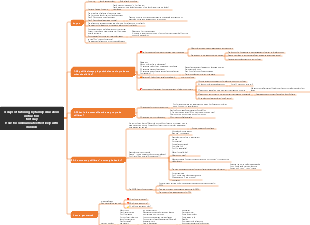
MindMap Gallery Effective communication and business negotiation mind map
Effective communication and business negotiation mind map, including the definition of communication, elements of efficient communication, negotiation overview, etc. I hope it will be helpful to you!
Edited at 2023-11-26 23:44:06This is a mind map about bacteria, and its main contents include: overview, morphology, types, structure, reproduction, distribution, application, and expansion. The summary is comprehensive and meticulous, suitable as review materials.

This is a mind map about plant asexual reproduction, and its main contents include: concept, spore reproduction, vegetative reproduction, tissue culture, and buds. The summary is comprehensive and meticulous, suitable as review materials.
This is a mind map about the reproductive development of animals, and its main contents include: insects, frogs, birds, sexual reproduction, and asexual reproduction. The summary is comprehensive and meticulous, suitable as review materials.
This is a mind map about bacteria, and its main contents include: overview, morphology, types, structure, reproduction, distribution, application, and expansion. The summary is comprehensive and meticulous, suitable as review materials.
This is a mind map about plant asexual reproduction, and its main contents include: concept, spore reproduction, vegetative reproduction, tissue culture, and buds. The summary is comprehensive and meticulous, suitable as review materials.
This is a mind map about the reproductive development of animals, and its main contents include: insects, frogs, birds, sexual reproduction, and asexual reproduction. The summary is comprehensive and meticulous, suitable as review materials.
Effective communication and business negotiation
communication definition
Communication definition: It is the process of transmitting a certain information or meaning to an object or object, in order to obtain the corresponding effect from the object;
The 5C principles of communication: clear (pronunciation and articulation); concise (expressed content), accurate (information), complete (information materials), constructive (ideas);
Communicate with leaders: understand the leader’s intentions, repeat what the leader said, and add your own meaning;
Methods for coordinating work: Why do we do it? How to make it? Who is responsible? Implementation and completion time? Where is it done? In what way is it done?
Elements of effective communication
interactivity
Downward communication mode: handing over tasks, asking subordinates to repeat them, asking the other party to make suggestions, giving methodological guidance, Require periodic reporting of time and nodes, summary and reflection
Horizontal communication model: Confirm the task objectives, ask the other party for confirmation, and ask the other party for suggestions on how to do it. Provide willing and extraordinary suggestions, require periodic communication and control nodes, and summarize and reflect on the review.
Upward communication mode with leaders: listen to leadership requirements, confirm task goals, put forward suggestions for practice, Request phased guidance and overall reports on control nodes and task completion;
mediality
For example, using prompts, as long as three customers ask the same question, the prompts should be adjusted;
expectancy
Why should this be done, and the benefits to the other party;
Purpose
How do you respond to employees who want a raise? What can you do for the company; How to communicate when a subordinate resigns? What are your plans for the future?
Negotiation Overview
Overview of Negotiation: The behavior and process in which people strive to reach consensus through negotiation in order to coordinate their relationships and meet their respective needs. Or when people negotiate an agreement in order to reach agreement, they are negotiating.
Why others should cooperate with you and listen to you:
Why would you let others make your money? In the game of money, demand is still a product, it must be demand;
Three-dimensional demand analysis of employees and enterprises
Problem-solving needs: salary, benefits, security, training, promotion;
Solve emotional needs: listen, understand, understand, care; what is a friend? Someone who talks nonsense with you when you have nothing to do;
Needs for maintaining relationships: long-term employment, company strength and stability, competence, trust; Why do others want to maintain relationships with you? Let others see and believe that you have long-term value;
Modern employee needs: physiological needs, safety needs, social affinity needs, self-esteem needs, self-actualization needs;
Characteristics of a master at communication and negotiation
Experienced: well prepared, clear goals, listening and understanding each other, actively looking for solutions to problems, considering everything carefully, Committed to reachable agreements; low factual failure rate;
Different identities have different concerns: spend your own money to do your own things (cost-effectiveness); spend your own money to do other people's things (price); Spend other people's money to do your own things (quality); spend other people's money to do other people's things (personal benefits);
What is the other party’s concern in the game: employees, managers, trade unions, government officials, agents? Dealing with different objects requires different methods;
Whoever raises the price first: pre-emptively. Those with information advantages or monopoly status can strike first; Take a step later: If you do not have information advantage or monopoly position, make a price later to gain strategic advantage;
Counteroffer strategy, sandwich method: If you want to negotiate, be shameless, cut it off on the spot, and ask for more than you think;
When the other person asks for a favor from you, you should automatically ask for something in return: counter-ask for it. It really pays off; it increases the value of concessions and lays a solid foundation for future exchanges; it can stop the other party from constantly making demands;
Negotiation is not mainly about talking, the most important thing is to understand his role, what he wants, and his budget;
Note: Cooperation, not confrontation
Correct understanding: If the other person has a different opinion, it is not disrespectful to you; Sometimes the other person asks questions just to show off that they know more; The goal is never to prove that we are smarter than others; There is no gain in proving the other party wrong; If the other party feels hurt, they will take every opportunity to defend and fight for themselves; Everyone hopes to be recognized by others; Patience and logic can wear away objections;
Artistic expression of high emotional intelligence communication: Organization, judging the needs of the people in the villa; deciding what effect you want to achieve; planning the content of the conversation; Express, introduce topics; express and support opinions; talk about the needs of others; Check, check the other person’s reaction;
life is exchange
Message sending skills: time, place, form
Use analogies and learn to tell stories; you can shock the enemy without exposing them and losing face; Talk about a social phenomenon and talk about needs on the side;
Three give-and-takes in communication and negotiation: Let the other party listen (timing, occasion, atmosphere); Make the other party listen reasonably (first tell the other party what is beneficial, then point out mutually beneficial aspects, and finally make demands); Make the other party happy to listen (how to tell the other party that they like it? How to make the other party feel relaxed? Which part is easier to accept);
Summary: Communication and Negotiation Thinking Checklist;
Negotiation strategy structure analysis (Six requirements of knowing and knowing the other)
Negotiation strategy steps: Collect and organize the other party's information; evaluate the strengths and weaknesses of both parties, and predict the other party's acceptance area and initial position; Determine negotiation goals; Analyze the nature of negotiations and analyze the negotiation environment;
Analyze yourself: Know what you really need; Know why you need it; Know what the desired outcome is; Know what results you are striving for; Know what you value most; Know what you can’t accept the most; Know what your bottom line is;
Know what your bottom line is
Consider the priority of goals in advance: (Think clearly and know how to make judgments) Arrange goals in order of "most important" and "least important"; Distinguish goals between "issues of principle" and "issues that can be used to make concessions"; Infer the priority of the opponent's goals; Think about where you can give in; What is non-negotiable;
The most rare thing for successful people is to give up
Analyze the opponent: Consider the need, why? Participate in decision-making; Decision-making process and time frame; competitive situation; feasibility analysis tools;
Analyze and measure feasibility
Analyzing the opponent often makes mistakes Improper collection of information; Hypothetical information
Establish negotiation principles: Goal oriented; The strategy must be pragmatic; Consider the identity of the other party; Consider the other party’s possible priorities; Don’t just talk about yourself but influence the other person;
Don’t just talk about yourself, try to influence the other person, not fight against them. Trust is very important during the negotiation process.
Game elements and priorities: Things to discuss include price, quantity, quality, delivery, delivery, discounts, training, after-sales service, and others; List the issues you want to negotiate this time; Arrange the questions in order of "most important" and "least important"; Distinguish issues into "issues of principle" and "issues that can be used as conditions for concessions"; Infer the priority of the other party’s issues; Decide where to give in; What are the non-negotiable issues;
Slowly nibbling away
Consider possible options: An experienced negotiator has a broader mind and considers more solutions to problems than an average negotiator; As each option is considered, more data is collected; the range of possible solutions to each problem; Try to consider and explore various solutions from the other party's perspective; What are you prepared to pay for different solutions that you don’t have?
Multiple plans
Wrapping up the toolbox: What are the main issues in developing a strategy?
Three metrics for any negotiation approach: It should be a sensible agreement; It should be efficient; It should improve (or at least not harm) the relationship between the two parties;
influence the outcome of negotiations three pressure points
The power of information, intelligence and consultation: Rules for collecting information: Don’t be too confident; don’t be afraid to ask questions; the place where you ask has a big impact, and people will be very cautious in the work environment. It’s easier to talk a lot outside of the work environment. You can stay away from the work environment; ask about the companies the other person has worked for in the past; ask about the groups or social circles the other person participates in;
The power of leaving, creating a deadlock:
Overall plan, steps, time pressure: Time pressure: Under time pressure, people will be more flexible; don’t let the other party know that you are under time pressure; more than 80% of the concessions in negotiations are at the end of the negotiation Achieved in one-fifth of the time; the longer the negotiation takes, the easier it is to make progress; be patient and don’t compromise on the time spent; To counterattack, explain all the details clearly in advance. When the other party tells you that we will discuss this issue later, you must be alert;
Key points of the game: anchoring effect Negotiation is not just about price, but also about influencing the other party’s expectations; Always work around the other person’s “wants and fears”; Before and during negotiations, try to influence the other party’s feelings; Understand the target time and overall plan before negotiating; Influence and control the other party's time and overall plan during negotiations; After negotiation, cooperate with the other party’s time and overall plan;
Factors in communication, persuasion, and negotiation
Expectation management: both parties are satisfied with the exchange achieved;
Master: Influence the other party’s expectations: Recruitment negotiations: Attract with high standards; Use low standards for control; give some surprises in life; Use some methods to influence the other party’s expectations; negotiate and make up stories; Mid-hand: Meet the opponent’s expectations; Low hand: Completely disclose information to the other party and be influenced by the other party;
Before negotiation: influence the other party’s expectations; During negotiation: meet the other party’s expectations; After negotiation: exceed the other party’s expectations;
Negotiation persuasion: Be persuaded by the logic of the other party’s arguments;
Learn to analyze the other person: what he thinks and what he is afraid of;
Observable, controllable, solidified work (cleaning): fixed salary Workload changes, scalability (production line): piece rate Effort required, elasticity (sales): bonus Bring the other party into the company's growth (manager): stocks, joint stock, partners Work now may impact the future (R&D): Options
Ways to create feelings: Feeling that you can’t get better results if you persist;
Boss of Hangzhou Luohu Commercial City: Performance, first step tool, collecting information; The second step is to leave. Leave when there is no one around. Don’t walk too fast and don’t buy everything; The third step is to create a deadlock and find a balancing price; Numbers game: don’t settle for a fixed price, as there is still more to learn; decimal point; How many steps should be made: the four most perfect steps, the concession must be smaller and smaller, and the prerequisite must be to control the target base
How to give way: The first step, the big step, 50%; The second step is to show sincerity, 30%; Step 3: Decimal point: 12 yuan 5; Step 4: Remove the zeros and make up an auspicious number;
How to bargain: Expensive, still expensive (your conditions are not good enough!) How much is not expensive? (What conditions are considered good?) Anyway, I think it’s expensive! Do you have any gifts? (After negotiating the price, discuss the items or gifts) Whoever raises the price first will be unlucky; the best way to buy is not to buy; the best way to sell is not to sell;
Restricted and uncontrollable factors: Having to reach an agreement due to factors beyond our control, such as time, overall plan, etc.;
Somali kidnapping cases: Kidnapped and extorted 1 million on Tuesday; Fridays saw the most kidnappings; Gangsters kidnap for weekend fun; Wednesday held firm; Ask you on Thursday how much you can pay; Pay 3724 yuan on Friday night Use the most critical time or moment to get the best results;