MindMap Gallery Human Resource Management Chapter 12 Wage and Employment Theory
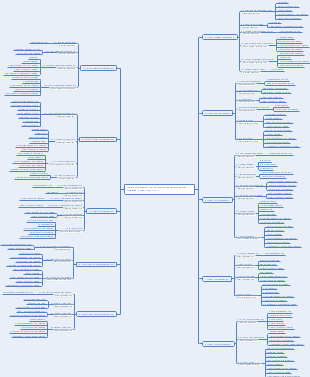
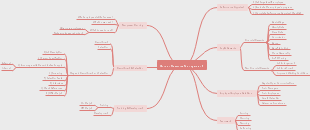
This is a mind map about Chapter 12 of "Human Resource Management": Wage and Employment Theory. It has a detailed introduction and comprehensive description. I hope it can help interested friends learn.
Edited at 2023-11-19 19:20:20This is a mind map about bacteria, and its main contents include: overview, morphology, types, structure, reproduction, distribution, application, and expansion. The summary is comprehensive and meticulous, suitable as review materials.
This is a mind map about plant asexual reproduction, and its main contents include: concept, spore reproduction, vegetative reproduction, tissue culture, and buds. The summary is comprehensive and meticulous, suitable as review materials.
This is a mind map about the reproductive development of animals, and its main contents include: insects, frogs, birds, sexual reproduction, and asexual reproduction. The summary is comprehensive and meticulous, suitable as review materials.
This is a mind map about bacteria, and its main contents include: overview, morphology, types, structure, reproduction, distribution, application, and expansion. The summary is comprehensive and meticulous, suitable as review materials.
This is a mind map about plant asexual reproduction, and its main contents include: concept, spore reproduction, vegetative reproduction, tissue culture, and buds. The summary is comprehensive and meticulous, suitable as review materials.
This is a mind map about the reproductive development of animals, and its main contents include: insects, frogs, birds, sexual reproduction, and asexual reproduction. The summary is comprehensive and meticulous, suitable as review materials.
"human resource Management" Chapter 12: Wage and Employment Theory
Section 1: Wage levels and wage differences
1. Salary level
1. Monetary wages and real wages
①Money wages
Also known as nominal wages, monetary remuneration paid to employees, such as a monthly salary of 8,000 yuan
②Actual salary
The purchasing power of money wages, the amount of goods and services that can be purchased
Real wages = money wages/price index
In reality, the monetary wage level is always higher than the actual wage level
③Labourers’ decisions are made based on changes in actual wages, not monetary wages.
2. Actual factors in determining wage levels
①The upper and lower limits of salary levels
The urgency of employer’s need for labor
The urgency of workers to meet their daily needs
The balance of power between the negotiating parties
② Factors affecting the determination of salary levels
Living expenses of workers (individual and family)
Equal pay for equal work
Completion of work of equal value should result in the same salary
obstacle
Between departments with different profit levels or wage payment capabilities
There are mobility barriers, departments with staff shortages and departments with excess staff
Enterprise salary payment ability
3. The relationship between wage levels, productivity and enterprise size
①The relationship between wage levels and productivity
②The relationship between wage level and enterprise size
Large companies have more special training opportunities than small companies, which is conducive to training employees and establishing long-term employment relationships with the company.
High wages can be seen as a compensating wage difference: under strict requirements, if the attractiveness is less attractive, some compensation needs to be provided
Large companies can provide employees with multiple levels of promotion opportunities in the career "job ladder"
In larger companies, the cost of job vacancies is high
2. Wage difference
1. Definition of the concept of wage difference
①Concept: The difference in salary levels among various types of personnel
②Essential reasons: Quality and skills cannot be exactly the same, differences in working conditions cannot be eliminated, and wage differences cannot be eliminated.
③ Differences have a positive impact on the allocation of resources: reallocate resources and encourage workers to move from low-productivity jobs, enterprises, industries or industrial sectors, occupations and even countries to high-productivity places.
2. Reasons for wage differences between different industrial sectors
①Proportion of skilled labor force
The greater the proportion, the higher the overall wage level; the greater the proportion of unskilled workers, the lower the overall wage level.
The wages of workers in the construction industry are relatively high: because there is a large proportion of skilled workers (electricians, carpenters, bricklayers, plumbers, etc.), the wages of these jobs are high, so the average wage level of the entire industry is also high.
Retail pay is lower: the reason is that most employees are unskilled
②Technical and economic characteristics
Industrial sectors that are large in scale and have a high proportion of capital investment per capita also have higher per capita wages: such as the financial industry and investment banking
Industries with low capital investment requirements, low entry barriers, and competitive market structures have a large proportion of labor costs and generally belong to low-wage industrial sectors, such as clothing processing factories, textiles, and leather product production industries, etc.
③Development stage
During the boom period, wages were high
During recession, wage growth is difficult
In sectors where production is booming, favorable economic conditions will keep wages above the overall average
In sectors with poor production, wages are lower than the overall average.
Sooner or later it will tend to a similar level
④ Degree of unionization
⑤Geographical location
3. Reasons for wage differences between different occupations
①Five factors (Adam Smith)
Differences in labor intensity and working conditions
The difference between pleasure and unpleasantness
There are differences in the difficulty of professional abilities
There are different levels of social security, i.e. job security and career stability.
Differences in the degree of responsibility required of practitioners
②Modern economists’ research on wage differences between occupations
compensatory wage differential
There is no essential difference in knowledge and technology. Wage differences arise due to differences in working conditions and social environment.
Competitive wage differential (skill wage differential)
Noncompensatory wage differences are the most important type of competitive wage differences.
due to qualitative differences in the labor power of different workers
Monopoly wage differential (non-compensatory wage differential)
Income differences caused by unnatural monopoly
such as government policy
Income differences caused by natural monopoly
If the income of celebrities is greater than the income of ordinary workers
Section 2: Employment and Unemployment
1. Unemployment rate statistics and the stock-flow model of the labor market
1. Total population = employed population, unemployed population, non-labor force population
2. Unemployment rate = number of unemployed ÷ number of labor force × 100% = number of unemployed ÷ (number of unemployed + number of employed) × 100%
3. The meaning of the unemployment rate: it reflects the situation that the majority of people over a certain age want to work but are unable to achieve employment. Statistics are often completed at a certain point in time.
4. There are three pairs of flows with opposite directions among the three stocks of employed people, unemployed people and non-labor force.
5. Long-term unemployment rate
Concept: The proportion of unemployed people who have been unemployed for one year or more in the total labor force population
Reflects the severity of the unemployment problem in a country or region
2. Types of undertakings, their causes and countermeasures
1. Frictional unemployment
Temporary fluctuations in demand that cause workers to temporarily lose their jobs
Reasons: The dynamic nature of the labor market and imperfect information (workers do not know that there are recruitments)
Nature: a normal form of unemployment, a natural feature of a competitive labor market
Countermeasures: Strengthen labor market intelligence work, speed up information transmission, increase diffusion scope, and clear information channels.
2. Structural unemployment
Technological unemployment: Unemployment caused by the difference or misalignment between enterprises' needs for technology and labor. It is usually caused by changes in production technology. Unemployment caused by the adoption of new labor-saving technologies in production, geographical location (the vacant positions are not in the place where the unemployed are) The area where you live) will also cause structural unemployment.
Nature: a normal unemployment
Features:
Caused by incompatible skills and incoordination with regional structures
The reason is that unemployed workers cannot afford the cost of learning skills or moving to a new area, or the process is too long and they cannot master the required skills in the short term.
Factors that determine the severity of structural unemployment
How quickly the demand for labor changes
Can labor supply adapt to changes in demand?
Technology substitution flexibility
How quickly you learn another skill or occupation
differences in geography
Countermeasures
Strengthen labor market intelligence efforts
The government provides funds to transfer resettlement fees from areas with a surplus of labor to areas with a shortage.
Develop training plans to synchronize job knowledge updates with technological developments
Provide career guidance and supply and demand forecasts
3. Seasonal unemployment
Loss of jobs for regular workers due to seasonal changes
Causes
Demand in some industries fluctuates with seasonal changes, such as agriculture, tourism, construction, shipping, etc.
The demand for labor during the purchasing peak (peak season) and trough (off season) of some industries, such as the clothing industry, shoemaking industry, etc.
Nature: a normal unemployment
Countermeasures: The government strengthens forecasts, stipulates reasonable unemployment benefit periods, and reduces the living difficulties of seasonal workers.
An unavoidable lower level of unemployment in a competitive labor market is normal unemployment. It is also what economist Friedman calls the "natural unemployment rate." The unemployment rate when the labor market is in equilibrium is about 4% to 6% and does not affect the realization of full employment.
4. Cyclical unemployment
Concept: Unemployment caused by imbalances in supply and demand in the labor market caused by economic cycles or economic fluctuations
basic reasons
Insufficient total enterprise demand
Nature: Abnormal unemployment
Specifically the above