MindMap Gallery Human Resource Management Chapter 13 Human Capital Investment Theory
This is a mind map about the human capital investment theory in Chapter 13 of "Human Resources Management". It is full of useful information. Interested friends can refer to it!
Edited at 2023-11-19 19:22:33This is a mind map about bacteria, and its main contents include: overview, morphology, types, structure, reproduction, distribution, application, and expansion. The summary is comprehensive and meticulous, suitable as review materials.

This is a mind map about plant asexual reproduction, and its main contents include: concept, spore reproduction, vegetative reproduction, tissue culture, and buds. The summary is comprehensive and meticulous, suitable as review materials.
This is a mind map about the reproductive development of animals, and its main contents include: insects, frogs, birds, sexual reproduction, and asexual reproduction. The summary is comprehensive and meticulous, suitable as review materials.
This is a mind map about bacteria, and its main contents include: overview, morphology, types, structure, reproduction, distribution, application, and expansion. The summary is comprehensive and meticulous, suitable as review materials.
This is a mind map about plant asexual reproduction, and its main contents include: concept, spore reproduction, vegetative reproduction, tissue culture, and buds. The summary is comprehensive and meticulous, suitable as review materials.
This is a mind map about the reproductive development of animals, and its main contents include: insects, frogs, birds, sexual reproduction, and asexual reproduction. The summary is comprehensive and meticulous, suitable as review materials.
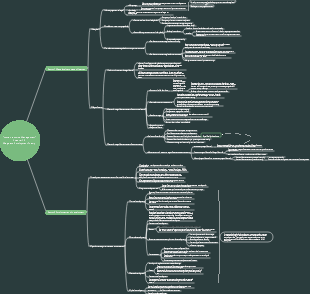
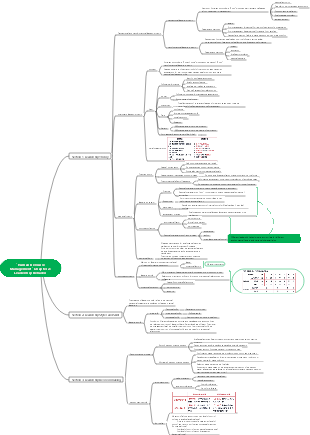
"Human Resource Management" Chapter 13 Human Capital Investment Theory
Section 2: Human Resource Investment and Higher Education
1. Basic model of higher education investment decision-making
1. Cost-benefit analysis framework for higher education investment
Going to college is fundamentally an economic decision that considers costs and benefits
Cost = direct cost, opportunity cost, psychological cost
Direct costs: tuition, books and school supplies
Opportunity cost: other income forgone by attending college
Psychological Cost: The Psychological Stress of Going to College
Benefit = Economic Benefit Psychological Benefit
2. Several basic inferences on higher education investment decisions
All other things being equal
The longer the incremental income stream after investment, the greater the likelihood of attending college
The lower the cost of going to college, the more people go to college.
The greater the wage gap between college graduates and high school graduates, the more people are willing to invest in college education.
The higher the discount rate (the extent to which the actual value is discounted), the less likely you are to give up immediate benefits and the less likely you are to go to college.
3. Decisions about the reasonable number of years to attend college
assumed:
Marginal returns are diminishing, and the marginal cost of investment in college education remains unchanged for each additional year.
in conclusion
For people with strong learning ability, the marginal cost of going to college is lower.
It is best for different people to choose universities with different years of study
When marginal benefits are constant, people with high marginal costs are willing to go to college for fewer years.
When the marginal cost is constant, those who gain higher marginal benefits from each additional year of college are more likely to attend college for a longer period of time.
2. Estimation of income from education investment and Signaling model of higher education
Social benefits of investment in education
The level of national income increases and social wealth increases, thereby improving the welfare level of the entire country and society.
Helps reduce unemployment, reduce unemployment benefit payments, prevent crime and enforce laws
Improve the quality and efficiency of policy decision-making processes
Impact on the health and education status of the next generation
Improve the moral level and credit level of the entire society and improve market efficiency
Estimate bias of private returns from investment in education
overestimation bias
Ability bias, overestimating the benefits a person can gain from investing in education
trough bias
The private benefits generated by education, especially higher education, have been reduced
It not only shows higher productivity, but also shows psychological benefits and non-monetary benefits.
Ignore consumption benefits
Welfare part
selection bias
Overestimating the benefits of not going to college and feeling like giving up going to college, and underestimating the actual benefits that college graduates get from going to college
Signaling model of higher education
About signals
Companies select people based on some signs or characteristics, including age, experience, and education, which are called signals
View
Higher education is a signal of high productivity
Using university diplomas as a selection tool is a good way for companies to simply and clearly predict with higher accuracy
Section 3: Human capital investment and on-the-job training
Costs and benefits of on-the-job training and its arrangements
Costs and benefits of on-the-job training
direct cost
Pay trainees’ salaries and teachers’ lecture fees
Pay for renting training venues and training equipment
The company’s teachers, venues, and equipment should also be included in the training costs
opportunity cost
It takes a certain amount of time for current employees to participate in training, and losses caused by leaving get off work early or taking leave
Unable to work at full capacity, causing certain losses to the company's production and work
Opportunity cost of using machines or experienced workers for training or
income
Mainly reflected in the improvement of trainee productivity
It takes a while to show up
General training and special training cost and benefit arrangements
Cost-bearing approach to general training
Employees bear the responsibility and the employees themselves benefit
It does not necessarily require direct payment, and may only enjoy a lower wage rate than without training.
Special training cost burden method
Enterprises and employees share costs
Enterprises and employees share the benefits (after training)
Section 4: Labor mobility
Inter-occupational mobility of labor
Foreign experience shows
There is a net inflow of workers in occupations with high incomes, and there is a net outflow of workers in occupations with incomes below the median level, except for the service industry. Because opportunities are easy to come by, the inflow rate exceeds the outflow rate.
The direction of labor force occupational mobility
According to level
Voluntary mobility: upward mobility
Involuntary mobility: upward or horizontal mobility will also be pursued, but there will be downward mobility.
Overall, upward mobility accounts for a large proportion of
Special forms of career mobility
Career transfers between family generations
Occupational differences are small and not obvious
The more decisive non-competitive forces are, the greater the irrational component of labor allocation will be.
Occupational differences are more obvious
The greater the impact of competition on career choice, the more rational the labor allocation will be.