MindMap Gallery General Psychology Chapter 1 Psychological Research Objects and Methods
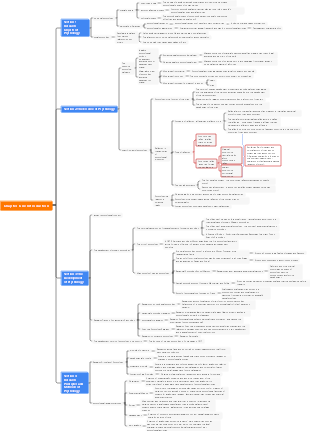
This is a mind map about Chapter 1 of General Psychology: Psychological Research Objects and Methods, including history, research objects, research methods, tasks, etc.
Edited at 2023-11-14 15:29:23This is a mind map about bacteria, and its main contents include: overview, morphology, types, structure, reproduction, distribution, application, and expansion. The summary is comprehensive and meticulous, suitable as review materials.

This is a mind map about plant asexual reproduction, and its main contents include: concept, spore reproduction, vegetative reproduction, tissue culture, and buds. The summary is comprehensive and meticulous, suitable as review materials.
This is a mind map about the reproductive development of animals, and its main contents include: insects, frogs, birds, sexual reproduction, and asexual reproduction. The summary is comprehensive and meticulous, suitable as review materials.
This is a mind map about bacteria, and its main contents include: overview, morphology, types, structure, reproduction, distribution, application, and expansion. The summary is comprehensive and meticulous, suitable as review materials.
This is a mind map about plant asexual reproduction, and its main contents include: concept, spore reproduction, vegetative reproduction, tissue culture, and buds. The summary is comprehensive and meticulous, suitable as review materials.
This is a mind map about the reproductive development of animals, and its main contents include: insects, frogs, birds, sexual reproduction, and asexual reproduction. The summary is comprehensive and meticulous, suitable as review materials.
Research objects and methods
history
The historical background of modern psychology (Aristotle's "On the Soul")
The influence of modern philosophy
Rationalism: Descartes in 17th-century France
Empiricism: Hobbes and Locke in 17th-century England
Effects of Experimental Physiology
Sources of Experimental Methods, Neurophysiology, Sensory Physiology
late 19th century psychology school
constructivist psychology
Characters: 1879, Wundt, Titchener Claim: Study consciousness and divide experience into three elements Focus: Emphasis on combining introspection and experimentation Contributions: Laboratory, Independent Science
functionalist psychology
Characters: James, Dewey, Angel Claim: Mainly studies consciousness, emphasizing the role and function of consciousness Consciousness allows organisms to adapt to their environment Contribution: Promoting the progress of American psychology in real life, especially in the field of education
behaviorist psychology
Character: Watson Claim: Anti-consciousness mainly acts, anti-introspection mainly experiments environmental determinism Disadvantages: too extreme, denying the internal structure and processes of psychology Contribution: Research methods promote psychology to embark on a scientific path
Gestalt Psychology
Characters: Wertheimer, Kohler, Koffka Claim: Against the elements, for the whole Contribution: Emphasis on experimental research, experimental research on perception, learning, and thinking
psychoanalytic school
Character: Freud Claim: Desire and motivation determinism Dream Study and Free Association The importance of libido in childhood Contribution: Emphasis on motivation and unconscious research
Contemporary psychology research trends
physiological psychology
The relationship between brain and mind, psychological immunology, genetic influence on behavior Brain imaging method, local excision method, chemical method, electrical stimulation, clinical method
Behaviorism
Characters: Around 1940, Skinner, Tolman Claim: Skinner's procedural learning system Proposed mediating variables between traditional stimuli and behavior Developed behavioral therapy and behavior improvement, promoted biofeedback technology
Psychoanalysis
Characters: Freud, Exxon, Erikson Standing: Caring about the development of children and youth Emphasis on the importance of awareness and self The importance of libido in youth
cognitive psychology
Character: In 1967, the American Neisser published "Cognitive Psychology", and the logo was born Claim: Human beings are cognitive information processors and use inner resources to interact with the environment. environment governs cognitive processes Cognitive neuroscience reveals brain mechanisms, neurobiological mechanisms Mainstream development of psychology in the 21st century
humanistic psychology and positive psychology
Character: Maslow Claim: Human nature is good, has free will, and has the need for self-actualization It is believed that individual measurements of people should be studied Lack of definition and clear research methods Positive psychology embraces empirical research methods
evolutionary psychology
1980s Claim: Emphasis on natural selection shaping behavior and influencing psychological evolution
The development of psychology in China
The development of ancient psychological thought: There were rich ideas in ancient times, but there were no monographs
Early dissemination: The dissemination of psychology originated from the late Ming Dynasty missionary Matthew's "The Record of the West" and Ai Julius's "Confirmation of Sexuality"
Modern development: 1949 enters a new era, with twists and turns
Task
basic tasks
process structure brain mechanism The occurrence and development of phenomena relationship with environment
Significance
Theory: Correctly describe and reveal human psychological phenomena, get rid of superstitions, and form a correct outlook on life and the world. Practice: Master the laws of psychological phenomena, predict and control psychological phenomena
field of study
universal heart Physiological Psychology and Psychophysiology Industrial Psychology military psychology social psychology educational psychology medical psychology developmental psychology
scientific status
intermediate science
Research methods
Objectivity: repeatability, falsifiability
Observation
Applicable conditions: ① Unable to control the research subjects ② Control will affect a certain behavior ③ Social moral restrictions, uncontrollable Advantages: ① Directly obtain first-hand information ② Under natural conditions, the subjects are not aware, and the results are more realistic Disadvantages: ① It is difficult to repeat experiments to verify the results ② It is easy to observe redundant phenomena ③ Under natural conditions, there are too many causes of phenomena, making it difficult to accurately analyze ④ It is easily affected by the consciousness of the observer
test method
Method: Standardized scales measure certain psychological qualities Requirements: Test reliability and validity Conduct in-depth research on psychological qualities in advance and make the scale scientific and rigorous
Relevant law
Method: Correlation coefficient Disadvantages: Cannot provide cause and effect
Experimental Method
laboratory experiment method, natural experiment method able to reveal cause-and-effect relationships Double-blind control reduces subjective effects on participants
case approach
For individual studies, generalization of results must be rigorous Often used to propose theories and hypotheses that rely on other methods for testing
ethics
Research object
Individual psychology (psychological phenomena possessed by individuals)
Cognition: receiving external information and transforming it into internal psychological activities through nervous system processing, which controls human behavior, including feeling, perception, memory, thinking, language, etc. Motivation and emotion: the internal motivation that drives a person's activities and toward a certain goal When people come into contact with something, in addition to understanding its attributes, characteristics and relationships, they will also develop an attitude towards it. Ability and personality: The stable and frequently occurring psychological characteristics are called personality psychology, including ability and personality.
Behavior
Definition: An organism's reaction system, which consists of a series of reaction actions and activities
Produced under the influence of stimuli (internal and external factors)
Psychology as a mediator of stimulus-induced behavior
Psychology controls behavior and is expressed through behavior
Psychology is the science that studies behavior and psychological processes. It reveals human psychological processes through objective recording, analysis, and measurement of behavior.
consciousness and unconsciousness
Consciousness: a rich and stable inner world composed of human cognition, emotions, emotions, desires, etc.
Self-awareness: People can not only be aware of external things, but also be aware of their own psychological activities Self-awareness only appears when an individual develops to a certain stage
Attention: Attention is the direction and concentration of consciousness on activities
Unconscious: A psychological phenomenon that people cannot detect, regulate and control independently under normal circumstances.
Individual Psychology and Social Psychology
People are members of society, live in social groups, establish social relationships, Social psychology and individual psychology are the relationship between commonality and personality