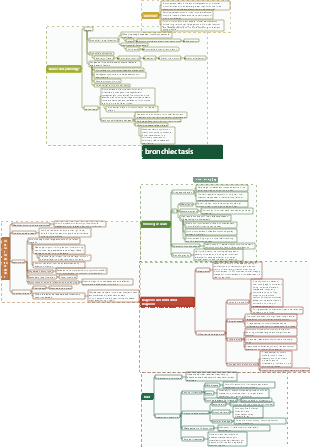
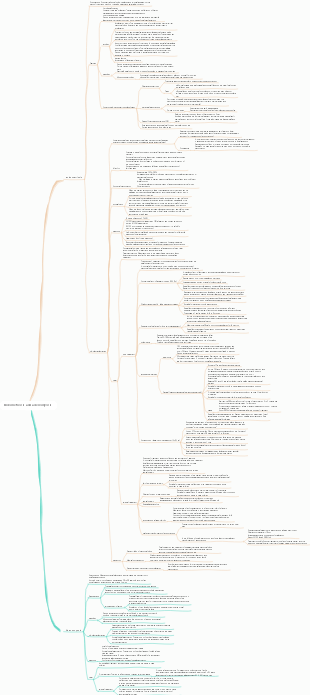
MindMap Gallery Obstetrics and Gynecology – Endometriosis and Adenomyosis
This article mainly introduces the related concepts, etiology and pathology, clinical manifestations, diagnosis and differential diagnosis and treatment methods of endometriosis and adenomyosis. Can be used for professional review reference.
Edited at 2023-07-28 11:08:06This is a mind map about bacteria, and its main contents include: overview, morphology, types, structure, reproduction, distribution, application, and expansion. The summary is comprehensive and meticulous, suitable as review materials.

This is a mind map about plant asexual reproduction, and its main contents include: concept, spore reproduction, vegetative reproduction, tissue culture, and buds. The summary is comprehensive and meticulous, suitable as review materials.
This is a mind map about the reproductive development of animals, and its main contents include: insects, frogs, birds, sexual reproduction, and asexual reproduction. The summary is comprehensive and meticulous, suitable as review materials.
This is a mind map about bacteria, and its main contents include: overview, morphology, types, structure, reproduction, distribution, application, and expansion. The summary is comprehensive and meticulous, suitable as review materials.
This is a mind map about plant asexual reproduction, and its main contents include: concept, spore reproduction, vegetative reproduction, tissue culture, and buds. The summary is comprehensive and meticulous, suitable as review materials.
This is a mind map about the reproductive development of animals, and its main contents include: insects, frogs, birds, sexual reproduction, and asexual reproduction. The summary is comprehensive and meticulous, suitable as review materials.
Obstetrics and Gynecology review reference summary
Adenomyosis
Concepts and causes
concept
When endometrial glands and stroma invade the myometrium, it is called adenomyosis
It mostly occurs in multiparous women aged 30 to 50 years old. About 15% are also complicated by endometriosis, and about half are complicated by uterine fibroids.
Cause
Multiple pregnancies and childbirths, induced abortions, chronic endometritis, etc. cause damage to the basal layer of the endometrium. Closely related to the onset of adenomyosis
pathology
Ectopic endometrium usually grows diffusely in the myometrium, mostly involving the posterior wall, so the uterus enlarges uniformly.
The microscopic feature is that there are islands of ectopic endometrial glands and stroma distributed in the myometrium. The characteristic islands are composed of typical endometrial glands and stroma, and are immature endometrium. Basal lining, changes responsive to estrogen but unresponsive or insensitive to progesterone
clinical manifestations
The main symptoms are excessive menstrual flow, prolonged menstrual period and gradually worsening progressive dysmenorrhea. The pain is located in the middle of the lower abdomen, often starting one week before menstruation and continuing until the end of menstruation.
Gynecological examination shows that the uterus is uniformly enlarged or has localized nodules and bulges, is hard and tender, and the tenderness is even worse during menstruation.
diagnosis
A preliminary diagnosis can be made based on the typical history of progressive dysmenorrhea and menorrhagia, and gynecological examination of the uterus, which is uniformly enlarged or locally bulging, hard and tender.
Imaging examination is helpful to some extent and can be selected as appropriate. The confirmed diagnosis depends on the postoperative pathological examination.
treat
It depends on the patient’s symptoms, age and fertility requirements. There is currently no effective and curative drug.
For patients with mild symptoms, fertility requirements and near-menopausal patients, danazol, gestrinone, GnRH-a or levonorgestrel intrauterine sustained-release system (LNG-IUS) can be tried, all of which can relieve symptoms. But you need to pay attention to the side effects of drugs
Patients with uterine adenomyoma who are young or who want to have children can try lesion resection, but there is a risk of recurrence after surgery.
Total hysterectomy should be performed for those with severe symptoms, no desire to have children, or those who are ineffective in drug treatment.
Whether to preserve the ovaries depends on whether there is any disease in the ovaries and the age of the patient
endometriosis
Concepts and causes
concept
When endometrial tissue (glands and stroma) appears outside the body of the uterus, it is called endometriosis (EMT), or endometriosis for short.
Cause
The source of ectopic endometrium has not yet been clarified. Currently, there are three main theories about the source of endometriosis:
planting theory
The main routes of transmission include: menstrual blood reflux; lymphatic and venous dissemination; iatrogenic implantation
coelomic metaplasia theory
induction doctrine
The formation of endometriosis may also be related to the following factors
Genetic factors; immune and inflammatory factors; other factors (local microenvironment)
pathology
The basic pathological change is that ectopic endometrium undergoes periodic bleeding due to changes in ovarian hormones, leading to the proliferation of surrounding fibrous tissue, the formation of cysts, and adhesions, and eventually develops into purple-brown solid nodules or masses of varying sizes.
Gross pathology
Ovarian endometriosis
minimal change type
Red, blue or brown spots or cysts located on the superficial layer of the ovary. The lesions are only a few millimeters in size. They often cause adhesion between the ovary and surrounding tissues. During the operation, viscous brown liquid will flow out after puncture.
Typical lesion type
Also known as cyst type, commonly known as "ovarian chocolate cyst"
peritoneal endometriosis
In the early stage of the disease, there are scattered purple-brown bleeding spots or scattered granular nodules in the local area of the lesion; as the disease progresses, the posterior wall of the uterus and the anterior wall of the rectum are adherent, and the recto-uterine depression becomes shallower or even disappears completely.
deep infiltrating endometriosis
Refers to endometriosis with lesion infiltration depth ≥5mm
Endometriosis in other parts of the body
Including scar endometriosis (such as abdominal wall incision, perineal incision, etc.) and other rare Distant endometriosis, such as endometriosis in the lungs, pleura, etc.
Microscopic examination
In typical ectopic endometrial tissue, components such as endometrial glands, stroma, fibrin, and bleeding can be seen under the microscope.
Typical endometrial tissue can generally be seen in non-pigmented early ectopic lesions. However, after repeated ectopic endometrial bleeding, these tissue structures can be destroyed and difficult to find, resulting in an inconsistent phenomenon of very typical clinical manifestations and very few histological features. About 24%
The clinical manifestations and intraoperative findings are very typical. Even if only red blood cells or hemosiderin cells and other bleeding evidence can be found in the ovarian cyst wall under the microscope, it should be regarded as endometriosis.
Domestic and foreign literature reports that the incidence of malignant transformation of endometriosis is about 1%, which is mainly related to ovarian endometriosis; The main tissue types of malignant transformation of endometriosis are clear cell carcinoma and endometrioid carcinoma, and their mechanisms are not yet clear.
clinical manifestations
symptom
Lower abdominal pain and dysmenorrhea
Pain is the main symptom of endometriosis. Typical symptoms are secondary dysmenorrhea and progressive aggravation.
Infertility
The infertility rate among patients with endometriosis is as high as 40%
Discomfort during sexual intercourse
It is more common in those who have ectopic lesions in the recto-uterine pit or who have the uterus fixed in retroversion due to local adhesions.
Pain caused by collision or uterine contraction and lifting during sexual intercourse, usually manifested as deep sexual intercourse pain. Pain during sexual intercourse is most obvious before menstruation
Abnormal menstruation
15% to 30% of patients have increased menstrual flow, prolonged menstruation, incomplete menstruation, or premenstrual spotting; this may be related to ovarian parenchymal lesions, anovulation, luteal insufficiency, or the combination of adenomyosis and uterine fibroids.
Other special symptoms
When there are ectopic endometrium implants growing anywhere outside the pelvic cavity, Periodic pain, bleeding, and lumps may occur locally, and corresponding symptoms may occur.
physical signs
When the ovarian ectopic cyst is large, the mass adhering to the uterus can be palpable during gynecological examination.
Positive peritoneal irritation sign when cyst ruptures
During a typical bimanual examination of pelvic endometriosis, it can be found that the uterus is retroverted and fixed, tender nodules can be palpable in the rectouterine pit, low uterine ligament or under the posterior wall of the uterus, and cysts are palpable at the appendages on one or both sides. Sexual mass, poor mobility
When the lesion involves the rectovaginal space, the posterior vaginal fornix can be palpated with obvious tenderness, or local raised nodules or purple-blue spots can be directly seen.
Diagnosis and Differential Diagnosis
diagnosis
Film degree exam
Ultrasound examination is an important method for diagnosing ovarian ectopic cysts and bladder and rectal endometriosis
Serum CA125 and human epididymis protein 4 (HE4) determination
Serum CA125 levels may increase. The sensitivity and specificity of CA125 in diagnosing endometriosis are low and cannot be used as an independent diagnostic basis. However, it is helpful for monitoring disease changes, evaluating efficacy and predicting recurrence.
HE4 is mostly at normal levels in endometriosis and can be used in the differential diagnosis of ovarian cancer.
Laparoscopy
It is currently the best method recognized internationally for the diagnosis of endometriosis. The diagnosis can be confirmed by biopsy of typical lesions or suspicious lesions described in gross pathology under laparoscopy.
Differential diagnosis
Malignant ovarian tumors
The expression levels of serum CA125 and HE4 were significantly increased.
pelvic inflammatory mass
Most of them have a history of acute or recurrent pelvic infection, and the pain is irregular.
Adenomyosis
Symptoms of dysmenorrhea are usually located in the middle of the lower abdomen and are more severe. The uterus is often uniformly enlarged and hard.
deal with
The fundamental purpose of treating endometriosis is to reduce and remove lesions, relieve and control pain, treat and promote fertility, and prevent and reduce recurrence.
Treatment methods should be selected based on the patient’s age, symptoms, lesion location and scope, and fertility requirements, emphasizing individualized treatment.
treatment method
medical treatement
Nonsteroidal anti-inflammatory drugs (NSAIDs)
It is a class of anti-inflammatory, antipyretic and analgesic drugs that do not contain glucocorticoids.
The mechanism of action is to reduce pain by inhibiting the synthesis of prostaglandins.
Apply as needed, no less than 6 hours apart
Side effects are mainly gastrointestinal reactions, and occasionally liver and kidney function abnormalities; long-term use requires vigilance for gastric ulcers.
oral contraceptive pills
The aim is to reduce pituitary gonadotropin levels and act directly on the endometrium and ectopic endometrium, leading to intimal atrophy and reduced menstrual flow
Long-term continuous use of contraceptive pills causes artificial amenorrhea similar to pregnancy, which is called "pseudopregnancy therapy"
Suitable for patients with mild endometriosis
Low-dose and high-efficiency progesterone and tetravitol compound preparations are commonly used clinically. Usage: 1 tablet daily for 6 to 9 months
Side effects mainly include nausea, vomiting, and be wary of the risk of thrombosis.
progesterone
Inhibits pituitary gonadotropin secretion, causing acyclic low estrogen state, and works together with endogenous estrogen to cause hyperprogestogenic amenorrhea and endometrial decidualization to form pseudopregnancy.
Continuous application for 6 months, such as medroxyprogesterone 30mg/d
Side effects include nausea, mild depression, water and sodium retention, weight gain, and irregular vaginal drips. Bleeding, etc.
Gonadotropin-releasing hormone agonist (GnRH-a)
Inhibits the secretion of gonadotropin by the pituitary gland, causing a significant decrease in ovarian hormone levels. Temporary amenorrhea occurs, this therapy is also called "drug-induced oophorectomy"
Commonly used drugs: Lupron 3.75mg, after subcutaneous injection on the first day of menstruation, Injection once every 28 days, 3 to 6 times in total
Amenorrhea usually begins in the second month after taking the medicine, which can relieve dysmenorrhea and ovulation can be restored in a short period of time after stopping the medicine. Side effects mainly include menopausal symptoms such as hot flashes, vaginal dryness, loss of sexual desire and bone loss, and most of them disappear after stopping the medicine.
When using GnRH-a for 3 to 6 months, reverse additive treatment can be given as appropriate to increase estrogen levels and prevent the occurrence of vascular symptoms and bone loss related to low estrogen status.
Surgical treatment
The goal of treatment is to remove the lesion and restore anatomy
Laparoscopic surgery is the preferred surgical method, Currently, laparoscopic diagnosis, surgery + drugs are considered the "gold standard" treatments for endometriosis.
Surgical methods: fertility-preserving surgery; ovarian function-preserving surgery; radical surgery
Treatment of different cases of endometriosis
endometriosis related pain
For patients without infertility or adnexal mass, drug treatment is the first choice
For patients with infertility or adnexal mass, surgical treatment is preferred
endometriosis related infertility
First, conduct a comprehensive infertility examination to rule out other infertility factors.
Medication alone is not effective in spontaneous pregnancy
Laparoscopy is the preferred surgical treatment
Young patients with mild to moderate symptoms can expect natural pregnancy for 6 months after surgery and will be given fertility guidance.
malignant transformation of endometriosis
The main site of malignant transformation is the ovary, and it is rare in other sites.
In the following clinical situations, you should be alert to the malignant transformation of endometriosis
Postmenopausal patients with endometriosis, altered pain rhythm
Ovarian cyst diameter >10cm
Imaging examination shows signs of malignancy
Serum CA125 level >200U/ml
Chapter 18. Endometriosis and Adenomyosis