MindMap Gallery Chapter 5 Decision-Making Mind Map
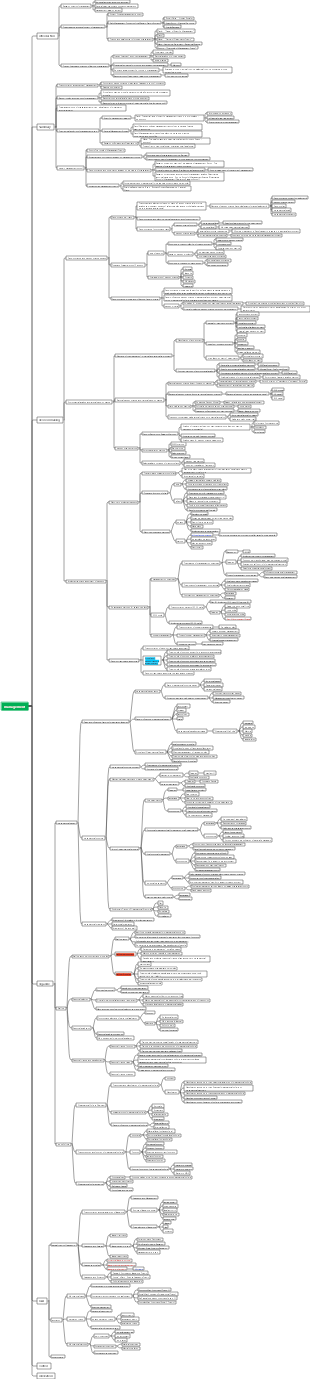
Regarding the decision-making mind map in Chapter 5, decision-making refers to the process from proposing a problem to finalizing it. Decision-making is a complex activity that has its own work rules and needs to follow certain scientific procedures.
Edited at 2023-11-08 16:24:00This is a mind map about bacteria, and its main contents include: overview, morphology, types, structure, reproduction, distribution, application, and expansion. The summary is comprehensive and meticulous, suitable as review materials.

This is a mind map about plant asexual reproduction, and its main contents include: concept, spore reproduction, vegetative reproduction, tissue culture, and buds. The summary is comprehensive and meticulous, suitable as review materials.
This is a mind map about the reproductive development of animals, and its main contents include: insects, frogs, birds, sexual reproduction, and asexual reproduction. The summary is comprehensive and meticulous, suitable as review materials.
This is a mind map about bacteria, and its main contents include: overview, morphology, types, structure, reproduction, distribution, application, and expansion. The summary is comprehensive and meticulous, suitable as review materials.
This is a mind map about plant asexual reproduction, and its main contents include: concept, spore reproduction, vegetative reproduction, tissue culture, and buds. The summary is comprehensive and meticulous, suitable as review materials.
This is a mind map about the reproductive development of animals, and its main contents include: insects, frogs, birds, sexual reproduction, and asexual reproduction. The summary is comprehensive and meticulous, suitable as review materials.
Chapter 5 Decision-making
5.1 The decision-making process
1Definition: Refers to the process from raising a problem to finalizing it. Decision-making is a complex activity that has its own work rules and needs to follow certain scientific procedures.
eight stages
1. Discover and identify problems
1. Identify the priorities of problems; 2. Frequency of occurrence of problems; 3. Causes and background of problems; 4. Whether there are ready-made solutions; 5. Whether the results are predictable; 6. The nature of the problem, etc.
2. Collect information
Investigate and research, collect information related to decision-making, organize and analyze it
Establish a database, conduct analysis and comparison, identify gaps and problems
3. Determine decision-making criteria
Decision-making criteria refer to the factors that affect decision-making. There are many factors that affect decision-making, and the degree of influence is different. Some have a large impact and some have a small impact. This requires weighting the criteria.
4. Formulate a plan
The main purpose of formulating a plan is to find an effective way to achieve the goal. Therefore, a variety of alternative plans must be formulated and compared repeatedly.
5. Analyze the plan 6. Determine the plan
Choosing and determining options best reflects the level of the decision-maker and is the key to decision-making. When determining a plan, it is an important task for the decision-maker to weigh the pros and cons among various alternative plans, and then select one or combine them into one.
7. Implementation plan
Before the plan is implemented, various necessary preparations need to be made
For major decisions, specific responsible decision-makers should be formulated to supervise and implement measures for the implementation departments and personnel.
The corresponding decision-makers should assume the responsibility of supervising the implementation and grasp the implementation status of the new plan. Especially at critical stages and critical points, control and supervision must be strengthened to ensure the timeliness and operability of the decision-making plan implemented within the organization.
8. Tracking feedback
Inspection and tracking implementation is an important control method to ensure that decisions are implemented
Continuous tracking should be carried out during the implementation of the plan
If major differences are found during the operation of the new plan, while providing feedback and reporting, decision-makers should identify the reasons, analyze them in detail, and treat them differently according to the specific circumstances.
Managers can only seek satisfactory decisions, not the best decisions
5.2 Quantitative decision-making method—decision tree method
Quantitative decision-making methods
>Definition: refers to those "hard technologies" in decision-making, which refers to methods that rely on mathematical methods and use mathematical models and computers to make decisions.
>Core: Express the relationship between decision-making variables and variables and goals using mathematical formulas, establish a mathematical model, and then obtain the answer through calculation.
>Advantages: This decision-making method bases decision-making on a relatively reliable scientific basis, reduces the blindness of decision-making, and is suitable for decision-making problems that can be evaluated quantitatively. Due to the rapid development of computers and their applications, quantitative decision-making methods have been widely used, especially for large-scale, multi-variable complex decisions.
Classification
decision tree method
·The most widely used and most effective in risk decision-making
Game method
Also called game theory, it analyzes the ways in which two or more players or participants choose actions or strategies that can jointly affect each participant's actions or strategies.
matrix summary method
·Give weights to various factors and consider them all
Optimization theory
·Study people’s attitude towards risk and analyze the various possibilities when people are willing or avoid taking risks
risky decisions
Concept: Under uncertainty, people have a certain degree of understanding of the future, but are not sure about the decision-making process. There are a large number of decision-making problems in business operations that are risky decisions.
Features:
(1) Decision-making objectives are generally economic and can be measured in currency;
(2) There are multiple feasible solutions, and the income or loss of each solution can be estimated more accurately based on the project's production capacity and market forecast data;
(3) Various natural states may occur in the future environment;
(4) People can predict the probability values of various natural states based on previous data and experience; (5) The decision-making criterion is to maximize the expected net benefit or minimize the expected loss. Risk-based decision-making methods include decision table analysis method, matrix decision-making method and decision tree method.
Steps of decision tree analysis
1. Draw a decision tree
2. Calculate expected profit and loss value
3. Pruning decision
Decision tree drawing method
5.3 Brainstorming method
1. Introduction to brainstorming
I. Definition: Also called free talk. It was pioneered by Alex Osborne of the United States. It is mainly conducted by members of the value engineering working group in the form of meetings in a normal, harmonious and unrestricted atmosphere, breaking the rules, thinking positively, speaking freely, and fully expressing their opinions. Decision-making methods.
II. Classification
direct brainstorming
Question brainstorming
III. Advantages and Disadvantages
Advantages: Inspire each other, brainstorm, learn from each other's strengths, and comprehensively gather opinions from all aspects at a faster speed to draw decision-making conclusions.
Disadvantages: Due to the limited number of participants, representation is often insufficient. Brainstorming requires high quality of participants.
IV. excitation mechanism
associative response
enthusiasm contagious
Sense of competition
personal desires
V. organizational form
Group size is 5-10 people
Meeting time: 20 minutes - 1 hour
Determine the moderator, recorder, and group members
2. Principles of brainstorming
Don’t make any comments on other people’s suggestions
Encourage everyone to think independently and broaden their minds. The more novel and bizarre the ideas, the better.
Can supplement and improve existing construction to make it more convincing
The more suggestions the better, no restrictions, no need to think carefully
3. brainstorming process
I. Preparation Phase
II. Warm-up phase
III. clarify the problem
IV. Talking stage
V. screening stage
4. Key points of brainstorming
I. Set the right topic
II. Make the most of mutual stimulation to generate inspiration
III. The host pays attention to wording, guidance, and time control
IV. The recorder should note the key points in order and ensure that they are clear enough so that participants can capture the points.
V. Subsequent attempts will be made to analyze and organize opinions from multiple perspectives, and the results of the discussion will be handed over to the expert group for screening.