MindMap Gallery Mind map of analytical chemistry volume 2
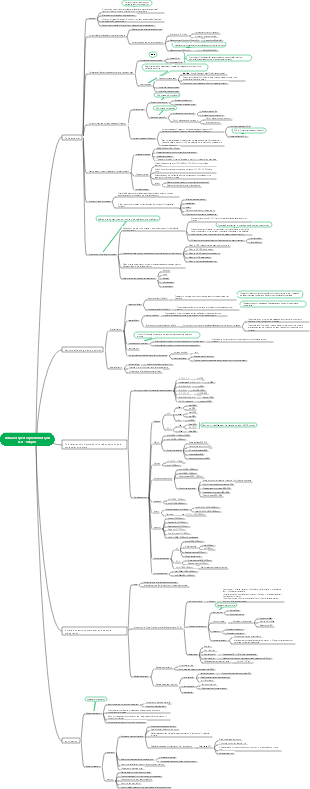
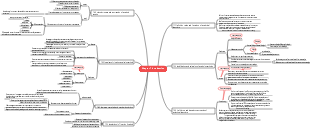
This is a mind map about Chapter 6 of Volume 2 of Analytical Chemistry, including fluorescence analysis, phosphorescence analysis, chemiluminescence analysis, etc. Hope this helps!
Edited at 2023-11-05 21:32:53This is a mind map about bacteria, and its main contents include: overview, morphology, types, structure, reproduction, distribution, application, and expansion. The summary is comprehensive and meticulous, suitable as review materials.

This is a mind map about plant asexual reproduction, and its main contents include: concept, spore reproduction, vegetative reproduction, tissue culture, and buds. The summary is comprehensive and meticulous, suitable as review materials.
This is a mind map about the reproductive development of animals, and its main contents include: insects, frogs, birds, sexual reproduction, and asexual reproduction. The summary is comprehensive and meticulous, suitable as review materials.
This is a mind map about bacteria, and its main contents include: overview, morphology, types, structure, reproduction, distribution, application, and expansion. The summary is comprehensive and meticulous, suitable as review materials.
This is a mind map about plant asexual reproduction, and its main contents include: concept, spore reproduction, vegetative reproduction, tissue culture, and buds. The summary is comprehensive and meticulous, suitable as review materials.
This is a mind map about the reproductive development of animals, and its main contents include: insects, frogs, birds, sexual reproduction, and asexual reproduction. The summary is comprehensive and meticulous, suitable as review materials.
molecular luminescence analysis
Fluorescence analysis
definition
When certain substances are irradiated by light of a certain wavelength, the electron absorption capacity in the branch jumps from the ground state to the excited state, and then returns to the ground state. The process of returning to the ground state is accompanied by the phenomenon of light radiation.
Fundamental
Generation of molecular fluorescence
Most molecules contain an even number of electrons
In the ground state, electrons in the same orbit have opposite spins, S-0. Molecular multiplet state M= 2S 1=1, ground singlet state (S).
Absorb energy and jump to the first and second excited singlets (S1,S)
Radiative transition, non-radiative transition
Transition selection law ΔS=0 (single single, double double, three one three)
deactivation process
vibration relaxation
internal conversion
Crossing between systems
Fluorescence emission
Phosphorescent emission
Fluorescence efficiency and influencing factors
formula
K: rate constant of fluorescence emission process
K: the rate constant of the nonradiative transition process.
The fluorescence efficiency with application value is 0.1-1.
Molecular Structure
Conjugated π bond system
Bigger is easier
rigid planar structure
Effect of substituents
envirnmental factor
Solvent
temperature
inversely proportional to
pH
Fluorescence quenching
Relationship with solution concentration
formula
l,:fluorescence intensity
1: Radiation intensity
Fluorescence intensity at high concentrations deviates from the linear relationship
Fluorescence quenching
The physical and chemical process that occurs between fluorescent substance molecules or between solvent molecules that results in a decrease in fluorescence intensity
Fluorescence quencher
A reagent that weakens the fluorescence effect of fluorescent substances.
self-quenching effect
The phenomenon that the fluorescence effect is weakened by the interaction between fluorescent substance molecules.
self-absorption phenomenon
Increased probability of non-radiative transitions due to collisions
Fluorescence excitation spectrum and emission spectrum
Fluorescence excitation spectrum
A curve drawn with the excitation wavelength as the abscissa and fluorescence intensity as the ordinate.
Fluorescence emission spectrum
Fix the excitation wavelength and intensity, measure the fluorescence intensity at different wavelengths, and draw the relationship curve of fluorescence intensity with wavelength.
Fluorescence Spectrometer
Light source: lamp, high-pressure mercury lamp, laser;
Two monochromators: excitation monochromator and emission monochromator
Sample cell: Quartz (optical material)
Detector: Photomultiplier tube, charge coupling element detector
Signal output conversion system
application
Analysis of Inorganic Compounds
Analysis of organic compounds
biochemical analysis
Phosphorescence analysis
Overview
Phosphorescence
The optical radiation produced when the triplet state transitions to the ground state
Phosphorescence analysis
Methods for identification and quantitative analysis of organic compounds using phosphorescence spectroscopy
Fundamental
Phosphorescent radiation has a longer wavelength than fluorescent radiation
T, to S, is a forbidden transition, so T, has high stability and longer phosphorescence time
T, long life, leads to an increase in the probability of non-radiative transitions, so room temperature phosphorescence is generally weak
Phosphorescence analysis method
Low temperature phosphorescence
At room temperature, phosphorescent substances lose their activity when they collide with solvent molecules.
As the temperature decreases, the intensity of thermal movement decreases, the probability of deactivation decreases, and the phosphorescence increases.
When the analyte is in liquid nitrogen (77K=-196C), the phosphorescence is stronger and the measurement sensitivity is higher.
room temperature phosphorescence
Micellar Stable Room Temperature Phosphorescence
Solid surface room temperature phosphorescence
Sensitized room temperature phosphorescence
Phosphorescence spectrometer
structure
light source
monochromator
Sample cell
Detector
magnifying display device
Phosphoroscope
Some substances produce both fluorescence and phosphorescence. Mechanical light cutting device (utilizing the difference in lifetime between fluorescence and phosphorescence)
Dewar flask
Contains liquid nitrogen (77K)
application
Low temperature phosphorescence analysis
PAHs and heterocycles
drug
Room temperature phosphorescence analysis of solid surfaces
Analysis of micelle-stabilized room temperature phosphorescence
chemiluminescence analysis
7204832b44f8dfb59a1d61dfb8f8932