MindMap Gallery ionic reaction
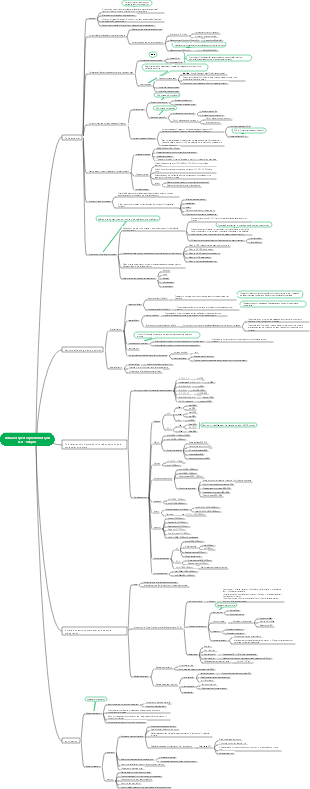
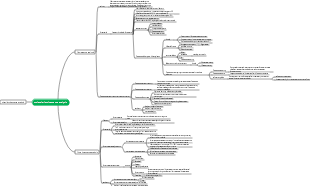
This is a mind map about ionic reactions. Redox reactions are chemical reactions in which the oxidation number (or valence) of an element increases or decreases accordingly before and after the reaction. This reaction can be understood as consisting of two half-reactions, namely oxidation reaction and reduction reaction.
Edited at 2024-10-13 19:45:16這是一篇關於把時間當作朋友的心智圖,《把時間當作朋友》是一本關於時間管理和個人成長的實用指南。作者李笑來透過豐富的故事和生動的例子,教導讀者如何克服拖延、提高效率、規劃未來等實用技巧。這本書不僅適合正在為未來奮鬥的年輕人,也適合所有希望更好地管理時間、實現個人成長的人。
This is a mind map about treating time as a friend. "Treating Time as a Friend" is a practical guide on time management and personal growth. Author Li Xiaolai teaches readers practical skills on how to overcome procrastination, improve efficiency, and plan for the future through rich stories and vivid examples. This book is not only suitable for young people who are struggling for the future, but also for everyone who wants to better manage time and achieve personal growth.
這七個習慣相輔相成,共同構成了高效能人士的核心特質。透過培養這些習慣,人們可以提升自己的領導力、溝通能力、團隊協作能力和自我管理能力,從而在工作和生活中取得更大的成功。
這是一篇關於把時間當作朋友的心智圖,《把時間當作朋友》是一本關於時間管理和個人成長的實用指南。作者李笑來透過豐富的故事和生動的例子,教導讀者如何克服拖延、提高效率、規劃未來等實用技巧。這本書不僅適合正在為未來奮鬥的年輕人,也適合所有希望更好地管理時間、實現個人成長的人。
This is a mind map about treating time as a friend. "Treating Time as a Friend" is a practical guide on time management and personal growth. Author Li Xiaolai teaches readers practical skills on how to overcome procrastination, improve efficiency, and plan for the future through rich stories and vivid examples. This book is not only suitable for young people who are struggling for the future, but also for everyone who wants to better manage time and achieve personal growth.
這七個習慣相輔相成,共同構成了高效能人士的核心特質。透過培養這些習慣,人們可以提升自己的領導力、溝通能力、團隊協作能力和自我管理能力,從而在工作和生活中取得更大的成功。
ionic reaction
The concept of redox reaction
oxidation reaction
Definition: A reaction in which a substance loses electrons (increases its valence).
For example: In the reaction 2Fe 3Cl₂ = 2FeCl₃, iron (Fe) rises from 0 to 3, loses electrons, and undergoes an oxidation reaction.
reduction reaction
Definition: A reaction in which a substance obtains electrons (the valence of its chemical compound is reduced)
For example: In the above reaction, chlorine (Cl₂) reduced its valence from 0 to -1, gained electrons, and a reduction reaction occurred.
oxidizing agent
Definition: A substance that loses electrons (increases its valence) during a reaction
For example: In the reaction H₂ CuO = Cu H₂O, hydrogen (H₂) increases from 0 to 1 and is a reducing agent
Characteristics of redox reactions
Redox reactions are characterized by increases and decreases in valence. In the redox reaction, the valence of elements will change, some will increase, and some will decrease. By observing changes in valence, you can determine whether a reaction is a redox reaction.
The essence of redox reactions
The essence of a redox reaction is the transfer (gain, loss or shift) of electrons. In a redox reaction, the oxidizing agent gains electrons, the reducing agent loses electrons, and the electrons are transferred from the reducing agent to the oxidizing agent.
For example, in the reaction 2Na Cl₂ = 2NaCl, the sodium atom (Na) loses an electron and becomes a sodium ion (Na⁺), the chlorine atom (Cl) gains an electron and becomes a chloride ion (Cl⁻), and the electron is transferred from the sodium atom to chlorine atom
The relationship between redox reactions and the four basic reaction types
Combination Reactions and Redox Reactions
A chemical reaction involving elements must be an oxidation-reduction reaction. For example: 2H₂ O₂ = 2H₂O, the valence of hydrogen and oxygen changes during the reaction, which is a redox reaction
A chemical reaction involving no elements is not necessarily a redox reaction. For example: CaO H₂O = Ca(OH)₂, the valence of each element does not change during the reaction, it is not a redox reaction
Decomposition and redox reactions
The decomposition reaction that produces elemental substances must be an oxidation-reduction reaction. For example: 2H₂O₂ = 2H₂O O₂↑. The valence of the oxygen element changes during the reaction. It is a redox reaction.
A decomposition reaction without the formation of elements is not necessarily a redox reaction. For example: CaCO₃ = CaO CO₂↑, the valence of each element does not change during the reaction, it is not a redox reaction.
Displacement reaction and redox reaction
The displacement reaction must be a redox reaction. Because a substitution reaction is a reaction in which one element reacts with one compound to form another element and another compound, during this process, the valence of the element must change. For example: Fe CuSO₄ = FeSO₄ Cu, the valence of iron and copper elements changes during the reaction, which is a redox reaction.
Metathesis reaction and redox reaction
A metathesis reaction must not be a redox reaction. Because the metathesis reaction is a reaction in which two compounds exchange components with each other to form two other compounds, during this process, the valence of each element does not change. For example: HCl NaOH = NaCl H₂O, the valence of each element does not change during the reaction, it is not a redox reaction
Judgment of oxidizing and reducing properties
Determine based on the redox reaction equation
The oxidizing property of the oxidizing agent is stronger than the oxidizing property of the oxidation product; the reducing agent is stronger than the reducing property of the reducing product.
For example: 2FeCl₃ Cu = 2FeCl₂ CuCl₂. In this reaction, the oxidant is FeCl₃ and the oxidation product is CuCl₂, so the oxidation property is: FeCl₃ > CuCl₂; the reducing agent is Cu and the reduction product is FeCl₂, so the reducing property is: Cu > FeCl₂
Judging based on the order of metal activity
The more active the metal is, the stronger its reducing properties; the corresponding cations are weaker oxidizing properties.
For example: In the order of metal activity, K > Ca > Na > Mg > Al > Zn > Fe > Sn > Pb > (H) > Cu > Hg > Ag > Pt > Au, so reducing properties: K > Fe > Cu; oxidizing property: Cu²⁺ > Fe²⁺ > K⁺
Balance of Redox Reactions
step
Marked price change: Mark the valence of the element whose valence changes before and after the reaction.
Column changes: List the numerical values of increased and decreased chemical valences
Find the total number: Find the least common multiple of the total number of increases and decreases in the price of a compound
Coordination coefficient: Determine the coefficients of oxidants, reducing agents, oxidation products, and reduction products based on the least common multiple
Check conservation: Check whether the number of atoms and the total number of charges of each element on both sides of the equation are equal
Take the reaction KMnO₄ HCl = KCl MnCl₂ Cl₂ H₂O as an example.
Standard price change: Mn element decreases from 7 to 2, Cl element increases from -1 to 0
Column changes: The valence of the Mn element decreases by 5, and the valence of the Cl element increases by 1×2 = 2 (because there are two Cl atoms in a Cl₂ molecule)
Find the total number: The least common multiple of 5 and 2 is 10
Coordination coefficient: In order to make the total number of increases and decreases in the chemical valence equal, add 2 in front of KMnO₄ and MnCl₂, and add 5 in front of Cl₂ to get 2KMnO₄ HCl = 2KCl 2MnCl₂ 5Cl₂ H₂O. Then according to atomic conservation, it is determined that the coefficient of HCl is 16 and the coefficient of H₂O is 8, that is, 2KMnO₄ 16HCl = 2KCl 2MnCl₂ 5Cl₂ 8H₂O
Applications of Redox Reactions
Application of redox reaction in batteries
A primary battery is a device that uses redox reactions to convert chemical energy into electrical energy. In the primary battery, the oxidation reaction and the reduction reaction are carried out on two different electrodes respectively. Electrons flow from the negative electrode to the positive electrode through the external circuit, forming an electric current.
For example, in a copper-zinc primary battery, zinc (Zn) loses electrons and undergoes an oxidation reaction and is the negative electrode; copper (Cu) gains electrons and undergoes a reduction reaction and is the positive electrode. The reaction equation is: Zn Cu²⁺ = Zn²⁺ Cu
Application of redox reaction in metal smelting
The essence of metal smelting is to reduce metals from their compounds. Commonly used reduction methods include thermal reduction, electrolysis, etc.
For example, carbon monoxide is used to reduce iron oxide to smelt iron. The reaction equation is: Fe₂O₃ 3CO = 2Fe 3CO₂. In this reaction, carbon monoxide (CO) is the reducing agent and reduces the iron in iron oxide (Fe₂O₃).
Application of Redox Reaction in Environmental Protection
Redox reactions can be used to treat harmful substances in wastewater and exhaust gas. For example, when using chlorine to treat wastewater containing cyanide (CN⁻), the reaction equation is: 2CN⁻ 8OH⁻ 5Cl₂ = 2CO₂ N₂ 10Cl⁻ 4H₂O. In this reaction, chlorine (Cl₂) oxidizes cyanide into harmless substances.