MindMap Gallery Infrared spectrophotometry IR0.8~500μm mind map
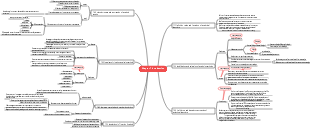
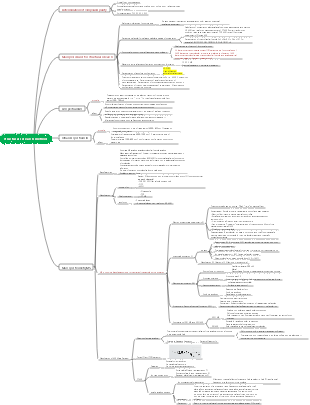
This is a mind map about infrared spectrophotometry IR0.8~500μm, including the relationship between infrared spectrum and molecular structure, infrared spectrophotometer and sample preparation, etc.
Edited at 2023-11-06 09:35:23This is a mind map about bacteria, and its main contents include: overview, morphology, types, structure, reproduction, distribution, application, and expansion. The summary is comprehensive and meticulous, suitable as review materials.

This is a mind map about plant asexual reproduction, and its main contents include: concept, spore reproduction, vegetative reproduction, tissue culture, and buds. The summary is comprehensive and meticulous, suitable as review materials.
This is a mind map about the reproductive development of animals, and its main contents include: insects, frogs, birds, sexual reproduction, and asexual reproduction. The summary is comprehensive and meticulous, suitable as review materials.
This is a mind map about bacteria, and its main contents include: overview, morphology, types, structure, reproduction, distribution, application, and expansion. The summary is comprehensive and meticulous, suitable as review materials.
This is a mind map about plant asexual reproduction, and its main contents include: concept, spore reproduction, vegetative reproduction, tissue culture, and buds. The summary is comprehensive and meticulous, suitable as review materials.
This is a mind map about the reproductive development of animals, and its main contents include: insects, frogs, birds, sexual reproduction, and asexual reproduction. The summary is comprehensive and meticulous, suitable as review materials.
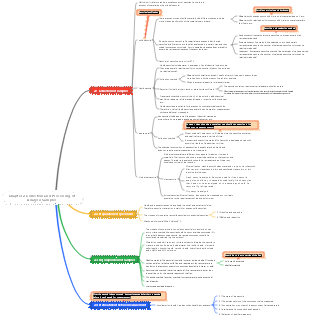
Infrared SpectrophotometryIR 0.8~500μm
Fundamental
produce
It is produced when the vibrational energy level and rotational energy level transition of each group and chemical bond in the molecule
Vibration-rotation spectroscopy molecular absorption spectrum
Infrared activity: changes in dipole moment
Condition: Infrared light energy (E photon) = vibration energy level difference of the molecule (ΔE wave number)
Percent transmittance of infrared light - wave number or wavelength
Vibrational energy levels and vibrational spectra
Resonators and potential energy curves
Vibration energy and vibration frequency
E vibration = (V 1/2)hv
v: molecular vibration frequency
V: vibration quantum number
Wave number=1/λ=v/c=1/2πc×√K/μ
m=mA×mB/(mA mB)
Wave number=1302/√K/μ’
Calculate the fundamental vibrational frequency of certain groups
μ’=MA×MB/(MA MB)
Fundamental frequency peak and overtone frequency peak
Fundamental frequency peak
V₀→V₁
Linear: 3N-5
Nonlinear: 3N-6
The number of fundamental frequency peaks is much smaller than the theoretically calculated number of fundamental vibrations
overtone peak
Near infrared region, weak peaks, increase the characteristics of identifying molecular structures
Frequency octave peak
V₀→V₂/V₃: Double frequency peak/Triple frequency peak
The vibration frequency v is slightly lower than an integer multiple of the fundamental frequency peak v
The intensity is very weak and difficult to measure directly
Combined frequency peak
difference frequency peak
Vibration types and vibration degrees of freedom
Vibration type
Stretching vibration v
Only change the bond length
Symmetric scaling vs.
Asymmetric telescopicⅴas
Bending vibration δ
Only change bond angles
In-plane bending vibration β
Scissor vibration δs
In-plane rocking vibration ρ
Out-of-plane bending vibration γ
Out-of-plane rocking vibration ω
twisting vibration τ
vibration degrees of freedom
Vibration degrees of freedom = molecular degrees of freedom (3N) - (translational degrees of freedom rotational degrees of freedom)
Nonlinear molecules: 3N-6
Linear molecule: 3N-5
Only two rotational degrees of freedom
Each vibrational degree of freedom can be regarded as a basic (fundamental frequency peak) vibration form of the molecule, which has its own characteristic vibration frequency.
Feature areas, fingerprint areas and correlation peaks
characteristic area
4000~1333cm⁻¹(2.5~7.5μm)
Characteristic absorption of major functional groups
Characteristic peaks
The absorption peak is "sparse" and easy to identify → characteristic band area
Fingerprint area
The low frequency region of 1333~400cm⁻¹ (7.5~25μm) in the infrared spectrum
Stretching vibration and various bending vibrations of C-X (X=C,N,O) single bond
Small changes in the molecular structure will cause obvious changes in the spectrum of the fingerprint area.
effect
What groups are present in circumstantial compounds?
Determine the fine structure of a compound
correlation peak
Number of absorption peaks
Theoretically, each vibrational degree of freedom (basic vibration number) produces an absorption peak in the infrared spectrum.
In fact, the number of peaks is often less than the number of fundamental vibrations
Infrared inactive vibration
degenerate
cover
Falling outside the mid-infrared region
The intensity is too weak to be measured
The intensity of the absorption peak
Referred to as the peak intensity or the size of the molar absorption coefficient ε
Depends on: the size of the change in the dipole moment of the molecule during vibration
Stronger polar groups (C=O, C-X, etc.) vibrate and have greater absorption intensity.
The dipole moment is related to the symmetry of the molecular structure. The higher the symmetry of the vibration, the smaller the change in the molecular dipole moment during the vibration, and the weaker the band intensity.
Completely symmetrical, no change in dipole moment, no absorption
Different vibration modes lead to different absorption peak intensities.
ε(ⅴas)>ε(va)
ε(v)>ε(β)>ε(γ)
The absolute peak intensity is expressed by the molar absorption coefficient ε
When ε>100, it means that the peak is very strong, vs
When ε=20~100, strong peak, s
When ε=10~20, medium strong peak, m
When ε=1~10, weak peak, w
When ε<1, extremely weak peak, vw
When infrared spectroscopy is used for qualitative analysis, the peak intensity generally refers to the relative intensity.
Peak intensity and behavior representation
s(strong)
m(m)
w(weak)
b(broad peak)
sh (shoulder)
Factors affecting band position
Internal factors
electronic effect
Induction effect (I effect)
The electron-withdrawing group moves the absorption peak toward high frequency.
Compete for electrons, reduce the polarity of the connecting group, increase K, the larger the wave number, and move to the high wave number area.
Conjugation effect (C effect)
The conjugation effect shifts the absorption peak to the low wave number region
The electron density is averaged, K decreases, and moves to the low wave number area
spatial effect
steric hindrance
The coplanarity of the conjugated system is affected or destroyed, and the absorption frequency moves to the direction of high wave numbers.
Ring tension (bond angle tension effect)
As the ring shrinks, the bond angle decreases and the ring tension increases
The double bonds in the ring are weakened, and the stretching vibration frequency of the double bonds is reduced.
The double bond outside the ring and the carbonyl group on the ring are strengthened, and the stretching vibration frequency of the double bond increases.
hydrogen bonding effect
ⅴ shifts to low wave number, and the spectrum band becomes wider and stronger
Intramolecular hydrogen bonding (independent of concentration)
The stretching vibration band shifts significantly to the low wave number direction
Intermolecular hydrogen bonds (concentration dependent)
tautomerism
Vibrational coupling effects and (Fermi) resonance
vibration coupling
split
Fermi resonance
Special vibration coupling
The over-frequency peaks are strengthened or split into double peaks.
external effects
solvent effect
Polar group: solvent polarity ↑, v↓
Changes in solution concentration and temperature
Differences in Infrared Spectrometer Types
The relationship between infrared spectrum and molecular structure
Distribution rules of fundamental frequency peaks
C-H,O-H,N-H
v>2700
Unsaturated C-H, O-H, N-H
ⅴ>3000
C-H, O-H, N-H
γ<900
C-H, O-H
β=1500~1300
C-C, C-O, C-N
v=1300~900
C=C, C=O, C=N, N-H
Around 1700
CC, NN three keys
v=about 2200
Typical spectrum
Alkanes
vC-H
CH₃
vas=2960
vs=2870
CH₂
vas=2926
vs=2852
CH
v=2890
δC-H
CH₃
δas=1450
δs=1375
When two or three CH₃ are on the same carbon atom, δs1370 doublet
CH₂
δas=1465
Olefins
vC=C 1695~1540cm⁻¹(1650)
v=C-H 3100~3000cm⁻¹
Substituted alkenes
Single replaces 990, 910
trans double substitution 970
A C double replaces 890
Three replaces 820
Cis double substitution 690
Alkynes
vC≡C 2270~2100cm⁻¹
v≡C-H 3300cm⁻¹
Aromatic hydrocarbons
v=C-H 3100~3000cm⁻¹
vC=C 1600,1500cm⁻¹
Overtone peak 2000~1667cm⁻¹
Substituted aromatics
Single two, double three one, three two, four five one, plus seven
Four or five hydrogens cost around 750
Three adjacent hydrogens 800~750
Two adjacent hydrogens 860~800
One hydrogen 900~860
Hydroxyl
vO-H 3650~3590cm⁻¹
vC=O 1740~1650cm⁻¹
Ethers
Phenyl ethers and vinyl ethers
vs(C-O-C) 1275~1200cm⁻¹
vas(C-O-C) 1075~1020cm⁻¹
Fatty ether
vas(C-O-C) 1150~1050cm⁻¹
carbonyl
Acid:vC=O 1710cm⁻¹
Ketones: vC=O 1715cm⁻¹
Aldehydes: vC=O 1725cm⁻¹
Esters: vC=O 1735cm⁻¹
Acid chloride:vC=O 1800cm⁻¹
vO=C-H:2820,2720cm⁻¹Double peaks
Amines and amides
vH
Amine:3500~3300cm⁻¹
Primary amides
vas 3350cm⁻¹
vs 3180cm⁻¹
Secondary amide:3270cm⁻¹
Tertiary amide: none
δN-H
Primary amine:1650~1570cm⁻¹
Secondary amine:1500cm⁻¹
vC=O 1690~1620cm⁻¹
Main characteristic peaks of amide
Nitro compounds
vas(NO₂) 1565~1540cm⁻¹
vs (NO₂) 1385~1340cm⁻¹
Infrared spectrophotometer and sample preparation
type
Dispersive type: infrared spectrophotometer
Interference type: Fourier transform infrared spectrometer
Introduction to Fourier Transform Infrared Spectrometer (FT-IR)
working principle
process
Light source → infrared radiation → Michelson interferometer → interference light → illuminate the sample →Interference light with sample information →Detector →Interference pattern with sample information →Computer system→Fourier cosine transform of the interference pattern function→Infrared spectrogram
The main components
light source
Same as dispersion type
Nernst lamp
Silicon carbide rod
monochromator
Michelson interferometer
Fixed mirror(M₁)
Moving Mirror(M₂)
Beam splitter (BS)
Detector
Pyroelectric detector
Photoelectric detector
computer system
Fourier cosine transform calculation
Interferogram with sample spectral information → Ordinary infrared spectrum with wave number as the abscissa
advantage
Scan fast
High-resolution
high sensitivity
Can analyze 10⁻⁹~10⁻¹²g ultra-trace samples
High precision
Wave number precision can be accurately measured to 0.01cm⁻¹
Wide measurement spectral range
Up to 10~10⁴cm⁻¹
Sample preparation
Sample requirements
Dry and water-free
Purity generally needs to be greater than 98%
Sample preparation method
solid sample
tabletting method
Commonly used dispersion media: KBr
Paraffin paste method (paste method)
thin film method
liquid sample
liquid pool method
Clamp method or smear method
gas sample
application
Qualitative analysis
characteristic frequency
Identify whether it is a known ingredient
Compare with standard material
Check with standard chart
Check whether the reaction proceeds and whether certain groups are introduced or eliminated
Study on the geometric configuration and three-dimensional conformation of compound molecules
Structure determination of unknown compounds
Spectrum analysis
program
Source and nature of sample
Understand sources and context
Determine melting and boiling points
Elemental analysis and molecular weight estimation of compound’s molecular formula
Calculate the degree of unsaturation Ω of a compound
Ω=n₄-(n₁-n₃)/2 1
0, chain saturated compound
1. A double bond or an alicyclic ring
2. One parabond or two double bonds or two rings or one double bond or one ring
≥4, a benzene ring
Determine the existence of a certain group
characteristic area
Not appearing does not mean it does not exist
Determine replacement situation and connection method
Compare with standard chart
method
Feature area first, then fingerprint area
The strongest peak first, then the next strongest peak
Check roughly first, then search carefully
Deny first and then affirm
A set of related peaks confirms the presence of a functional group