MindMap Gallery limit and continuity
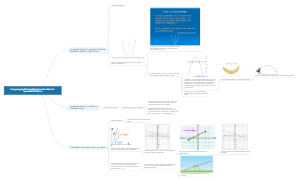
This is a mind map about limits and continuity, including the basic concepts of limits and continuity, their applications, etc. Hope this helps!
Edited at 2023-11-04 17:49:59This is a mind map about bacteria, and its main contents include: overview, morphology, types, structure, reproduction, distribution, application, and expansion. The summary is comprehensive and meticulous, suitable as review materials.
This is a mind map about plant asexual reproduction, and its main contents include: concept, spore reproduction, vegetative reproduction, tissue culture, and buds. The summary is comprehensive and meticulous, suitable as review materials.
This is a mind map about the reproductive development of animals, and its main contents include: insects, frogs, birds, sexual reproduction, and asexual reproduction. The summary is comprehensive and meticulous, suitable as review materials.
This is a mind map about bacteria, and its main contents include: overview, morphology, types, structure, reproduction, distribution, application, and expansion. The summary is comprehensive and meticulous, suitable as review materials.
This is a mind map about plant asexual reproduction, and its main contents include: concept, spore reproduction, vegetative reproduction, tissue culture, and buds. The summary is comprehensive and meticulous, suitable as review materials.
This is a mind map about the reproductive development of animals, and its main contents include: insects, frogs, birds, sexual reproduction, and asexual reproduction. The summary is comprehensive and meticulous, suitable as review materials.
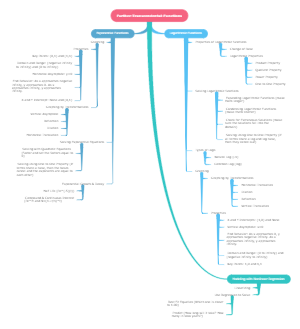
limit and continuity
Basic concepts of limit and continuity
definition of limit
The definition and properties of limit
definition of limit
A limit is the concept that a function approaches a certain value at a certain point.
Continuity is the property that a function has no interruption within a certain interval.
Limit and continuity are interdependent. Without continuity, there is no limit, and without limit, there is no guarantee of continuity.
As the independent variable approaches a certain value, the limit of the function value represents the effect of that value on the function.
When a limit exists, its value is unique and finite; when it does not exist, the function may be infinitely large or infinitely small at that point.
The calculation methods of the limit include the pinch theorem, Lópida's rule, etc.
properties of limits
Uniqueness of limit: The limit value of a function at a certain point is unique.
Boundedness of the limit: If the left limit and the right limit of a function at a certain point both exist and are equal, then the limit of the function at that point is bounded.
Continuity of limits: If the left and right limits of a function at a certain point exist and are equal, then the limit of the function at that point is continuous.
Infinitesimal/infinite: When the left and right limits of a function at a certain point both tend to infinity or infinitesimal, we call that point the "critical point" of the function.
Pinch theorem: If a function is sandwiched between two other functions, then the function must reach its limit at the dividing point of the two functions.
Consistent continuity: If the left and right limits of a function at a certain point exist and are equal, then the limit of the function at that point is consistent and continuous.
extreme algorithm
The ultimate algorithm includes four arithmetic operations.
The operation rules of the limit need to follow the properties of real numbers, such as finiteness, additivity, multiplication, etc.
The operation rules of the limit involve the basic concepts of calculus, such as derivatives, continuity, original functions, etc.
The algorithm of limit has important application value in solving differential equations, integral equations, etc.
The extreme algorithm needs to be analyzed and applied in conjunction with specific problems and cannot be applied mechanically.
continuous definition
The definition and properties of continuity
Continuous function: Within a certain interval, the function value is infinitely close to a constant as the independent variable increases or decreases.
Left limit and right limit: The left limit of a function at a certain point means that when the independent variable approaches the left side of the point, the function value approaches the limit value of the point; the right limit means that when the independent variable approaches the point When on the right side of , the function value approaches the limit value of that point.
Definition of continuity: If the left limit and right limit of a function in a certain interval exist and are equal, then the function is continuous in that interval.
Continuity theorem: If a function is continuous at every point in an interval, then the function is also continuous in that interval.
Infinite small quantity and infinite large quantity: Infinite small quantity refers to the quantity whose limit value is 0 when the independent variable approaches 0; infinite quantity refers to the quantity whose limit value does not exist when the independent variable approaches positive infinity or negative infinity.
Properties of continuity: The derivative of a continuous function at a certain point is equal to the slope of the tangent line at that point; if f(x) is continuous within a certain interval, then f'(x) is also continuous within the interval.
Arithmetic rules for continuous functions
The addition rule of continuous functions: If f(x) and g(x) are both continuous functions, then f(x) g(x) is continuous on the interval [a, b].
Multiplication rule for continuous functions: If f(x) and g(x) are both continuous functions, then f(x)×g(x) is continuous on the interval [a, b].
Division rule for continuous functions: If f(x) and g(x) are both continuous functions, and g(x) is not equal to 0, then f(x)÷g(x) is continuous on the interval [a, b].
The composite function rule of continuous functions: If f(x) is a continuous function and g(x) is also a continuous function, then h(x)=f(g(x)) is continuous on the interval [a,b].
The relationship between limit and continuity: If f(x) tends to a certain value C on the closed interval [a, b], then f(x) must be continuous on this interval.
Basic concepts of limit and continuity: Limit is a concept in mathematics that describes the changing trend of a function near a certain point, and continuity is one of the necessary conditions to ensure the existence of a limit.
Definition of the derivative of a continuous function: Assume f(x) is a continuous function, then the derivative at point a exists and is unique, denoted as f'(a), which represents the rate of change of the function at point a.
Extreme and continuous applications
Extreme and continuous application examples
Solve for the limit of a function at a point to determine its stability at that point.
Understand how continuous functions behave differently in certain situations by comparing their limits with those of discontinuous functions.
Use the concept of limits to solve physical problems, such as solving speed, acceleration, etc.
In calculus, continuous functions are mapped onto infinitesimal intervals to allow for more precise calculations.
The application of limits in the limits of a sequence, such as solving the convergence or divergence of a sequence.
Use limits to prove theorems, such as Rolle's theorem, Lagrange's mean value theorem, etc.
The application of limits in optimization problems, such as finding the maximum or minimum value of an objective function.
Extreme and continuous application skills
The mutual transformation of limit and continuity.
Pinch theorem: Use the pinch theorem to solve the limit of a sequence or function.
Monotone bounded principle: Use monotonicity to determine the uniqueness of function limits.