MindMap Gallery surgical infection care
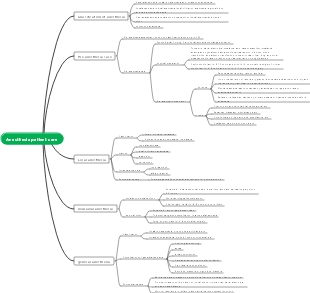
In surgical nursing, the care of patients with surgical infections specifically includes superficial tissue purulent infections, acute purulent infections of the hands, specific infections, and systemic surgical infections.
Edited at 2023-10-26 22:58:38This is a mind map about bacteria, and its main contents include: overview, morphology, types, structure, reproduction, distribution, application, and expansion. The summary is comprehensive and meticulous, suitable as review materials.

This is a mind map about plant asexual reproduction, and its main contents include: concept, spore reproduction, vegetative reproduction, tissue culture, and buds. The summary is comprehensive and meticulous, suitable as review materials.
This is a mind map about the reproductive development of animals, and its main contents include: insects, frogs, birds, sexual reproduction, and asexual reproduction. The summary is comprehensive and meticulous, suitable as review materials.
This is a mind map about bacteria, and its main contents include: overview, morphology, types, structure, reproduction, distribution, application, and expansion. The summary is comprehensive and meticulous, suitable as review materials.
This is a mind map about plant asexual reproduction, and its main contents include: concept, spore reproduction, vegetative reproduction, tissue culture, and buds. The summary is comprehensive and meticulous, suitable as review materials.
This is a mind map about the reproductive development of animals, and its main contents include: insects, frogs, birds, sexual reproduction, and asexual reproduction. The summary is comprehensive and meticulous, suitable as review materials.
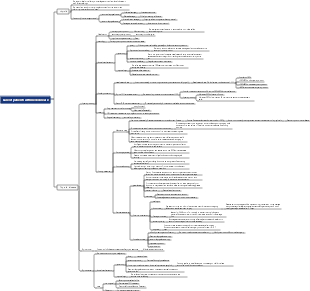
surgical infection care
Superficial tissue purulent infection
boil
definition
Acute purulent infection of a single hair follicle and its associated sebaceous gland
Features
The causative bacteria are Staphylococcus aureus or Epidermococcus
It often occurs in places rich in sebaceous glands such as the head, face, neck, back, armpits and groin.
More common in diabetic patients or children with low immunity
It is related to unclean skin, local abrasions, poor secretion of subcutaneous hair follicles and sebaceous glands, or reduced body resistance.
When the boils in the dangerous triangle area of the face are squeezed, bacteria can enter the skull along the ophthalmic veins and medial canthal veins, causing suppurative cavernous sinusitis.
If the ulcer has not broken out early in the morning, you can apply iodine tincture, fish stone ointment or golden powder. If the abscess has formed, it must be incised and drained in time. Immature boils should not be squeezed.
carbuncle
definition
Acute purulent infection of multiple adjacent hair follicles and surrounding tissues, which can also be caused by the fusion of multiple boils
Features
The causative bacterium is Staphylococcus aureus
It often occurs in thick and tough areas such as the neck and back, and can also be found in the soft tissues of the upper lip and abdomen.
Common in adults, especially patients with diabetes and low immunity
Multiple "pus heads" are formed, and the carbuncle has a large infiltration range and can involve deep subcutaneous connective tissue.
The sores are honeycomb-shaped, like a "crater", and the local skin turns purple-brown due to tissue necrosis.
It is often accompanied by systemic symptoms such as chills, high fever, lack of appetite, and fatigue. Lip abscesses can easily cause intracranial suppurative cavernous sinusitis
treat
In the early stage, wet compresses with 50% magnesium sulfate or 75% ethanol solution can be used, or Ichthyostatin ointment or golden powder can be used externally.
If ulcers have already occurred, timely incision and drainage should be performed. This method should not be used for lip carbuncles.
Antibiotics can be sulfamethoxazole plus methoxazole or penicillin or erythromycin
acute cellulitis
definition
Refers to purulent infection under the skin, subfascia, intermuscular space or deep loose connective tissue
Pathogenic bacteria
Beta-hemolytic Streptococcus (beta-hemolytic Streptococcus) is the most common, followed by Staphylococcus aureus and a few E. coli
pathology
Hemolytic streptococci can release highly toxic hemolysin, hyaluronic acid, and streptokinase. The inflammation is not easily localized and has unclear boundaries with the surroundings, which can cause obvious toxemia.
symptom
General subcutaneous cellulitis: redness, swelling, heat and pain, blisters of different sizes, local skin redness, slight fading when pressed, unclear boundaries, and often ischemic necrosis in the center of the lesion
Gasogenic subcutaneous cellulitis: caused by anaerobic bacteria, mostly occurring in the perineum or lower abdomen. The lesions are mainly in the subcutaneous connective tissue and do not invade the muscle layer. The pus has a foul smell and has crepitus.
neonatal subcutaneous gangrene
Acute cellulitis at the floor of the mouth, under the nose and neck: laryngeal edema is likely to compress the trachea, so incision and decompression should be made as soon as possible to prevent suffocation
treat
50% magnesium sulfate solution for wet compress, or external application of golden powder or fish stone ointment
Penicillin and sulfa drugs are preferred for Staphylococcus aureus and Streptococcus infections
Abscesses should be incised and drained
Gasogenic subcutaneous cellulitis is flushed with 3% hydrogen peroxide solution and added with metronidazole
Acute lymphangitis and lymphadenitis
Overview
Acute lymphangitis: Bacteria invade lymphatic vessels and cause inflammation of surrounding tissues, rarely superficial necrosis or suppuration.
Superficial acute lymphadenitis: It usually occurs in the neck, armpits and groin, and can become purulent and form an abscess.
Pathogenic bacteria: β-hemolytic Streptococcus, Staphylococcus aureus
Prevalent parts: lower limbs and face, especially lower limbs, foot fungus
symptom
acute lymphangitis
Reticulolymphangitis (erysipelas): patchy erythema with well-defined borders, blisters, and “elephantiasis”
Tubular lymphangitis: Common in the limbs, more commonly in the lower limbs. One or more "red lines" appear in the superficial part. There are no red lines in the deep part, and there is strip-shaped tenderness.
Acute lymphangitis: regional lymphadenopathy
Treatment: Elevate the affected limb and apply local 50% magnesium sulfate wet compress
Acute suppurative infection of hands
Paronychia
Pathogenic bacteria: Staphylococcus aureus
Symptoms: Semi-circular abscess, which may form chronic osteomyelitis in severe cases
Treatment: When no abscess is formed in the early stage, physical therapy, hot compress, external application of Ichthyostatin ointment and traditional Chinese medicine should be used. If there is subungual pus, the nail should be removed.
purulent dactylitis
Pathogenic bacteria: Staphylococcus aureus
Symptoms: swelling and throbbing pain in the fingers, especially when the limbs are drooping. In severe cases, chronic osteomyelitis can develop.
Treatment: Keep the affected limb upward to avoid sagging. When abscess forms or throbbing pain occurs, timely incision and drainage are performed. Longitudinal incision is made on the side.
Acute suppurative tenosynovitis, bursitis, deep palm space infection
Anatomy: Tenosynovitis of the index finger can spread to the thenar space. Infection of the middle finger and ring finger extending to the space between the palms
symptom
Tenosynovitis: Stretching your fingers can worsen the pain
Bursitis
Radial bursitis: inability to abduct and straighten the thumb
Ulnar bursitis: little finger is half-curved
palmar space infection
Infection of the space in the palm: the depression in the palm disappears
Infection of the thenar space: depression in the palm, swelling of the thenar eminence and tiger's mouth
Treatment: In the initial stage, apply Ichthyostega and Jinhuang Powder externally, and place the affected limb flat or elevated. In severe cases, incision and drainage will be performed.
specific infection
tetanus
Overview: Clostridium tetani invades the wound and causes acute specific infection, which may occur during delivery under unclean conditions secondary to various traumas.
Cause
The causative bacteria are Clostridium tetani, Gram-positive anaerobic Clostridium spores
Narrow and deep wounds, local ischemia, foreign body retention, tissue necrosis, tight packing, wounds mixed with other aerobic bacteria, etc.
clinical manifestations
Incubation period: 7~8 days. The shorter the incubation period, the worse the prognosis. "Seven-day wind"
Prodromal stage: weakness in chewing and inconvenience in opening the mouth, with inconvenience in opening the mouth being the main feature
Attack stage: paroxysmal strong spasms, the first affected muscles are mastication
Any slight stimulation can induce strong paroxysmal spasms of muscles throughout the body, and the patient will be conscious during the attacks.
Complications: Muscle rupture, fractures, urinary retention, Main causes of death: Asphyxia, heart failure, lung infection
Treatment principles
Eliminate the source of toxins: Thoroughly debridement after injection of tetanus antitoxin, open the wound, adequately drain it, and rinse with 3% hydrogen peroxide solution
Neutralize free toxins: Tetanus immune globulin (TIG) 3000~6000IU intramuscular injection; Tetanus antitoxin (TAT) 20,000~50,000 U intramuscular injection
Controlling and relieving muscle spasms: This is an important part of treatment. Commonly used drugs are 10% chloral hydrate, phenobarbital sodium, and diazepam.
Prevent and treat complications
prevention
Proper wound management: Thorough debridement, irrigation and wet dressing with 3% hydrogen peroxide solution
artificial immunity
Active immunization: with tetanus toxoid antigen
passive immunity
Tetanus Antitoxin
Tetanus immune globulin: best passive immunity, no serum reaction, no allergy test required
Nursing measures
Keep the respiratory tract open: tracheotomy as soon as possible. For those with channel convulsions, oral intake is prohibited.
prevent patient injury
Strengthen nutrition: high energy, high protein, high vitamins, eat small amounts frequently
Condition observation
general care
Placement and recuperation environment: single isolation room, quiet, blackout, reduce visits, operations should be concentrated as much as possible, and should be carried out within 30 minutes of using sedatives
Isolation and disinfection: Clostridium tetanus is contagious and should be isolated from contact. Used accessories should be burned. Used dishes and chopsticks should be soaked in 0.1% to 0.2% peracetic acid and then boiled and disinfected for 30 minutes. The changed linens should be wrapped and sent to an ethylene oxide room for sterilization before being cleaned and disinfected.
health education
Disease prevention: avoid unclean production and receive regular injections of tetanus toxoid or DPT vaccine
Tetanus antitoxin prophylaxis
Any deep and narrow traumatic wound, such as a wooden thorn or a rusty nail
Although the wound was shallow, it was contaminated with human and animal feces
Emergency delivery or abortion without sterilization outside the hospital
Before removal of old foreign body
gas gangrene
Definition: An acute specific infection characterized by myonecrosis or myositis caused by Clostridium difficile, which develops rapidly and has a poor prognosis
Cause
The causative bacterium is Gram-positive anaerobic Clostridium
Depends on the body's resistance and the hypoxic environment of the wound
Low resistance, open fractures, crush injuries with deep muscle injuries, prolonged use of tourniquets, too tight plaster bandages, etc.
Pathophysiology: The causative factors are mainly exotoxins and enzymes. Some enzymes can produce large amounts of insoluble gas that accumulates between tissues.
clinical manifestations
Characteristics: The condition develops rapidly, and the overall condition can deteriorate rapidly within 12 to 24 hours. The incubation period is generally 1 to 4 days, with a minimum of 8 to 10 hours.
Early stage: "cracking" severe pain appears, which is the earliest symptom and cannot be relieved by general analgesics.
Late stage: there is crepitus around, bubbles often overflow from the wound, and thin and foul-smelling secretions flow out, muscle necrosis, no contraction or bleeding during incision
Auxiliary inspection
Laboratory tests: Large Gram-positive Clostridium can be detected
Imaging examination: X-ray and CT examination often show gas in the wound muscles.
Treatment principles
Thorough debridement: Complete debridement while resisting shock. Extensive and multiple incisions are made in the diseased area to reach normal tissue. The incisions are open without suturing.
Antibiotic application: high-dose penicillin intravenous drip
hyperbaric oxygen therapy
pain care
Disinfection and isolation: contact isolation
systemic surgical infection
including sepsis and bacteremia
Cause
Gram-negative bacilli are the most common, including Escherichia coli, Pseudomonas aeruginosa, and Proteus
Gram-positive cocci: Staphylococcus aureus, hemolytic streptococci, enterococci
Non-spore-forming anaerobic bacteria: Clostridium
Fungi
clinical manifestations
Sudden onset of chills, followed by high fever
Headache, dizziness, nausea and vomiting, abdominal distension and diarrhea, even coma
Increased heart rate, thin pulse, rapid and difficult breathing
Liver and spleen may be enlarged
Blood routine
White blood cells are significantly increased or decreased, neutrophil nuclei are shifted to the left, and most patients have signs of anemia.
Treatment principles
Treat primary infection focus
Apply antibiotics
Before the bacterial culture results are obtained, antibiotics should be used in combination as early as possible and in sufficient amounts, and adjustments will be made based on the results later.
Fungal sepsis: Discontinue broad-spectrum antibiotics, switch to narrow-spectrum antibiotics, and apply antifungal drugs