 Wondershare EdrawMind
MindMap Gallery Motion system(1)
- 45
Motion system(1)
Movement system, anatomy, section 1, bones (206 bones) Bone is an organ, mainly composed of bone tissue. According to its location, it is divided into skull (29 bones), trunk bones (51 bones), limb bones and upper limb bones (64 pieces), lower limb bones (62 pieces)
Edited at 2023-10-20 13:33:54
- bacteria
This is a mind map about bacteria, and its main contents include: overview, morphology, types, structure, reproduction, distribution, application, and expansion. The summary is comprehensive and meticulous, suitable as review materials.
- Plant asexual reproduction
This is a mind map about plant asexual reproduction, and its main contents include: concept, spore reproduction, vegetative reproduction, tissue culture, and buds. The summary is comprehensive and meticulous, suitable as review materials.
- Reproductive development of animals
This is a mind map about the reproductive development of animals, and its main contents include: insects, frogs, birds, sexual reproduction, and asexual reproduction. The summary is comprehensive and meticulous, suitable as review materials.
Motion system(1)
- bacteria
This is a mind map about bacteria, and its main contents include: overview, morphology, types, structure, reproduction, distribution, application, and expansion. The summary is comprehensive and meticulous, suitable as review materials.
- Plant asexual reproduction
This is a mind map about plant asexual reproduction, and its main contents include: concept, spore reproduction, vegetative reproduction, tissue culture, and buds. The summary is comprehensive and meticulous, suitable as review materials.
- Reproductive development of animals
This is a mind map about the reproductive development of animals, and its main contents include: insects, frogs, birds, sexual reproduction, and asexual reproduction. The summary is comprehensive and meticulous, suitable as review materials.
- Recommended to you
- Outline
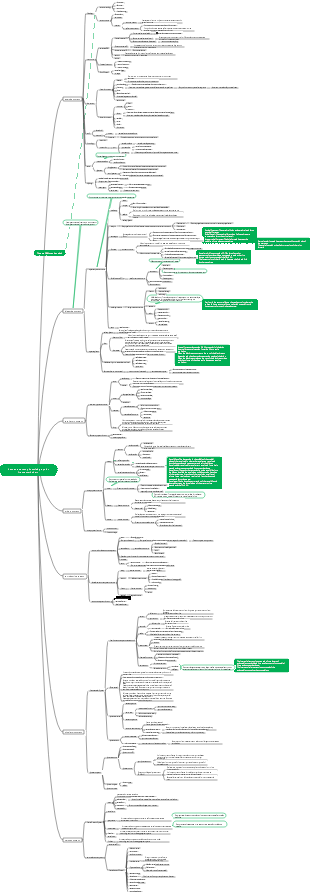
exercise system
Overview of Bones
Classification of bones (206 pieces)
Bone is an organ Mainly composed of bone tissue
According to its location
Skull (29 pieces)
Trunk bones (51 pieces)
axial bone
limb bones
Upper limb bones (64 pieces)
Lower limb bones (62 pieces)
According to the shape of the bone
long bone (one body with two ends)
Short bones (cuboidal in shape)
Flat bones (plate-shaped)
Irregular bones
bone structure
There are blood vessels and lymphatic vessels and innervation
Bone (main body)
Bone compaction (consisting of closely arranged layers of bone plates distributed on the surface of the bone)
Cancellous bone (spongy, made up of interwoven trabeculae, located inside the bone)
periosteum
Epiosseous membrane
Inner layer (loose, rich in blood vessels, neuroosteoblasts, osteoclasts)
Outer layer (thicker, made of dense connective tissue)
endosteum (thin connective tissue)
marrow
red bone marrow
Red bone marrow is stored throughout life in the ilium, sternum and vertebrae
Yellow bone marrow (contains a lot of fatty tissue)
Bone blood vessels, lymphatic vessels and nerves (periosteum is rich in lymph)
Chemical composition and physical properties of bone
Main components of bone
The ratio of organic matter to inorganic matter in adult bones is 3:7
1/3 organic matter (composed of collagen fibers and mucopolysaccharide proteins, which form the scaffolding of bones and give them toughness and elasticity)
2/3 inorganic matter (mainly composed of calcium salts, deposited in collagen fibers, making bones hard)
bone occurrence and development
membranous bone
chondrified bone
Bone plasticity and its significance
Overview of bone connections
direct link
fiber link
Two adjacent bones are connected by fibrous connective tissue, which is tight, firm and inactive.
ligamentous junction
Sutures: Found between the skull bones
cartilage connection
hyaline cartilage union
Fibrocartilage syndesmosis: such as the intervertebral discs between vertebrae
osseointegration
indirect link
basic structure of joints
Articular surface: refers to the bone surface where the bones participating in the joint contact each other.
joint head
glenoid fossa
Articular cartilage: reduces friction and cushions pressure
joint capsule
Outer layer: fibrous layer, thick and tough, rich in blood vessels and nerves
Inner layer: The synovial layer is rich in vascular network and can secrete synovial fluid for lubrication.
Joint cavity: It is a narrow gap between the synovial layer of the joint capsule and the articular cartilage. There is a small amount of synovial fluid in the cavity. The negative pressure in the cavity is conducive to the stability of the joint.
auxiliary structures of joints
ligament
extracapsular ligament
intracapsular ligament
Articular disc: Increases the stability of the joint and the diversity of movement
The articular disc of the knee joint is half-moon-shaped, called the meniscus
Articular labrum: ring of fibrocartilage attached to the periphery of the glenoid fossa
Increase joint stability and flexibility
joint movement
Flexion and extension: movements along the coronal axis
Adduction and abduction: movement along the sagittal axis
Rotation: Movement along a vertical axis
Circular rotation: It is a compound movement on the coronal axis and the sagittal axis
Classification of joints
single axis joint
biaxial joint
multi-axis joint
joint stability and flexibility
The area difference between the two joint surfaces
joint capsule
joint ligaments
muscle
The shape and structure of bones in the body
trunk bone
Vertebrae (irregular bones) (24 pieces)
Composed of vertebral bodies and posterior plate-like vertebral arches
general shape of vertebrae
The vertebral bodies and vertebral arches surround the vertebral foramina, and the vertebral foramina are connected to form the spinal canal.
The upper and lower notches of the two adjacent vertebral pedicles form an intervertebral foramen, through which spinal nerves pass.
Main characteristics of each vertebrae
Cervical vertebrae (large body holes, transverse process holes at the roots of the transverse processes) (7 pieces)
The first cervical vertebra (also known as the atlas) is annular and has no vertebral body or protrusion.
The second cervical vertebra (also known as the pivot vertebra)
The seventh cervical vertebra (also known as the vertebrae) has a long spinous process and does not bifurcate at the end.
The vertebral bodies of the thoracic vertebrae (12) are heart-shaped, and there are transverse costal processes in front of the ends of the transverse processes.
The lumbar vertebrae (5 pieces) have large vertebral bodies, well-developed vertebral arches, and spinous processes that are plate-shaped and extend horizontally to the rear.
Sacrum: It is formed by the fusion of 5 sacral vertebrae, with the base upward and the middle part of the front edge of the base protruding forward, called the promontory.
Coccyx: It is formed by the fusion of 3-4 degenerated coccygeal vertebrae. The upper end is connected to the sacrum, and the lower end is free to become the tip of the coccyx
Sternum (1 piece)
Sternal manubrium: wide at the top and narrow at the bottom
Body of sternum: rectangular with lateral edge connected to costal cartilages 2-7
Xiphoid process: flat and thin, with large changes in shape and free lower end
Ribs (12 pairs)
The front ends of the 1st to 7th pairs of ribs are connected to the sternum and are called true ribs. The front ends of the 8th to 10th pairs of ribs are connected to the upper costal cartilage by costal cartilage to form a costal arch, which is called a false rib. The front ends of the 11th and 12th pairs of ribs are free in the abdominal muscles and are called floating ribs.
Rib (flat bone) body and front and rear ends
Costal cartilage: Located at the front end of each rib, it is composed of hyaline cartilage and does not ossify throughout life.
Important bony landmarks of trunk bones
jugular notch
Sternal angle: It is the slightly forward convex angle at the connection between the sternum manubrium and the sternum body.
Costal arch: The 8th to 10th costal cartilage is connected to the upper costal cartilage in turn to form the left and right costal arches. It is an important sign of clinical liver and spleen palpation.
Sacral canal hiatus: at the lower end of the middle of the back of the sacrum, between the left and right sacral angles, it is the downward opening of the sacral canal, reaching the end of the epidural space of the spinal cord, and is the needle insertion site for sacral anesthesia.
The 7th cervical spinous process: can be used as a marker to determine the number of vertebral spines
limb bones
Upper limb bones
upper limb bone
Clavicle: Located in the front and upper part of the thorax, it is divided into two ends and upper and lower sides. It is smooth above and rough below.
The junction of the middle and outer third of the clavicle is thin and prone to fracture.
shoulder blade
Divided into three edges, triangle and front and rear sides
Hypertrophy of the lateral border is called the axillary border
The thin and sharp medial border is called the spinal border
The thickest lateral corner contains the glenoid
Scapular spine: The shallow fossa above and below the spine are called supraspinatus fossa and infraspinatus fossa respectively.
free upper limb bones
humerus
Long bone, one body with two ends
Humeral head
Anatomical neck: a shallow circular groove around the head of the humerus
Surgical neck (prone to fracture)
deltoid tuberosity
radial nerve groove
humeral pulley
Coronal and radial fossa
humeral head
olecranon fossa
Lateral epicondyle and medial epicondyle
The medial epicondyle is more prominent than the lateral epicondyle
ulnar nerve groove
ulna
Located on the inside of the forearm, divided into two ends
coronoid process and olecranon
radial notch
ulnar tuberosity
ulnar head
ulnar styloid process
Radius
radial neck
radial tuberosity
ulnar notch
radial styloid process
Carpal bones (8 pieces): scaphoid, lunate, triquetrum, pisiform, large polygonal, small polygonal, capitate, hamate
Divided into two rows, near and far, with 4 bones in each row
Metacarpal bones (5 pieces)
Finger bones (14 pieces)
Important bony landmarks of upper limb bones
Acromion: It is the highest point of the shoulder and is a mark for measuring the length of the upper limbs.
Lower angle of scapula: corresponds to the seventh rib or seventh intercostal space, and is the mark for determining the number of ribs
The medial epicondyle of the humerus, the lateral epicondyle and the olecranon at the upper end of the ulna
Lower limb bones
Lower limb bones (hip bones)
Irregular bone, flat and wide in the upper part, narrow and thick in the middle, with a deep socket facing downward, called the acetabulum
Ilium (2/5) divided into two parts: body and wing
Ischia (2/5) divided into two parts: body and ramus
Pubic bone (1/5) is divided into upper and lower branches
pubic comb
pubic tubercle
closed hole
free lower limb bones
Femur: femoral head, femoral neck, greater trochanter, lesser trochanter, linea pachyderma, gluteal tuberosity, popliteal surface, medial condyle, lateral condyle, intercondylar fossa
The longest and thickest long bone in the human body
Patella: Located in front of the knee joint, wrapped in the quadriceps tendon
The largest sesamoid bone in the human body
Tibia: Located on the inside of the calf and plays an important role in supporting body weight
Fibula: located on the outside of the lower leg
foot bones
tarsus
phalanx metatarsal
Important bony landmarks of lower limb bones
skull
Composition of the skull (23 pieces)
Brain skull (8 pieces)
in pairs
parietal bone
Temporal bone
Temporal scale
Iwabe
Drum part
Not paired
frontal bone
Sphenoid bone: located in the center of the skull base
body
Large wing: foramen rotunda, foramen ovale, foramen spinosum
Xiaoyi
superior orbital fissure
pterygoid process
Occipital bone
Ethmoid bone: located between the two orbits and forming the lateral wall of the upper part of the nasal cavity
The most fragile air-containing bone
Sieve plate
vertical board
ethmoid labyrinth
Facial skull (15 pieces)
in pairs
maxilla
cheekbones
nasal bones
tear bone
palatine bone
inferior nasal bone
Not paired
vomer
Mandible: divided into two parts
Hyoid bone: located behind and below the mandible, with the body in the middle and a pair of large and small horns extending backward.
holistic view of skull
Top view of skull: oval, narrow in front and wide in back, smooth and convex
Coronal suture: between the frontal bone and the parietal bones on both sides
Sagittal suture: between the two parietal bones
Lamb suture: between the parietal bones and occipital bones on both sides
cranial view
Frontal bone, sphenoid bone, parietal bone, temporal bone, occipital bone
Pterion: frontal bone, parietal bone, temporal bone, greater wing of sphenoid bone
anterior cranial view
orbit
bony nasal cavity
paranasal sinuses
maxillary sinus
frontal sinus
Anterior ethmoid sinus, middle group
Open into middle sinus
retroethmoid group
Opening into superior sinuses
sphenoid sinus
Opening into sphenoethmoidal recess
internal view of skull
inner surface of skull
inner surface of skull base
anterior cranial fossa
Composed of the orbital length of the frontal bone, the cribriform plate and the lesser wing of the sphenoid bone
From front to back, there are frontal crest, blind foramen, and cockscomb on the midline.
There are sieve holes in the cribriform plate leading to the nasal cavity
middle cranial fossa
It is composed of body of sphenoid bone, greater wing, petrous part of temporal bone, etc.
On both sides of the sella turcica, from front to back, there are the superior orbital fissure, round foramen, foramen ovale, foramen spinosum, etc.
posterior fossa
It is mainly composed of the occipital bone and the back of the petrous part of the temporal bone.
External appearance of skull base
Neonatal skull characteristics and postnatal changes
The ratio of a newborn’s brain to facial skull is 8:1 Adult 4:1
coronal suture
sagittal suture
herringbone seam
Important bony features of the skull
Mastoid: Behind the ear, there are mastoid cells inside
Zygomatic arch
Brow arch, supraorbital rim: It is the upper edge of the orbit, composed of the frontal bone
Mandibular ramus, mandibular angle and mandibular floor
external occipital protuberance
Myology
Overview
Muscles can be divided into smooth muscle, cardiac muscle, and skeletal muscle
Muscle shape and structure
longus, brevis, latissimus, orbicularis
muscle belly
The main body of muscle, composed of striated muscle fibers
tendon
Made of collagen fibers, non-contractile, attached to bone
The tendon of the latissimus muscle is membrane-like, called aponeurosis
The origin and function of muscles
Muscles usually originate from one bone and insert into another, spanning one or more joints Generally, the attachment points close to the midline of the body or the proximal sides of the limbs are called muscles. The starting point or fixed point, the other end is called the end point or moving point
muscle distribution
The distribution of muscles is related to the axis of motion of the joint
Prime mover, antagonist muscle, synergist muscle, fixed muscle
muscle auxiliary device
Fascia
superficial fascia
Located under the dermis, also called subcutaneous fascia
It is composed of loose connective tissue, including superficial arteries, superficial veins, cutaneous nerves, lymphatic vessels and adipose tissue, etc.
deep fascia
Also known as inherent deep tendons
It is composed of dense connective tissue located deep in the superficial fascia, wrapping muscles, muscle groups, body walls, blood vessels, nerves, etc.
synovial bursa
Synovial inflammation can affect local motor functions of the limbs
It is a small, closed connective tissue sac with thin walls and synovial fluid inside.
tendon sheath
It is a sheath that wraps around the tendon and is located in the part of the tendon that has greater mobility.
Divided into outer fibrous layer and inner synovial layer
head and neck muscles
head muscles
facial muscles
It is a flat and thin skin muscle, which can be divided into two types: circular muscle and radial muscle. It is also called expression muscle.
occipitofrontalis muscle
Consists of two muscle bellies and the galea aponeurosis in the middle
orbicularis oculi muscle
Located around the eye fissure, it is flat oval in shape and closes the palpebral fissure when it contracts.
orbicularis oris muscle
Surrounds the cleft of the mouth and can close the mouth when contracted
buccinator muscle
Located deep in the cheek, when this muscle contracts, the cheek is close to the teeth and gums, assisting in chewing and sucking.
Masticatory muscles
Masseter muscle
Originating from the lower edge and inner surface of the zygomatic arch, the fibers terminate obliquely posteriorly and downwardly at the masseter tuberosity.
temporalis muscle
Originates from the temporal fossa and ends at the coronoid process of the mandible
medial pterygoid muscle
It originates from the pterygoid process and ends at the tuberosity of the pterygoid muscle on the inner surface of the mandibular angle.
Lift the mandible
lateral pterygoid muscle
The natural position of the mandibular joint is with the mouth closed
In the infratemporal fossa, originating from below the greater wing of the sphenoid bone and lateral to the pterygoid process
Descending mandible
neck muscles
shallow group
platysma
Located in the superficial fascia on both sides of the front of the neck, it has the function of tightening the neck skin and lowering the corners of the mouth.
sternocleidomastoid muscle
Originates from the manubrium of the sternum and the medial end of the clavicle and ends at the mastoid process of the temporal bone
Function: Contraction on one side makes the head tilt to the same side and the face faces the opposite side. Contraction on both sides makes the head tilt back.
suprahyoid muscles
Located between the hyoid bone, mandible, and skull base
Infrahyoid muscles
Located in the front of the neck, on either side of the midline below the hyoid bone
deep group
medial group
In front of the cervical segment of the spine, there are the longus capitis and longus colli muscles.
outer group
Located on both sides of the cervical segment of the spine, there are the anterior scalene muscle, the middle scalene muscle, and the posterior scalene muscle.
limb muscles
Upper limb muscles
Upper limb girdle muscles
deltoid muscle
Located on the outside of the shoulder in a triangular shape
supraspinatus
Originates from the supraspinatus fossa and ends at the greater tubercle of the humerus, with the upper arm abducted
infraspinatus muscle
It originates from the infraspinatus fossa, is partially covered by the trapezius and deltoid muscles, passes behind the shoulder joint and ends at the greater tubercle, with the upper arm externally rotated
teres minor
Located below the infraspinatus muscle, originating from the back of the lateral edge of the scapula and ending at the greater tubercle, with the upper arm externally rotated
teres major
It is located below the infraspinatus and teres minor muscles, originating from the lower angle of the scapula and ending at the lesser tuberosity ridge. The upper arm is adducted and internally rotated.
subscapularis
From the subscapular fossa to the lesser tubercle of the humerus
brachial muscles
Anterior group (flexor muscles)
Biceps
The elbow joint is fusiform, with two heads at the beginning.
coracobrachialis
Behind the short head of the biceps brachii
Assists in forward flexion and adduction of the upper arm
brachialis
Located deep in the lower half of the biceps brachii, flexing the elbow joint
posterior group (extensor muscles)
triceps brachii
Located behind the humerus, it has three heads at its origin and extends the elbow joint
forearm muscles
Anterior group (9 flexor muscles)
Shallow layer
There are 6 muscles, from the radial side to the ulnar side, they are the brachioradialis, pronator teres, flexor carpi radialis, palmaris longus, flexor digitorum superficialis and flexor carpi ulnaris.
Deep
There are three muscles, the flexor pollicis longus on the radial side, the flexor digitorum profundus on the ulnar side, and the pronator quadratus on the deep side.
Posterior group (10 extensor muscles)
Shallow layer
There are 5 muscles, from the radial side to the ulnar side, they are extensor carpi radialis longus, extensor carpi radialis brevis, extensor digitorum, extensor digiti minimi and extensor carpi ulnaris.
Deep
There are 5 muscles, from top to bottom, from the radial side to the ulnar side, namely the supinator muscle, the abductor pollicis longus muscle, the extensor pollicis brevis muscle, the extensor pollicis longus muscle and the extensor index finger muscle.
hand muscles
outer group
It can make the thumb expand, flex, palm open and close, etc.
Located on the thumb side of the palm, it has a plump appearance and is called the thenar. There are 4 pieces in total.
medial group
Can make the little finger do flexion, abduction and palm alignment.
Located on the little finger side of the palm, it is relatively plump and is called the hypothenar, with a total of 3 pieces.
intermediate group
Located in the middle part of the palm, there are 11 muscles in total, including 4 lumbrical muscles, 3 palmar interosseous muscles, and 4 dorsal interosseous muscles.
Fascia and tendon sheaths of the upper limbs
local structure of upper limbs
armpit
The cone-shaped cavity located between the lateral wall of the chest and the upper arm, which supplies blood vessels and nerves to the upper limbs.
cubital fossa
Triangular shallow depression located in front of the elbow joint
wrist fossa
Located on the palm side of the wrist
Lower limb muscles
hip muscles
former group
iliopsoas muscle
psoas major
Originates from the sides and transverse processes of the lumbar vertebrae
iliacus muscle
Originates from iliac fossa
Flex and externally rotate the thigh
tensor fascia lata
From the anterior superior iliac spine, the muscle belly is wrapped between two layers of fascia lata and inserts at the lateral condyle of the tibia.
Function: Tighten the fascia lata and flex the thighs
Houqun
Function: Extend and externally rotate the thigh
gluteus maximus
It is located in the superficial layer of the buttocks, is large and thick, and forms a unique buttock bulge together with the subcutaneous tissue.
gluteus medius
The upper and anterior parts are located under the skin, and the lower and posterior parts are located deep to the gluteus maximus muscle.
gluteus minimus
Located deep to gluteus medius
piriformis muscle
Originating from the front of the sacrum in the pelvis, the fibers go out from the greater ischial foramen to the buttocks and end at the greater trochanter of the femur.
Function: Externally rotate the straight thigh
obturator internus muscle
It starts from the inner surface of the obturator membrane and its surrounding bone surface and ends at the trochanteric fossa.
quadratus femoris
Originates from the ischial tubercle and ends at the intertrochanteric ridge.
obturator externus
On the deep surface of the quadratus femoris muscle, it starts from the outside of the obturator membrane and its surrounding bone surface, passes behind the femoral neck, and ends at the trochanteric fossa.
Thigh muscles
former group
Sartorius muscle
Flat band-shaped longissimus muscle of the human body, originating from the anterior superior iliac spine, diagonally inward and downward, and inserting on the inner surface of the upper end of the tibia
Function: Flex the hip and knee joints to internally rotate the flexed knee joint
quadriceps
It is particularly developed. It is the largest muscle in the human body and has 4 heads: rectus femoris, vastus medialis, vastus lateralis and vastus intermedius.
Function: Extends the knee joint, the rectus femoris muscle can remove the hip joint
medial group
Located on the inner thigh, there are 5 muscles in total
Adduct and externally rotate the thigh
Houqun
Main function: knee flexion and hip extension
biceps femoris
Located on the posterior and lateral sides of the femur, the long head originates from the ischial tubercle, and the short bone originates from the back of the femur. After the two ends meet, the long tendon ends at the head of the fibula.
semitendinosus
Located on the medial side of the posterior thigh, the long and slender tendon accounts for about half of the muscle. It originates from the ischial tubercle and inserts on the inner surface of the upper end of the tibia.
semimembranosus
Located deep to the semitendinosus muscle, the originating tendon is membranous, accounting for almost half of the entire muscle length. It originates from the ischial tubercle and inserts behind the medial condyle of the tibia.
Bend the knees, extend the thighs, and rotate the calves inwards.
calf muscles
former group
Located in front of the calf, there are three muscles
tibialis anterior
extensor digitorum longus
𧿹Extensor longus
outer group
Located on the outside of the fibula
Peroneus longus muscle (superficial layer)
Peroneus brevis (deep)
Function: Pronates the foot and plantar flexes it to maintain the arch of the foot
Houqun
Located behind the calf
Triceps surae (superficial)
gastrocnemius
soleus muscle
Function: Lift the heel to plantarflex the foot
Deep
flexor digitorum longus
tibialis posterior
𧿹Flexor longus
foot muscles
dorsalis pedis
Including extensor pollicis brevis and extensor digitorum brevis, which can extend the thumb and toes.
plantar muscle
There are three groups: medial, lateral and middle. The medial and lateral group lacks the anti-plantaris muscle. In addition to the lumbrical muscles and interosseous muscles, the middle group also has flexor digitorum brevis and quadratus plantaris muscles, which can assist in flexing the toes and maintaining the arch of the foot.
fascia of lower limbs
local structure of lower limbs
stock triangle
Located in the upper anterior thigh, the triangular area surrounded by the inguinal ligament, the medial edge of the sartorius muscle and the medial edge of the adductor longus muscle contains the femoral nerve, blood vessels and lymph nodes.
adductor canal
Located on the inner side of the mid-thigh, it is the triangular space formed between the sartorius, vastus medialis, and adductor magnus muscles. The upper opening is connected to the femoral triangle, and the lower opening is the adductor tendon hiatus, through which the femoral vessels enter the popliteal fossa.
Popliteal fossa
Located behind the knee joint, it is rhombus-shaped and has four sides: the biceps femoris, semitendinosus, and the medial and lateral heads of the gastrocnemius. There are popliteal blood vessels, tibial nerve, common peroneal nerve, lymph nodes and fat in the fossa.
Trunk muscles
Back muscles
superficial dorsal muscles
trapezius muscle
Located in the shallow layer of the neck and back, one side is triangular and the two sides together are rhombus
Function: To bring the scapula closer to the spine, the upper muscle bundle can lift the scapula, and the lower muscle bundle can fix the scapula
If the scapula is fixed, contraction of the muscles on one side causes the neck to flex to the same side and the face to the opposite side. Contraction of both sides at the same time can cause the head to tilt back.
latissimus dorsi
It is the largest latissimus muscle in the body, located in the lower back, waist and side walls of the chest.
Make the humerus adduct, rotate internally and extend posteriorly. When the upper limb is fixed, you can do pull-ups.
Deep dorsal muscles
Erector spinae
Also known as the sacrospinalis muscle, it is the longest and largest muscle on the back and is located in the longitudinal grooves on both sides of all spinous processes.
Function: Extend the spine and raise the head
thoracolumbar fascia
Wrapped around the erector spinae and quadratus lumborum muscles, it forms the sheath of these muscles and is divided into three layers: anterior, middle and posterior.
chest muscles
chest and upper limb muscles
pectoralis major
It is fan-shaped and covers most of the anterior chest wall. It originates from the medial half of the clavicle, the sternum and the 1st to 6th costal cartilages. The muscle bundles are concentrated laterally and end with the flat tendon at the greater tubercle ridge of the humerus.
Function: Adducts, internally rotates and flexes the humerus. If the upper limb is fixed, it can lift the trunk, and also lift the ribs to assist in inhalation.
pectoralis minor
Located deep to the pectoralis major muscle, it is triangular in shape, originating from the 3rd to 5th ribs and ending at the scapula and coracoid process.
Function: Pull the scapula forward and downward. When the scapula is fixed, the ribs can be lifted to assist in inhalation.
serratus anterior
Close to the lateral wall of the thorax, the muscle teeth originate from the outside of the 1st to 8th ribs, the muscle bundles are obliquely posterior and upward, and end at the medial edge and lower corner of the scapula.
Function: Pull the scapula forward and close to the chest. The lower muscles can help lift the arm. When the scapula is fixed, lift the ribs to help take a deep breath.
pectoralis propria
external intercostal muscles
It is located in the most superficial layer of each intercostal space, starting from the lower edge of the upper rib, and the muscle bundle is obliquely forward and downward, ending at the upper edge of the next rib.
Function: Lifting ribs to assist in inhalation
internal intercostal muscles
Located on the deep surface of the external intercostal muscles, it originates from the upper edge of the lower ribs, and the muscle fibers run forward and upward, ending at the lower edge of the upper ribs.
Function: lowering ribs and assisting exhalation
innermost intercostal muscle
Located in the middle of the intercostal space, deep to the internal intercostal muscles, the direction and function of the muscle bundles are the same as those of the internal intercostal muscles
diaphragm
Located between the thorax and abdomen, becoming the bottom of the thorax and the roof of the abdominal cavity
A broad muscle that separates the chest and abdomen. It swells upward and is dome-shaped. The surrounding part is muscle. The muscle fibers originate from the periphery of the lower thoracic opening and the front of the lumbar vertebrae. They move toward the center to become aponeurosis, which is called the central tendon.
There are three holes on the diaphragm. The aortic hole in front of the 12th thoracic vertebra, between the left and right crura of the diaphragm and the spine, has the aorta and thoracic duct passing through it; the esophageal hole is located in front of the left side of the aortic hole, about the level of the 10th thoracic vertebra, and has The esophagus and vagus nerve pass through; there is a vena cava foramen located on the right front and upper side of the aortic hiatus, about the level of the eighth thoracic vertebra, and the inferior vena cava passes through
It is mainly a respiratory muscle. When contracting, the diaphragmatic vault descends and the chest volume expands, assisting in inhalation. When relaxed, the diaphragmatic vault rises and returns to its original position, and the chest volume decreases, assisting expiration. When the diaphragm and abdominal muscles contract simultaneously, it can increase abdominal pressure to assist defecation and childbirth.
abdominal muscles
Located between the thorax and pelvis
anterolateral group
rectus abdominis
A pair of long strap-like muscles located on both sides of the midline of the front of the abdomen, wrapped in the rectus abdominis sheath, wide at the top and narrow at the bottom
Muscle fiber direction: muscle bundles upward, tendons across
external oblique muscle
It is a broad platysus muscle, located in the superficial layer of the anterolateral wall. It has 8 teeth originating from the outside of the lower 8 ribs and intersects with the teeth of the serratus anterior and latissimus dorsi muscles.
Muscle fiber direction: from outer to upper and oblique to outer and lower
Forming structures: inguinal ligament, anterior superior iliac spine and pubic tubercle, superficial inguinal ring
internal oblique muscle
Located deep to the external oblique muscle, originating from the thoracolumbar fascia, iliac crest, and lateral half of the inguinal ligament
Muscle fiber direction: fan-shaped
transversus abdominis
Located deep to the internal oblique muscle, originating from the inner surface of the lower 6 costal cartilages, thoracolumbar fascia, iliac crest and lateral 1/3 of the inguinal ligament
Muscle fiber direction: Muscle bundles run transversely
Houqun
quadratus lumborum
It is located on both sides of the spine on the posterior abdominal wall, originating from the back of the iliac crest and ending upward at the 12th rib and the transverse processes of the 1st-4th lumbar vertebrae. When contracting, lower the 12th rib and flex the spine laterally
psoas major
effect: Together, they protect abdominal organs, maintain intra-abdominal pressure, and keep the positions of abdominal organs fixed. Increase abdominal pressure to aid bowel movements, childbirth, vomiting and coughing Lower ribs to assist expiration Flex the spine forward, lateral flexion and rotation
Intermuscular structure formed by abdominal muscles
rectus abdominis sheath
It is composed of the three layers of flat muscles of the anterolateral abdominal wall and the aponeurosis surrounding the radiorectus abdominis.
White line
It is composed of three layers of aponeurotic fibers interwoven with the flat muscles on both sides.
It is an aponeurotic band on the midline of the anterior abdominal wall
Originates from the xiphoid process and ends at the pubic symphysis
Characteristics: Tough, avascular, wide at the top and narrow at the bottom
inguinal canal
draw-in structure Spermatic cord (male) Round ligament of uterus (female)
Located on the medial half of the inguinal ligament
constitute
couple
Internal opening: deep (abdominal) ring of inguinal canal
External opening: superficial (subcutaneous) ring of inguinal canal
four walls
front wall
External oblique aponeurosis and internal oblique
back wall
Transversalis fascia and falx inguinalis
upper wall
The inferior arcuate border of the internal oblique and transversus abdominis muscles
lower wall
inguinal ligament
Inguinal (Heidegger's) triangle
Located in the lower part of the anterior abdominal wall
Composition: surrounded by the lateral edge of the rectus abdominis, inguinal ligament and inferior epigastric artery
abdominal fascia
superficial fascia
deep fascia
It can be divided into several layers, covering the surface and deep surface of each muscle of the anterolateral group.
pelvic floor muscles
Muscles within the anal triangle
levator ani muscle
It is a pair of wide thin muscles, funnel-shaped, originating from the pelvic side wall, and the fibers end posteriorly and inwardly at the central tendon of the perineum, anococcygeal ligament and coccyx.
Function: seals the lower opening of the pelvis and supports the internal organs. During contraction, it lifts the anus and assists in tightening the anus. In women, it also has the function of narrowing the vaginal opening.
coccygeus muscle
It is attached to the inner surface of the sacrospinous ligament, originates from the ischial spine, and ends in a fan shape at the lateral edges of the sacrum and coccyx. It helps form the pelvic floor, closes the posterolateral part of the lower pelvic opening, and supports the pelvic viscera.
external anal sphincter
It is the skeletal muscle surrounding the anus, divided into subcutaneous, superficial and deep parts.
Muscles within the urogenital triangle
Superficial transverse perineal muscle, bulbocavernosus muscle, ischiocavernosus muscle, deep transverse perineal muscle, urethral sphincter
The connection of bones throughout the body
trunk bone connection
connection between vertebrae
connection between vertebrae
intervertebral disc
It is a fibrocartilage disc that connects two adjacent vertebrae. There are 23 in adults.
Function: Withstand pressure, absorb shock, slow down impact
Located behind the center of the disc: nucleus pulposus
Multilayered ring of fibrocartilage surrounding the nucleus pulposus: annulus fibrosus
anterior longitudinal ligament
Prevent excessive extension of the spine and forward disc herniation
posterior longitudinal ligament
Limit excessive forward bending of the spine
Limit excessive extension and flexion of the spine
connection between vertebral arches
ligamentum flavum
A short ligament that connects two adjacent vertebral laminae, also known as the interarchus ligament
Made of yellow elastic fiber
Helps encircle the spinal canal and limit excessive forward bending of the spine
interspinous ligament
supraspinal ligament
Limit forward flexion of the spine
nuchal ligament
Composed of the upper and lower facet joints of two adjacent vertebrae: facet joint
atlanto-occipital joint
Allows the head to rotate the atlantoaxial joint
spine
It is composed of all vertebrae, intervertebral discs, sacrum, and coccyx connected by their ligaments and joints. The adult spine is about 70 cm long, with a spinal canal inside and 23 pairs of intervertebral foramina on both sides. It has the functions of supporting body weight, transmitting pressure, buffering shock, protecting the spinal cord, and protecting internal organs.
Holistic view of the spine
Anterior view of spine
back view of spine
It can be seen that the spine has four physiological curvatures: neck, chest, waist and sacral: side view of the spine
movement of spine
Can do flexion, extension, lateral flexion, rotation, and circumference
rib connection
The back end of the ribs is connected to the thoracic vertebrae, and the front end of the ribs is connected to the sternum through costal cartilage.
Connection between ribs and thoracic vertebrae
The posterior end of the ribs and the thoracic vertebra form the costovertebral joint
The rib heads and rib concavities form the rib head joints
The rib tubercle and rib neck form the costotransverse process joint
Ribs can be raised and lowered
connection between ribs and sternum
thorax
The composition of the thorax
It is composed of 12 thoracic vertebrae, 12 pairs of ribs, and 1 sternum.
shape of thorax
function of thorax
Accommodates and protects the heart, lungs, great blood vessels, and covers the liver, spleen and other organs
engage in breathing exercises
Inhale, the front end of the ribs is raised, the sternum rises, the anteroposterior diameter of the thorax is enlarged, the ribs are raised, the rib body expands outward, the transverse diameter of the thorax is enlarged, and the volume of the thorax is increased.
When exhaling, the front ends of the ribs lower, the sternum descends, reducing the anteroposterior diameter of the thorax, the ribs descend, the rib body contracts inward, the transverse diameter of the thorax decreases, and the volume of the chest cavity decreases.
connection of limb bones
connection of upper limb bones
Upper limb bone connection
sternoclavicular joint
It is the only joint that connects the bones of the upper limbs to the bones of the trunk
It consists of the sternal end of the clavicle, the clavicular notch of the sternum, and the upper surface of the first costal cartilage.
The joint capsule is tough and reinforced by ligaments, and there is an articular disc within the joint capsule.
acromioclavicular joint
A planar joint formed by the acromial end of the clavicle and the articular surface of the acromion
The upper part of the joint capsule and the lower part of the clavicle are strengthened by the acromioclavicular ligament and coracoclavicular ligament respectively.
articular disc
coracoacromial ligament
It is a triangular ligament that is connected between the coracoid process and acromion of the scapula.
Coracoacromial arch: The coracoacromial ligament, coracoid process and acromion jointly form to prevent upward dislocation of the humeral head.
articulation of free upper limb bones
shoulder joint
Composed of the head of the humerus and the glenoid of the scapula, also called the glenohumeral joint
The head is large and shallow, the joint capsule is thin and loose, the ligaments are small, the movement is flexible, and the stability is relatively poor.
Movement: flexion, extension, retraction, expansion, rotation, rotation
elbow joint
Humeroulnar joint
Composed of humeral trochlea and ulnar trochlear notch
humeroradial joint
Composed of the articular concavity of the humeral head and radial head
proximal radioulnar joint
Composed of the annular articular surface of the radius and the radial notch of the ulna
joint capsule, ligament
Movement: flexion, extension, pronation, supination
radioulnar connection
interosseous membrane of forearm
proximal radioulnar joint
distal radioulnar joint
composition
Features: Relaxation of joint capsule
Combined with the proximal radioulnar joint, the forearm can be pronated and supinated.
hand joints
radiocarpal joint
Glenoid fossa: composed of the articular surface at the lower end of the radius and the articular disc below the ulnar head
Articular head: proximal surface of scaphoid, lunate, and triquetrum
composition
Features: The joint capsule is loose and surrounded by ligaments that strengthen it
Movement: flexion, extension, extension, rotation
intercarpal joint
connection between carpal bones
carpometacarpal joint
Composed of the distal row of carpal bones and 5 metacarpal bases
metacarpophalangeal joint
interphalangeal joint
lower limb bone connection
lower limb bone connection
sacroiliac joint
Made up of the auricular surfaces of the sacrum and ilium
The joint capsule is tense and strengthened by the anterior and posterior sacroiliac ligaments in the front and back respectively.
pubic symphysis
It is formed by connecting the pubic symphysis surfaces on both sides through the interpubic disc.
sacrotuberous ligament and sacrospinous ligament
Encircle the greater and lesser ischial notches to form the greater ischial foramen and the lesser ischial foramen
pelvis
It has the function of supporting body weight, transmitting gravity, supporting and protecting pelvic organs
It is composed of the sacrum, coccyx, left and right hip bones and the bone connections between them.
Boundary lines: promontory, arcuate line, pubic comb, pubic tubercle, upper edge of pubic symphysis
large pelvis
small pelvis
upper pelvis
pelvic cavity
pelvic orifice
It is bounded by the tip of the coccyx, the sacrotuberous ligament, the ischial tubercle, the ischial ramus, the pubic ramus and the lower edge of the pubic symphysis.
free lower limb bones
hip joint
Made up of acetabulum and femoral head
Auxiliary structure
Ligaments: iliac ligament, femoral head ligament
articular labrum, acetabular labrum
The head is large and deep, the joint capsule is tight and tough, the ligaments are numerous and thick, the range of motion is small, and the stability is good
Movements: flexion, extension, abduction, internal rotation, external rotation, rotation (the range is not as good as that of the shoulder joint)
knee joint
It consists of the lower end of the femur, the upper end of the tibia and the ilium (the most complex joint in the human body)
Iliac ligament, tibial collateral ligament, fibular collateral ligament, anterior and posterior cruciate ligament
Meniscus: inner C outer O
Movement: flexion, extension, rotation in semi-flexion position
tibia-fibula connection
upper end
Tibiofibular joint: composed of the fibular articular surface of the tibia and the head of the fibula
between two backbones
interosseous membrane of lower leg
lower end
Anterior and posterior tibiofibular ligaments
foot bone connection
Ankle joint (talocrural joint)
Composed of the lower ends of the tibia, fibula and talus pulley
intertarsal joint
tarsometatarsal joint
metatarsophalangeal joint
interphalangeal joint
arch
The tarsus and metatarsal bones are firmly connected by ligaments to form a convex upward arch.
medial longitudinal arch
Root bone, talus, navicular bone, 3 cuneiform bones, 3 medial metatarsals
lateral longitudinal arch
calcaneus, 2 lateral metatarsals
horizontal bow
3 cuneiform bones, metatarsal bones
skull connection
Fibrous and cartilage connections of the skull
suture, sphenooccipital union
synovial joints of skull
temporomandibular joint
It is composed of the mandibular fossa of the temporal bone, the articular tubercle and the mandibular head of the mandible.
Features: Articular disc
Movement: lift, drop, forward, backward, sideways