MindMap Gallery Surgery - Movement System - Introduction to Fractures
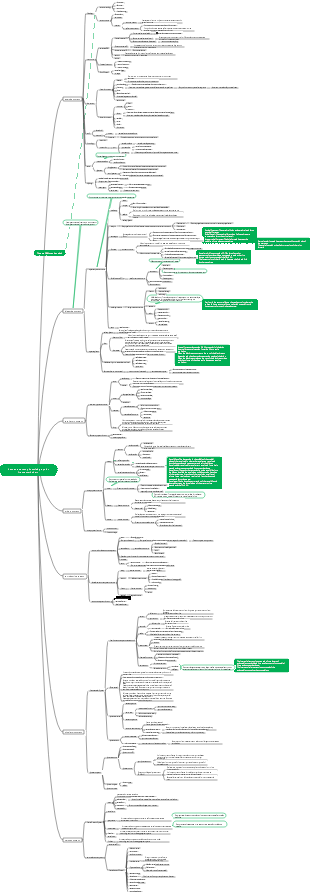
The definition, causes, classification and displacement of fracture segments. Clinical manifestations of fractures (including unique signs) and X-ray examination. Complications of fractures. Principles of first aid and treatment of fractures. Principles of management of open fractures and joint trauma. The healing process of fractures; factors affecting fracture healing. AO/ASIF classification of fractures.
Edited at 2024-03-09 16:30:22This is a mind map about bacteria, and its main contents include: overview, morphology, types, structure, reproduction, distribution, application, and expansion. The summary is comprehensive and meticulous, suitable as review materials.

This is a mind map about plant asexual reproduction, and its main contents include: concept, spore reproduction, vegetative reproduction, tissue culture, and buds. The summary is comprehensive and meticulous, suitable as review materials.
This is a mind map about the reproductive development of animals, and its main contents include: insects, frogs, birds, sexual reproduction, and asexual reproduction. The summary is comprehensive and meticulous, suitable as review materials.
This is a mind map about bacteria, and its main contents include: overview, morphology, types, structure, reproduction, distribution, application, and expansion. The summary is comprehensive and meticulous, suitable as review materials.
This is a mind map about plant asexual reproduction, and its main contents include: concept, spore reproduction, vegetative reproduction, tissue culture, and buds. The summary is comprehensive and meticulous, suitable as review materials.
This is a mind map about the reproductive development of animals, and its main contents include: insects, frogs, birds, sexual reproduction, and asexual reproduction. The summary is comprehensive and meticulous, suitable as review materials.
Introduction to fractures
【Master】The definition, causes, classification and displacement of fracture segments. Clinical manifestations of fractures (including unique signs) and X-ray examination. Complications of fractures. Principles of first aid and treatment of fractures. Principles of management of open fractures and joint trauma. [Familiarity] The healing process of fractures; factors affecting fracture healing. AO/ASIF classification of fractures.
1 Definition, causes, classification and displacement of fracture segments
Definition: A fracture occurs when the integrity or continuity of a bone is interrupted Traumatic fractures and pathological fractures
Cause: 1 Direct violence 2 Indirect violence (muscle tension) 3 Accumulated strain injuries 4 Bone diseases (pathological fractures)
Classification
1. Depending on whether the fracture is connected to the outside world
1 closed fracture
2 open fractures
2. According to the degree and shape of the fracture
1 Incomplete fracture
1 Crack fracture (skull fracture, scapula fracture) 2 Greenstick fracture (fracture of limbs in children)
2 complete fractures
1 transverse fracture 2 Oblique fracture 3 spiral fracture 4 Comminuted fracture (fracture broken into more than three pieces) 5 Impaction fracture (metaphysis) 6 Compression fracture (cancellous bone vertebral body and calcaneus) 7 Epiphyseal injury (separation) (children)
Stability
Stable fractures (cracks, green branches, compression, impaction, transverse fractures)
Unstable fractures (oblique, spiral, comminuted)
Displacement of the fracture segment
1 Angular shift
2 side shift
3 Shortening and shifting (overlapping or interpolation)
4 separation shift
5 rotational shift
Factors affecting displacement: external violence, muscle pulling, weight of the distal limb of the fracture, improper handling and treatment
2. Clinical manifestations of fractures (including unique signs) and X-ray examination
1. Whole body performance 1 shock 2 Fever
2. Local manifestations 1. Special signs of fracture Deformity Abnormal activities Bone fricative and bone friction sensation 2 Other manifestations of fractures Pain and tenderness Local swelling and ecchymosis Functional impairment
3. X-ray examination of fractures X-ray examination: anteroposterior, lateral, axial, oblique, tangential, CT (three-dimensional imaging), MRI (articular ligament, meniscus, spinal cord injury)
Special clinical manifestations of fractures include:
(1) Deformity: After the fracture segment is displaced, the shape of the injured part changes;
(2) Abnormal activities: In parts of the limbs without joints, there may be abnormal activities after fracture;
(3) Bone friction or bone friction feeling: When the fracture ends rub against each other, you can hear bone friction or feel bone friction. The diagnosis can be confirmed when one of the above three manifestations is found. If the above special clinical manifestations are not found, fracture cannot be excluded.
3 Complications of fractures
Common comorbidities
Early complications: shock, fat embolism syndrome, visceral injury (liver, spleen, lung, kidney, rectum, urethra and bladder), important artery injury, spinal cord injury, peripheral nerve injury. Compartment syndrome (paresthesia, passive stretch, active flexion pain and tenderness) (on the verge of ischemic muscle contracture-ischemic muscle contracture-gangrene). Early blood and fluid transfusions, timely debridement, and proper on-site first aid can prevent the occurrence of complications.
Late complications: septic pneumonia, bedsores, deep vein thrombosis of the lower limbs, infection, traumatic ossification (myositis ossificans), traumatic arthritis, joint stiffness, acute bone atrophy (painful osteoporosis near joints) , reflex sympathetic osteodystrophy), ischemic osteonecrosis, ischemic muscle contracture, etc.
4. Fracture healing process
1 Organizing stage of hematoma inflammation Fiber connection, completed in two weeks
2. Primitive callus formation period (12-24 weeks) Intramembranous osteogenesis and endochondral osteogenesis
3. Callus reconstruction and shaping stage 1-2 years Primary healing (direct healing) Secondary healing (indirect healing)
Clinical fracture healing criteria:
(1) There is no local tenderness or longitudinal percussion pain;
(2) There is no abnormal local activity;
(3) X-ray films show that the fracture line is blurred and there is continuous callus passing through the fracture line;
(4) After the external fixation is released, the injured limb meets the following requirements: the upper limb can lift 1kg forward for 1 minute, and the lower limb can walk continuously for 3 minutes on level ground without crutches, and no less than 30 steps;
(5) Observe that the fracture is not deformed for two consecutive weeks.
5 Factors Affecting Fracture Healing
The main factors are:
Systemic factors (1) Patient’s age: children heal faster than adults; (2) Health conditions affect fracture healing;
local factors (1) Blood supply to the fracture: Those with good blood supply heal faster; (2) Type and number of fractures; (3) Infection affects fracture healing; (4) Degree of soft tissue damage: severe injuries heal slowly; (5) Soft tissue embedding will cause fractures to not heal;
Treatment affects fracture healing. Repeated manual reduction, open reduction, open fracture debridement to remove excessive bone fragments, and traction separation. Insecure fixation, inappropriate exercise, and other factors include the effect of drugs, the influence of pulse current, etc.
6 First aid for fractures
The purpose of first aid is to use simple and effective methods to save lives, protect the affected limb, and transport it safely and quickly to a nearby hospital for proper treatment.
(1) Rescue shock: First save life, fight shock, transfuse blood and fluids, and keep the respiratory tract open.
(2) Wound dressing: Use a bandage to compress the wound. A tourniquet can be used when large blood vessels bleed. If the fracture end has a wound and is infected, it should not be reset immediately.
(3) Proper fixation (secondary injury, pain, transportation) first corrects the deformity, then fixes it with special splints or branches, wooden sticks, etc.
(4) Rapid transportation.
7 Principles of Fracture Treatment
(1) Reduction: that is, restoring the fractured segment to a normal anatomical relationship (anatomical reduction), or to a functionally satisfactory anatomical relationship (functional reduction).
reset standard
Anatomical reduction and functional reduction (rotation and separation displacement need to be corrected, shortening and displacement of the lower limbs should not exceed 1cm for adults and not more than 2cm for children, angulation and lateral angulation need to be corrected, intra-articular fractures need anatomical reduction, long bone shaft alignment must be achieved 1/3 metaphysis reaches 3/4)
Reset method
Manual reduction, open reduction (indications: soft tissue embedded, intra-articular fractures, poor manual reduction, combined neurovascular injuries, multiple fractures, unstable fractures, spinal fractures combined with spinal cord injury. Elderly people with limb fractures should get out of bed as soon as possible)
Advantages and Disadvantages of Open Reduction
Advantages: Anatomical reduction, reliable fixation, getting out of bed early, reducing muscle atrophy and joint stiffness, convenient care and reducing complications. Disadvantages: Separating the periosteum and soft tissue affects blood supply and increases soft tissue damage, infection, and osteomyelitis.
(2) Fixation: that is, maintaining the post-reduction position until it heals firmly.
External fixation: small splint, plaster bandage, head and neck and abduction frame, continuous traction, external fixator.
Internal fixation: Kirschner wires, bone plates, screws, steel plates, intramedullary pins, locking intramedullary nails (common type, reconstruction nails, PFN, PFNA)
Small splint fixation Advantages: The upper and lower joints are not fixed, early exercise is possible, and there are few complications. Disadvantages: easy redisplacement of fractures, skin pressure sores, ischemic contracture
Indications for cast immobilization 1. After open fracture debridement and before wound healing. 2. Auxiliary fixation after open reduction and fixation of fractures in certain parts. 3. Maintenance of deformity correction position and post-operative fixation of bone and joints. 4. Fixation of limbs affected by septic arthritis and osteomyelitis.
Precautions after plaster immobilization 1. Elevate the affected limb to help reduce swelling Avoid local compression during fixation 2. Avoid changing your body position before the plaster has solidified. 3. Indicate the fracture status and date on the plaster. 4. Observation window to observe distal blood supply 5. After the swelling of the limb subsides, replace the cast with a fitted cast 6. Muscle relaxation and contraction exercises during the fixation process, and timely movement of unfixed joints 7. During the plaster immobilization process, active muscle contraction should be performed to exercise the unfixed joints and move them as early as possible.
(3) Functional exercise and rehabilitation: that is, on the basis of reduction and fixation, exercising the injured limb and the whole body to achieve the purpose of promoting fracture healing and restoring limb function and systemic health.
Early exercise (1-2 weeks), mid-term exercise (two weeks - clinical healing), late exercise (after clinical healing)
(4) Internal and external medications and other treatments.
8 Principles of management of open fractures and joint trauma
Open fractures can be divided into three grades based on the severity of soft tissue damage. First degree: The skin is punctured by the fracture end from the inside out, and the damage to the muscles, subcutaneous tissue and skin is minor. Second degree: The skin is cut or crushed from the outside in, and the subcutaneous tissue and muscles are moderately damaged. Third degree: extensive contusion of skin, subcutaneous tissue and muscles, often combined with damage to blood vessels and nerves. Open fractures are at risk of infection due to the wound. The wound must be treated promptly and correctly to prevent infection and strive for rapid wound healing, thereby converting the open fracture into a closed fracture.
Preoperative examination and preparation: medical history, physical examination, neurovascular tendon injuries, observation of wound contamination, radiographs and CT Debridement time: 6-8 hours Key points of debridement: debridement (cleaning, excision of skin margin, removal of bruised ligament joint capsule, treatment of epiosseous membrane, treatment of fracture end 1-2mm, cleaning again with saline-iodine-hydrogen peroxide). Tissue repair (fracture fixation, soft tissue repair, wound drainage), wound closure (suture, tension reduction suture skin grafting, delayed suture, skin flap transplantation)
9 Principles of management of delayed union, nonunion and malunion of fractures
Delayed healing (4-8 months) Fracture non-union (9-12 months) Hypertrophic, atrophic Fracture malunion: The healing position does not reach functional reduction, and there are angulation, rotation, and overlapping deformities.