MindMap Gallery Fracture of upper and lower limbs
This is a mind map about upper and lower limb fractures. This mind map elaborates on the relevant content in order to provide useful reference and guidance for clinicians and patients.
Edited at 2024-11-20 21:10:11This template shows the structure and function of the reproductive system in the form of a mind map. It introduces the various components of the internal and external genitals, and sorts out the knowledge clearly to help you become familiar with the key points of knowledge.
This is a mind map about the interpretation and summary of the relationship field e-book, Main content: Overview of the essence interpretation and overview of the relationship field e-book. "Relationship field" refers to the complex interpersonal network in which an individual influences others through specific behaviors and attitudes.
This is a mind map about accounting books and accounting records. The main contents include: the focus of this chapter, reflecting the business results process of the enterprise, the loan and credit accounting method, and the original book of the person.
This template shows the structure and function of the reproductive system in the form of a mind map. It introduces the various components of the internal and external genitals, and sorts out the knowledge clearly to help you become familiar with the key points of knowledge.
This is a mind map about the interpretation and summary of the relationship field e-book, Main content: Overview of the essence interpretation and overview of the relationship field e-book. "Relationship field" refers to the complex interpersonal network in which an individual influences others through specific behaviors and attitudes.
This is a mind map about accounting books and accounting records. The main contents include: the focus of this chapter, reflecting the business results process of the enterprise, the loan and credit accounting method, and the original book of the person.
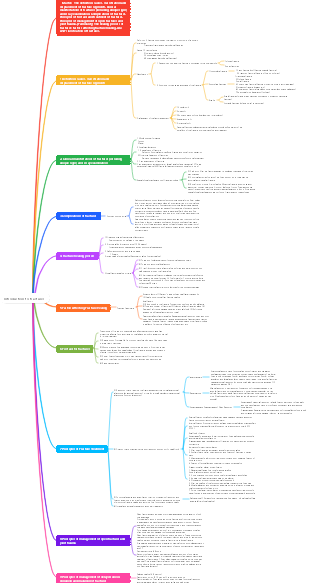
Fracture of upper and lower limbs
Upper limb bone fracture
Shoulder and arm injuries
Clavicle fracture: the proximal end is pulled upward and backward by the sternocleidomastoid muscle. The distal end is displaced anteriorly, inferiorly, and medially due to the weight of the limbs and the pulling of the pectoralis major muscle, resulting in shortening and overlapping displacement of the broken ends.
Surgical neck fracture of humerus
Fissure fracture: no displacement
Impacted fracture: no displacement
Abduction fracture: The proximal end of the fracture is pulled by the supraspinatus and infraspinatus muscles, causing slight abduction and external rotation displacement; the distal end of the fracture is pulled inward and outward by the latissimus dorsi, pectoralis major, and teres major muscles. The fracture is displaced forward and upward, with the two fractured ends being embedded on the outside and separated on the inside; or the broken ends are overlapped and displaced, with the distal end of the fracture located on the inside of the proximal end, and the fracture forms an inward angulation deformity or an inward or forward deformity. Angular deformity
Adduction fracture: The proximal end of the fracture can be displaced by abduction, external rotation, lateral, shortening, or angulation due to the pulling of different muscles.
Surgical neck fracture of the humerus combined with shoulder dislocation: It depends on the combination: if the proximal fracture end is displaced medially and superiorly, and the distal fracture end is displaced laterally and downwardly, then the combined shoulder dislocation is likely to be an anterior dislocation. At this time, the humerus The head will come out forward and downward. Conversely, if the fractures are displaced in the opposite direction, the combined shoulder dislocation may be a posterior dislocation.
humeral shaft fracture
When the upper 1/3 is fractured (above the insertion point of the deltoid muscle), the proximal end is displaced forward and inward due to the pulling of the pectoralis major, latissimus dorsi, and teres major muscles; the distal end is displaced forward and inward due to the pull of the deltoid, coracobrachialis, and brachialis muscles. The biceps and triceps pull and move upward and outward.
When the middle 1/3 is fractured (below the insertion point of the deltoid muscle), the proximal end is displaced outward and forward due to the pulling of the deltoid and coracobrachialis muscles; the distal end is displaced due to the pulling of the biceps brachii and triceps brachii muscles. and shift upward
Fractures of the lower 1/3 of the humeral shaft are mostly caused by indirect violence (such as bomb throwing, arm wrestling), and are often oblique or spiral bone I fold. The displacement can vary depending on the direction of the force and the position of the forearm and elbow joint, and is mostly angular and internal rotation displacement.
Elbow, forearm injuries
supracondylar fracture of humerus
straight type
Ulnar deviation type: The fracture force comes from the front and outside of the humerus. During the fracture, the humerus is pushed to the back and inside, and the medial bone cortex is squeezed. Pressure will cause certain collapse. The anterolateral periosteum is ruptured, the medial periosteum is intact, and the distal end of the fracture is displaced ulnarly.
Radial deviation is the opposite of ulnar deviation. The bone cortex on the stack side of the fracture end collapses due to compression, the lateral periosteum remains continuous, the ulnar side periosteum is broken, and the distal end of the fracture is displaced toward the stack side.
Flexion type: Violent impact on the olecranon of the ulna from posterior to inferior to anterior and superior. After the superior fracture is performed, the distal end is displaced forward. The fracture line is often posterior-inferior and oblique to anterior and superior, which is opposite to the extension type.
Comminuted type: can be divided into "T" shaped and "Y" shaped fractures.
Intercondylar fracture of humerus
Extension type: The ulnar semilunar notch impacts the trochlear groove posteriorly and superiorly, splits the humeral condyle in half, and moves posteriorly and superiorly.
The mechanism of flexion injury is that when the back of the elbow lands on the ground during the injury, the olecranon of the ulna impacts the trochlear groove forward and upward, causing a supracondylar fracture and splitting the humeral condyle and pushing it forward and upward.
The proximal humerus is often displaced forward or backward, or downward, and is inserted between the separated or rotated condylar fracture fragments. In severe cases, an open fracture may be formed. The fracture fragments of the medial and lateral condyles are often separated and displaced, or are accompanied by rotational displacement, which changes the normal relationship between the distal humerus and the articular surface of the radius and ulna. The pull of the muscles attached to the medial and lateral epicondyle can aggravate the above-mentioned separation and rotational displacement. Regardless of the extension or flexion type of humeral intercondylar fracture, the injury is often accompanied by elbow varus stress, and varus type (ulnar deviation type) displacement occurs, while valgus type (radial deviation type) displacement is rare. Rotational displacement may also occur between the distal and proximal ends of the fracture.
Fracture of both ulnar and ulnar shafts
In children with greenstick fractures, simple angular displacement often occurs at the fracture end.
When the radius is fractured above the insertion point of the pronator teres muscle, the proximal end of the fracture is pulled by the supinator muscle and biceps brachii muscle and is in the supination position, and the distal end is pulled by the pronator teres muscle and pronator quadratus muscle and is in the pronation position.
When the fracture is below the insertion point of the pronator teres muscle, the proximal end of the fracture is pulled by the supinator muscle, biceps brachii and pronator teres muscle and is usually in the mid-rotation position, or in a mild supination position, and the distal end of the fracture is pulled by the pronator teres muscle. The muscle is stretched and placed in the pronated position
distal radius fracture
Extension fracture (radial side): distal dorsal, proximal volar
Flexion fracture (radial side): distal volar side, proximal lateral side
wrist, hand injuries
navicular fracture
Tubercle fracture, because this part is a more prominent part of the carpal navicular bone, it is easy to fracture when it is impacted by external force. At this time, the fracture fragment may be displaced downward and outward due to external forces.
When the waist is fractured, because the scaphoid bone in the waist is relatively slender and weak, it is easy to fracture. After a fracture, the proximal fracture end may be displaced upward due to the traction of the surrounding soft tissue, while the distal fracture end may be displaced downward and outward due to the movement of the wrist joint.
Proximal fracture: The fracture fragment may be displaced upward and inward by external forces.
Lower limb bone fractures
Hip, thigh injuries
Femoral neck fracture
The fracture mechanism of an abduction fracture occurs due to sudden abduction of the lower limb. The fracture is not displaced, but is impacted (mostly the distal lateral side is embedded in the proximal medial side).
Adduction type fractures are injured due to sudden adduction of the lower limb due to violence. The fracture end is rarely embedded, and the distal end is externally rotated and moved upward due to the pull of the external rotator and adductor muscles.
Intertrochanteric fracture of femur
Intertrochanteric fracture: the fracture line runs obliquely inward and downward from above or slightly below the greater trochanter to above or slightly below the lesser trochanter (roughly parallel to the intertrochanteric line)
Degree I: non-displaced fracture
Degree II: The femoral calcar is broken but impaled
Degree III: separation of the lesser trochanter, upward movement of the distal femur, and coxa varus
Degree IV: The lesser trochanter is separated, and the greater trochanter and femoral calcar are also broken. Severe coxa varus, the distal end is obviously moved upward and externally rotated.
Reverse intertrochanteric fracture: the fracture line is obliquely upward and medial from below the greater trochanter to above the lesser trochanter (approximately perpendicular to the intertrochanteric line) with proximal abduction and external rotation displacement (abduction and external rotator muscle pulling) , the distal end moves inward and upward (adduction, iliopsoas muscle contraction), and the lesser trochanter may also be broken and separated.
Femoral shaft fractures: Except for incomplete fractures or greenstick fractures, all other fractures are unstable. fracture displacement due to Affected by factors such as muscle group stretch and the injured limb's own gravity, typical shifting often occurs.
Upper 1/3
Medium 1/3
Next 1/3
Knee, calf injuries
patella fracture
In transverse fractures, the fracture line is usually perpendicular to the long axis of the patella. At this time, the fracture fragment may be displaced upward, downward, or sideways due to external forces.
In a comminuted fracture, the patella is broken into multiple small pieces. These small pieces may be dispersed and displaced due to external forces, forming complex fracture patterns.
In a longitudinal fracture, the fracture line extends along the long axis of the patella. At this point, the fracture fragment may shift upward or downward due to muscle pull.
tibiofibular shaft fracture
If the upper third of the leg is fractured, because the upper part of the calf is rich in muscles, violent impact may cause the fracture end to be crushed or displaced. The proximal fold end may shift inward and backward due to the pull of surrounding muscles; the distal fold end may shift outward and forward due to gravity or muscle pull.
When the middle third of the fracture is fractured, because there are relatively few muscles in this part, the fracture ends may be directly separated due to external force, forming an open fracture. At this time, the displacement direction of the fracture fragment may change depending on the direction of violence and the force of muscle pulling.
When the lower third of the leg is fractured, because the muscles and ligaments in the lower part of the calf are relatively tough, the fracture end may be shortened, rotated, or angularly displaced due to external forces. The proximal fracture end may be displaced forward or backward due to the traction of the tibialis anterior and tibialis posterior muscles; the distal fracture end may be displaced downward due to the traction of the Achilles tendon.
Ankle, foot injuries
ankle fracture
Valgus injury: The fracture fragment may be displaced inward, upward, or downward by external forces. This is usually caused by force to the foot from eversion or adduction.
Varus injury: The fracture fragment may be displaced outward, downward, or backward by external forces. This is usually caused by inversion or abduction violence to the foot.
External rotation injury: The talus rotates backward and externally, hitting the posterior ankle causing fracture and displacing it backward and upward.
Longitudinal crush (vertical compression) injury: The fracture fragment may be displaced backward, upward, or downward by external forces. This is usually caused by axial compression of the foot or a sprain.