 Wondershare EdrawMind
MindMap Gallery Zimbardo General Psychology Chapter 2 Biopsychology, Neuroscience, and Human Nature
- 45
- 1
Zimbardo General Psychology Chapter 2 Biopsychology, Neuroscience, and Human Nature
This book is the latest edition of "The Image and Voice of Contemporary Psychology", the masterpiece of the famous psychologist Filipbardo. As a classic psychology textbook, this book contains 14 topics that need to be learned for introductory psychology, including the mind , biological psychology, feeling and perception, learning, memory, thinking and intelligence, life-span development, state of consciousness, motivation and emotion, personality, social psychology, psychological disorders, treatment of psychological disorders, and from stress to health and happiness, etc. content. Each chapter of this book is led by a common question in life, and core concepts in the relevant field of psychology are proposed around this question, helping learners build their understanding of this field in the process of answering the question. At the same time, this book also strengthens learners' application and in-depth thinking of psychological knowledge in daily life through sections such as "Psychology is useful", "Try it", "Write it", and "Application of critical thinking". In addition, compared with the previous edition, this book has made a lot of updates on new research in various psychological subdivisions, making it easier for learners and researchers to update their own knowledge system.
Edited at 2024-03-05 10:01:35
- bacteria
This is a mind map about bacteria, and its main contents include: overview, morphology, types, structure, reproduction, distribution, application, and expansion. The summary is comprehensive and meticulous, suitable as review materials.
- Plant asexual reproduction
This is a mind map about plant asexual reproduction, and its main contents include: concept, spore reproduction, vegetative reproduction, tissue culture, and buds. The summary is comprehensive and meticulous, suitable as review materials.
- Reproductive development of animals
This is a mind map about the reproductive development of animals, and its main contents include: insects, frogs, birds, sexual reproduction, and asexual reproduction. The summary is comprehensive and meticulous, suitable as review materials.
Zimbardo General Psychology Chapter 2 Biopsychology, Neuroscience, and Human Nature
- bacteria
This is a mind map about bacteria, and its main contents include: overview, morphology, types, structure, reproduction, distribution, application, and expansion. The summary is comprehensive and meticulous, suitable as review materials.
- Plant asexual reproduction
This is a mind map about plant asexual reproduction, and its main contents include: concept, spore reproduction, vegetative reproduction, tissue culture, and buds. The summary is comprehensive and meticulous, suitable as review materials.
- Reproductive development of animals
This is a mind map about the reproductive development of animals, and its main contents include: insects, frogs, birds, sexual reproduction, and asexual reproduction. The summary is comprehensive and meticulous, suitable as review materials.
- Recommended to you
- Outline


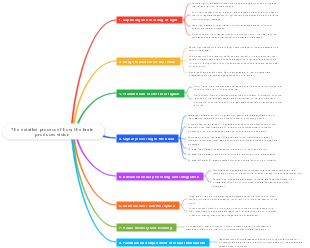

Zimbardo General Psychology Chapter 2: Biopsychology, Neuroscience and Human Nature
Human nature refers to "natural qualities", and "natural" refers to inheritance. The English word for genetics is genetics, so the biological molecules that carry genetic content are called genes. Genes are the carrier of human "nature", and the genetic code determines the content of "nature". Human's internal psychology and external behavior require the interaction between genes and the environment, and the nervous system plays a regulatory role.
Chapter Question: What do we learn about the way the human brain is organized and its amazing adaptability through Jill’s (stroke) experience?
1. human brain
The 1.4-kilogram wonder organ that makes us human
The brain is essentially the basis of human thinking, emotion, behavior and understanding.
The human brain has the ability to think about itself.
The human brain uses its vast array of neural circuits to regulate all of our bodily functions, control our behavior, generate our emotions and desires, and process our lifetime of experiences—mostly activities that occur unconsciously. However, when disease, drugs, or accidents destroy brain cells, the biological basis of the human psyche becomes abundantly clear.
2. Our brains communicate through contralateral pathways, so information from one side of the body is processed by the contralateral cerebral hemisphere.
3. Brain plasticity allows us to restore or reshape functions lost due to disease, injury or trauma
4. Our brains are made up of a collection of specialized structures, each of which performs a certain task, but they work together to produce our thoughts, behaviors, and emotions.
Core Concept 1: How are genes and behavior related? —Evolution fundamentally shapes psychological processes because it selects for those genetic variants that produce adaptive behavior. Evolution serves as the link between heredity and behavior.
1. evolution and natural selection
Humanity "originates from monkeys"
Evolutionary scientists believe that monkeys and humans had a common ancestor millions of years ago. The theory of evolution holds that over time, two species have diverged, each developing different adaptive traits. Humans have developed a brain specifically adapted to language.
There is a big difference between these two statements
2. Genes and Heredity
genotype
Phenotype
Genotype and phenotype make each person a unique individual
Epigenetics: Uncovering the mechanisms of interaction between genes and environment
Chromosomes, DNA and genes
Cell → Chromosome → DNA → Gene → Nucleotide
There are subtle differences in the genes of different individuals, which is the biological basis of individual differences noted by Darwin.
Genetic explanations of mental processes
Genetic rules: Differences between species come from genetic "words" - differences in genes themselves. Genes are different "spelling" combinations of the four letters (nucleotides) in the word list of life. In other words, the genetic code of all organisms on our planet is composed of these four nucleotides, but the combination pattern and order are different.
Genes influence our psychological traits just as they influence our physical traits. But heredity never works alone. Heredity and environment have always worked together to influence our behavior and psychological processes.
3. Expression genetics
Study how the environment changes gene expression
一些研究表明,表现遗传的变化甚至能传递给后代。父母所接触到的环境条件会给子辈甚至孙辈的基因组留下持久的印记
Throughout our lives, signals from within the body and the external environment control how genes turn on and off. Each time this occurs, a chemical mark is left behind to record what happened. This record is essentially a log of all the effects on a particular cell.
Some marks stay on the DNA, while others stay on the histones (the proteins around which DNA is wrapped). These residual chemical marks make up the epigenome - so essentially the epigenome is a set of "annotations" on the original blueprint.
While the original blueprint, our DNA, remains unchanged throughout our lives, the epigeneticome is flexible and adapts to changes in the environment, turning genes off or on based on the organism's experiences.
Case: The impact of early parenting on babies, the role of exercise on health and aging, etc.
Core Concept 2: How does the body communicate internally? -The body's two major communication systems, the nervous system and the endocrine system, are regulated by the brain and communicate through similar chemical processes with various targets throughout the body.
1. Neuron: the basic unit of the nervous system
Types of neurons
(1) Sensory neurons, also called afferent neurons, are like one-way roads that carry information from the sense organs to the brain.
(2) Motor neurons, also called efferent neurons, are one-way pathways that carry information from the brain or spinal cord to muscles, organs, or glands. Therefore, motor neurons carry the instructions for all of our movements.
(3) Interneurons: Sensory and motor neurons rarely communicate directly except in the simplest reflex circuits, which usually rely on interneurons for communication. Interneurons carry information from sensory neurons to other interneurons or motor neurons, sometimes in very complex routes. In fact, the brain itself is a super network of intricately connected interneurons.
How neurons work
(1) A typical neuron receives thousands of messages simultaneously from its dendrites and soma (cell body)
(2) When the cell body is fully awakened, its information will be transmitted to the [axon], and the axon transmits the information to the cell's [synaptosome] through the [action potential]
(3) Tiny vesicles containing neurotransmitters rupture and release their contents into the synapse (or synaptic cleft)
(4) After reaching the postsynaptic membrane, appropriately shaped neurotransmitter molecules dock at the receptors and stimulate the receiving cell. Excess neurotransmitter can be pulled back to the "sending" neuron through reuptake
Glia: the support group of neurons
Glial cells provide structural support to neurons and also help neurons generate new synapses during learning.
The nervous system has two major components
Neurons: amazingly plastic
Supportive glial cells: protect neurons and assist in nerve signaling
neuroplasticity
One of the brain's most amazing abilities is its ability to adjust itself in response to experience—a process called plasticity. For example, when we learn new things, dendrites grow and form new synapses, making new connections with different neurons. Over time, repeated stimulation of neural connections creates stronger, denser neural pathways.
Due to the effects of plasticity, many abilities previously thought to decline with age (e.g., the ability to learn new techniques and information, physical dexterity, and vision) may be preserved through more frequent use because frequent use maintains and Enhance the corresponding neural network.
Case:
Plasticity and PTSD
Tragic experiences alter brain's emotional responses
Effects of pornography on the brain
Any frequent experience affects our brain pathways through plasticity
2. nervous system
Central Nervous System
brain
Contralateral pathway
spinal cord
reflection
peripheral nervous system
Somatic nervous system (communicates with sense organs and voluntary muscles)
external
sensory (afferent) nervous system
Motor (efferent) nervous system
Autonomic nervous system (communicates with internal organs and glands)
internal
Sympathetic Nervous System (Arousal)
Parasympathetic nervous system (calming)
3. Endocrine System
Who controls the endocrine system
brain, especially the hypothalamus
Pituitary gland (master gland)
endocrine system glands
Blood-borne messages in the form of hormones serve as communication channels between different glands of the endocrine system
The peripheral nervous system and the endocrine system provide parallel means of communication, and coordination between them is accomplished through connections to the brain. Ultimately, it is the brain that determines which information is sent across the two networks.
4. How do psychotropic drugs affect the nervous system?
As stimulants or antagonists, psychotropic drugs affect the nervous system by affecting the action of neurotransmitters. Unfortunately for people taking psychotropic medications, many neural pathways in the brain use the same neurotransmitters, leading to unwanted side effects
Core Concept 3: How does the brain produce behavior and mental processes? -The brain is made up of many specialized modules that work together to create psychology and behavior. Love does not come from the heart, nor does disgust come from the digestive system. Instead, all emotions, desires and thoughts originate from the brain.
1. Various brain scanning technologies
Sensing brain waves with EEG
Mapping the brain's topography using electrical probes
Computerized brain scans: CT, PET, MRI, fMRI
2. The three-layer structure of the human brain
The brainstem and its neighbors
survival instinct
The brainstem and its neighbors control movement and most of the most basic functions of life, and most of their functions are automatic and do not require conscious involvement. However, the other two layers of the human brain appear more obviously in consciousness.
limbic system
Emotions, memories and more
The limbic system is the "command post" of the human brain that controls emotions, motivation, memory, and maintains body balance.
cerebral cortex
Thinking hat of the human brain
Functional localization theory: different parts of the brain perform different tasks
4 lobes of cerebral cortex
1. Frontal lobe: Responsible for movement, speech, and emotion, as well as certain higher mental functions we call "thinking" or "intelligence"
2. Parietal lobe: Responsible for sensation (especially touch and body position) and the understanding of speech
3. Temporal lobe: responsible for hearing, memory, and face recognition
4. Occipital lobe: responsible for vision
association cortex
cooperation of brain regions
The association cortex interprets raw data from the primary cortex and puts it into appropriate context, allowing us to understand and use the information provided by the data. In this way, different association cortices throughout the brain's lobes interpret sensations, formulate plans, make decisions, and prepare for action, all of the mental powers that distinguish us humans from other animals.
However, no single brain region is independently responsible for emotion, memory, personality, or other complex psychological traits, and no major skill is performed by a single "brain center." Instead, every mental or behavioral process involves the coordinated work of many brain networks, each of which is an expert in a specific task.
It’s clear that the brain usually tries to “pull all the information together” to understand and respond to the world in a coherent way. But neuroscientists don’t yet know [how] it does this.
3. cerebral hemisphere dominance
The tendency for each hemisphere to specialize in different tasks is called hemispheric dominance, an often exaggerated concept. In fact, both hemispheres are always working together to generate our thoughts, feelings, and actions.
Different processing styles
The two hemispheres of the brain do not usually compete with each other. Instead, they serve different roles within the same task. In neuroscientist terms, the two hemispheres have different but complementary processing styles.
The cognitive style of the left hemisphere is: analytical, linear, and sequential; while the right hemisphere is: more holistic, emotional, and space-based. In a functioning brain, these two styles complement each other to generate multiple perspectives on the world.
The biological basis of meditation
At the peak of meditation, activity in the left hemisphere's association cortex (the brain region that draws our attention to the physical boundaries of our bodies) drops dramatically. As blood flow slows in the left hemisphere, our awareness of ourselves as a separate and special organism fades away.
Case: Split-brain Man
When the brain "splits" in half, only the corpus callosum is actually severed. This surgery blocks communication between the two hemispheres. For the most part, split-brain people behave like normal people. However, specific experiments show that split brains can produce double consciousness
Gazzaniga suggests that we think of the human psyche as a [Union of Thoughts] that is neither a single entity nor a dual entity, but a union of consciousnesses. Each hemisphere processes specific types of information. Therefore, for most of us, the corpus callosum is the connecting channel that helps our alliance of minds share information.
Chapter 2: Biopsychology, Neuroscience, and Human Nature
1. Chapter Question: What do we learn about the way the human brain is organized and its amazing adaptability through Jill’s (stroke) experience?
1.1. human brain
The 1.4-kilogram wonder organ that makes us human
The brain is essentially the basis of human thinking, emotion, behavior and understanding.
The human brain has the ability to think about itself.
The human brain uses its vast array of neural circuits to regulate all of our bodily functions, control our behavior, generate our emotions and desires, and process our lifetime of experiences—mostly activities that occur unconsciously. However, when disease, drugs, or accidents destroy brain cells, the biological basis of the human psyche becomes abundantly clear.
1.2. Our brains communicate through contralateral pathways, so information from one side of the body is processed by the contralateral cerebral hemisphere.
1.3. Brain plasticity allows us to restore or reshape functions lost due to disease, injury or trauma
1.4. Our brains are made up of a collection of specialized structures, each of which performs a certain task, but they work together to produce our thoughts, behaviors, and emotions.
2. How genes and behavior are related
2.1. Core idea
Evolution fundamentally shapes psychological processes because it selects for those genetic variants that produce adaptive behavior.
Evolution serves as the link between heredity and behavior.
2.2. evolution and natural selection
Humanity "originates from monkeys"
Evolutionary scientists believe that monkeys and humans had a common ancestor millions of years ago. The theory of evolution holds that over time, two species have diverged, each developing different adaptive traits. Humans have developed a brain specifically adapted to language.
There is a big difference between these two statements
2.3. Genes and Heredity
genotype
Phenotype
Genotype and phenotype make each person a unique individual
Epigenetics: Uncovering the mechanisms of interaction between genes and environment
Chromosomes, DNA and genes
Cell → Chromosome → DNA → Gene → Nucleotide
There are subtle differences in the genes of different individuals, which is the biological basis of individual differences noted by Darwin.
Genetic explanations of mental processes
Genetic rules: Differences between species come from genetic "words" - differences in genes themselves. Genes are different "spelling" combinations of the four letters (nucleotides) in the word list of life. In other words, the genetic code of all organisms on our planet is composed of these four nucleotides, but the combination pattern and order are different.
Genes influence our psychological traits just as they influence our physical traits. But heredity never works alone. Heredity and environment have always worked together to influence our behavior and psychological processes.
2.4. Expression genetics
Study how the environment changes gene expression
一些研究表明,表现遗传的变化甚至能传递给后代。父母所接触到的环境条件会给子辈甚至孙辈的基因组留下持久的印记
Throughout our lives, signals from within the body and the external environment control how genes turn on and off. Each time this occurs, a chemical mark is left behind to record what happened. This record is essentially a log of all the effects on a particular cell.
Some marks stay on the DNA, while others stay on the histones (the proteins around which DNA is wrapped). These residual chemical marks make up the epigenome - so essentially the epigenome is a set of "annotations" on the original blueprint.
While the original blueprint, our DNA, remains unchanged throughout our lives, the epigeneticome is flexible and adapts to changes in the environment, turning genes off or on based on the organism's experiences.
Case: The impact of early parenting on babies, the role of exercise on health and aging, etc.
3. How the body communicates internally
3.1. Core idea
The body's two major communication systems, the nervous system and the endocrine system, are regulated by the brain and communicate through similar chemical processes with various targets throughout the body.
3.2. Neuron: the basic unit of the nervous system
Types of neurons
(1) Sensory neurons, also called afferent neurons, are like one-way roads that carry information from the sense organs to the brain.
(2) Motor neurons, also called efferent neurons, are one-way pathways that carry information from the brain or spinal cord to muscles, organs, or glands. Therefore, motor neurons carry the instructions for all of our movements.
(3) Interneurons: Sensory and motor neurons rarely communicate directly except in the simplest reflex circuits, which usually rely on interneurons for communication. Interneurons carry information from sensory neurons to other interneurons or motor neurons, sometimes in very complex routes. In fact, the brain itself is a super network of intricately connected interneurons.
How neurons work
(1) A typical neuron receives thousands of messages simultaneously from its dendrites and soma (cell body)
(2) When the cell body is fully awakened, its information will be transmitted to the [axon], and the axon transmits the information to the cell's [synaptosome] through the [action potential]
(3) Tiny vesicles containing neurotransmitters rupture and release their contents into the synapse (or synaptic cleft)
(4) After reaching the postsynaptic membrane, appropriately shaped neurotransmitter molecules dock at the receptors and stimulate the receiving cell. Excess neurotransmitter can be pulled back to the "sending" neuron through reuptake
Glia: the support group of neurons
Glial cells provide structural support to neurons and also help neurons generate new synapses during learning.
The nervous system has two major components
Neurons: amazingly plastic
Supportive glial cells: protect neurons and assist in nerve signaling
neuroplasticity
One of the brain's most amazing abilities is its ability to adjust itself in response to experience—a process called plasticity. For example, when we learn new things, dendrites grow and form new synapses, making new connections with different neurons. Over time, repeated stimulation of neural connections creates stronger, denser neural pathways.
Due to the effects of plasticity, many abilities previously thought to decline with age (e.g., the ability to learn new techniques and information, physical dexterity, and vision) may be preserved through more frequent use because frequent use maintains and Enhance the corresponding neural network.
Case:
Plasticity and PTSD
Tragic experiences alter brain's emotional responses
Effects of pornography on the brain
Any frequent experience affects our brain pathways through plasticity
3.3. nervous system
Central Nervous System
brain
Contralateral pathway
spinal cord
reflection
peripheral nervous system
Somatic nervous system (communicates with sense organs and voluntary muscles)
external
sensory (afferent) nervous system
Motor (efferent) nervous system
Autonomic nervous system (communicates with internal organs and glands)
internal
Sympathetic Nervous System (Arousal)
Parasympathetic nervous system (calming)
3.4. Endocrine System
Who controls the endocrine system
brain, especially the hypothalamus
Pituitary gland (master gland)
endocrine system glands
Blood-borne messages in the form of hormones serve as communication channels between different glands of the endocrine system
The peripheral nervous system and the endocrine system provide parallel means of communication, and coordination between them is accomplished through connections to the brain. Ultimately, it is the brain that determines which information is sent across the two networks.
3.5. How do psychotropic drugs affect the nervous system?
As stimulants or antagonists, psychotropic drugs affect the nervous system by affecting the action of neurotransmitters. Unfortunately for people taking psychotropic medications, many neural pathways in the brain use the same neurotransmitters, leading to unwanted side effects
4. How the brain produces behavior and mental processes
4.1. Core idea
The brain is made up of many specialized modules that work together to create psychology and behavior.
Love does not come from the heart, nor does disgust come from the digestive system. Instead, all emotions, desires and thoughts originate from the brain.
4.2. Various brain scanning technologies
Sensing brain waves with EEG
Mapping the brain's topography using electrical probes
Computerized brain scans: CT, PET, MRI, fMRI
4.3. The three-layer structure of the human brain
The brainstem and its neighbors
survival instinct
The brainstem and its neighbors control movement and most of the most basic functions of life, and most of their functions are automatic and do not require conscious involvement. However, the other two layers of the human brain appear more obviously in consciousness.
limbic system
Emotions, memories and more
The limbic system is the "command post" of the human brain that controls emotions, motivation, memory, and maintains body balance.
cerebral cortex
Thinking hat of the human brain
Functional localization theory: different parts of the brain perform different tasks
4 lobes of cerebral cortex
1. Frontal lobe: Responsible for movement, speech, and emotion, as well as certain higher mental functions we call "thinking" or "intelligence"
2. Parietal lobe: Responsible for sensation (especially touch and body position) and the understanding of speech
3. Temporal lobe: responsible for hearing, memory, and face recognition
4. Occipital lobe: responsible for vision
association cortex
cooperation of brain regions
The association cortex interprets raw data from the primary cortex and puts it into appropriate context, allowing us to understand and use the information provided by the data. In this way, different association cortices throughout the brain's lobes interpret sensations, formulate plans, make decisions, and prepare for action, all of the mental powers that distinguish us humans from other animals.
However, no single brain region is independently responsible for emotion, memory, personality, or other complex psychological traits, and no major skill is performed by a single "brain center." Instead, every mental or behavioral process involves the coordinated work of many brain networks, each of which is an expert in a specific task.
It’s clear that the brain usually tries to “pull all the information together” to understand and respond to the world in a coherent way. But neuroscientists don’t yet know [how] it does this.
4.4. cerebral hemisphere dominance
The tendency for each hemisphere to specialize in different tasks is called hemispheric dominance, an often exaggerated concept. In fact, both hemispheres are always working together to generate our thoughts, feelings, and actions.
Different processing styles
The two hemispheres of the brain do not usually compete with each other. Instead, they serve different roles within the same task. In neuroscientist terms, the two hemispheres have different but complementary processing styles.
The cognitive style of the left hemisphere is: analytical, linear, and sequential; while the right hemisphere is: more holistic, emotional, and space-based. In a functioning brain, these two styles complement each other to generate multiple perspectives on the world.
The biological basis of meditation
At the peak of meditation, activity in the left hemisphere's association cortex (the brain region that draws our attention to the physical boundaries of our bodies) drops dramatically. As blood flow slows in the left hemisphere, our awareness of ourselves as a separate and special organism fades away.
Case: Split-brain Man
When the brain "splits" in half, only the corpus callosum is actually severed. This surgery blocks communication between the two hemispheres. For the most part, split-brain people behave like normal people. However, specific experiments show that split brains can produce double consciousness
Gazzaniga suggests that we think of the human psyche as a [Union of Thoughts] that is neither a single entity nor a dual entity, but a union of consciousnesses. Each hemisphere processes specific types of information. Therefore, for most of us, the corpus callosum is the connecting channel that helps our alliance of minds share information.