 Wondershare EdrawMind
MindMap Gallery 1A41500 Construction Technology 27 points 2
- 35
1A41500 Construction Technology 27 points 2
Construction practice: 1A41500 Construction Technology 2, including main structure engineering construction, waterproofing engineering construction, decoration engineering construction, etc.
Edited at 2024-01-17 10:29:01
- bacteria
This is a mind map about bacteria, and its main contents include: overview, morphology, types, structure, reproduction, distribution, application, and expansion. The summary is comprehensive and meticulous, suitable as review materials.
- Plant asexual reproduction
This is a mind map about plant asexual reproduction, and its main contents include: concept, spore reproduction, vegetative reproduction, tissue culture, and buds. The summary is comprehensive and meticulous, suitable as review materials.
- Reproductive development of animals
This is a mind map about the reproductive development of animals, and its main contents include: insects, frogs, birds, sexual reproduction, and asexual reproduction. The summary is comprehensive and meticulous, suitable as review materials.
1A41500 Construction Technology 27 points 2
- bacteria
This is a mind map about bacteria, and its main contents include: overview, morphology, types, structure, reproduction, distribution, application, and expansion. The summary is comprehensive and meticulous, suitable as review materials.
- Plant asexual reproduction
This is a mind map about plant asexual reproduction, and its main contents include: concept, spore reproduction, vegetative reproduction, tissue culture, and buds. The summary is comprehensive and meticulous, suitable as review materials.
- Reproductive development of animals
This is a mind map about the reproductive development of animals, and its main contents include: insects, frogs, birds, sexual reproduction, and asexual reproduction. The summary is comprehensive and meticulous, suitable as review materials.
- Recommended to you
- Outline

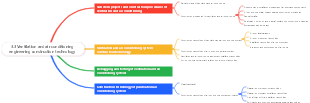
Architectural Engineering Construction Technology 27 points
Main structure engineering construction 13, 11, 7, 14, 9, 20, 13
Concrete structure engineering construction
Concrete structure construction technology
Main structure formwork project
Classification
Plywood formwork
Light weight, large width
Combined steel formwork
There are many seams, poor tightness, and poor appearance quality.
Steel framed wood plywood formwork
large template
Combined aluminum alloy template
high cost
Design Principles
Practicality
Ensure that the shape, size, and structure of the components are correct, the structure is simple, and the surface is smooth and does not leak grout.
safety
Meet the requirements for bearing capacity and stiffness, ensure overall stability, and prevent collapse, damage, and deformation.
Economy
Under the premise of ensuring quality, safety and progress, reduce one-time investment, increase turnover times, reduce the number of dismantling and dismantling, and achieve civilized construction
Installation points
Wooden poles, steel pipes, door frames and other brackets and columns must not be mixed; the formwork should be watered and moistened, and no water should accumulate; the isolating agent should be applied, and any isolating agent that affects the structure or hinders the decoration must not be used
Beam plate>=4m, camber 1%. ~3%. Arching shall not reduce the section height of the component; The post-cast belt formwork and brackets should be set up separately
Dismantling points
Disassembly order: dismantle the first support first, dismantle the rear support first, dismantle the non-load-bearing ones first, then remove the load-bearing ones.
Bottom formwork dismantling (test blocks maintained under the same conditions): plate 2~8m, 50, 75, 100% strength; beam, arch and shell 8m, 75, 100 strength; cantilever structure 100%
Removal of the non-load-bearing side formwork: the corners are not damaged, take 1N/square millimeter
Quick release mold system
The spacing between the bracket columns of the quick-release bracket system should be ≤2m. When the formwork is removed, the vertical poles should be retained and supported to support the floor. The recommended component span of the concrete strength when the formwork is removed is 2m and determined in accordance with the regulations.
Main structural steel bar engineering
Ingredients calculation
Straight steel bar = member length - protective layer thickness, additional length of hook
Bend steel bar = length of straight section, length of inclined section - bending adjustment value, added length of hook
Beam bending ribs are calculated according to 45 degrees bending
stirrup = stirrup perimeter stirrup adjustment value
The overlap length is required to be increased separately
Steel bar replacement
Combined bars (meet the steel bar spacing requirements)
28mm and below, no more than 3 wires,
32mm, preferably 2 pieces,
36mm and above, it is not suitable to combine ribs
Equal area, equal intensity
Design unit agrees
Meet structural requirements such as minimum reinforcement ratio, steel bar spacing, protective layer thickness, anchor length, joint area percentage and other overlap lengths
Rebar connection
Binding, welding, mechanical connection
Applicable scenarios
Mechanical connections are used to bear dynamic loads and welding is not suitable.
Tension > 25, compression > 28, tying is not suitable
processing
Cold drawing and straightening
The smooth round and cold drawing rates should be ≤4%; the other cold drawing rates should be ≤1%.
Install
column
The distance between the joint position and the floor is ≥500mm, ≥Hn/6, ≥hc (the long side of the column section), which is the larger value.
Steel bars such as frame beams, corbels and column caps should be placed inside the longitudinal steel bars of the column.
When the longitudinal stress reinforcement of the column is >25, add 2 stirrups 100mm at the overlap.
wall
The length of vertical steel bars exceeds 4m\6m (not more than 12mm\12mm) or the floor height increases the overlap length
The length of horizontal steel bars should not exceed 8m
beam plate
Beam height >1m, process problem (formwork and steel bar sequential process problem)
plate steel bar
The intersection points of the two rows of steel bars around the perimeter should be firmly tied at each point, and the intersection points in the middle can be staggered and firmly tied apart.
For a steel mesh with two-way load-bearing bars, all intersection points of the steel bars must be firmly tied.
The wires at adjacent binding points should be in a figure-eight shape to prevent the mesh from skewing and deforming.
Quality Control
Concealed project acceptance
Rebar entry acceptance
Yield strength, tensile strength, elongation, bending properties and weight deviation inspection
Inspection batch 60t, 30t finished steel bar
Formed steel bars, on-site supervision and third-party inspection report, only weight deviation inspection
Sub-project master control items
The joint rate should not exceed 50%, and the beam and plate should not exceed 25%.
The distance between the end of the joint and the starting point of the steel bar bending is not less than 10D
Brittle fracture, poor welding or insufficient mechanical properties, arrange special inspection
Main structure concrete project
Mix ratio
Strength, durability and workability
Mixing transportation
Stratification and segregation should not occur, and pouring should be completed before initial setting.
pumping concrete
Slump>=100mm, water-cement ratio<=0.6, cementitious material>=300kg/m³, plus air-entraining agent, air content<4%
Feeding sequence: gravel, cement, sand, water, admixtures
Coarse glue and fine water
Pouring from far to near; ensure continuous work; pipelines should be straight and turns should be gentle.
pour
For metal templates, the ambient temperature is higher than 35°C, water and moist, and the mold entry temperature is not higher than 35°C.
The cement mortar poured at the bottom of the column should be no less than 30mm thick and have the same mix ratio as the concrete.
The particle size of the stone is >25, and the height should be <=3m; <=25, <=6m
construction joints
Parts subject to small shear stress or convenient for construction
column
On the top surface of foundation, floor slab and beam, below the corbels and column caps of beams and crane beams
Liang
Large-section beams (higher than 1m) are placed 20-30mm below the bottom of the slab;
For floors with primary and secondary beams, the construction joints should be left within 1/3 of the span of the secondary beams;
plate
unidirectional
Parallel to the short side in any direction
Two-way
According to design requirements
wall
Leave it in the middle of the lintel span of the door opening
Pouring requirements
Strength meets requirements
Clean the surface and apply interface agent or cement mortar to the joints.
Post pouring belt pouring
Micro-expansion concrete, one level higher in strength, kept moist and cured for at least 14 days
Underground large volume concrete (waterproof requirements) post-pouring with curing 28D
The compressive strength of poured concrete is not less than 1.2N/mm2
The joints of the post-cast belt shall be treated according to the requirements of construction joints
maintenance
natural care
7 days for PⅠ, PⅡ, PO, and 14 days for others
Cover with watering, film, and maintenance solution
Curing after pouring and before final setting (8~12h)
Heating and curing
Quality Control
sampling
For every 100 trays of concrete with the same mix ratio that does not exceed 100m³, sampling must be done at least once.
When less than 100 trays of concrete with the agreed mix proportion are mixed in each working shift, sampling shall be conducted no less than once.
When a continuous pouring exceeds 1000m³, the concrete with the same mix proportion shall be sampled no less than once every 200m³.
The mix ratio of each floor shall be the same no less than once
Keep at least one set of standard maintenance specimens at a time
Cover and humidify within 12 hours of pouring
Cast-in-situ structure sub-project
Prestressed engineering
Apply prestress to concrete in advance to improve crack resistance
Pre-tensioning method and post-tensioning method (provided by bonding force and anchorage)
Post-tensioning method is divided into bonded and unbonded
All use tensioning equipment
The standard compressive strength of concrete cubes during tensioning is not less than 75%
Tension end selection
Adhesive
20m, tensioned at one end
35m in straight line
>20, both ends
No adhesive
40m, one end; >40m, both ends
tensioning sequence
Prestressed floor slabs and secondary beams should be tensioned first, and then the prestressed main beams should be tensioned. Reinforcements; for horizontal overlapping members, it is advisable to tension them layer by layer first and then downward.
grouting
The water-cement ratio should not be greater than 0.45, and the strength should not be less than 30Mpa
Cement slurry prepared with Portland cement or ordinary Portland cement
The number of broken wires in post-tensioning steel wires or steel strands shall not exceed one wire, and the number of breaks or slips shall not exceed 30% of the number of the same cross-section.
Masonry structural engineering construction
masonry mortar
Mix ratio
Consistency, water retention, compressive strength
Consistency meter, consistency value/thin, proportional
Degree of stratification <=30mm (segregation) to ensure good water retention
Mixing time: cement and cement are mixed for 2 minutes; cement fly ash and admixture mortar are mixed, not less than 3 minutes
The mixing time is calculated from the completion of feeding
Special mortar according to instructions
Use up within 3 hours; when the temperature is above 30°, use up within 2 hours
Half-hearted
Strength: 7.07cm, 28 days of curing, a set of 3 pieces
Leave a group of mortars on the same plate
Inspection batches of mortars of various types and strength levels for masonry construction not exceeding 250m³ shall be randomly inspected once for each mixer.
For masonry construction by paving method, the grouting length shall not exceed 750, and at high temperatures of 30 degrees, the length shall not exceed 500.
Cement mortar with a strength less than M5 should not be used to replace cement mixed mortar with the same strength. If replacement is needed, increase it by one grade.
The average value of the test blocks in the inspection batch shall be greater than or equal to 1.1 design value, and the minimum value shall not be less than 0.85 design value.
technical standard
Use 32.5 for M15 and below, and 42.5 for M15 and above.
Gypsum is filtered through 3mm*3mm mesh
Quick lime slaked lime paste, 7 days
Construction finely ground quicklime powder, 2d
The aging time is not less than
Brickwork
Sintered plain brick masonry
240*115*53
Porous bricks (commonly used in load-bearing parts)
The holes are built perpendicular to the pressure surface
Semi-blind hole with back cover facing up
Sintered hollow bricks (non-load-bearing parts)
Holes are oriented horizontally
There are 3 skins of ordinary bricks at the bottom
Sintered ordinary or precast concrete blocks are used on both sides of the door and window openings.
The fullness of gray seams is not less than 80%
Vertical joints are made by squeezing or adding grout
The mortar joints of brick columns shall not be less than 90%
Blind sewing transparent sewing false sewing
No feet, hands or eyes allowed
120mm thick, water, stone, independent column with wall column; lightweight partition wall; sandwich composite wall; window width less than 1m
Within the height range of 60° triangle and 1/2 of the clear span on the lintel
Beam or beam cushion and its left and right 500
Both sides of door and window openings
Stone masonry 300
Other 200
corner
Stone masonry 600
Other masonry 450
Design requirements do not leave any space for feet, hands and eyes
Construction requirements
For temporary interruptions in areas with non-seismic fortification and seismic fortification intensity levels of 6 and 7, when diagonal beams cannot be left, straight beams can be left except at corners, but the straight beams must be made into convex beams, and pulleys must be added. Tie steel. There should be a 90° hook at the end.
Areas above 8 degrees should be set up as slanted chalets; and the horizontal projected length-to-height ratio of the slanted chalets of ordinary brick masonry should not be less than 2/3, and the length-to-height ratio of the slanted chalets of porous brick masonry should not be less than 1/2
The daily construction height of brick masonry is 1.5m or within the height of one step of scaffolding; the stone masonry does not exceed 1.2m
Case
The roof masonry should be laid 14 days later, diagonally from the middle to both sides.
The height of the structural column must not exceed 300mm;
The temporary opening in the brick wall is 500mm away from the wall junction, and the clear width does not exceed 1m
Intensity above 9 degrees is determined by the design
Set up bark poles at corners and junctions, with spacing no more than 15m apart.
Sections are set at deformation joints, structural joints or door and window openings, and the height difference between adjacent working sections does not exceed 4m or one floor height.
Brick columns: whole bricks, the vertical mortar joints of the upper and lower skins are staggered by 1/4 of the brick length, and the core-covering method is not allowed.
Brick pile: The vertical mortar joints of the upper and lower skins are staggered by 1/2 brick length, and the construction is not less than 1/4 brick length.
Concrete small hollow block masonry project
Single and multiple rows of holes
Building with holes and staggered seams
Set up guide walls in rooms with water, the height should be 150
The indoor floor below or the moisture-proof layer should be filled with C20
small building blocks
Ordinary concrete small hollow blocks
No need to water and moisten in advance
Lightweight aggregate concrete small hollow blocks
Need to be watered and moistened in advance
The mortar fullness of horizontal mortar joints and vertical mortar joints of small concrete block masonry, the net area calculation should not be less than 90%
The overlapping length of small blocks with single row of holes is 1/2 of the length of the block. Multiple rows of holes can be adjusted appropriately and should not be less than 1/3; the infill wall aerated concrete test block is 1/3
None should be less than 90mm (concrete small hollow blocks)
The vertical gap should not exceed two skin bricks
3 hearts and 2 thoughts
Infill wall block project
Set up guide walls in rooms with water, the height should be 150
Without practical measures, it shall not be used in the following parts:
Classification
Autoclaved aerated concrete blocks
The stacking height should not exceed 2m
At 28 days of age, the moisture content of autoclaved aeration should be less than 30%
Do not mix masonry
The special mortar does not need to be sprayed with water in advance to moisten it.
Lightweight aggregate concrete small hollow blocks
The thickness of the mortar joint is 8~12mm and should not exceed 15mm. The special bonding mortar should be 3~4mm.
The fullness of gray seams is not less than 80%
Blind sewing transparent sewing false sewing
Basic rules
Main control project
Chemical reinforcement should be physically inspected
Basic rules
Age 28d
Lintels are provided for openings above 300mm
Construction quality control levels: Level A, B, and C. Reinforced masonry shall not be constructed in Level C.
Horizontal trenches should be opened in the wall; pipelines should be buried in load-bearing walls and independent columns with cross-section lengths less than 500
Anti-corrosion measures should be taken for steel bars in masonry in humid environments or environments with chemical erosion.
In areas where the seismic fortification intensity is 9 degrees, the temporary openings shall be determined by the design unit.
Moisture content: 30 aerated blocks, 40~50 non-sintered blocks, 60~70 sintered blocks
Steel structure engineering
Steel structure connection methods
Welding, riveting, ordinary bolts, high-strength bolts
Steel structure construction requirements
welding
Solid inclusions, incomplete penetration, holes, cracks, lack of fusion, shape defects
Ordinary bolts
Hexagonal, double-headed, anchor bolts
No more than 2 washers on the bolt head side, no more than 1 washer on the nut side, and no less than 2 wires exposed
Fastening sequence: the former from the middle to both sides
High-strength bolts
Friction, tension and pressure connections
2~3 strands exposed
The initial and final re-screwing is completed within 24 hours
Tighten first and then weld
The stiffness of the latter proceeds toward the smaller constraint.
The latter cannot be operated in the rain, and gas cutting or reamer file expansion is prohibited.
Painting
Anti-corrosion first, fire protection later
Steel component assembly and pre-assembly engineering inspection batches shall be carried out after passing the quality acceptance
Fire retardant coatings CB, B, H, coating must be certified
Grid structure installation methods: overall jacking method, overall hoisting method, overall lifting method, sliding method, high-altitude bulk installation method, strip or block installation method
Prefabricated concrete structure engineering construction
Prefabricated concrete structure construction plan
Special program
Project overview, preparation basis, site layout, progress plan, green construction, component transportation and storage, etc.
Prefabricated concrete structure construction preparation
Production, lifting and storage of prefabricated components
Lifting and transportation requirements
The horizontal angle of the sling should not be less than 60 degrees and should not be less than 45 degrees
Lean on the shelf
To place against each other: the facing layer faces outward; to stack: set the cushion blocks and align them up and down.
Prefabricated component installation requirements
vertical member
The distance between the upper support point and the bottom of the slab should not be less than 2/3 of the height of the column or wall panel; it should not be less than 1/2 of the height of the column or wall panel; the lower support pads should be arranged symmetrically with the center line
If the component height is higher than 10m, cable wind ropes should be installed
horizontal member
Choose independent steel pillars for the lower support of the composite slab
Prefabricated columns
Corner columns, side columns and center columns should be installed in sequence. Columns connected to cast-in-place should be installed first.
When in position, the axis and outer contour are used as positioning lines; the outer contours of side columns and corner columns are mainly used.
Adjustable temporary fixed supports are provided in two directions, and vertical and torsional adjustments should be made
Precast shear wall panels
The cast-in-place connection is hoisted first, and the outside is hoisted first and then the inside is hoisted.
Dual control of axis and outer contour
When multi-layer shear walls use seat grout, the thickness should not be greater than 20MM.
beam or composite beam
First the main beam, then the secondary beam; first low and then high
The temporary supports will be removed until the concrete reaches the design requirements.
There should be no less than two temporary supports
Prefabricated component connections
Use steel sleeve grouting connection, steel grout anchor lap connection, welding or bolt connection, steel mechanical connection, etc.
Inspect content in place
Specifications, quantity, and depth of sleeves and reserved holes; specifications, quantity, location, and length of connected steel bars.
grouting work
The ambient temperature should not be lower than 5℃. When the maintenance temperature of the connection part is lower than 1O℃, heating and insulation measures should be taken.
Stand by the grouting process to form construction inspection records
Fluidity testing
The grouting method is used for grouting. After the upper outlet flows out, it should be blocked in time and the pressure should be maintained for 30 seconds. If necessary, separate bins can be set up for grouting;
The slurry is used up in 30 minutes
The construction of welding and bolting connections should comply with current specifications.
Post-poured concrete requirements
normative issues
For non-standard content, the construction unit shall organize and formulate the acceptance content
Concealed project acceptance
Master item
Prefabricated components
Representatives from the construction unit or supervision unit should be stationed at the factory to supervise the production process
No on-site supervision, physical inspection of main control items on site
Inspection of main reinforcement quantity, specifications, spacing, protective layer thickness, concrete strength, etc.
Allowed cracks: bearing capacity, deflection, crack width
No cracks are allowed; bearing capacity, deflection, crack resistance
Installation and connection
grouting
The work team should produce 1 group and each layer should not be less than 3 groups of 40×40×160mm rectangular specimens, and perform a compressive strength test after standard curing for 28 days.
seat pulp
The grout strength of the bottom joints of prefabricated components should meet the design requirements. One group of cube specimens with a side length of 70.7mm should be produced for each working shift with the same mix ratio and each layer should have no less than 3 groups. The compressive strength test should be conducted after 28 days of standard curing.
Waterproof performance of exterior wall panel joints
One inspection lot is 1,000 square meters. If the area is less than 1,000 square meters, it should be divided into one inspection lot. One inspection lot shall be selected from each inspection lot.
The area is no less than 10 square meters, and the location is: the horizontal and vertical cross joint area formed by four wall panels on two adjacent floors.
Quality inspection and acceptance requirements for peripheral protection systems
(1) Embedded parts (2) Connection nodes with the main structure (3) Blocking structural nodes between the main structure (4) Structural nodes at deformation joints and wall corners (5) Lightning protection device (6) Fireproof structure
Steel-concrete composite structure engineering construction
The biggest change, multiple choice question
Advantages of steel concrete structure
There is no need to wait for the concrete strength to meet the requirements, which can shorten the construction period
The template does not need to be supported
The safety level is not lower than Level 2
Design regulations
When designing components, check the strength, stiffness and stability of steel components under the combined action of before and after concrete pouring.
Green construction, finished product protection
Fall prevention measures in public spaces
The thickness of the composite floor slab should not be less than 90mm, the thickness of the profiled steel plate should not be less than 0.7mm, and the supporting length of the floor slab on the steel beam should not be less than 40mm.
When steel pipes restrain concrete, exhaust holes should be provided. If the floor height exceeds 6m, an exhaust hole should be added between the two floors.
Encryption areas are set up at the ends of beams and columns, the length of seismic first-level encryption is >= 2h, and others >= 1.5
Fire protection requirements, measures to prevent high temperature concrete bursting
Construction requirements
Non-destructive testing of welds
Level 1 100% internal defect
Level 2 not less than 20% internal defects
All concrete in the main structure pipe is inspected for pouring quality
Reinforced steel steel component connections
bypass
welding
opening
Socket or connector
Check relevant quality
Waterproof engineering construction 8, 2, 6, 2, 6, 0, 0
Underground waterproofing project construction
Underground engineering waterproof concrete
Not suitable for underground environments where the ambient temperature is higher than 80°
Raw material requirements
Mainly PⅠ, PⅡ, PO, other should be tested
The particle size of stones should not be larger than 40mm
The medium-coarse sand and mud content should not be greater than 3%, and the mud content should not be greater than 1%.
The slump is 120~160, and the initial setting time should be 6~8 hours.
Construction requirements
Mechanically stir for two minutes
The thickness of layered pouring shall not exceed 500mm
Large volume molding should not be greater than 30 degrees
The temperature difference between the surface and the inside does not exceed 25 degrees, and the temperature difference between the surface and the environment does not exceed 20 degrees.
Curing after final setting, curing should not be less than 14D
Avoid temperature gaps
The impermeability grade shall not be less than P6 (the trial fitting grade shall be 0.2MPa higher than the design);
The compressive strength and impermeability performance of waterproof concrete meet the design requirements
Detailed practices meet design requirements
Underground waterproof concrete quality management
First-class standard, uneven water seepage, no wet stains on the structural surface
Level 2
No water leakage is allowed, a small amount of wet stains are allowed
Level three
There are a small amount of water leakage points, and there must be no line flow or leakage of sediment.
Level 4
If there are water leakage points, there must be no line flow or leakage of sediment.
Waterproof concrete post-cast tape maintenance shall be no less than 28D
Underground engineering waterproof mortar
The applicable environment should not be higher than 80 degrees or subject to continuous vibration.
Raw material requirements
Medium sand, mud content 1%
Construction requirements
Multi-layer smearing
Multi-layer smearing, the last layer is lifted and calendered
After the mortar waterproof layer is finally cured, the curing temperature should not be lower than 5°C and the curing time should not be less than 14 days.
The construction temperature in winter should not be lower than 5°, and in summer it is not suitable to construct above 30° or under the scorching sun.
Single layer 6~8mm, double layer 10~12mm; the thickness of admixture should be 18~20mm
If the mortar base is uneven, use the same waterproof mortar to smooth it.
Construction will be carried out after the main structure has passed the acceptance inspection
It is advisable to construct continuously; when construction joints must be left, a stepped slope should be used, and the distance from the yin and yang angle should not be less than 200mm.
Construction is strictly prohibited on rainy, snowy days and strong winds above level 5
Inspection lot size is 100 square meters, no less than 10 square meters
Underground engineering membrane waterproofing
Construction is strictly prohibited on rainy, snowy days and strong winds above level 5
The construction environment temperature of cold bonding method and self-adhesive method should not be lower than 5 degrees; hot melt construction should not be performed below -10 degrees (the lowest temperature of steel structure).
yin and yang angle
The yin and yang corners are reinforced with a width of 300~500mm.
The yin and yang angles should be made into arcs or 45° slopes.
Laying method
External protective patch
First the plane and then the elevation
The temporary protective wall is constructed with lime mortar and the inner surface should be made of leveling layer.
External defense and internal patching
On the contrary, when building a facade, turn the corners first and then widen the surface.
Turn the corner first and then make the big picture
Apply a 20:3 thick cement mortar leveling layer to the inner surface of the protective wall.
In the direction of the flow of water, who will press whom?
Protection layer settings
roof
Artificial backfill soil 50mm
Mechanical backfill 70mm
base plate
50
Fine stone concrete, not less than
side wall
Soft protective material or spread 20mm thick 1:2.5 cement mortar
The floor cushion is constructed using the empty laying method or the point-gluing method; the side walls are constructed using the full-gluing method.
Measures to prevent the roll from sliding down on the facade
Two layers of membrane shall not be laid vertically
Short side seam stagger distance>=500mm
The width of the upper and lower layers is staggered by 1/3~1/2
The modified asphalt lap should be 150 and the synthetic polymer lap should be 100
Paint waterproof construction
Inorganic waterproof
For use on the back surface of structures
organic waterproof
On the facing surface and on the back surface, it has higher impermeability and is better bonded to the structure.
The overlap width of the carcass reinforcement material is not less than 100mm, the paving is not vertical, and the staggered seams are 1/3 of the width.
The protective layer is the same as the roll material side wall
Roof waterproofing engineering construction
roof waterproofing membrane
Waterproof level and waterproofing requirements: Level 1 and Level 2 (important buildings, high-rise buildings, general buildings of Level 2), corresponding to 2 times and 1 time of waterproofing
Prevention is the main thing and platoon is the supplement
roof
The leveling layer on the insulation layer shall be provided with separation seams with a seam width of 5~20mm and a seam spacing of <=6m. The curing time shall not be less than 7 days; the yin and yang corners shall be arc treated.
Waterproof layer paving
Detail first and then the general layout, laying from the lower parts of the roof to the higher parts
It is advisable to lay parallel to the roof ridge and overlap in the direction of water flow.
The facade or large slope is full of stickiness
For hot bonding method construction, the cold base oil temperature should not be lower than 180°C and not higher than 200°C.
Thickness 1~1.5mm
roll seam
The short side lap seams are staggered by 500mm
The staggered width of the upper and lower layers should not be less than 1/3
The overlapping seam is set on the side of the gutter but not the bottom
3mm is strictly prohibited from hot melt construction
Basically the same as underground membrane waterproofing
Before laying the cement mortar or fine stone concrete protective layer, make an isolation layer first
The waterproof layer is subject to observation, water spraying or water storage tests after rain. After passing the test, the protective layer and isolation layer are constructed.
Eaves (eaves, inner gutters) and water drop details
Add metal strips to the closing edge of the coil and seal it with sealant
Add eagle beak and drip channel to the cornice; cover the entire roof cornice within 800mm
Add an additional layer under the waterproof layer at the flooded part of the parapet wall. The width of the additional layer should be greater than 250mm.
The additional layer of eaves and gutters shall be no less than 250mm deep into the roof.
Shuiluokou
The water drop cup is fixed on the load-bearing structure; the slope within 500mm of the center of the cup axis should not be less than 5%
Add an additional layer of coating film under the waterproof layer. The waterproof layer and additional layer should extend into the water outlet no less than 50mm, and they should be firmly bonded.
When finding slopes for structures, the slope should not be less than 3%; when using materials to find slopes, the slope should be 2%. The longitudinal slope of eaves and gutters should not be less than 1%. The thickness of the thinnest part of the slope layer should not be less than 20mm.
The spacing between exhaust ducts should be 6m, 36㎡/drainage hole
The overlap of the long side of the coated waterproof carcass reinforcement material shall not be less than 50mm, and the overlap of the short side shall not be less than 70mm.
The width of the two layers on the long side should be staggered by no less than 1/3
Indoor waterproofing engineering construction
Same as underground waterproofing
indoor waterproof concrete
On walls where the construction joint is not less than 300mm from the ground
Indoor waterproof mortar
It is advisable to construct continuously; when construction joints must be left, use stepped slopes, the distance from the yin and yang angle shall not be less than 200mm, and the staggered joints between the upper and lower floors shall not be less than 100
Other requirements for indoor waterproofing
The coating film is waterproof and survives multiple times
The roll material paving should be erected first and then leveled. Only after passing the inspection can the next process be carried out.
External defense and internal patching
The construction environment temperature should be 0-35℃ for solvent-based coatings and 5-35℃ for water-emulsion coatings.
The waterproof layer of the coating film should be applied multiple times. The application of the last coat of paint should be carried out after the previous coat has dried. The painting directions of the two coats should be perpendicular to each other, and should be applied first to the elevation and then to the flat surface.
Carcass reinforcement materials
The overlap between the long and short sides is not less than 50mm, and the staggered distance between the short side joints is not less than 500mm.
process
Material entry retest
Technical briefing
Clean the base layer-bonding layer-detailed additional layer-waterproof layer-water test
Decoration and renovation project construction 4, 1, 2, 3, 3, 6, 9
Low cost performance
furnish
Plastering project construction
Key points of plastering engineering technology
Strengthening measures will be taken if the thickness exceeds 35 mm.
The lime paste curing period should not be less than 15 days
Add cracking measures at the junction of different material substrates
Strengthen the mesh base overlap >100mm,
Concealed corner guards for door and window openings
Lightweight partition wall engineering construction
Lightweight Partition Wall Requirements
Floor pillow belt C20
Decorative panel (brick) project
Veneer panel, installation height <24, fortification intensity <=8 degrees
Wet work, mortar pasting, alkali-proof sealing
Height >6m is not suitable for wet pasting
Exterior metal plate, lightning protection
Decorative bricks, exterior wall height <100 meters, fortification intensity <=8 degrees
Paste from bottom to top
Ceiling engineering construction
Boom point spacing
less than 1200
The main keel is less than 1200 and the secondary keel is less than 600
Main keel cantilever<300
Boom length
greater than 1500
Set up anti-support
greater than 2500
Set up steel structure transfer layer
Ground engineering construction
Retest requirements
radioactivity of granite tiles
Formaldehyde in artificial boards, carpets, etc.
Construction requirements
Painting and pasting engineering construction
Curtain wall engineering construction
type
Component type
All-glass curtain wall with glass curtain wall
Hanging main structure
There is a gap between the lower end and the lower tank, and silicone sealant should be used to seal the gap between the tank wall and the glass.
The loads and effects of the all-glass curtain wall panel are transmitted to the glass ribs through glue joints, and the glue joints must use silicone structural sealants.
Point supported curtain wall installation
Floating head type
Countersunk head
summary
1. Glass panel thickness: When using floating-head connectors, it should not be less than 6mm; when using countersunk-head connectors, it should not be less than 8mm.
2. The glass ribs should be tempered laminated glass.
Curtain wall column and beam construction
Silicone weather-resistant glue and silicone structural glue (stress-bearing) are not interchangeable, and structural glue cannot be used as sealant.
Curtain wall glass panels and sealant requirements
Opening angle <30 degrees, opening distance less than 300mm
Curtain wall fire protection structure
Fireproof sealant
More than 100 thick rock wool, slag wool
1.5mm galvanized steel plate support
Horizontal fire and smoke belt
Curtain wall lightning protection structure
Lightning protection grounding: 10m spacing, every 3 layers
Aluminum alloy plate larger than 3mm, top plate for lightning protection
Lightning protection connection, decoating
Finished product protection and cleaning
test
Comprehensive retest of the main structure
The location of embedded parts
Safety
Fusion test and peel adhesion of silicone structural sealant
On-site pull-out strength of rear embedded parts
Material arrival acceptance
Rear embedded parts
Variety specifications, anchor bolt pull-out force, chemical anchor glue inspection
Function
Wind pressure resistance, air permeability, rainwater permeability and plane deformation performance
Energy saving engineering construction
As a new branch project
Sub-segment projects such as envelope systems, heating, air conditioning and pipe network energy conservation, electric power energy conservation, monitoring system energy conservation and renewable resources, etc.
Commonly used roof insulation materials
Polystyrene board, rigid polyurethane foam and other organic materials
25~80 thickness
Inorganic materials such as cement expanded perlite board, cement expanded vermiculite board, aerated concrete, etc.
80~260 thickness
On-site inspection of insulation materials
Check apparent density or dry density, compressive strength or compressive strength of plate insulation materials
Fiber insulation materials should be tested for apparent density
Thermal conductivity, combustion performance
Insulation layer construction requirements
The basic structure of an inverted roof should consist of a structural layer, a slope layer, a leveling layer, a waterproof layer, an insulation layer, and a protective layer from bottom to top.
The insulation layer is outside the waterproof layer and protects the waterproof layer.
Find the slope first and then level it
找平水泥砂浆易开裂,设分隔缝
The slope of an inverted roof should not be greater than 3%
When it is greater than 3%, fixed anti-slip measures will be provided
The design thickness of the inverted roof insulation layer should be increased by 25% of the calculated thickness, and the minimum thickness should not be less than 25mm.
Planted roof insulation
Structural layers: base layer, insulation layer, slope layer, general waterproofing, root puncture resistance, protective layer, drainage layer, filter layer, planting soil layer, vegetation layer
The minimum slope is 2%, and the drainage slope of gutters and gutters should not be less than 1%.
Install fixed anti-slip measures if the slope is greater than 20%
Key points for construction of wall energy-saving projects
Classification
External wall insulation
Internal insulation of exterior walls
Prefabricated insulated panel cast-in-place concrete
construction
The joints between the fire-resistant curtain wall and the surrounding walls should be fully filled with elastic closed-cell materials and sealed with weather-resistant sealant
The construction of fire isolation belts should be carried out simultaneously with the construction of insulation materials.
protective layer
B1\B2, should not be less than 15mm
Others are not less than 5mm
If a pasted and fixed external insulation system is used, the tensile bond strength test between the base wall and the adhesive should be carried out according to the standard before construction. The tensile bond strength should not be less than 0.3MPa, and the bonding interface separation area should not be greater than 50%.
There should be no high temperature or open flame operations at the construction site of the insulation project.
The air temperature during the construction of external insulation projects should not be lower than 5°, and construction is not allowed in strong winds above level 5
Quality acceptance
On-site physical inspection of building envelope
Supervision witness
Exterior wall energy-saving physical inspection
Drill core sampling
Testing unit
或施工单位实施
Insulation material types, insulation layer thickness and insulation structure practices
heat transfer coefficient or thermal resistance
Physical inspection of exterior window air tightness
Party A entrusts qualified and testing institutions