 Wondershare EdrawMind
MindMap Gallery 1A41500 Construction Technology 27 points 1
- 46
1A41500 Construction Technology 27 points 1
Construction Practice: 1A41500 Construction Technology 1, including construction surveying, earthwork construction, foundation and foundation engineering construction, etc.
Edited at 2024-01-17 10:12:37
- bacteria
This is a mind map about bacteria, and its main contents include: overview, morphology, types, structure, reproduction, distribution, application, and expansion. The summary is comprehensive and meticulous, suitable as review materials.
- Plant asexual reproduction
This is a mind map about plant asexual reproduction, and its main contents include: concept, spore reproduction, vegetative reproduction, tissue culture, and buds. The summary is comprehensive and meticulous, suitable as review materials.
- Reproductive development of animals
This is a mind map about the reproductive development of animals, and its main contents include: insects, frogs, birds, sexual reproduction, and asexual reproduction. The summary is comprehensive and meticulous, suitable as review materials.
1A41500 Construction Technology 27 points 1
- bacteria
This is a mind map about bacteria, and its main contents include: overview, morphology, types, structure, reproduction, distribution, application, and expansion. The summary is comprehensive and meticulous, suitable as review materials.
- Plant asexual reproduction
This is a mind map about plant asexual reproduction, and its main contents include: concept, spore reproduction, vegetative reproduction, tissue culture, and buds. The summary is comprehensive and meticulous, suitable as review materials.
- Reproductive development of animals
This is a mind map about the reproductive development of animals, and its main contents include: insects, frogs, birds, sexual reproduction, and asexual reproduction. The summary is comprehensive and meticulous, suitable as review materials.
- Recommended to you
- Outline
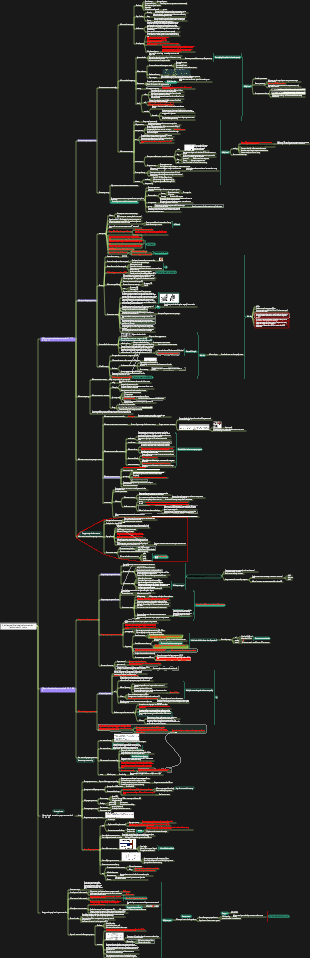

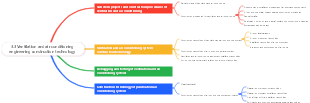
Architectural Engineering Construction Technology 27 points
Construction measurement 0, 6, 0, 2, 1, 1, 5
Contents and methods of construction surveying
The main work of construction surveying
Angle measurement, distance measurement and height difference measurement
Measurement principles
whole to part
Factory control network, construction control network, main axis, detailed sample
Construction measurement methods
Cartesian coordinate method
polar coordinate method
Angle forward intersection method
distance intersection method
direction line intersection method
elevation measurement
a Ha=b Hb
The known faces the unknown, look backward and forward
elevation transfer
Deformation measurement during building construction
Deformation monitoring object
Foundation pits with safety design level one and two
First level foundation pit
Important projects or supporting structures are part of the main structure
Excavation depth is greater than 10m
The distance between the foundation pit and adjacent buildings and important facilities is within the excavation depth.
Within the scope of the foundation pit, there are historical cultural relics, outstanding modern buildings, important pipelines and other foundation pits that need to be strictly protected.
The design grade of the foundation is Class A or the design grade of the weak foundation is Class B
critical infrastructure
Engineering structures with long spans or long and narrow bodies
Other objects required to be monitored during engineering design or construction
content
independent coordinate system
Subsidence observation of the above objects
Building settlement observation
① Start the observation after the foundation is completed and the basement is completed. For high-rise civil buildings, observation is conducted once every 2-3 floors.
② If the construction height increases evenly, the measurement should be performed once each when increasing the load by 25%, 50%, 75%, and 100%;
③Test once each during temporary shutdown, shutdown and resumption of work, and once every 2-3 months during the shutdown period;
④Number of observations during the post-completion operation phase: 3-4 observations in the first year. Observations are made 2-3 times in the second year. Once a year starting from the third year until the settlement reaches a stable state and meets the observation requirements.
⑤ When the maximum settlement rate in the last 100 days is less than 0.01-0.04mm/d, it can be considered that a stable state has been reached
Setup of settlement observation points
The four corners of the building, the four corners of the core tube, large corners and every 10-20m along the exterior wall or every 2-3 column bases;
(2) Both sides of the intersection of high-rise and low-rise buildings, old and new buildings, and vertical and horizontal walls;
(3) For buildings with a width greater than or equal to 15m, internal wall points should be set in the middle of the load-bearing internal partition wall, and ground points should be set in the center and around the indoor floor;
(4) On each or part of the column base of frame structures and steel structure buildings or along the longitudinal and transverse axes;
(5) The four corners and the middle of the bottom plate of raft-shaped foundation, box-shaped foundation or structural part close to the foundation;
(6) There should be no less than 2 monitoring points for each large structural column of super high-rise buildings and large grid structures, and they should be arranged symmetrically.
Foundation pit deformation monitoring
Deformation monitoring of foundation pit supporting structures
① The deformation observation points on the foundation pit retaining wall or the top of the foundation pit slope are arranged along the periphery of the foundation pit, with points set up in the middle of the periphery, at the sun corners, and at locations with large stress changes; The horizontal spacing between monitoring points should not be greater than 20m, and the number of monitoring points on each side should not be less than 3; horizontal and vertical monitoring points should share the same point.
② The horizontal displacement monitoring points of the foundation pit retaining wall or deep soil mass should be arranged in the middle part of the retaining wall, at the sun corners and representative parts. The horizontal spacing between monitoring points is 20-60m, and each side should not be less than 1 indivual.
Foundation pit rebound observation
No less than 3 times
Before excavation, after excavation, and before pouring foundation concrete
Horizontal displacement monitoring, verticality and tilt monitoring of high-rise and super high-rise buildings, long spans and important infrastructure
Carry out disturbance monitoring, sunlight deformation monitoring, and wind vibration deformation monitoring for high-rise and super high-rise buildings and long-span buildings.
Convergence deformation monitoring of tunnels and culverts
summary
If the following situations occur during the deformation monitoring process, a safety plan must be implemented to increase the frequency of observations or increase the content of observations.
1) Abnormal changes in the deformation amount or deformation rate; 2) The deformation amount or deformation rate reaches or exceeds the warning value; 3) Collapse and landslides occur in the surrounding areas or on the excavation surface; 4) Abnormalities occur in the building itself, surrounding buildings and the ground surface; 5) Other abnormal deformations caused by natural disasters such as earthquakes, heavy rains, freezing and thawing.
datum point
settlement
Displacement
No less than 4 special and first-level, and 3 others
Deformation measurement requirements
Accuracy level: Special 1, 2, 3, 4, a total of five levels
Gregorian calendar, Beijing time
Characteristics and applications of commonly used engineering measuring instruments
Measuring instrument performance
Steel ruler, level, theodolite, total station
Level, which uses the sight distance measurement principle to measure approximate horizontal distances
Earthwork construction 2, 1, 4, 5, 3, 4, 3
Classification and Properties of Geotechnical
Geotechnical Engineering Classification
Eight types of soil, basis for calculating labor, machinery and engineering costs
Soft, normal, hard soil, gravel soil, soft stone, sub-hard stone, hard stone, extra-hard stone
Particle size and plasticity index
2mm*50%
Gravel soil
2mm,0.075m*50%
sand
0.075mm,<10 plasticity index
Silt
0.075mm,>10 plasticity index
Clay soil
clay
silty clay
Geotechnical engineering properties
internal friction angle
The critical self-stability angle of the block on the inclined surface
Analyze slope stability
soil shear strength
cohesion
Soil's natural moisture content
m water/m dry
The difficulty of digging, the stability of the slope, the compaction of the fill, etc. have an impact
natural density
dry density
Compaction standards for controlled soil
Density
looseness
Important parameters for earthwork balance
Compaction factor
Foundation pit support construction
Shallow foundation pit support
Inclined column support
anchor pull support
Steel pile transverse baffle
Short pile diaphragm support
Temporary retaining wall support
Soil retaining cast-in-place pile support
permanent
Stacked bag retaining wall support
summary
Deep foundation pit support
Classification of safety levels of foundation pit side walls
6m and 12m boundary distinction
structure type
Cast-in-place pile support
The safety level of the side walls of the foundation pit is 123.
Precipitation or water-stopping curtains can be used
Construction requirements
Piles should be formed at intervals. The distance between completed piles and adjacent piles should be greater than 4 times the pile diameter or the interval should be greater than 36 hours.
The grouting height at the top of the pile is >=500mm; underwater grouting increases the strength level by one level compared with the design.
The water-stop curtain adopts single-axis, double-axis, or three-axis cement and soil mixing piles; the net distance between the piles and the row of piles is less than 200mm.
Diaphragm Wall
Main structure exterior wall, two walls in one
The safety level of the side walls of the foundation pit is 123.
Construction requirements
Set up guide walls
C20, thickness >200mm, the top is 100mm higher than the ground and 500mm higher than the groundwater level. The bottom of the guide wall enters the undisturbed soil for more than 200mm. The height is not less than 1.2m. The internal clearance of the guide wall is 40mm wider than the design thickness of the diaphragm wall.
The length of the tank section is 4~6m. The mud in the tank should not be lower than 0.3m of the guide wall and 0.5m higher than the groundwater level.
Conduit method for pouring mud
The level of the pipe is <=3m, the end is <=1.5m, and the distance between the lower part and the bottom of the trench should be 300~500mm. Concrete should be poured within 4 hours after the steel cage is suspended. The slump is 200-20. The strength is increased by one level. The pouring is 300 higher than the design. ~500mm
grouting
After the concrete reaches the design strength, at least 2 steel pipes should be used for grouting at the bottom of the wall. When the tank section is >6m, a grouting pipe should be added. The grouting pipe should be 200~500mm deep into the bottom of the tank, and the grouting pressure should be controlled at 2MPa.
Termination: The grouting volume reaches the design requirements; the grouting volume is 80% and the pressure reaches 2MPa
soil nail wall
Single soil nail wall, prestressed anchor composite soil nail wall, cement soil pile composite soil nail wall, micro pile composite soil nail wall (gypsum boards are connected by wooden keels)
Safety level 2, 3
Construction requirements
(1) The slope ratio (ratio of vertical height and horizontal width of the wall) of soil-nailed walls and prestressed anchor-composite soil-nailed walls should not be greater than 1:0.2.
(3) The horizontal and vertical spacing of soil nails should be 1-2m; the inclination angle of soil nails should be 5°-20
(4) The diameter of the soil nail hole for the grouting type steel bar should be 70-120mm; the soil nail steel bar should be HRB400 and HRB500 steel bars with a diameter of 16-32mm; the soil nail hole grouting material can be cement slurry or cement mortar, the strength is It should not be lower than 20MPa.
(5) The outer diameter of the steel pipe used for soil nailing should not be less than 48mm, and the wall thickness should not be less than 3mm.
Construction requirements
(1) The construction of soil nail walls must follow the principle requirements of “advanced support, layered and segmented, layer by layer construction, time-limited closure, and over-excavation is strictly prohibited”. 【201927】
(2) After the construction of each layer of soil nails, the pull-out resistance of the soil nails should be randomly checked as required.
(3) After excavation, the free surface should be closed in time, and the placement of soil nails and the spray concrete surface layer should be completed within 24 hours. When excavating silty soil, the placement of soil nails and shot concrete surface layer should be completed within 12 hours.
(4) The lower layer of soil can be excavated 48 hours after the grouting of the upper layer of soil nails is completed.
(5) Hole-forming grouting type reinforced soil nails should be constructed using two grouting processes. The first grouting should be cement mortar, and the grouting amount should not be less than 1.2 times the borehole volume. The second grouting can only be carried out after the first grouting has initially set; the second grouting should be pure cement slurry. The grout volume is 30%-40% of the first grouting volume. The grouting pressure should be 0.4-0.6MPa.
(8) The maximum particle size of aggregates in shotcrete should not be greater than 15mm. The operation should be carried out in sections and in sequence, from bottom to top within the same section, and the thickness of one injection should not be greater than 120mm.
(9) The thickness of the protective layer of soil nail reinforcement should not be less than 25mm
Articulating pile retaining wall
The safety levels of foundation pit side walls are 1, 2, and 3. It is suitable for deeper foundation pits and can be used for water interception at the same time.
Construction technology
(1) The interlocking piles are constructed in two stages: I (Pile A) and II (Pile B, full-length reinforcement). During the construction of the II piles, a hole-forming machine is used to cut the I pile body to form a continuous interlocking pile wall.
(2) Occlusal cutting is divided into soft cutting and hard cutting.
(3) For piles using soft cutting technology, the construction of piles in sequence I should be completed before the final setting of piles in sequence I. Super retarded concrete should be used in sequence I, and the retarding time should not be less than 60h; the 3d strength of concrete should not be greater than 3MPa; soft cutting Ordinary concrete should be used for sequence II piles and hard-cut sequence I and II piles.
(4) During segmented construction, a sand-grouted II sequence pile should be set at the end of the construction section for closing the retaining piles.
sheet pile retaining wall
Concrete sheet piles and steel sheet piles have the function of intercepting water. When used in conjunction with internal supports (mainly steel supports), they have the effect of intercepting water.
(1) It is advisable to use vibrating hammer for installation. When using the hammering type, pile caps should be installed; when adjacent buildings (structures) and underground pipelines, the static pile pressing method should be used for construction. (2) The joints of steel sheet pile bodies should not be larger than 50% at the same elevation. (3) The concrete strength should reach 70% when lifting concrete sheet piles and 100% when driving. (4) Sheet pile recycling should be carried out after the foundation pit backfill is completed. The pile holes after removal should be filled with grouting in time.
The safety levels of foundation pit side walls are Level 1, Level 2, and Level 3. It is suitable for deep foundation pits such as clay soil, silt soil, and sandy soil, and the depth should not be greater than 12m.
Cement-soil gravity retaining wall
retaining wall
The safety level of the side wall of the foundation pit is level two or three; it is suitable for silty soil and silt foundation pits, and the depth should not be greater than 7m.
Second and third level side wall safety level foundation pit
Steel cement soil mixing wall
The safety levels of foundation pit side walls are Level 1, Level 2, and Level 3. It is suitable for deep foundation pits such as clay soil, silt soil, sandy soil, and gravel soil. The depth should not be greater than 12m.
Construction requirements
(1) The steel-cement-soil mixing wall should be constructed using a three-axis mixing pile driver. Construction sequences such as jump drilling, unilateral extrusion, and advance drilling and drilling can be used. The overlap time interval between piles should not be greater than 24 hours.
(2) Before inserting the section steel that is to be pulled out and recycled, it should be derusted in dry conditions and then painted with friction-reducing material on its surface. The gap left after the steel is pulled out should be filled with grouting in time.
(3) The pile body strength of the cement-soil mixing pile should be tested before excavation of the foundation pit. It should be determined by the strength test method of slurry test block, or the strength test method of drilling the pile core.
inner support
(1) The construction and dismantling sequence of the support system should be consistent with the design conditions of the support structure. The principle of supporting first and then digging should be strictly followed. There should be water-stopping structural measures where the columns pass through the bottom plate of the main structure and where the supports pass through the exterior wall of the basement.
(2) Reinforced concrete supports can be removed by mechanical removal or blasting. The blasting holes should be reserved. Before blasting, the parts where the supports connect to the purlins or the main structure should be cut.
(3) Before blasting and demolishing the support structure, isolation and protection measures should be taken for the permanent structure and the surrounding environment.
anchor rod
Foundation pit monitoring
The construction unit entrusts a third party with relevant qualifications to conduct the
Types of foundation pits that should be monitored
Foundation pit design safety level is one or two
Deep foundation pit is greater than or equal to 5m
Less than 5m, but the geology is complex
Special construction plan for foundation pit engineering
Construction technical parameters such as supporting structures, groundwater control, earth excavation and backfilling
Construction technology, construction plans, safety technical measures/emergency plans, engineering monitoring requirements, etc.
Foundation pit safety back
Special demonstration
(1) Foundation pit projects with complex engineering geology and hydrogeological conditions; (2) Neighboring important buildings, Foundation pit projects with serious consequences of damage to facilities, pipelines, etc.; (3) Foundation pit projects that have been reorganized and implemented after serious accidents have occurred; (4) First- and second-level foundation pit projects that adopt new technologies, new processes, new materials, and new equipment. Pit projects; (5) Other foundation pit projects that need to be demonstrated.
5m is the limit
Artificial drainage of groundwater
Continue to import and fill in
Selection of groundwater control technology solutions
Water collection, open drainage, water interception, precipitation and groundwater recharge
The groundwater level is located 0.5~1.5m below the ground of the foundation pit
Precipitation construction technology
Artificial precipitation
Depth less than 3m, water collection and open drainage
Depth greater than 3m, well point precipitation
Light well point
Precipitation depth 6, multi-level light well point 6~10m
The machine is simple, the cost is low, and the slope stability is improved
jet well point precipitation
Precipitation depth 8~20m
The equipment is simple, the drainage depth is large, and compared with 1, it has less precipitation equipment, less earthwork excavation, and lower costs, etc.
Soil permeability coefficient 0.1~20m/d
Tube well point precipitation
vacuum
non-vacuum
Depth greater than 6m,
Soil permeability coefficient 1~200m/d
cut off water
water cutoff curtain
Well point reinjection
Prevent the impact of water pumping on surrounding buildings
Earthwork excavation construction
Earth excavation
Earthwork excavation construction
Foundation pit excavation requirements
Grooving support, support first and then excavation, layered excavation, over-excavation is strictly prohibited
Soil nail wall: advanced support, layered and segmented, layer-by-layer construction, time-limited closure, over-excavation strictly prohibited
To avoid disturbing the foundation soil, reserve 150~300mm for manual excavation and then dig to the design elevation after the next process begins.
When using machinery to excavate foundation pits, in order to avoid damaging the base soil, the foundation pit should be A 200-300mm thick soil layer is reserved above the elevation for manual excavation.
The groundwater drops below 0.5m~1.5m below the foundation elevation, which facilitates excavation.
Pay attention to drainage to prevent the foundation pit from soaking
Deep foundation pit excavation (depth greater than 5 meters)
No support: sloping excavation
With support: central island type, basin type excavation, reverse method excavation
Large excavation area
The layering thickness is controlled at 3 meters, and the length of layering sections during soil nail wall construction does not exceed 30m.
Rock foundation pit excavation
Excavation in layers and sections, poor geology and unstable foundation pits, excavation in layers and sections at intervals
Blasting should be used; slot blasting in the middle of the foundation pit and stepped blasting around the foundation pit; protective measures should be taken around the foundation pit close to the supporting structure or rock mass; mechanical repair of the base or slope surface
Backfilling
Backfilling should be done simultaneously on both sides or around the perimeter, preferably with the same type of soil.
Clay, silty soil, soil with organic matter >5%, and soil with substandard moisture content should not be backfilled.
Foundation pit trench inspection method
Information and conditions required for tank inspection
The director or the person in charge of the construction unit organizes the five parties to be in place. Once qualified, the basic engineering construction will be carried out.
Personnel, foundation design documents, survey reports, light power cone penetration reports
Branch project acceptance
The thickness of the retained protective layer is not less than 100mm and the quality inspection report of the deep foundation construction
Natural foundation trench inspection
Light Power Penetration Report
Light power penetration is not required
The pressure-bearing water head is higher than the ground level of the foundation pit. Penetration may cause water and sand to flow out, etc.
The supporting layer is a gravel layer or pebble layer with a thickness >1m
The bearing layer is a uniform and dense sand layer with a thickness >1.5m
Foundation treatment project trench inspection
Pile foundation engineering trench inspection
Tank inspection method
Foundation and Foundation Engineering Construction 2, 0, 6, 2, 8, 5, 4
Commonly used foundation treatment methods
foundation replacement method
Shallow foundation pit
The filling thickness is 0.5~3M, and the design is determined
Replace the filling materials with dust, fly ash, compaction coefficient >=0.95, others >=0.97
The lime soil is mixed and compacted on the same day.
3D must not be soaked
lay a solid foundation
Strong ramming
Low saturation silt soil
dynamic replacement
Highly saturated silt
20*20m test area to determine the effect and applicability on site
Effective reinforcement depth 3~10m
Start calculation from ramming surface
composite foundation
Cement fly ash gravel piles, lime soil compaction piles, vibrating gravel piles and immersed sand and gravel piles, rammed cement soil piles, cement soil mixing piles, jet grouting piles composite foundation
CFG pile (cement fly ash gravel pile)
Piling technology
Long spiral drilling and pouring, long spiral center pressure pouring into piles
Vibration immersed tube, mud wall retaining hole filling
Grouting reinforcement
Micro pile reinforcement
Pile foundation construction
pile classification
End-bearing piles, friction piles
Precast piles, cast-in-place piles
Precast pile construction
Hammering pile sinking
Heavy hammer, low blow, low hammer, heavy blow
Construction sequence
Determine the pile position and pile sinking sequence → put the pile driver in place → lift and feed the piles → make corrections → hammer and sink the piles → connect the piles → hammer and sink the piles again → send the piles → retract the hammer → cut the pile heads.
Construction requirements
The strength is 70% for lifting, and can be transported and piling after 100%.
A single-section pile must be lifted at two points, and the lifting point must be 0.2 pile length from the end. It is strictly prohibited to drag the pile.
Welding, threaded joints, mechanical engagement joints
The sequence of pile sinking should be carried out in the order of deeper, larger, longer and closer (existing buildings) first.
Standards for hammering to terminate pile sinking
The pile end elevation control is mainly controlled, and the penetration is supplemented; the pile end reaches hard, hard plastic clay, weathered rock, etc., and on the contrary
When the penetration reaches the design requirements but the pile end elevation does not, hammering should be continued for 3 cycles, and it shall be confirmed that the penetration of 10 blows per cycle is less than the value specified in the design.
Prefabricated pile body fracture
Phenomenon
Sudden tilt and dislocation
There are no special changes in soil conditions, and the penetration gradually increases or suddenly increases
When the pile hammer jumps up, the pile body will rebound.
reason
1) When making piles, the bending of the pile body exceeds the regulations, the pile tip deviates greatly from the longitudinal axis of the pile, and the pile body tilts or bends during the sinking process.
2) After the pile is inserted into the soil, it encounters a large hard obstacle and pushes the pile tip to one side.
3) If the stable pile is not vertical, press it into the ground to a certain depth and then use the walking frame method to correct it to make the pile bend.
4) When constructing two-section piles or multi-section piles, the two connected piles are not on the same axis, resulting in bending.
5) The concrete used to make the piles is not strong enough, and cracks or fractures in the piles were not discovered during the stacking and lifting processes.
prevention and control
1) Before construction, the obstacles under the pile positions should be cleared, and if necessary, use a probe to understand each pile position. After inspecting the pile components, it is found that the pile body is bent beyond the standard or the pile tip is not on the longitudinal axis and should not be used. 2) Correct the non-verticality in a timely manner during the pile stabilization process. When connecting the piles, ensure that the upper and lower piles are on the same longitudinal axis. The joints must be constructed in strict accordance with the operating procedures. 3) During the stacking and lifting of piles, relevant regulations must be strictly followed. If cracks exceeding the regulations are found, they must not be used. 4) The processing method should be studied together with the designers. According to the engineering geological conditions, the upper load and the structural part where the piles are located, pile replacement methods can be adopted. One or two piles can be added on both sides of the axis
Static pressure pile
Construction sequence
Measure and position → put the pile driver in place → lift the pile and insert the pile → center and straighten the pile body → static pressure pile sinking → pile connection → static pressure pile sinking again → send the pile → terminate the pile pressing → inspection and acceptance → transfer the pile driver.
Construction requirements
No less than 3 test piles
The maximum pressure provided by the pile driver is less than 0.9 times the sum of the frame weight and counterweight.
The depth of pile delivery should not be greater than 10~12m. For depths greater than 8m, the pile feeder is specially designed
5 discontinuous pressure piles on the same bearing platform
Dense pile groups should not be operated continuously 24 hours a day, and the daily downtime should not be less than 8 hours.
Welding, thread 0.5~1m, meshing, snap hoop, etc. 1~1.5m (the height of the pile joint above the ground)
Pile pressing sequence: deep and long, avoid dense
Termination of pile sinking: elevation as the main factor and pressure as the supplement
friction, pile top elevation
End bearing friction: elevation is the main factor, pressure is the auxiliary factor,
End bearing: terminal pressure is the main one, elevation is the supplementary one
The stable pressure pile pressing force is not less than the final pressure
Voltage stabilization time 5~10s
Depth >8m, re-press 2~3 times; <8m, re-press 3~5 times
drilling piles
Overfilling shall not be less than 1 meter, and the concrete grade shall be increased
Drilling and hole forming, lowering steel cages, lowering steel conduits, secondary cleaning, concrete pouring, pile integrity testing, pile bearing capacity testing
Mud wall retaining bored pile
Collapse hole
reason
The specific gravity of mud is not enough,
The water head is not high enough or there is pressurized water in the hole.
The casing is buried too shallowly and the lower hole collapses
The footage speed is too fast or the idle time is too long or the rotation speed is too fast.
Impact cone tilts to impact hole wall
When blasting the isolated rocks and probe rocks in the hole, the amount of explosives was too large, causing great vibrations.
Solution
Craftsmanship
The mud level in the borehole is 0.5 meters above the groundwater level.
Raw soil pulping
Conduit pouring and grouting conduits shall be made of steel pipes, each pile shall be no less than 2, and the filling coefficient shall not be less than 1
Bottom sediment thickness
end bearing pile
<50
friction type
<100
Resistance to pull-out and horizontal load
<200
Stop grouting
The amount of grouting meets the design requirements
The grouting pressure reaches the design value and the grouting volume >=80%
Satisfy one of them
Technical trial holes, the number is not less than 2
Immersed tube cast-in-place pile
Category: single play, multiple play or reverse insertion
Singles: soil layer with small water content and saturated soil layer
The pile driver is in place → hammering (vibrating) the immersed pipe → loading → hammering (vibrating) while pulling out the pipe, and continue to pour concrete → lower the steel cage, continue to pour concrete and pull out the pipe → complete the pile.
Construction method
1) Concrete should be poured immediately after the pile pipe sinks to the design elevation and stops vibrating. After the pipe is filled with concrete, it should be vibrated first and then the pipe should be pulled out. During the pipe removal process, concrete should be added in sections to keep the concrete surface in the pipe not lower than the ground surface or 1-1.5m higher than the groundwater level.
2) When the pile body is equipped with a steel cage, the first concrete should be poured to the bottom elevation of the cage, then the steel cage is placed, and then concrete is poured to the top elevation of the pile.
In the re-driving method, the concrete pouring should reach the natural ground, and the re-driving construction is completed before the initial setting, and the center line of the pile remains unchanged.
Manually dug cast-in-place piles
Steel arm guard, concrete arm guard
The most widely used method of manually digging cast-in-place pile wall protection is cast-in-place concrete segmented wall protection. When the clear distance between piles is less than 2.5m, spaced excavation and spaced pouring should be adopted, and the minimum construction spacing between adjacent rows of piles should not be less than 5m. The order of excavation in the hole should be first in the middle and then at the periphery. For the bottom expansion part, the pile body cylinder should be excavated first, and then proceed from top to bottom according to the bottom expansion size.
Security control points
Judgment and correction
(1) A special construction plan should be prepared before the construction of manually dug piles, and the construction should be organized strictly according to the procedures specified in the plan. Manually dug pile projects with an excavation depth exceeding 16m require expert demonstration of the special construction plan.
(2) An emergency soft ladder must be installed in the pile hole for personnel to go up and down the well. The electric hoist and cage used should be safe and reliable, and equipped with an automatic clamping safety device.
(3) The composition and content of toxic and harmful gases underground must be tested before starting work every day, and reliable safety protection measures should be taken. When the excavation depth of the pile hole exceeds 10m, special equipment for supplying air to the underground should be equipped.
(4) The earth and stone that must be excavated around the hole should be transported away from the hole in time and should not be piled within 1m around the hole. Motor vehicle traffic should be kept away from openings.
(5) It is strictly forbidden to use one gate for multiple purposes when using electricity in each hole of a bored pile. The cables above the hole must be elevated for more than 2.0m. It is strictly prohibited to mop the floor or bury them in the soil. The cables in the hole must be protected against wear, moisture, and breakage. Illumination should use a safety miner's lamp or a safe voltage below 12V.
21.Restricted use in July
summary
Foundation pile inspection
method
Before construction, test pile inspection provides basis for design
Ultimate bearing capacity of single pile
After pile foundation construction, engineering inspection to provide basis for acceptance
Single pile bearing capacity and pile integrity
specific method
Single pile vertical compressive static load test
Single pile vertical pullout static load test
Single pile horizontal static load test
Core drilling method
low strain method
high strain method
sonic transmission method
integrity
summary
Detection meets conditions
Strain method and acoustic transmission method detection
The strength of the pile body under test shall not be less than 70% of the design strength and not less than 15Mpa
Core drilling method
The age reaches 28 days, or the strength of the same culture test block reaches the design requirements.
Pile diameter
<1.2, can be 1~2 holes
1.2~1.6, preferably 1~2 holes
>1.6, preferably 3 holes
Value within the range of 0.15~0.25D at the center of the pile
Rest time before bearing capacity test (minimum requirement)
Sand 7d
Silt soil 10d
Unsaturated clay 15d
Saturated Clay 25D
Mud wall protection, manual excavation, extended rest time
It is advisable to conduct pile integrity testing first and then conduct bearing capacity testing. Pile integrity testing should be carried out after excavation of the foundation pit.
The pile body integrity is classified into four categories: Type I piles, Type II piles, Type III piles, and Type IV piles. Type I piles have a complete pile body; Type II piles have slight defects in the pile body, which will not affect the normal bearing capacity of the pile structure; Type III piles have obvious defects in the pile body, which have an impact on the pile structure bearing capacity; Type IV piles There are serious flaws in the body.
Conditions for selecting piles to be inspected for acceptance testing
(1) Piles with questionable construction quality; (2) Piles with abnormal local foundation conditions;
(3) Select some Class III piles during bearing capacity acceptance; (4) Piles that the designer considers important; (5) Piles with different construction techniques;
(6) It should be selected evenly and randomly according to regulations.
Pile foundation requirements
Locating deviation: 20mm for group piles and 10mm for single row piles
test block
The same mixing station, 50m³, one set of test blocks; if less than 50, one set will be left for 12 hours of continuous pouring
A group of single piles
Pile body integrity
20% of the total number, and not less than 10 pieces
No less than 1 root under the platform
Bearing capacity inspection
Design Grade A
Static load test
1% of the total number of piles, no less than 3
The total number of piles is less than 50 and no less than 2
With experience and comparative information, Level B and C
learn
High strain method vertical compressive bearing
5% of the total number, no less than 10 pieces
Pile position deviation
Form P377
concrete foundation construction
Shallow foundation construction
Classification
Independent foundation
raft foundation
Strip foundation
If the length of raft foundation and box foundation of high-rise buildings exceeds 40m, post-casting strips >=800mm must be installed, and the steel bars must run through them.
Division of sub-projects
Reinforcement engineering
Shallow foundation steel bar project
The thickness of the protective layer should be according to the design requirements, 40% with cushion and 70% without cushion.
The intersection points of the two rows of steel bars on the surrounding sides are fully tied, and the middle part is crossed and fastened firmly; the two-way stress-bearing steel bars are fully tied
The binding points are formed into a figure eight shape
Double-layer steel mesh, with steel support feet between the upper and lower layers to ensure the correct position of the steel bars
Independent foundation, the short side stress reinforcement is on the long side stress reinforcement
When d>25 is in tension and d>28 is in compression, lashing joints cannot be used.
Same structure
Template project
concrete project
Concrete project
The cushion should be poured immediately after the foundation trench inspection. The next process can be carried out after the strength of the cushion reaches 70%.
The step-type independent foundation construction can be completed in one step according to the steps, and construction joints are not allowed to be left. Each layer of concrete must be poured one at a time, starting from the corners and then in the middle, making sure that the concrete fills the formwork.
The strip foundation is advanced section by section in a ladder shape, with a pouring length of 2~3m and a layering of 300~500mm.
Mass concrete project
Short side exceeds 1m
Construction Organization
Construction organization design content
①Calculation results of temperature stress and shrinkage stress of large-volume concrete pouring body;
② Determination of main anti-cracking structural measures and temperature control indicators during the construction stage ③ Raw material selection, mix ratio design, preparation and transportation plan;
④Main construction equipment and general site layout; ⑤Temperature control monitoring equipment and test layout drawings;
⑥Pouring sequence and construction progress plan; ⑦Insulation and moisture conservation methods; ⑧Emergency plans and emergency safeguard measures;
⑨Construction measures in special locations and under special climate conditions.
construction regulations
C25~C50 strength, the strength of 60d and 90d can be used as the basis for mix design, concrete strength assessment and project acceptance
Structural steel bars to control temperature and shrinkage are installed outside the stressed steel bars.
For rock foundations, a sliding layer should be installed on the concrete cushion.
Technical measures to reduce external constraints on concrete in design
Propose relevant testing requirements for temperature field and strain based on engineering conditions
1.2 times the amount required per unit time
The dosage of fly ash is not more than 50%, the dosage of slag powder is 40%, and the dosage of the first two together is 50%.
The water-binder ratio should not be greater than 0.45
Collapse<180, water<170
Construction requirements
1. Large-volume concrete construction should adopt overall layered or push-type continuous pouring construction. 2. When horizontal construction joints are set up in large-volume concrete construction, the location and interval time should be determined according to design regulations, temperature crack control regulations, concrete supply capacity, steel bar engineering construction, embedded pipe installation and other factors. 3. When using the jump method, the maximum one-way size of the jump block should not be greater than 40m, the construction time between jumps should not be less than 7 days, and the jump joints should be set and treated according to the requirements of construction joints. 4. The temperature of concrete entering the mold should be controlled at 5-30℃. 5. Mass concrete pouring should comply with the following regulations: 1) The thickness of the concrete pouring layer should be determined based on the depth of action of the vibrator used and the workability of the concrete. It should be 300-500mm for continuous overall pouring. Over-vibration and leakage vibration should be avoided during vibration. 2) For overall layered continuous pouring or push-type continuous pouring, the interval time should be shortened, and the second layer of concrete should be poured before the initial setting of the first layer of concrete. The interval time between layers should not be greater than the initial setting time of concrete, which should be determined through testing. When the interval time between layers exceeds the initial setting time of concrete, the layers should be treated as construction joints. 3) Concrete pouring should be continuous and orderly, and construction joints should be reduced. 4) Concrete should be pumped and vibrated twice. 6. The large-volume concrete pouring surface should be troweled multiple times in a timely manner. 7. Large-volume concrete should adopt thermal insulation and moisturizing maintenance, and thermal insulation and moisturizing maintenance should comply with the following regulations: 1) A dedicated person should be responsible for the insulation and maintenance work, and test records should be carried out; 2) The duration of moisturizing and curing should not be less than 14 days, the integrity of the plastic film or curing agent coating should be checked frequently, and the concrete surface should be kept moist; 8. When there is sudden heavy rain or strong wind during the large-volume concrete pouring process, construction joints should be left in reasonable parts of the structure in time, and concrete pouring should be stopped; the concrete that has been poured but has not hardened should be covered immediately, and rainwater is strictly prohibited from directly washing the newly poured concrete. of concrete.
Construction testing and monitoring
Concrete test sampling
<=1000, no less than 10 groups
1000~5000, if it exceeds 1000, take one group for every additional 500, and if it is less than 500, take one group
>5000, if it exceeds 5000, one group will be taken for every additional 1000, and if it is less than 5000, one group will be taken.
Temperature detection and control
Temperature control index
The temperature rise after entering the mold will not easily exceed 50 degrees.
During the curing stage, the temperature difference between the 50mm surface and the inner 1/2, the two adjacent temperature measurement points inside, and the temperature difference between the inside and outside should not be greater than 25°.
The temperature drop should not exceed 2°/day
The insulation covering should be removed step by step in layers. When the maximum temperature difference between the concrete surface temperature and the environment is less than 20°C, it can be completely removed.
Temperature measurement point layout
In the thickness direction, the distance between measuring points should not be greater than 500mm.
On the test axis, the number of monitoring points should be no less than 4
The distance between the temperature measurement point and the surface should be 50mm
Thickness direction, surface layer, bottom layer and center
testing time
After the concrete is poured, it should be done no less than 4 times a day and night; the temperature of entering the mold should be no less than 2 times every shift.
Post-cast belt project
The higher-grade micro-expansion concrete pouring and post-pouring joints are treated as construction joints
The main structure should be retained for a period of time before being poured (no design requirements, at least 14 days should be retained) to connect the structure as a whole.
maintenance
Waterproof, moist maintenance 28
Others, 14 days
Concrete structural joint treatment, etc.
Masonry foundation construction
Masonry foundation requirements
Trinity: a shovel of ashes, a brick, and a squeeze
Cement mortar masonry
The foundation is uneven, and the higher parts are built toward the lower parts.
For rooms requiring waterproofing, a 200mm guide wall should be installed
Hollow brick jar with solid skin brick