MindMap Gallery Natural Medicinal Chemistry Sugars and Glycosides-Structure Determination, Extraction and Isolation
This is a mind map about natural medicinal chemistry, including purity identification of monosaccharides and oligosaccharides, structure determination of sugar chains, extraction and separation of sugars, etc.
Edited at 2024-01-16 20:31:36This is a mind map about bacteria, and its main contents include: overview, morphology, types, structure, reproduction, distribution, application, and expansion. The summary is comprehensive and meticulous, suitable as review materials.

This is a mind map about plant asexual reproduction, and its main contents include: concept, spore reproduction, vegetative reproduction, tissue culture, and buds. The summary is comprehensive and meticulous, suitable as review materials.
This is a mind map about the reproductive development of animals, and its main contents include: insects, frogs, birds, sexual reproduction, and asexual reproduction. The summary is comprehensive and meticulous, suitable as review materials.
This is a mind map about bacteria, and its main contents include: overview, morphology, types, structure, reproduction, distribution, application, and expansion. The summary is comprehensive and meticulous, suitable as review materials.
This is a mind map about plant asexual reproduction, and its main contents include: concept, spore reproduction, vegetative reproduction, tissue culture, and buds. The summary is comprehensive and meticulous, suitable as review materials.
This is a mind map about the reproductive development of animals, and its main contents include: insects, frogs, birds, sexual reproduction, and asexual reproduction. The summary is comprehensive and meticulous, suitable as review materials.
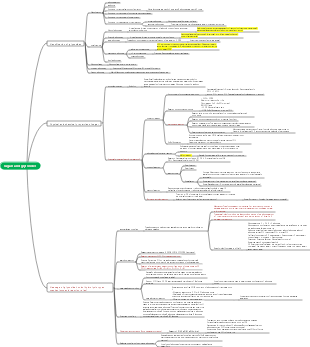
sugars and glycosides
Identification of purity of monosaccharides and oligosaccharides
PC (paper chromatography)
Expansion system: commonly used water-saturated organic solvents
Color developer: phthalic acid aniline (makes reducing sugar appear brown and black)
TLC (Thin Layer Chromatography)
(0.03M boric acid solution inorganic salt) silica gel → plate making
GC (Gas Chromatography)
Preparing sugar as trimethylsilyl ether: increasing its volatility
aldose
Reduction of NaBH4 to polyol (avoids formation of anomers)
Made into acetyl or trifluoroacetyl
HPLC (High Performance Liquid Chromatography)
Packing material: chemically modified silica gel, such as -NH2 column
Suitable for analyzing heat-labile, non-volatile oligosaccharides and polysaccharides
IEC (ion exchange chromatography)
Boric acid complexes of sugars: capable of ion exchange chromatography
No need to make derivatives
Direct separation with aqueous solution
Determination of the structure of sugar chains
Process: Purity - MW - Composition of monosaccharides - Determination of the absolute configuration of monosaccharides - Determination of the connection positions between monosaccharides - Determination of the connection sequence of sugar chains - Determination of glycoside bond configuration and oxygen ring
Determination of polysaccharide purity
ultracentrifugation
High-voltage electrophoresis (HPCE)
Gel chromatography: column h:d > 40
Polarimetry: Different concentrations of ethanol↓, comparison
Others: Functional group molar ratio method, RI, HPLC method, etc.
Determination of molecular weight
traditional method
Sedimentation method, light scattering method, viscometry method, osmotic pressure method, ultrafiltration method, ultracentrifugation method
gel column chromatography
MS
ESI-MS: single or multiply charged protons
MALDI-TOF-MS: mostly single-charge protons
Determination of monosaccharide composition (total hydrolysis)
PC
Color development determination: type of monosaccharide
TLCS: roughly quantitative
GC
CH3OH solution → TMS
Use mannitol or myo-inositol as the internal standard and known monosaccharides as the standard.
HPLC
Optional refractive index detector to determine the absolute configuration of monosaccharides
Determination of absolute configuration of monosaccharides
Principles of separation of enantiomers
Derivatization, introduction of new chiral centers → diastereomers
Chromatographic columns are chiral
method
GC
Process: monosaccharide chiral reagent → diastereomeric → TMS
Method: D, L-monosaccharide reacts with a single configuration of chiral reagent (L-); 1 monosaccharide reacts with 2 chiral reagents (D, L-)
HPLC
Chiral reagent: (S)-(-)-1-phenylethylamine
Less sample consumption; sensitivity is not as high as GC
Chiral chromatography: expensive
Optical rotation detector: expensive instrument
Optical rotation comparison method: large amount of sample
Determination of connection positions between monosaccharides
Polysaccharide: permethylation → hydrolysis → GC qualitative and quantitative
hydrolysis
Hydrolyze with 90% HCOOH first, then 0.05 M H2SO4 or CF3COOH
CH3OH solution: Sometimes it will cause methylation of the sugar connection site, so use it sparingly!
Oligosaccharides
1H-NMR: Peracetylation→2D-NMR
13C-NMR determination: glycosylation shift
Determination of the connection sequence of sugar chains
mild hydrolysis
Hydrolyzing polysaccharide chains into smaller fragments and then analyzing the order in which these oligosaccharides are connected
NMR method
13C-NMR: Relaxation time T1
2D-NMR
Mass Spectrometry
FAB-MS
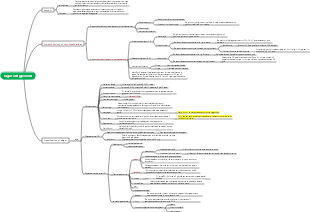
Sugar extraction and separation
Extraction of glycosides
enzyme-killing glycosides
Collect fresh materials
Rapid heating and drying; frozen storage; calcium carbonate is often added to prevent enzyme destruction during extraction.
Solvent method: water; dilute alcohol (monosaccharides, oligosaccharides, polysaccharides)
Methods for separating and refining sugar compounds
refined
protein removal
Sevag method: CHCl3 pentanol (butanol) polysaccharide aqueous solution 5: 1: 25 → shake vigorously for 20 minutes → centrifuge to remove denatured proteins between the two phases. Trifluorotrichloroethane method: Polysaccharide aqueous solution CF3-CCl3 1:1 → Stir for 10 min → Centrifuge and collect the water layer, twice. Trichloroacetic acid method: Add 3.13COOH dropwise to the polysaccharide aqueous solution → until it no longer becomes turbid → overnight at 5~10°C → centrifuge to remove the precipitate. Enzymatic hydrolysis: polysaccharide aqueous solution pepsin, trypsin, papain, pronase, etc.
Separation of acidic polysaccharides: Quaternary ammonium hydroxide precipitation method
Features: Emulsifier, can form a precipitate with acidic polysaccharides; form a precipitate with neutral polysaccharides: increase the pH of the solution, or contain borax buffer (increased acidity). Commonly used quaternary ammonium salts: CTAB/CP-OH. Operation: 1~10% CTAB or CP-OH, add dropwise to 0.1~1% polysaccharide solution with stirring (pH<9, no borax); control the quaternary ammonium salt concentration to separate different acidic polysaccharides
Separation of polysaccharides of different polarities: Fractional precipitation or graded dissolution method
Sugar solution, gradually add ethanol (acetone) → each part ↓
Polysaccharides are usually carried out at pH=7 Acidic polysaccharides are processed at pH=2~4 To prevent acid hydrolysis of glycoside bonds, the operation should be rapid
Made into etherification and acetylation products, soluble in alcohol
Step by step Small polar solvent (diethyl ether)→↓
chromatographic separation
Activated carbon column chromatography (non-polar)
Elution sequence: water → organic solvent (EtOH): H2O → 10% → 20% → 30% → 50% → 70% EtOH, The most water-soluble ones come out first: inorganic salts → monosaccharides → disaccharides → trisaccharides → polysaccharides
cellulose chromatography
Ion exchange column chromatography
As the acidic groups in polysaccharide molecules increase, the adsorption force increases; for linear molecules, those with larger molecular weights are easier to adsorb; straight chains are easier to adsorb.
gel column chromatography
The order of exiting the column is that large molecules exit the column first, and small molecules exit the column later.
preparative zone electrophoresis
The upper end is the positive electrode and the lower end is the negative electrode.