MindMap Gallery Natural Medicinal Chemistry Sugars and Glycosides-Physical and Chemical Properties, Glycoside Bond Cleavage
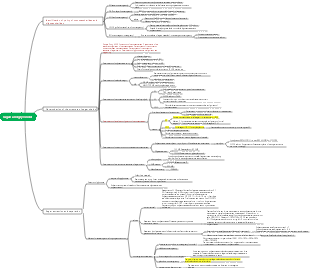
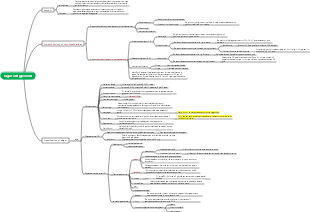
This is a mind map about natural medicinal chemistry, sugars and glycosides - physical and chemical properties, glycoside bond cleavage. Sugars and glycosides are common components in natural products and have a variety of biological activities. Understanding their physical and chemical properties is of great significance for studying the extraction, isolation and purification of natural products.
Edited at 2024-01-16 20:26:17This is a mind map about bacteria, and its main contents include: overview, morphology, types, structure, reproduction, distribution, application, and expansion. The summary is comprehensive and meticulous, suitable as review materials.

This is a mind map about plant asexual reproduction, and its main contents include: concept, spore reproduction, vegetative reproduction, tissue culture, and buds. The summary is comprehensive and meticulous, suitable as review materials.
This is a mind map about the reproductive development of animals, and its main contents include: insects, frogs, birds, sexual reproduction, and asexual reproduction. The summary is comprehensive and meticulous, suitable as review materials.
This is a mind map about bacteria, and its main contents include: overview, morphology, types, structure, reproduction, distribution, application, and expansion. The summary is comprehensive and meticulous, suitable as review materials.
This is a mind map about plant asexual reproduction, and its main contents include: concept, spore reproduction, vegetative reproduction, tissue culture, and buds. The summary is comprehensive and meticulous, suitable as review materials.
This is a mind map about the reproductive development of animals, and its main contents include: insects, frogs, birds, sexual reproduction, and asexual reproduction. The summary is comprehensive and meticulous, suitable as review materials.
sugars and glycosides
Classification of glycosides
Classification
glycoside atom
aglycone
According to terminal carbon configuration
Alpha glycosides are mostly L-type, and β-glycosides are mostly D-type.
According to the number of connected monosaccharides
According to the number of sugar chains
According to the existence in the organism
primary glycoside
Glycosides originally present in plants
secondary glycosides
The primary glycoside hydrolyzes away a sugar or changes its structure
oxyglycoside
Alcohol glycosides
It is a glycoside formed by dehydration of alcoholic hydroxyl group and sugar terminal hydroxyl group.
Salidroside (strength, enhance adaptability), ranunculus (insecticide, bactericidal), geniposide (laxative, choleretic), glycyrrhizic acid (anti-tumor)
Phenolic glycosides
It is a glycoside formed through a phenolic hydroxyl group
Gastroside (sedative), sennoside A (diarrhoea), rutin (blood vessel softening), cinpidin (antibacterial)
ester glycosides
The aglycon is connected to the terminal carbon of the sugar by -COOH.
It has the properties of ester and acetal.
cyanogenic glycoside
alpha-hydroxycyanoside
HCN is produced in the body to exert an antitussive effect. Overdose → death; taking lactose → competes for β-glucosidase in the body → prevents poisoning and increases LD50
γ-Hydroxycyanoside
Trichoside: Reduces alanine aminotransferase
oxyazoglycosides
Indole glycosides
Glucosinolates
Glucosinolate, sinigrin, white sinigrin
nitrogen glycosides
Adenosine (A), guanosine (G), cytidine (C), uridine (U), crotonin
Carbon glycoside
Mainly flavonoids, chalcones, anthraquinones, anthrones, phenolic acids, etc.
Physical and chemical properties of sugar
physical properties
Solubility
Sugar: Small molecules are highly polar and have good water solubility; monosaccharides are more polar than disaccharides; water solubility decreases as the degree of polymerization increases. Glycoside: hydrophilic; aglycon: lipophilic
Chemical properties (identifying reactions!)
oxidation reaction
Activity order of monosaccharide groups
Hemiacetals (ketones) > Primary alcohols > Secondary alcohols 2-OH > 3,4-OH e bond -OH > a bond -OH (*general chemical shift value e bond > a bond)
Reaction conditions and products
• -CHO→-COOH Silver mirror reaction: Ag →Ag Flynn reaction: Cu2 →Cu2O brick red↓ Br2/H2O: fade • HNO3: Aldose→glycaric acid • HIO4, Pb(Ac)4 oxidation: ortho-diol-OH
periodic acid reaction
Reaction rate: ortho-diol>α-amino alcohol>α-hydroxyaldehyde (ketone)> ortho-dione
Reaction conditions: aqueous solution, protected from light
Reaction characteristics: The reaction proceeds quantitatively, the degradation products are stable, and the generated iodic acid can be titrated
Determination of periodic acid consumption
Monosaccharide: determined by Fischer formula; glycoside: determined by Haworth formula; active CH2: consume one more molecule of periodic acid
Pb(Ac)4 oxidation
Stronger oxidizing ability than HIO4: oxalic acid can be oxidized at room temperature Higher stereoselectivity: cannot oxidize furanose trans-diol OH Need to be carried out in organic solvents
glycoaldehyde formation reaction
Polysaccharides and glycosides are first hydrolyzed into monosaccharides under the action of concentrated acid, and then dehydrated to form corresponding products.
Molish reaction
Sample Concentrated sulfuric acid α-naphthol → brown ring
hydroxyl reaction
Reactivity: Hemiacetal hydroxyl group (C1-OH) > Primary alcohol group (C6-OH) > Secondary alcohol group (C2-OH)
reaction type
Etherification
Esterification
Acetalization
Concept: Aldehydes or ketones react with hydroxyl groups with appropriate spatial positions under the action of dehydrating agents to form cyclic acetals and ketals.
Sugar acetone → five-membered ring ketal (isopropylidene derivative)
Sugar Benzaldehyde → Six-membered cyclic acetal (benzaldehyde derivative)
carbonyl reaction
Reducing sugar phenylhydrazine → glycohydrazone (easily soluble in water) 2 molecules of phenylhydrazine → glycohydrazone (hardly soluble in water)
Boric acid complex reaction
The ortho-di-OH of sugar can form complexes with many reagents → change the physical constants → help sugar Isolation, identification and configuration derivation of
Sugar Boric acid → Complex (increased acidity, ionizable)
Cleavage of glycoside bonds (hydrolysis types, mechanisms and reaction rules)
acid catalyzed hydrolysis
The glycoside bond belongs to an acetal structure and is easily hydrolyzed by dilute acid catalysis.
Mechanism: The glycoside atom is protonated first, and the bond is broken to generate a cationic ion or a semi-chair intermediate, which is solvated in water to form a sugar.
The general rule of hydrolysis: the electron cloud density of the glycoside atom is ↑, the protonation steric hindrance is ↓, and the ring tension is ↑ (stability ↓), the easier the reaction is.
Specific rules (from easy to difficult)
Glycoside atoms: N > O > S > C glycoside Glycoside bond configuration: when the aglycone is a small group, e > a; when the aglycone is a large group, a > e Aglycone: phenolic glycoside, enol glycoside > alcohol glycoside, alcohol glycoside: tertiary OH > secondary OH > primary OH -I effect of substituents: 2,3-dideoxysugar > 2-deoxysugar > 3-deoxysugar > hydroxyl sugar > uronic acid > 2-aminosugar Furanose > Pyranose; Ketose > Aldose (stability, tonicity) Sugar has many A bonds: easy (stability) C5-Substituent size: The larger, the more difficult it is (protonation steric hindrance): five-carbon sugar > methyl five-carbon sugar > six-carbon sugar > seven-carbon sugar
acetolysis reaction
Reagents: acetic anhydride acid (H2SO4, HClO4, CF3COOH, Lewis acid)
Reaction mechanism: CH3CO is the attacking group
Purpose: Protect the -OH on the aglycone and increase lipophilicity; partially crack the glycoside bond: identify the connection method of polysaccharides
Reaction rule: isomerization is easy to occur (end group of sugar, sugar cis-C2, 3-OH); reaction rate: (1→6)>>(1→4) >> (1→3) >> (1 →2)
base catalyzed hydrolysis
Generally, glycoside bonds are stable to dilute bases, but there are electron-withdrawing groups on the aglycone that directly interact with glycoside atoms. Continuous, easily hydrolyzed by alkali
Product: C1-OH and C2-OH are trans and easily hydrolyzed to 1,6-glucose anhydride
Hydrolysis products can be used to determine the configuration of glycoside bonds
beta-elimination reaction
Sugar reducing end, free CO (β, γ positions of glycoside bond) → activate ortho-H • Elimination reaction with 3-O- or 4-O-glycoside bonds • Alkali peels off the monosaccharides at the reducing end of the polysaccharide one by one and has no effect on the non-reducing end. • What is produced is α-deoxysugar acid
Understand the substitution patterns of reducing sugars from the generated sugar acids
Enzymatic hydrolysis
Purpose: Determine the glycoside bond configuration; the obtained aglycone keeps its structure unchanged; when extracting and separating, be careful to kill enzymes and preserve the glycoside! The hydrolysis methods that can obtain the real aglycone after hydrolysis are: enzymatic hydrolysis and oxidative cracking. Invertase can hydrolyze β-fructosidic bonds; maltase can hydrolyze α-glucosidic bonds; cellulase can hydrolyze β-glucoside; helicase can hydrolyze β-glucosidic bonds; amygdalin can hydrolyze β-6C aldoside
Oxidative cracking method (Smith degradation method)
Reagents: HIO4 (NaIO4) NaBH4 dilute H
The reaction conditions are mild and protoglycone can be obtained Not applicable to aglycones containing ortho-diol OH Can be used for the hydrolysis of C glycosides (Smith cleavage of carbon glycosides: obtain CHO-containing carbon source) Ginsenoside: Smith degrades to obtain protoglycone; use HOAc to flip the configuration; use HCl to form a ring
Selective hydrolysis of uronic acid glycosides
Special methods are required (photolysis method, Pb(Ac)4 decomposition method, acetic anhydride-pyridine decomposition method, microbial culture method)
Hydrolysis of glycosides linked to ether bonds cannot yield aglycone: paeoniflorin