MindMap Gallery Modern Social Survey Method 4 Sampling
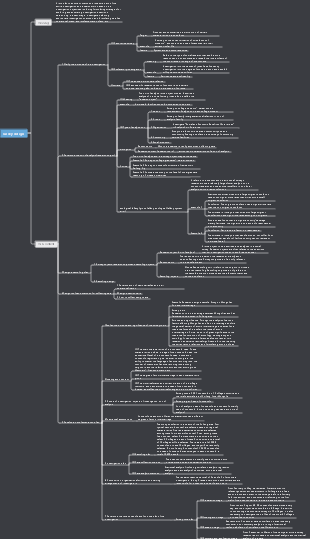
Chapter 4 Sampling Reference textbook: Modern Social Survey Methods (Sixth Edition) by Feng Xiaotian, which summarizes the concepts and procedures of sampling, probability sampling methods, non-probability sampling methods, sample size and sampling error, etc.
Edited at 2024-01-16 18:02:26This is a mind map about bacteria, and its main contents include: overview, morphology, types, structure, reproduction, distribution, application, and expansion. The summary is comprehensive and meticulous, suitable as review materials.

This is a mind map about plant asexual reproduction, and its main contents include: concept, spore reproduction, vegetative reproduction, tissue culture, and buds. The summary is comprehensive and meticulous, suitable as review materials.
This is a mind map about the reproductive development of animals, and its main contents include: insects, frogs, birds, sexual reproduction, and asexual reproduction. The summary is comprehensive and meticulous, suitable as review materials.
This is a mind map about bacteria, and its main contents include: overview, morphology, types, structure, reproduction, distribution, application, and expansion. The summary is comprehensive and meticulous, suitable as review materials.
This is a mind map about plant asexual reproduction, and its main contents include: concept, spore reproduction, vegetative reproduction, tissue culture, and buds. The summary is comprehensive and meticulous, suitable as review materials.
This is a mind map about the reproductive development of animals, and its main contents include: insects, frogs, birds, sexual reproduction, and asexual reproduction. The summary is comprehensive and meticulous, suitable as review materials.
sampling
1. Concept and procedures of sampling
(1) The concept of sampling
1.Population
The whole is the collection of all the elements that make up it, and the elements are the most basic units that make up the whole.
2.Sample
A sample is a collection of elements extracted from the population in a certain way.
3. Sampling
Sampling refers to the process of selecting or extracting a part of elements in a certain way from the set of all elements that make up a certain population.
4. Sampling Unit
Sampling unit is the basic unit used for a direct sampling
5. Sampling Frame
The sampling frame, also known as the sampling range, refers to the list of all sampling units in the population during a direct sampling
6.Parameter (overall value)
It is a comprehensive description of a certain variable in the population or a comprehensive quantitative expression of a certain characteristic of all elements in the population.
7.Statistic (sample value)
It is a comprehensive description of a certain variable in the sample, or a comprehensive quantitative expression of a certain feature of all elements in the sample.
8.Confidence Level (Confidence Level)
It is the probability that the overall parameter value falls within a certain interval of the sample statistical value, or in other words, it is the degree of certainty that the overall parameter value falls within a certain interval of the sample statistical value.
Reflects the reliability of sampling
9. Confidence Interval
It refers to the error range between the sample statistical value and the overall parameter value under a certain degree of confidence.
Confidence intervals reflect the accuracy of sampling
(2) Type of sampling
Sampling method
probability sampling
simple random sampling
systematic sampling
stratified sampling
cluster sampling
multi-segment sampling
non-probability sampling
chance encounter sampling
judgment sampling
quota sampling
snowball sampling
(3) Probability sampling procedures
1. Define the overall
2. Develop a sampling frame
3. Decide on the sampling plan
4. Actual sampling of samples
5. Assess sample quality
2. Probability sampling method
(1) Simple Random Sampling (Pure Random Sampling)
1. Definition
It is the most basic form of probability sampling, which is to directly select n elements from a population containing N elements to form a sample according to the principle of equal probability (N > n)
2.Method
(1) Drawing lots
(2) Random number table (random number table)
definition
The numbers and arrangements in the table are randomly formed, without any regularity.
Specific steps:
① First obtain a list of all elements of the survey population (i.e. sampling frame)
② Number all elements in the population in sequence one by one
③ Determine how many numbers to select from the random number table according to the number of digits in the overall scale;
④ Based on the overall scale, weigh the numbers in the random number table one by one and decide on the choice.
⑤Select a sufficient number of digits according to the sample size requirements
⑥ According to the number selected from the random number table, go to the sampling frame to find its corresponding element
(2) Systematic Sampling (equal interval sampling, interval sampling)
1.Meaning:
It is a method of sorting the elements of the population by number, then calculating a certain interval, and then extracting elements according to this fixed interval to form a sample.
2. Steps:
①Number each individual in the population in order
② Calculate the sampling interval by dividing the population size by the sample size K (sampling interval) = N (population size) / n (sample size)
③ Among the first K individuals, use simple random sampling to extract an individual, and record the number of this individual (assuming that the number of the selected individual is A), which is called the random starting point
④ In the sampling frame, starting from A, one individual is selected from every K individuals. That is, the numbers of the extracted individuals are A, A+K, A 2K, ... A ( n -1)K;
⑤ These n individuals are combined to form a sample of the population.
3. Attention
The prerequisite for systematic sampling is that the arrangement of elements in the population should be random relative to the research variables, and there should be no regular distribution related to the research variables. Otherwise, the results of systematic sampling will produce large errors.
2 situations
(1) In the overall list, the elements are arranged in a certain order and level;
(2) In the overall list, the arrangement of elements has a periodic distribution corresponding to the sampling interval.
(3) Stratified Sampling (Type Sampling)
1. Definition
It first divides all units in the population into several types or levels according to certain characteristics or signs, and then uses simple random sampling or systematic sampling to extract a subsample from each type or level. Finally, these subsamples are samples that together form the population
2. Advantages
① Reduce sampling errors and improve sampling accuracy without increasing sample size
② It is very convenient to understand the situation at different levels within the population, and to conduct separate research or comparison on different levels or categories within the population
3. Attention
Standard issues for layering
① Use the main variables or related variables to be analyzed and studied in the survey as the standard for stratification
② Use variables that ensure strong homogeneity within each layer, strong heterogeneity between layers, and highlight the overall internal structure as stratification variables.
③ Use those variables that have obvious hierarchical distinctions as stratification variables
layered proportions Proportional sampling and non-proportional sampling (distinguish the applicability of the two)
(4) Cluster sampling
1. Definition
A method of randomly selecting some small groups from the population, and then forming a survey sample from all the elements of the selected small groups.
2. Features
①Advantages
Simplify the sampling process, reduce costs, and expand the scope of sampling applications
②Disadvantages
The sample distribution is not wide and the representativeness is poor. Especially when the heterogeneity between subgroups is strong, the impact on representativeness is more obvious.
Applicability of Cluster Sampling and Stratified Sampling
stratified sampling
When different subgroups are very different from each other but not very different within each subgroup
cluster sampling
When different subgroups are not very different from each other and the degree of heterogeneity within each subgroup is relatively large, the cluster sampling method is particularly suitable.
think
Assume that the population of our survey is a collection of all cities in the country, and we want to draw a sample of 100 cities. What methods can be used to accomplish this? (Simple random sampling, systematic sampling, stratified sampling, cluster sampling...)
(5) Multi-stage sampling (multi-stage sampling)
1. Definition
According to the affiliation or hierarchical relationship of the sampling elements, the sampling process is divided into several stages. e.g. University - College - Major - Class - Student
2. Features
①Advantages
No overall list is needed, and sampling is easier; saving manpower and material resources
②Disadvantages
There will be errors at each level of sampling, so the errors are relatively large
Note: Keep a balance between categories and individuals
(6) PPS sampling
That is to say, the probability of sampling is proportional to the size of the element. The principle can be understood in a popular way as exchanging staged unequal probabilities for final and overall equal probabilities.
(7) Indoor sampling
1. “Kish Selection Method”
2. Birthday selection method
3. Non-probability sampling method
(1) Accidental or Convenience Sampling (convenience sampling or natural sampling)
definition
It means that the researcher selects people who meet by chance as the survey objects in a convenient way according to the actual situation, or only selects those who are closest and easiest to find as the survey subjects.
For example
At the entrance of public places; using newspapers and magazines; the teacher conducts surveys using students in the class he teaches as a survey sample
(2) Judgmental or Purposive Sampling (intentional sampling, subjective sampling)
definition
It is a method by which the investigator selects and determines the objects of investigation based on the research objectives and his or her own subjective analysis.
e.g. Survey on College Students’ Career Choice Tendencies and Employment Willingness
(3) Quota Sampling (Quota Sampling)
definition
Researchers should try their best to stratify the population based on various factors that may affect the research variables, and find out the proportion of members with various characteristics in the population, using chance sampling or judgment sampling methods to Select the survey objects so that the composition and proportion of the members in the sample in terms of the above factors and various characteristics are as close as possible to the overall situation.
e.g. Quotas based on gender, grade and major dimensions
Differences from stratified sampling
(1) Different purposes
Quota sampling must ensure that the structural proportions of the sample and the population are superficially consistent.
Stratified sampling includes proportional stratification and non-proportional stratification
(2) Different methods
Samples from each layer in quota sampling are selected non-randomly.
In stratified sampling, samples from each stratum are randomly selected.
(4) Snowball sampling
When we cannot understand the overall situation, we can start from a small number of members of the population, survey them, ask them who else they know who meet the conditions, and then go to those people and ask them again about the people they know. Like a snowball, we can find more and more group members with the same characteristics
e.g. Survey on the life of retired elderly people
4. Sample size and sampling error
1. Sample Size (Sample Size)
definition
is the number of cases included in the sample. According to the views of some social survey experts, the sample size in social surveys cannot be less than 100 cases at least.
Factors affecting sample size determination
(1) Overall scale
(2) Requirements for certainty and accuracy of inference
(3) Overall degree of heterogeneity
(4) Funds, manpower and time available to investigators
2. Sampling Error
It is the error that occurs when using sample statistics to estimate population parameter values. It is an error caused by the randomness of sampling itself
Sampling error mainly depends on the distribution variance of the population and the sampling size