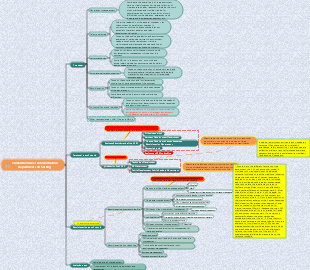
(1) Clarify the responsibilities and authorities of personnel. Responsibilities and authorities should be clearly defined for all employees. Generally speaking, for department and senior managers, their responsibilities and authorities can be clarified by formulating responsibility regulations; for ordinary employees, their responsibilities and authorities can be clarified by formulating job responsibilities. The company's duty regulations and job responsibilities should cover all employees. The following is an example of quality management responsibilities in a company, as shown in Table 1-6.
(2) Establish goals and perform performance management on them. Specific measures include the following two points.
① Guide individuals and teams to establish their own goals. Enterprise goals can be strategic goals, such as development goals; they can also be operational goals, such as the goal of completing a certain task; or they can be tactical goals, such as a certain quality improvement goal.
② Manage individual and team performance and evaluate results. The management and evaluation of the daily work performance of individuals and teams is mainly carried out on a monthly, quarterly and yearly basis, such as the statistics and assessment of various economic indicators for the production department or production employees.
These goals can be made public through corporate policies, quality policies and objectives, quality plans or other work plans. When necessary, you can also guide individuals and teams to establish their own goals based on these goals by issuing plans or tasks and breaking down goals, so that the small goals of individuals and teams are consistent with the big goals of the company.
The management and evaluation of non-routine work performance may not be based on time but may be carried out on a project basis, such as the management and evaluation of QCC activities, the management and evaluation of technological innovation results, etc.
(3) Provide convenient conditions for employees to participate in goal setting and decision-making. In order to attract employees to participate in goal setting and decision-making, enterprises should form a mechanism, the key points of which include the following aspects.
① There is a smooth channel for the lower level to reach the upper level, and this channel must not be blocked by the negativity of the middle level. For example: a manager's mailbox can be established, and emails sent by employees can be opened directly by the manager; employee representative symposiums can be held regularly to listen directly to employees' opinions, etc.
② Employees participate in the formulation of major corporate decisions. For example: hold employee representative conferences regularly.
③ There is a reward system for rational suggestions.
If employees make suggestions for establishing corporate goals and major issues, they should be rewarded. Even if the suggestion is not adopted, it should be encouraged. Of course, rewards are not necessarily monetary and can take many forms, such as recognition, promotion, providing free travel, providing training opportunities, giving appropriate honors, etc. The purpose of rewards is to inspire more employees to participate in corporate decision-making and form an ethos and culture.
(4) Recognize and reward employees’ work achievements. Every employee has his own job and may make achievements in his own field. Enterprises should assess employees' work and reward and punish employees accordingly based on their assessment results.
Enterprises must have a relatively complete reward system to reward employees who have achieved certain results in a timely manner. Rewards can be divided into two categories: one is to reward advanced employees on a monthly, quarterly, or annual basis, which is a comprehensive reward; the other is a reward that can be given anytime and anywhere, mainly for those who work on a certain project or a certain An employee who makes a difference in his work.
(5) Create conditions to encourage innovation. Innovation includes institutional innovation, technological innovation, and management innovation.
① When determining the quality policy and quality objectives, the content of innovation should be fully considered to encourage employees to actively participate in innovation.
② Provide opportunities for innovation through testing and analysis of product quality and quality management systems.
③ When carrying out quality improvement activities, in addition to taking corrective and preventive measures, attach great importance to innovative measures with a fundamental improvement nature.
④ When training personnel, focus on the long-term development of the company and provide employees with innovative knowledge and means.
⑤ Provide necessary resources for innovation, including giving recognition and rewards.
(6) Use information technology to build channels and promote communication. The specific methods are as follows.
① Establish bottom-to-top communication channels for grassroots employees. For example, some companies communicate through the establishment of "factory director's mailbox", "rational suggestions and proposals", and "employee representative forums". With the rapid development of information technology, some companies have established communication forms such as "factory director's public telephone number" and "employee proposal website". Senior managers of enterprises should often go to the scene to directly understand the situation at the grassroots level and listen to employees' opinions and suggestions. In particular, factory directors, managers and chairman of the board should visit the production site regularly to understand the situation.
② Collect reasonable suggestions, quality improvement plans and opinions on quality work from employees in a timely manner, and investigate and deal with relevant issues in a timely manner.
 Wondershare EdrawMind