MindMap Gallery language production in psycholinguistics
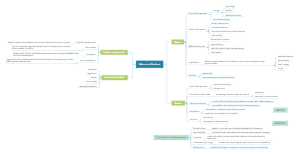
This mind map elaborates on content such as Variety of Language Production, Example of Language Production, What's Language Production. By interpreting these basic concepts related to linguistics, the map further showcases the multifunctionality and creativity of language in communication.
Edited at 2024-07-04 22:21:37Language Production in Psycholinguistics
What's Language Production
1. Language production refers to the cognitive processes involved in generating and expressing language, bringing thoughts and ideas into linguistic form .
2. It is a central aspect of psycholinguistics, studying how individuals retrieve and organize language elements to produce speech or writing .
3. Researchers investigate various aspects of language production, such as lexical selection, sentence planning, and the influence of context on linguistic choices.
How to Produce Language Production in Psycholinguistics
1. Psycholinguistics explores the processes involved in language production, including planning, formulation, and articulation .
2. Language production in psycholinguistics focuses on understanding how individuals generate and communicate meaning through spoken or written language .
3. The study of language production helps uncover the cognitive processes underlying sentence structure, word choice, and speech production .
4. Psycholinguists investigate how language production is influenced by factors such as context, cognitive abilities, and language proficiency .
5. Research in language production provides insights into how linguistic and nonlinguistic information is integrated during the process of generating language .
6. Understanding language production can offer valuable insights into language disorders, such as aphasia, and inform therapeutic interventions .
7. Psycholinguistic research in language production employs methodologies such as eyetracking, experimental tasks, and neuroimaging techniques .
8. Investigating language production contributes to theoretical frameworks that explain how individuals comprehend and generate language .
9. The study of language production in psycholinguistics helps us understand the dynamic nature of language and the cognitive mechanisms behind effective communication.

Variety of Language Production
1. The study of language production in psycholinguistics explores the diverse ways in which humans produce language, including speech, writing, and signing .
2. Language production involves complex cognitive processes, such as planning, articulation, and monitoring, which vary across individuals and different linguistic contexts .
3. Understanding the variety of language production is crucial for uncovering the mechanisms underlying language processing and communication, as well as addressing individual differences and language disorders.
Example of Language Production
1. "Language Production in Psycholinguistics" investigates how humans generate speech and writing, exploring the cognitive processes involved in forming sentences, selecting words, and organizing thoughts .
2. This field examines factors that influence language production, such as syntactic rules, semantic constraints, and working memory capacity .
3. Researchers use various methodologies, including experimental tasks and computational models, to study the production of different language structures and speech errors .
4. Understanding language production helps shed light on communication disorders, bilingualism, and the development of language skills in children .
5. Psycholinguists aim to uncover the intricate mechanisms behind language production, leading to insights into how we transform thoughts into meaningful linguistic expressions.
The Role of "Lemma" in Language Production
1. "Lemma" refers to the abstract form of a word that contains its essential meaning and morphological properties, playing a crucial role in language production .
2. In psycholinguistics, understanding how the lemma selection process occurs is important for unraveling the intricate mechanisms behind language production .
3. Language production involves the activation and retrieval of lemmas from memory, followed by their transformation into surface forms during speech or writing .
4. The lemma stage in language production represents a bridge between conceptual knowledge and the specific words used to express those concepts .
5. By studying the role of lemma in language production, researchers gain insights into how speakers generate words in realtime, considering factors such as frequency, context, and semantic relationships .
6. Lesions or disruptions in the lemma activation process can lead to wordfinding difficulties and impairments in producing grammatically correct sentences .
7. Overall, investigating the role of lemma in language production illuminates the detailed processes underlying our ability to express thoughts and ideas through spoken or written language.
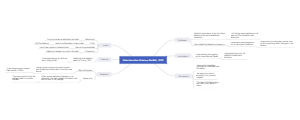
Steps Involved in the Production of Single Words According to Levelt, Roelofs, and Meyer (1999)
1. The production of single words involves several steps, including conceptualization, lexical selection, phonological encoding, and articulation.
2. Levelt, Roelofs, and Meyer (1999) proposed a model that explains these stages in language production and provides insights into the cognitive processes involved.
3. Understanding the intricate steps of word production is crucial for advancing psycholinguistic research and gaining a better understanding of how language is generated in the human brain.