 Wondershare EdrawMind
MindMap Gallery Overview of Fogg’s Behavioral Model
- 41
Overview of Fogg’s Behavioral Model
The Fogg Behavior Model was proposed by Dr. BJ Fogg, the originator of behavioral design at Stanford University. The "Fogg Behavior Model" means that the occurrence of behavior requires the three major elements of motivation, ability and prompts to work at the same time. Behavior occurs when motivation, ability and prompt appear at the same time. Motivation is the desire to perform a behavior, ability is the ability to perform a certain behavior, and prompts are signals that remind you to perform a behavior.
Edited at 2024-10-23 16:00:18
- Recommended to you
- Outline

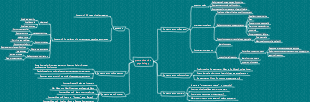

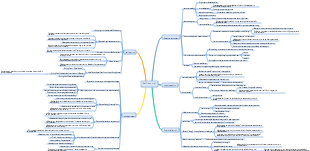
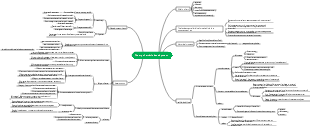
Overview of Fogg’s Behavioral Model
1. Model introduction
1.1 Overview of Fogg Model
The Fogg Behavior Model was proposed by Dr. BJ Fogg, the originator of behavioral design at Stanford University.
Aims to explain the processes by which human behavior occurs and changes.
It contains three core elements: motivation, ability and prompt-trigger.
1.2 Motivation
Motivation is an individual's desire or internal drive to perform a specific behavior.
It is divided into three levels: desire, motivation and expectation.
Motivation influences individual behavioral choices and decisions.
1.3 Ability
Capabilities are the skills, resources, and conditions required by an individual to perform a specific behavior.
Divided into three levels: simplicity, operability, and completeness.
Ability determines whether an individual can successfully complete a behavior.
1.4 Prompt-Trigger (Prompt)
A trigger is an event or situation that motivates human behavior
Divided into two types: time triggers and event triggers
Triggers convert motivation and ability into concrete behavior.
1.5 Conditions under which the behavior occurs
Behavior occurs when the three elements of motivation, ability, and triggers are present at the same time.
Different combinations of motivation and ability influence the probability of behavior.
The Fogg model helps understand and guide user behavior.
1.6 Application scenarios
The Fogg model has wide application in product design and behavior change strategies
Help designers better understand and guide user behavior.
Suitable for various behavior change and habit formation scenarios.
2. Motivational factors
2.1 Definition and levels of motivation
2.1.1 The concept of motivation
Motivation is the inner drive that drives an individual to perform a specific behavior.
In Fogg's behavioral model, motivation is one of the key elements in the occurrence of behavior.
2.1.2 Levels of motivation
Wishful Editing: Actions that can bring benefits or satisfy needs.
Motivated: Determining behavior based on personal goals and values.
Have Expectations: Behaviors are expected to result in specific rewards or benefits.
2.2 Factors affecting motivation
2.2.1 Personal needs
The degree to which an individual desires a certain outcome affects the level of motivation.
The intensity of needs directly affects the intrinsic driving force of behavior.
2.2.2 Values
Personal values and beliefs determine the direction of motivation.
Values guide individuals in choosing which behaviors are worth pursuing.
2.2.3 External incentives
External rewards and punishments can enhance or weaken motivation.
Social environment and cultural background have a significant impact on motivation.
2.3 Application of motivation
2.3.1 Motivation in product design
Designers improve product appeal by understanding users.
The function and interface design of the product need to meet the intrinsic needs of users.
2.3.2 Motivation in behavior change strategies
Behavior change strategies use motivation to motivate individuals to adopt new behaviors.
Improve the success rate of behavior change by increasing motivation.
3. Capability elements
3.1 Definition of capabilities
3.1.1 Skills and qualifications
The skills and resources an individual needs to perform a specific behavior.
Including knowledge, physical strength, economic conditions, etc.
3.1.2 Environmental conditions
Environmental factors that influence individual abilities.
Including social environment, physical environment and psychological environment.
3.1.3 Levels of capabilities
Simple and easy: The behavioral steps are simple and easy to complete.
Actionable: Having the skills and resources required to complete the behavior.
Integrity: Having sufficient skills and resources without relying on others.
3.2 Factors affecting ability
3.2.1 Skill level
Proficiency and mastery of personal skills.
The higher the skill, the greater the ability to perform the behavior.
3.2.2 Resource acquisition
An individual's access to resources.
The richer the resources, the stronger the capabilities.
3.2.3 Environmental support
The environment supports and promotes personal abilities.
The greater the environmental support, the faster the ability will improve.
3.3 Ability improvement strategies
3.3.1 Skill development
Improve personal skills through learning and practice.
The training plan should be formulated according to the actual situation of the individual.
3.3.2 Resource integration
Integrate personal internal and external resources to improve capabilities.
Including time management, financial management, etc.
3.3.3 Environment optimization
Improve personal environment and enhance abilities.
Including social environment, work environment and family environment.
3.4 The relationship between ability and behavior
3.4.1 Motivation and ability
When motivation is high but ability is low, behavior may not occur.
Behaviors may also not occur when ability is high but motivation is low.
3.4.2 Abilities and Triggers
Behaviors tend to occur when abilities are high and triggers are present.
With low ability, the behavior may not occur even if a trigger is present.
3.4.3 Synergy of three elements
Motivation, ability, and triggers work together to make behavior happen.
Without any one element, the behavior may not occur.
4. Tip - Trigger Elements
4.1 Definition and classification of triggers
4.1.1 The concept of triggers
A trigger is an event or situation that motivates human behavior.
In the Fogg model, a trigger is one of the necessary conditions for a behavior to occur.
4.1.2 Types of triggers
Time trigger: time-based behavior trigger, such as alarm clock, calendar reminder, etc.
Event trigger: trigger based on situation, such as seeing other people's behavior, receiving push, etc.
4.1.3 The role of triggers
Connect motivation and ability to make behavior happen.
Inspire behavior at the right time and context.
4.1.4 Trigger design principles
It should match the user’s needs and motivations.
The actual capabilities of the user and environmental conditions should be considered.
4.2 Effective application of triggers
4.2.1 Increase the probability of behavior occurring
Increase the likelihood that users will perform specific actions by designing effective triggers.
Combine motivation and ability to ensure triggers occur at the right time.
4.2.2 Trigger optimization strategy
Analyze user behavior data and optimize trigger settings and triggering timing.
Adjust triggers as appropriate to accommodate changes in user behavior.
4.2.3 Triggers and user experience
Make sure the trigger does not cause disruption or discomfort to the user.
Balance trigger frequency and intensity to improve user experience.
4.2.4 Continuous monitoring of triggers
Ongoing monitoring and evaluation of the effectiveness of triggers.
Continuously adjust and improve triggers based on user feedback and behavioral data.
4.3 Application of triggers in product design and behavior change
4.3.1 Application in product design
Use triggers to guide users through key actions in your product.
Use triggers to increase user engagement and loyalty to your product.
4.3.2 Application in behavior change strategies
Design triggers to help users establish new habits or change old ones.
Combine motivation and ability to drive users to achieve behavior change.
4.3.3 Empirical research on triggers
Conduct empirical research to verify the effectiveness of triggers in behavior change.
Analyze the impact of different types of triggers on user behavior.
4.3.4 Future Trend of Triggers
Explore new applications of triggers in the context of artificial intelligence and big data.
The future development trend of item test triggers in the field of behavioral design.
5. Conditions under which the behavior occurs
5.1 Motivation
5.1.1 Definition of motivation
Motivation is the inner drive that drives an individual to perform a specific behavior.
Motivation is divided into three levels: desire, motivation and expectation.
5.1.2 Levels of motivation
Desirable: Behavior believed to provide a benefit or satisfy a need.
Motivated: Deciding whether to perform a behavior based on personal goals and values.
Expectations: Anticipating that behavior will result in specific rewards or benefits.
5.1.3 Influence of motivation
When motivation is high, behavior is more likely to occur.
When motivation is low, the behavior is less likely to occur.
5.1.4 Application of motivation
Application in product design, such as stimulating user interest.
Application in behavior change strategies, such as increasing user engagement.
5.2 Ability
5.2.1 Definition of capabilities
Capabilities refer to the skills, resources, and environmental conditions required to perform a specific behavior.
Capabilities are divided into three levels: simple and easy, operable and complete.
5.2.2 Levels of capabilities
Simple and easy: The behavioral steps are simple and easy to complete.
Actionable: Having sufficient skills and resources to perform the behavior.
Integrity: Having sufficient skills and resources without relying on others or conditions.
5.2.3 Impact of capabilities
When ability is high, behaviors are easier to achieve.
When ability is low, the behavior cannot be completed.
5.2.4 Application of capabilities
Application in product design, such as simplifying user operation processes.
Application in behavior change strategies, such as providing necessary resources and support.
5.3 Trigger (Prompt)
5.3.1 Definition of trigger
A trigger is an event or situation that inspires behavior.
Triggers are divided into two types: time triggers and event triggers.
5.3.2 Time trigger
Time-based behavioral triggers, such as alarm clocks and calendar reminders.
Establish daily habits, such as regular exercise.
5.3.3 Event triggers
Situation-based behavior triggers, such as seeing other people's behavior and receiving push notifications.
Effects in social settings, such as group behavior.
5.3.4 Impact of triggers
Appropriate triggers can increase the probability of a behavior occurring.
A lack of triggers may result in the behavior not occurring.
5.3.5 Application of triggers
Applications in product design, such as smart reminder functions.
Applications in behavior change strategies, such as leveraging social influence.
6. Application and impact
6.1 Components of Fogg’s model
6.1.1 Motivation
Motivation is an individual's desire or internal drive to perform a specific behavior
Divided into three levels: desire, motivation, and expectation.
6.1.2 Ability
Capabilities are the skills, resources, and environmental conditions an individual needs to perform a specific behavior
Divided into three levels: simplicity, operability, and completeness
6.1.3 Trigger (Prompt)
A trigger is an event or situation that motivates human behavior
Divided into two types: time triggers and event triggers
6.2 Conditions under which the behavior occurs
6.2.1 The relationship between motivation and ability
When motivation and ability are both high, behavior is likely to occur
When motivation and ability are low, behavior may not occur even if a trigger is present
6.2.2 The role of triggers
A trigger is a necessary condition for a behavior to occur
When motivation is high but ability is low or ability is high but motivation is low, the probability of behavior is affected
6.3 Application of Fogg Model
6.3.1 Application in product design
Help designers understand and guide user behavior
Optimize user experience by adjusting motivations, capabilities and triggers
6.3.2 Application in behavior change strategies
Design effective behavior change programs
Using the Fogg Model to Analyze Key Elements of Behavior Change
6.4 Influence of Fogg Model
6.4.1 Impact on individual behavior
Provides methodologies for changing individual behavior.
Help individuals achieve target behaviors
6.4.2 Impact on social behavior
Design and change that affects social behavior
Advance social development and progress