MindMap Gallery Self-control
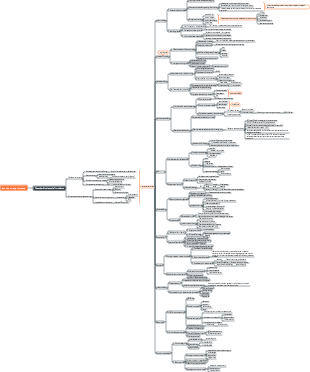
Book Summary, "Self-Control" is a book that explores self-control and how it affects people's lives. This book mainly explains the scientific principles and applications of self-control from the perspectives of psychology, neurology and economics.
Edited at 2024-03-12 16:26:23This is a mind map about bacteria, and its main contents include: overview, morphology, types, structure, reproduction, distribution, application, and expansion. The summary is comprehensive and meticulous, suitable as review materials.

This is a mind map about plant asexual reproduction, and its main contents include: concept, spore reproduction, vegetative reproduction, tissue culture, and buds. The summary is comprehensive and meticulous, suitable as review materials.
This is a mind map about the reproductive development of animals, and its main contents include: insects, frogs, birds, sexual reproduction, and asexual reproduction. The summary is comprehensive and meticulous, suitable as review materials.
This is a mind map about bacteria, and its main contents include: overview, morphology, types, structure, reproduction, distribution, application, and expansion. The summary is comprehensive and meticulous, suitable as review materials.
This is a mind map about plant asexual reproduction, and its main contents include: concept, spore reproduction, vegetative reproduction, tissue culture, and buds. The summary is comprehensive and meticulous, suitable as review materials.
This is a mind map about the reproductive development of animals, and its main contents include: insects, frogs, birds, sexual reproduction, and asexual reproduction. The summary is comprehensive and meticulous, suitable as review materials.
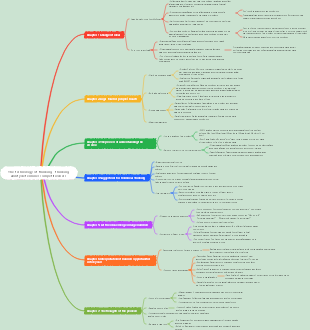
Self-control
Establish a mindset
appropriate delay
Things may not always be perfect
time management
Time management is not the management of time, but the management of one's own personality and habits
Do the right thing at the right time
effective procrastination
Procrastination creates the right amount of stress
Being busy is a positive stress
embodied cognition
energy poses
Stretch your arms straight above your head and turn your waist
envirnmental factor
The spacious space is suitable for thinking about big questions and helps generate new ideas.
Confined spaces can effectively evoke specific, rigorous and detailed thinking.
Improve motivation and mental motivation
The presence or absence of motivation is related to the following
Relevance - the connection with the person and the thing to be done
Proficiency - being able to handle and make a contribution will give you a sense of self-satisfaction
How to improve motivation
Change the way you think about work
Make a good connection between the work and your career planning and career development.
Make good connections between the work and interpersonal relationships
The connection between doing the job well and self-satisfaction
Get rid of addiction and dependence
Before coming into contact with temptation, think of one very important thing
The key is to find a good way to give yourself a break
sports
meditation
overlook
Thinking about things that restore our attention rather than drain it
set a goal
Start with small actions
Awareness of thinking about goals and giving motivation to goals
cognitive ability
Can't satisfy everyone
Besides, other people’s opinions won’t change either.
Instead of asking for advice on whether you should pursue your goals, ask for advice on how to achieve your goals.
What he sees in his eyes may not be important to us
Set your own standards for success
Success does not require perfection
growth mindset
Not afraid of failure
Treat setbacks and failures as opportunities to learn and grow
Don't hide your true emotions, recall them
Don’t have a “no big deal” mentality
To escape the failure response, we need to ask: Why is that goal, role, relationship important?
hinder growth mindset
duck syndrome
I firmly believe that "you can't let people around you see how hard you work for success."
Emotional control
Make friends with stress
free from stress
Exercise, take a walk, meditate, help others, spend time on creative hobbies, etc.
Change your mind and accept the pressure
Can help deepen thinking
Stress can create motivation for behavior.
Stress can deepen relationships between people.
self-efficacy
Continuously practice and give feedback to keep yourself in a learning attitude
Lack of self-confidence can also be seen as a sign of "trustworthiness"
Restless “Energy”: Actively Respond to Challenges
Feeling uneasy is a response to challenge. The body secretes adrenaline to make us more active.
Maintain better insight into your own environment. Therefore, uneasy emotions make people alert
A tightness in your chest is a sign of heightened intuition. This heightened self-awareness can help you put your best foot forward in important situations.
Rules for overcoming "catatonia"
I believe that the people around me (the audience) will support me
Make good use of jealousy: inspire your action
tell someone your thoughts
See jealousy as a signal of desire
Jealousy should not be used as a basis for self-denial, but as an opportunity to stimulate behavior.
No matter how jealous you are, you should still congratulate others on their success.
The object of your jealousy is not your enemy. He may be your potential ally, mentor, or friend, even someone who is currently in direct competition with you.
communicate
Pay attention to whether your words give others courage.
Ways to give opinions: Help the other person understand themselves
First, ask clearly what the other person’s goals are
Second, let them review their own experiences
Finally, ask some questions that will make you feel better
First question on "Are there any disappointments?"
End the process with an inconclusive conversation
Effective Apology: Enhancing Trust
①Admit that you have done something that you should apologize for.
②Be clear about the consequences of your mistake and the losses suffered by the other party.
③Express that you have learned from this behavior or failure.
④Express what kind of relationship you want to build with the other party (agreement with the other party).
The most effective way to say thank you
①When you want to express your gratitude, remember to evaluate the other person’s behavior first
②Please explain clearly why what the other person does is important to you?
③What can you recognize about the other person’s character and strengths from his behavior?
④Express what kind of relationship you want to build with the other party (reach an agreement with the other party).
Informal communication: Small talk helps build social resource relationships
① Try to communicate face-to-face directly and confirm whether the other party is available
②Remember to turn off your smartphone and other devices
③ “Track” previous communications
④Avoid spreading “negative gossip”
⑤Be a person who spreads positive energy
The rules for distinguishing bad words
Understand your motivations for wanting to say bad things
"Gossips just for the sake of the other person" require courage and a considerate attitude to say them
self-identity
Clothing Cognition: Stimulate Self-Role Identity
Walk the talk: gain leadership and trust
Consistency between words and deeds is the source of mental toughness (resilience)
Consistency between words and deeds is a way to strengthen interpersonal relationships within an organization
Wearing fakes can make us distrust ourselves and others
Even just one act of hypocrisy can cause the image of integrity that you have worked so hard to build to collapse.
Think about "your own values" every day
This is not something that happens once and for all. The key is to think about it every day.
What is "empathy"
Able to consider the needs, requirements, and pain of others and care about the suffering of others;
Be considerate of others with an interdependent attitude and build strong interpersonal relationships with them;
Meet the needs of others and provide support to alleviate suffering and achieve happiness
Moral 'Psychological Traps': How to Avoid Wrong Choices
Thinking Trap 1 “Moral License”
Thinking Trap 2: Depletion and Consumption of Willpower
The way to avoid a decline in your willpower is the same - set a principle for yourself in advance
Thinking Trap 3: Power takes away empathy