MindMap Gallery Critical thinking beyond feelings
Summary of the book, each chapter discusses a key concept such as truth, knowledge, and perspective. These concepts are crucial to a deeper understanding of critical thinking.
Edited at 2024-03-12 16:25:09This is a mind map about bacteria, and its main contents include: overview, morphology, types, structure, reproduction, distribution, application, and expansion. The summary is comprehensive and meticulous, suitable as review materials.

This is a mind map about plant asexual reproduction, and its main contents include: concept, spore reproduction, vegetative reproduction, tissue culture, and buds. The summary is comprehensive and meticulous, suitable as review materials.
This is a mind map about the reproductive development of animals, and its main contents include: insects, frogs, birds, sexual reproduction, and asexual reproduction. The summary is comprehensive and meticulous, suitable as review materials.
This is a mind map about bacteria, and its main contents include: overview, morphology, types, structure, reproduction, distribution, application, and expansion. The summary is comprehensive and meticulous, suitable as review materials.
This is a mind map about plant asexual reproduction, and its main contents include: concept, spore reproduction, vegetative reproduction, tissue culture, and buds. The summary is comprehensive and meticulous, suitable as review materials.
This is a mind map about the reproductive development of animals, and its main contents include: insects, frogs, birds, sexual reproduction, and asexual reproduction. The summary is comprehensive and meticulous, suitable as review materials.
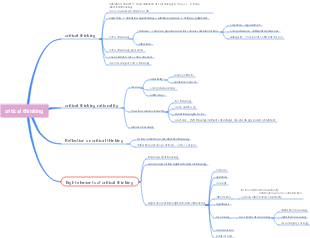
Critical thinking beyond feelings
1. Part One "Background"
:Explain concepts such as personality, critical thinking, truth, knowledge, opinion, evidence and argumentation, and overcome attitudes and beliefs that hinder critical thinking
1. egocentric thinking
: This refers to the tendency to only think from one's own perspective, without considering or understanding other people's perspectives. To overcome this, try to put yourself in the shoes of different people and work to understand how different backgrounds and experiences influence other people's perspectives.
2. resist change
: People often have strong loyalties to their beliefs and prejudices and are resistant to change. Overcoming this attitude requires an open mind, a willingness to accept new information, and a willingness to revise one's views when necessary.
3. Oversimplification and generalization
: This refers to the tendency to ignore complexity and use simple classifications and generalizations to deal with complex problems. Overcoming this tendency requires recognizing the complexity of reality, avoiding generalizations, and delving into different factors and details.
4. Emotionally driven
: Emotions sometimes interfere with logical thinking. While emotions are important, when thinking critically, effort needs to be made to distinguish between emotional responses and rational analysis. Developing self-awareness and understanding and managing your own emotional reactions is key.
5. confirmation bias
: This refers to the tendency to seek out or only value information that supports one's existing views. Overcoming this problem requires consciously seeking out and considering information and evidence that contradicts your own opinion.
The key to understanding confirmation bias
1. selective attention
: When people are exposed to a large amount of information, they tend to pay more attention to and value information that is consistent with their existing beliefs. For example, a person who strongly believes that a certain medical treatment is effective may pay more attention to the evidence supporting that method and ignore the evidence against it.
2. selective explanation
: Even when faced with the same information, different people may interpret it differently because of their pre-existing beliefs. For example, proponents and opponents of a study on climate change may draw completely different conclusions from the same data.
3. memory bias
: People tend to more easily remember information that supports their existing views and forget or downplay information that contradicts it.
Ways to Overcome Confirmation Bias
1. Proactively seek out challenging information
: Consciously seek out and consider information that might contradict or challenge your current beliefs.
2. Multi-angle Thinking
: Try to think about an issue from different angles and positions, which can help you identify perspectives you may have overlooked.
3. critical questioning
: Critically question the information you receive, whether it supports or opposes your point of view.
4. Ask for feedback
: Conversations and discussions with people who hold different perspectives can help reveal biases you may not have noticed.
6. over confidence
: Overconfidence can cause people to overestimate their knowledge or abilities. Developing humility, realizing that you may not always be right, and being willing to learn from your mistakes are important to improving your critical thinking.
2. Part 2 "Easy Mistakes"
: Teach to identify and avoid common errors in thinking.
3. Part Three "Strategy"
: Provide a variety of skills for solving problems and issues, including skills to be more observant, clarify issues, conduct inquiry, evaluate evidence, analyze other people’s opinions and make reasonable judgments
4. Learning ideas
Deeply understand core concepts
: Each chapter discusses a key concept such as truth, knowledge, and perspective. These concepts are crucial to a deeper understanding of critical thinking.
Application exercises
: Each chapter ends with application exercises designed to promote deeper understanding and application of what has been learned.
Reflection and Discussion
: During the learning process, constantly reflect on and discuss what you have learned with others, which can help deepen your understanding and identify possible blind spots.
Practical application
: Try to apply what you have learned to real-life problems and decisions to practice and consolidate critical thinking skills.