MindMap Gallery The development of ancient Greek and Roman philosophy
This is a mind map about the decline of Greek philosophy. The main contents include: Neoplatonism, the real founder Plotinus, skepticism, skepticism and Epicureanism, Stoicism was replaced by Hegel Collectively known as the "philosophy of self-consciousness" during the Hellenistic period. Like the other two schools, skepticism also pursues peace of mind, but their doubt is actually a kind of exploration and questioning for the philosophy of life. , Stoicism, Epicurus, Epicurus clearly stated that the purpose of philosophy is to "find the way to peace in life."
Edited at 2024-10-20 20:22:35루미 : 영적 각성의 10 차원. 당신이 자신을 찾는 것을 멈출 때, 당신은 당신이 찾고있는 것이 당신을 찾고 있기 때문에 우주 전체를 찾을 것입니다. 당신이 매일 인내하는 것은 당신의 영의 깊이의 문을 열 수 있습니다. 침묵 속에서 나는 비밀 영역으로 미끄러 져 내 주변의 마법을 관찰하기 위해 모든 것을 즐겼으며 어떤 소음도 만들지 않았습니다. 날개로 태어 났을 때 왜 기어 다니는 것을 좋아합니까? 영혼은 그 자체의 귀를 가지고 있으며 마음이 이해할 수없는 것들을들을 수 있습니다. 모든 것에 대한 답을 내면으로 찾으십시오. 우주의 모든 것이 당신 안에 있습니다. 연인들은 어딘가에서 만나지 않으며이 세상에는 이별이 없습니다. 상처는 빛이 당신의 마음에 들어가는 곳입니다.
만성 심부전은 심박수 속도의 문제가 아닙니다! 심근 수축 및 이완기 기능의 감소로 인해 심장 출력이 불충분하여 폐 순환에서 정체와 체계 순환의 혼잡을 유발합니다. 원인, 유도에서 보상 메커니즘에 이르기까지, 심부전의 병리 생리 학적 과정은 복잡하고 다양합니다. 부종을 제어하고, 심장의 전선 및 애프터로드를 줄이고, 심장 안락함 기능을 향상시키고, 기본 원인을 예방하고 치료함으로써, 우리는이 도전에 효과적으로 대응할 수 있습니다. 심부전의 메커니즘과 임상 증상을 이해하고 마스터 링 방지 및 치료 전략을 이해함으로써 우리는 심장 건강을 더 잘 보호 할 수 있습니다.
허혈-재관류 손상은 기관이나 조직이 혈액 공급을 회복시킨 후 세포 기능 및 대사 장애 및 구조적 손상이 악화 될 것이라는 현상입니다. 주요 메커니즘에는 증가 된 자유 라디칼 생성, 칼슘 과부하 및 미세 혈관 및 백혈구의 역할이 포함됩니다. 심장과 뇌는 흔한 손상 기관이며 심근 대사 및 초 구조적 변화, 심장 기능 감소 등으로 나타납니다. 예방 및 제어 조치에는 자유 라디칼 제거, 칼슘 과부하 감소, 신진 대사 개선 및 저 나트륨, 저온, 저압 등과 같은 재관류 조건을 제어하는 것이 포함됩니다. 이러한 메커니즘을 이해하면 효과적인 치료 옵션을 개발하고 허혈성 손상을 완화시키는 데 도움이 될 수 있습니다.
루미 : 영적 각성의 10 차원. 당신이 자신을 찾는 것을 멈출 때, 당신은 당신이 찾고있는 것이 당신을 찾고 있기 때문에 우주 전체를 찾을 것입니다. 당신이 매일 인내하는 것은 당신의 영의 깊이의 문을 열 수 있습니다. 침묵 속에서 나는 비밀 영역으로 미끄러 져 내 주변의 마법을 관찰하기 위해 모든 것을 즐겼으며 어떤 소음도 만들지 않았습니다. 날개로 태어 났을 때 왜 기어 다니는 것을 좋아합니까? 영혼은 그 자체의 귀를 가지고 있으며 마음이 이해할 수없는 것들을들을 수 있습니다. 모든 것에 대한 답을 내면으로 찾으십시오. 우주의 모든 것이 당신 안에 있습니다. 연인들은 어딘가에서 만나지 않으며이 세상에는 이별이 없습니다. 상처는 빛이 당신의 마음에 들어가는 곳입니다.
만성 심부전은 심박수 속도의 문제가 아닙니다! 심근 수축 및 이완기 기능의 감소로 인해 심장 출력이 불충분하여 폐 순환에서 정체와 체계 순환의 혼잡을 유발합니다. 원인, 유도에서 보상 메커니즘에 이르기까지, 심부전의 병리 생리 학적 과정은 복잡하고 다양합니다. 부종을 제어하고, 심장의 전선 및 애프터로드를 줄이고, 심장 안락함 기능을 향상시키고, 기본 원인을 예방하고 치료함으로써, 우리는이 도전에 효과적으로 대응할 수 있습니다. 심부전의 메커니즘과 임상 증상을 이해하고 마스터 링 방지 및 치료 전략을 이해함으로써 우리는 심장 건강을 더 잘 보호 할 수 있습니다.
허혈-재관류 손상은 기관이나 조직이 혈액 공급을 회복시킨 후 세포 기능 및 대사 장애 및 구조적 손상이 악화 될 것이라는 현상입니다. 주요 메커니즘에는 증가 된 자유 라디칼 생성, 칼슘 과부하 및 미세 혈관 및 백혈구의 역할이 포함됩니다. 심장과 뇌는 흔한 손상 기관이며 심근 대사 및 초 구조적 변화, 심장 기능 감소 등으로 나타납니다. 예방 및 제어 조치에는 자유 라디칼 제거, 칼슘 과부하 감소, 신진 대사 개선 및 저 나트륨, 저온, 저압 등과 같은 재관류 조건을 제어하는 것이 포함됩니다. 이러한 메커니즘을 이해하면 효과적인 치료 옵션을 개발하고 허혈성 손상을 완화시키는 데 도움이 될 수 있습니다.
Ancient Greek and Roman philosophy (6th century BC ~ 5th century AD)
The main schools and philosophers of early Greek philosophy and their thoughts
The background of Greek philosophy
Greek philosophy in its heyday
The decline of Greek philosophy
The background of Greek philosophy
The observance of fairness and the spirit of contract in the normal development of the market economy made the Greeks accustomed to believe that the complex universe is also restricted by some unified basis and has an essential regulation.
The Greek city-state system and democratic system provided a hotbed for the free development of ideas.
The Greek peninsula faces the sea on three sides, which is suitable for navigation and business. It promotes exchanges between islands and city-states and provides favorable conditions for the generation and spread of ideas.
On the basis of the emergence of the two philosophies of "surprise" and "leisure", the Greek nation is also a nation with speculative thinking. This is also the fundamental reason for the emergence of Western philosophy in ancient Greece.
The main schools and philosophers of early Greek philosophy and their thoughts
Milesian School
Thales said that everything is produced from water and returns to water.
Anaximander's Amorphous One, the concept of "origin" is said to have been first used by Anaximander. The Amorphous One is a primitive chaotic body, neither born nor destroyed, flowing and changing, and the universe consists of came into being, and then destroyed and returned to it
Anaximenes' theory of the origin of air is a synthesis of the ideas of Thales and Anaximander. Air condenses and dissipates with the changes of cold and heat. These two opposite movements are transformed into Fire, water, earth and everything in the universe
Pythagoreans
The Pythagoreans, the theory of the principle of number. The Pythagoreans proposed that the origin of all things is "number", and "amorphous things" are not worthy of being the origin of all things. All things contain quantitative relationships, so "number" is the origin
Eleatic school
Xenophanes, the founder of the Eleatic school, was the first person to publicly criticize the Greek myth of anthropomorphism. He believed that it was not God who created man, but man created God in his own image.
Parmenides' existence and non-existence, Xenophanes' immutable, unique and immortal "god" was expressed by Parmenides as a pure philosophical concept - "existence", which is different from All things in motion and flux distinguished by this phase are called "non-existence" by him. Truth and opinion, what is obtained based on abstract thinking is "truth", and what is obtained based on sensory perception is "opinion". The only "path to truth" is to insist that "existent things" (abstract essences) exist and "non-existence" (sensory phenomena) do not exist.
Zeno's argument for negating motion. In terms of denying motion, Zeno's arguments include "dichotomy", "Achilles is the least capable of being a tortoise", "Flying without understanding", etc. Arguments that negate many, "arguments from grains." All of Zeno's arguments serve one purpose, which is to use reductio ad absurdum to disprove that "existence" is immutable. Uniquely, the reality of these arguments lies in using logical reasoning to deny empirical observation and rational proof to deny sensory perception. On this basis, they established the basic belief that "seeing is false and thinking is true", thus laying the foundation for Western philosophy. The rationalist transformation in which objects of thought are seen as more real and reliable than objects of feeling
Melissot changed the spatial characteristics of "existence" from finite to infinite.
Heraclitus
Fire Origin said, "This world was not created by anyone or any god; it has been, is, and will always be a living fire, burning at a certain point and extinguished at a certain point." "Everything turns into fire, Fire turns into everything again”
Logos (logos) is the law of movement and change of all things. Logos is not an external force imposed on fire, but an inherent measure of fire itself. It regulates and restricts the flow and changes between fire and all things.
The founder of dialectics first believed that all things are in a state of universal movement, change and mutual transformation. "Everything changes and nothing remains permanent" and "One cannot step into the same river twice." Second, it shows that the basis for changes in movement is the conflict of opposites. Third, emphasize the relativity of things and different evaluation standards. The origin of all things is "One", and "One" is God.
Greek philosophy in its heyday
Sophists
Protagoras Man is the measure of all things. Relativity of Theory Protagoras' relativism has a basic principle "all theories have their opposite statements", which creates a subjective dialectic in theory. At the same time, because this relativism greatly exalts the supremacy of personal standpoint, Protagoras broke through creationism in terms of social politics and morality. He did not recognize the "natural rationality" of the established social order, but believed that these orders were only the result of some individuals' "conventional conventions." He thus became the pioneer of Western social contract theory
The relativism of Gorgias and Protagoras admits that all subjective feelings are true, while the skepticism of Gorgias strives to prove that all objective objects are false, and then our understanding of objective objects is also false. Furthermore, our expression of this understanding is still false. The corresponding three propositions are that nothing exists; even if there is something, it cannot be recognized; even if it is recognized, it cannot be expressed.
Atomic theory and its precursors
Empedocles' theory of the four roots clearly understood the origins as the basic elements of things for the first time, that is, he believed that all things are composed of the four origins-fire, air, earth, and water. Love and hate, the power of love combines the four roots to create all things, while the power of hate causes the four roots to decompose and destroy all things. According to the theory of effusion, objective things emit a kind of effusion, which affects human senses.
Anaxagoras Seed said that all the different things in the world have their own origins. These infinite origins are the smallest particles that make up various things. He called them "similar parts" or "seeds". ". Mind, the driving force outside the universe that is not mixed with all things, is "mind". This is the first time in the history of Western philosophy that spirit and matter are clearly distinguished. Initiative and independence are attributed to the spirit side, while matter is considered a passive thing
Leucippus is said to be the founder of hypostasis
Democritus Atoms and void, the universe is composed of atoms and void, and the existence of void gives the atoms room to move. Atoms and motion, an important difference between atoms and the four root theories or seeds is that atoms have agency, that is, atoms are not controlled by other things and are inherently moving. Democritus fundamentally eliminated the use of external factors. He used spiritual reasons to explain the possibility of material movement, thus establishing the material unity of the world on the basis of atoms and void. He was thus regarded as the first materialist and atheist in the strict sense. According to image theory, every object emits an image similar to its own shape. This image is imprinted on our eyes through the action of air, thus forming feelings and thoughts.
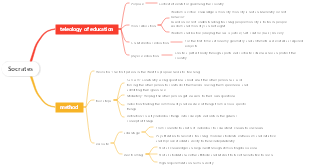
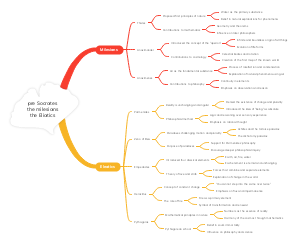
Socrates
Socrates, one of the greatest thinkers of ancient Greece. Know yourself, Socrates quoted the motto "Man, you have to know yourself" engraved in front of the Temple of Delphi. In his view, philosophy should study issues related to life and regard people as rational thinking subjects. . Theological teleology, God bestows souls on humans, making humans superior to animals, and arranges the entire nature into a system with human purposes in mind. Human beings have the ultimate goal of knowing God. Virtue is knowledge, virtue is knowledge about the concept of good. Inductive arguments and universal definitions, when Socrates discusses issues with others, he starts from the premises recognized by the other party, and then draws contradictory conclusions from the premises, step by step peeling off the universal principles hidden behind individual cases, and summarizes A general definition of the subject of discussion.
Little Socrates: The Megarians. The main representatives of this sect are Euclid of Megara and his disciple Eubrides. They expanded the "good" in the subjective spiritual meaning of Socrates into the universal of the universe. Principle, the basic proposition is that only universal things are absolutely true, and judgments about individual things will cause people's thinking to fall into self-contradictory dilemmas. The Punic School (Cynic School), whose founder was Antisthenes, a student of Socrates, advocated that people should adopt the simplest and crudest lifestyle like dogs. The main characteristics of Cynicism are to promote a free-spirited attitude towards life, to despise all social customs and moral norms, and to fight against what is considered artificiality with nature. The main representative figure is Diogenes. The main founder and main representative of the Plenic school was Aristippus, who combined the relativism of Protagoras with the ethics of Socrates and believed that everyone has the right to virtue and emotions in matters of virtue and emotion. It has its own unique judgment standards, advocating that goodness is happiness, that all virtues are just means to promote happiness, and that happiness is the purpose of life.
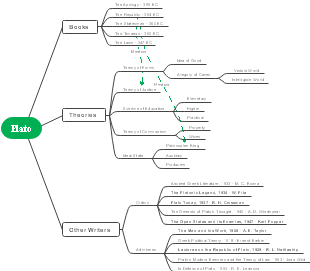
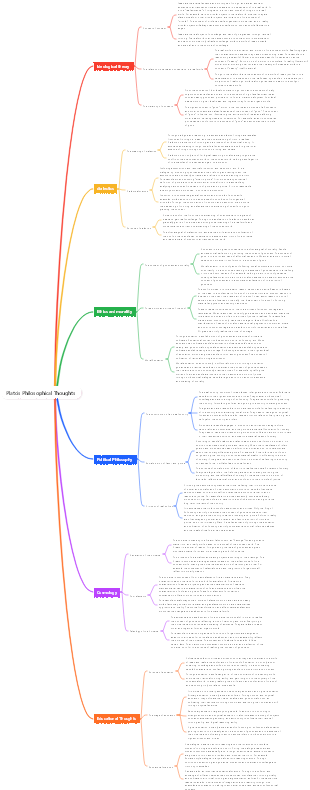
plato
Theory of Ideas, Plato calls the objects of thinking and reason "ideas", which are things "seen" by the mind or reason. They are concepts with the unity of "one" and the reality of "existence", that is, universal concepts. , universals or forms. Various natural objects and man-made objects have their own ideas as the basis for their existence. Perceptible things obtain their existence through "imitation" or "participation" of "ideas". One thing has multiple attributes, which is the participation of multiple "ideas". The concept of "goodness" and God create the world. "Goodness" not only enables all ideas to gain reality and essence, but is also the ultimate goal pursued by all things and the fundamental driving force for the creation of the world. Recall that before entering the soul, the soul lived in the "ideal world", so it already had knowledge about various ideas. After entering the body, it temporarily forgot the knowledge about ideas due to being obscured by the body. It takes a period of time. Only by "learning" can we regain it, and "learning" in Plato's view is "memory". Knowledge and opinion, "visible world" and "sensible world". Opinion is the understanding of the sensible world. The sensible world is divided into things and the images of things. Therefore, opinions can be divided into "imagination" and the understanding of the images of things. And the knowledge of things "faith". Truth is the dialectics of knowledge about the sensible world. Plato's dialectics is a study of the logical connection and mutual transformation of pure ideas. When considering the connotation of a category, its opposite situation should also be considered. The country is ruled by philosophers who have mastered the highest knowledge. The country is strictly hierarchical and has a clear division of labor.
Aristotle
Criticism of the Theory of Ideas, "I love my teacher, and I love the truth even more." (1) Ideas, as the form of things, entities or universals, can only exist in specific things and cannot exist independently outside things; ( 2) The methods used by people to demonstrate the existence of ideas are untenable. They are either inferences that lack inevitability, or they introduce some corresponding forms or ideas; (3) "participation" can only be a reflection of " The participation of "substance", because only "substance" has form or idea, but Plato allows those non-substantial things to also have ideas. In this way, "participation" is an empty phrase, and at best it is just a kind of "poetry" metaphor"; (4) From a realistic point of view, ideas have no meaning for perceptual things. It can neither cause changes in the movement of things nor help people understand things better.
First philosophy and ontology. Aristotle understood philosophy as the summary of all sciences. It consists of three parts: theoretical science, practical science and art. Among them, adjacent science is divided into first philosophy (i.e. metaphysics), physics Science (i.e. natural science) and logic as methodology, practical philosophy including ethics and politics. Aristotle clarified that the basic purpose of first philosophy is to clarify the general causes and principles of things. Aristotle believed that it is human nature to seek knowledge. Human knowledge starts from feelings and memories and rises to technology through the accumulation of experience. Only by rising from the technology in the production department to the knowledge in the theoretical department can we reach the highest wisdom. This kind of wisdom is the first philosophy or metaphysics, and its object is "existence" itself. This science about "existence" itself is what is commonly called "ontology" (ontology). Aristotle raised a question that had never been asked before: "What is existence?" Because "existence" is the highest and cannot be defined by a higher concept, so existence can only be classified. Aristotle believes that "existence" mainly has two meanings: (1) accidental attributes. Such as "This man is white"; (2) Necessary essence. That is category. Such as entity, as well as nature, quantity, relationship, activity, passivity, location, time, etc. These are the inevitable existences of any thing.
Entity theory, the characteristics of Aristotle's entity, first of all, entity is a specific and individual thing. Rather than something universal and abstract; secondly, entities are different from attributes, and they have no opposite; thirdly, entities have no difference in degree, that is, no entity is more of an entity than another entity; finally, entities are constant despite changes. .
Aristotle founded the theory of four causes on the basis of summarizing various previous original theories, which attributed the causes of entities to material cause, formal cause, dynamic cause and final cause.
Potential and reality, Aristotle believes that any individual or individual thing is in the process of movement from a potential state (potential) to reality. The relationship between potential and reality corresponds to the relationship between matter and form. Everything is composed of matter and form. When the matter has not yet obtained a certain form of the thing, it is a thing in a potential state. Only when it obtains this Only after the form is determined can it become a real thing. Aristotle believed that the generation process of entities is the transformation from potential to reality, and this transformation process is movement.
The most basic form of logic is: major premise, minor premise and conclusion, three logical truths, the law of contradiction, contradictory judgments cannot be true at the same time; the law of excluded middle, there cannot be an intermediate between two contradictory propositions; the theory of identity, Everything that is true must be consistent in itself in every way.
Ethics, the two virtues. One is the mental aspect, that is, knowing virtue; the other is the moral aspect, that is, practicing virtue.
The decline of Greek philosophy
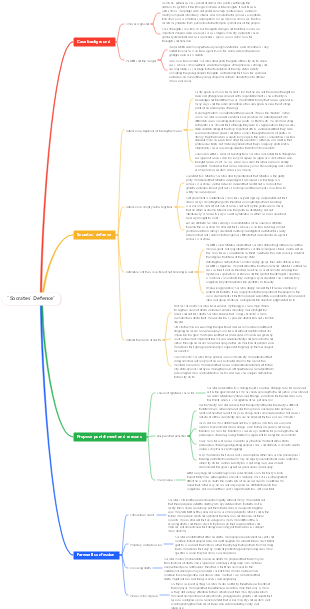
Epicurus school, Epicurus clearly stated that the purpose of philosophy is to "find the way to peace of life"
In the atomic theory of the universe, Epicurus inherited the atomic theory of Democritus and advocated that everything in the world is composed of atoms and void. However, Epicurus further believed that in addition to having shape, order, position, etc., atoms There are differences in aspects, as well as differences in weight. The reason why atoms move downward in the void is that they have weight. This view leads to an atheistic conclusion.
The epistemology of sensoryism. Epicurus advocated sensoryism in epistemology. He called the senses "the reporters of truth" and advocated that "feeling and touch should always be used as the basis."
"Happiness theory" ethics The "happiness" pursued by Epicurus is not the indulgence of sensuality, but refers to physical tranquility and spiritual peace. He believes that eliminating the fear of gods and death and controlling one's desires are the key to Necessary conditions for happiness.
Stoicism
Early Stoicism The founder of Stoicism was Zeno. Early Stoicism believed that the world was a harmonious and orderly whole and that everything was governed by strict laws of necessity. This law was governed by gods or "logs" determined. In ethics, it is believed that when people consciously obey "logs" and "fate", they obey their own reason and realize their own nature. This is what they understand as "freedom". The virtues they value are simplicity, seriousness, fortitude, and temperance, and they do not advocate sympathy, pity, and sadness.
Late Stoicism Accommodating nature and obeying fate are still the basic views of late Stoicism, but the tone is darker and more pessimistic than in the early days. Marcus Aurelius, "Meditations" "In short, always be mindful of how fleeting and worthless human things are; what yesterday was a bit of slime tomorrow will be mummy or dust. Then pass naturally. In this short period of time, end your trip with satisfaction, just like an olive dropped when it is ripe, grateful to the nature that produced it, grateful to the tree on which it was born.” The late Stoic school's pessimistic attitude towards life in this world coincides with the emerging Christian ideal of heaven. The asceticism of "obeying fate" and "enduring suffering" it declares is also quite consistent with the Christian gospel of salvation. Therefore, Stoicism The philosophy of Ge School has become one of the important sources of Christian theology.
Skepticism, together with Epicureanism and Stoicism, was collectively referred to by Hegel as the "philosophy of self-consciousness" during the Hellenistic period. Like the other two schools, skepticism also pursues peace of mind, but their doubt is actually a kind of exploration and questioning for the philosophy of life.
Early Skepticism Founded by Pyrrho, Pyrrho's basic idea is: "Make no decisions, suspend judgment."
Representative figures of late skepticism, Aenesidemus, Agrippa, Sextus and others, further deepened, theorized and systematized the early skeptical views, and shifted the object of suspicion from feeling to reason. itself.
Neoplatonism, real founder Plotinus
Plotinus and Porphyry