 Wondershare EdrawMind
MindMap Gallery How to break the circle
- 21
How to break the circle
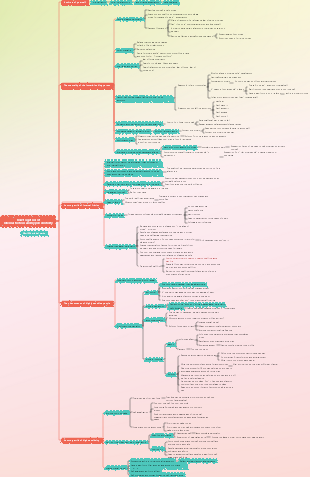
Everyone is eager to break through their own limitations, expand their social circle, and enhance their personal influence. And "how to break the circle" has become the focus of many people's attention. This mind map provides us with a comprehensive and systematic framework to guide us on how to achieve personal growth and social expansion through a series of steps and methods.
Edited at 2024-11-18 21:48:47
- 魯米:10個靈性的高維覺醒
魯米:靈性覺醒的10個維度。當你停止尋找自己,便會找到整個宇宙,因為你正在尋找的東西,也在尋找你。任何你每天持之以恆在做的事情,都可以為你打開一扇通向精神深處的門。靜默中,我滑入祕境,萬般皆妙樂觀察身邊的神奇,不要聲張。你生而有翼,為何喜歡爬行?靈魂擁有了它自己的耳朵,能夠聽到頭腦無法理解的事情。向內尋求一切的答案吧,宇宙中的一切都在你體內。情人們並不最終相遇某處,這個世界沒有離別。傷口是光進入你內心的地方。
- 病理生理學-心力衰竭
慢性心力衰竭,不僅僅是心率的快慢問題!它源於心肌收縮與舒張功能的下降,導致心輸出量不足,進而引發肺循環充血和體循環淤血。從病因、誘因到代償機制,心衰的病理生理過程複雜多樣。通過控制水腫、減輕心臟前後負荷、改善心臟舒縮功能,以及防治基本病因,我們可以有效應對這一挑戰。了解心衰的機制與臨床表現,掌握防治策略,才能更好地守護心臟健康。
- 病理生理學-缺血-再灌注損傷
缺血再灌注損傷是器官或組織恢復血液供應後,細胞功能代謝障礙和結構破壞反而加重的現象。其主要機制包括自由基生成增多、鈣超載以及微血管和白細胞的作用。心臟和腦是常見的受損器官,表現為心肌代謝和超微結構變化、心功能下降等。防治措施包括清除自由基、減輕鈣超載、改善代謝和控制再灌注條件,如低鈉、低溫、低壓等。理解這些機制有助於製定有效治療方案,減輕缺血性損傷。
How to break the circle
- 魯米:10個靈性的高維覺醒
魯米:靈性覺醒的10個維度。當你停止尋找自己,便會找到整個宇宙,因為你正在尋找的東西,也在尋找你。任何你每天持之以恆在做的事情,都可以為你打開一扇通向精神深處的門。靜默中,我滑入祕境,萬般皆妙樂觀察身邊的神奇,不要聲張。你生而有翼,為何喜歡爬行?靈魂擁有了它自己的耳朵,能夠聽到頭腦無法理解的事情。向內尋求一切的答案吧,宇宙中的一切都在你體內。情人們並不最終相遇某處,這個世界沒有離別。傷口是光進入你內心的地方。
- 病理生理學-心力衰竭
慢性心力衰竭,不僅僅是心率的快慢問題!它源於心肌收縮與舒張功能的下降,導致心輸出量不足,進而引發肺循環充血和體循環淤血。從病因、誘因到代償機制,心衰的病理生理過程複雜多樣。通過控制水腫、減輕心臟前後負荷、改善心臟舒縮功能,以及防治基本病因,我們可以有效應對這一挑戰。了解心衰的機制與臨床表現,掌握防治策略,才能更好地守護心臟健康。
- 病理生理學-缺血-再灌注損傷
缺血再灌注損傷是器官或組織恢復血液供應後,細胞功能代謝障礙和結構破壞反而加重的現象。其主要機制包括自由基生成增多、鈣超載以及微血管和白細胞的作用。心臟和腦是常見的受損器官,表現為心肌代謝和超微結構變化、心功能下降等。防治措施包括清除自由基、減輕鈣超載、改善代謝和控制再灌注條件,如低鈉、低溫、低壓等。理解這些機制有助於製定有效治療方案,減輕缺血性損傷。
- Recommended to you
- Outline







How to break the circle
self-awareness and positioning
Analysis of personal strengths and specialties
Skills inventory
Professional skills: In-depth analysis of the professional knowledge system mastered in academic or vocational training, such as mechanical design and electronic circuit knowledge in the engineering field, disease diagnosis and treatment skills in the medical field, investment analysis and risk assessment capabilities in the financial field, etc. Grade the proficiency of each professional skill to clarify where your own advantageous professional skills lie.
Soft skills: Carefully evaluate communication skills, including the fluency, accuracy, and appeal of oral expression, and the logic, organization, and literary talent of written expression; in terms of coordination ability, review the coordination of resources of all parties in team projects or organizational activities, Experience and results in resolving conflicts; organizational capabilities consider the efficiency and effectiveness of planning activities, arranging tasks, and managing time and personnel.
Special skills: Exploring unique language talents, being able to fluently use multiple languages for business negotiations or cultural exchanges; artistic performance talents, covering specialties in singing, dancing, drama performances, etc., as well as niche areas such as handicrafts and magic performances special skills.
Talent mining
Creativity: Review the unique innovative ideas and methods proposed in the process of solving problems and completing tasks, such as proposing new functional concepts in product design, designing ingenious promotion strategies in marketing plans, and analyzing the inspiration generated by these innovative thinking Sources and thought patterns.
Leadership: Examine the examples of leading the direction, motivating members, and making key decisions in a team or organization, and evaluate the influence of your own decisions, such as the leadership traits demonstrated in leading the team to overcome difficulties and achieve performance growth, including strategies Ability in planning, team cohesion, crisis response, etc.
Learning ability: Analyze the speed, depth and breadth of learning new knowledge and skills, such as quickly mastering the grammar and vocabulary of a new language, efficiently understanding complex scientific theories or technical principles, and being able to apply the learned knowledge extensively ability in different scenarios.
Hobbies and passions
In-depth exploration of areas of interest
Cultural and artistic fields: If you are interested in music, study in depth music theory, instrument performance skills, and music creation methods, study the historical evolution and cultural connotation of different music styles, participate in music performances, competitions, music festivals and other activities, and interact with other music lovers , communicate and interact with professional musicians, and even try music production, music education and other related practices.
Sports and fitness field: For your favorite sports, such as basketball, you not only participate in daily competitions and training, but also conduct in-depth research on basketball tactics, athlete physical training methods, sports injury prevention and rehabilitation knowledge, pay attention to domestic and foreign basketball competition trends, and analyze top teams Based on the players' technical characteristics and game strategies, obtain relevant coaching or referee certificates.
Technology field: If you are keen on emerging technologies, such as artificial intelligence, systematically learn machine learning algorithms and deep learning frameworks, participate in open source project development, pay attention to the application cases of artificial intelligence in different industries such as medical care, finance, transportation, etc., and read professional academic papers and Industry reports, participation in technology exhibitions and academic seminars, and exchanges and discussions with scientific researchers and corporate engineers.
The intersection of interests and career/social life
How to transform interests into career advantages: For example, combine painting interests with design careers, use painting skills to engage in graphic design, illustration design, interior design, etc.; transform reading and writing interests into careers in editing, copywriting planning, self-media creation, etc. Direction, attract readers by creating high-quality content, establish personal brand and influence, and then expand career development space.
Build relevant social circles based on interests: Take photography interests as an example, join photography clubs, online photography communities, participate in photography exhibitions, photography collecting activities, get to know photographers, photography enthusiasts, photography equipment dealers, etc., and share photography works and exchange photography Skills and experience, and establishing extensive and deep social relationships. These network resources may provide individuals with creative inspiration, cooperation opportunities, career recommendations, etc.
Personal values and goal determination
Clear core values
Integrity: Reflect on how to adhere to the principle of integrity in interpersonal communication, business transactions, academic research, etc., such as truthfully reporting work progress and results at work, and not plagiarizing or forging; when getting along with friends, keeping promises, not cheating, or betrayal .
Responsibility: Review the performance of assuming responsibilities at home, work, and society, such as taking care of family members and doing housework at home, completing tasks conscientiously at work, being brave enough to bear the consequences for work mistakes, actively participating in public welfare activities in society, and contributing to society. Contribute to the problem.
Fairness: Think about how to pursue and maintain fairness in teamwork, resource allocation, and competitive environments. For example, ensure that members’ contributions are fairly evaluated and rewarded in team projects, and follow fair and reasonable principles when allocating resources without favoritism or discrimination.
Short-term and long-term goal setting
Short-term goals: Set specific goals that can be achieved within 1-2 years, such as learning a new software tool, such as the video editing software Premiere Pro, within 6 months, mastering its basic operations and common functions, and being able to complete simple tasks independently Video editing project; obtain a qualification certificate related to career development within 1 year, such as a junior marketer certificate in the field of marketing, and improve your professional recognition in this field through systematic learning and examinations.
Long-term goals: Plan for 5-10 years or even longer-term goals, such as becoming an intermediate expert in your industry within 5 years, having in-depth research results and rich practical experience in professional fields, being able to independently lead small project teams, and contributing to companies or organizations. Create significant value; become a well-known expert or leader in the industry within 10 years, have extensive industry influence, be able to participate in formulating industry standards, promote industry development and innovation, such as developing new technologies or products with significant influence in the field of science and technology.
Knowledge and skills improvement
Deepening of professional knowledge
Industry cutting-edge research and learning
Subscription to professional journals and magazines: According to your professional field, subscribe to authoritative journals and magazines such as "Nature", "Science" (in the field of comprehensive science), "The Lancet" (in the field of medicine), and "Financial Times" (in the field of finance). Regularly read research papers, industry reviews, trend analysis and other articles to learn about the latest scientific research results, technological breakthroughs, market dynamics, policy and regulatory changes and other information.
Participate in industry seminars and academic lectures: Actively pay attention to seminars and lectures held by well-known universities, scientific research institutions, and industry associations at home and abroad, such as ACM conferences in the computer field, AACR conferences in the biomedical field, etc., register in advance, and participate in the conferences Listen carefully to the reports and speeches of experts and scholars, conduct in-depth exchanges and discussions with participants, obtain first-hand cutting-edge industry information, and expand your network resources and academic horizons.
Professional qualification certificate examination
Determine certificates related to career development: Combine your career plan and industry needs to determine certificates with higher value and recognition, such as obtaining a first-level construction engineer certificate in the construction industry, obtaining a certified public accountant (CPA) certificate in the accounting industry, To obtain a teacher qualification certificate in the education industry, analyze the examination content, registration conditions, examination time, validity period and other information of each certificate.
Develop a certification plan: Develop a detailed certification plan based on the difficulty of the certificate and your own time schedule. For example, for the CPA exam, plan to pass all subject exams within 2-3 years. In the first year, focus on learning basic subjects such as accounting, auditing, and financial cost management. Make a study plan with no less than 20 hours of study time per week, and sign up for professional courses. The courses of the training institution are combined with learning methods such as textbook study, exercise exercises, and mock exams to gradually master exam knowledge points and test-taking skills.
General skill development
Communication and collaboration skills
Teamwork skills training: Participate in team-building training courses or workshops to learn team communication skills, such as active listening skills. Learn to focus on listening to other people's opinions during team discussions, without interrupting or rushing to refute, and confirm understanding by asking questions, summarizing, etc. ;Effective presentation skills, including clear elaboration Express your own opinions, ideas, and suggestions, use concise and clear language, appropriate body language and expressions to enhance the persuasiveness and appeal of expression; conflict coordination skills, learn to identify the types and roots of team conflicts, and use negotiation, compromise, and mediation and other methods to resolve conflicts and maintain team harmony and stability.
Cross-department communication strategy: Understand the functions, goals, work processes and cultural characteristics of different departments, be fully prepared before cross-department communication, and clarify the purpose, content and expected results of communication. For example, when communicating with the marketing department about product needs, understand the market research results and customer demand analysis reports of the marketing department in advance, explain the product's technical features and development plans in a language and manner that the marketing department can understand, and seek consensus and cooperation opportunities between both parties. Establish good cross-departmental working relationships.
Time management and efficiency improvement
Learn time management methods: Learn time management methods in depth, such as the Pomodoro Technique. Divide working time into 25-minute working periods and 5-minute rest periods. After completing 4 Take a long break every Pomodoro period to improve work concentration and efficiency; the four-quadrant rule divides tasks into important and urgent, important but not urgent, urgent but not important, and not important according to their importance and urgency. The four categories of non-urgent include prioritizing important and urgent tasks, reasonably arranging time to handle important and non-urgent tasks, minimizing or entrusting others to handle urgent, unimportant and unimportant and non-urgent tasks, and optimizing time allocation.
Optimize work processes and learning processes: Analyze and optimize daily work and learning processes to remove tedious, repetitive, and inefficient links. For example, when operating office software, learn to use macro commands, shortcut keys and other functions to improve the efficiency of data processing, document editing and other work; during the learning process, formulate a systematic learning plan and knowledge system framework to avoid blind learning and knowledge fragmentation , improve learning effects.
Critical thinking and problem solving skills
Learn and analyze the logical framework of problems: learn and master methods such as fishbone diagram analysis, which are used to analyze the causes and influencing factors of problems, use the problem as the head of the fish, and divide possible causes into categories such as personnel, equipment, materials, methods, environment, etc. As a fishbone, find out the specific reasons under each category through brainstorming and other methods, and analyze the root cause of the problem in depth; 5W1H analysis method, that is What (what is the problem), Why (why does the problem occur), Who (who are the people or departments involved), When (when does the problem occur), Where (where does the problem occur), How (how to solve the problem), through comprehensive analysis All aspects of the problem and develop targeted solutions.
Cultivate the ability to think about problems from multiple perspectives and propose innovative solutions: When facing problems, encourage yourself to think about problems from different angles, positions, and stakeholder perspectives, and break through your thinking stereotypes. For example, when it comes to the issue of corporate product sales decline, we not only analyze it from conventional perspectives such as market competition and product quality, but also conduct in-depth discussions from social and cultural trends, consumer psychology changes, emerging technology applications, etc., and propose ways to combine product development with social media hot spots. Marketing innovation, development of personalized customized products for specific consumer groups and other innovative solutions.
Emerging skills learning
digital skills
Fundamentals of data analysis: systematically learn data analysis tools and methods, such as being proficient in the advanced functions of Excel, including the use of pivot tables, function formulas (VLOOKUP, SUMIFS, etc.), and being able to clean, organize, analyze and visualize data; learn SQL Database query language, master the basic operations of the database, such as data query, insert, update, delete and other statements, and be able to extract valuable data information from the database to provide support for data analysis and decision-making.
Introduction to programming: Choose a programming language that is suitable for beginners and widely used, such as Python, learn its basic syntax, data types, control structures, function definitions and other basic knowledge, and gradually master programming through online courses, programming textbooks, practical projects, etc. Skill. For example, use Python for data crawling to obtain public data on the Internet; write simple data analysis scripts to realize automated data processing and analysis; develop small automated office programs, such as batch processing of files, automatic sending of emails, etc., to improve work efficiency.
Social media and marketing skills
Social media platform operation: Choose mainstream social media platforms, such as WeChat public accounts, Weibo, Douyin, Xiaohongshu, etc., and formulate personalized operation strategies based on platform characteristics and target audience positioning. Learn content creation skills, including writing attractive titles and copywriting, and producing high-quality pictures, videos and other multimedia content; master fan management methods, such as increasing fan stickiness and activity through interactive activities, community building, private message communication, etc.; Analyze platform data to understand fan growth trends, content reading volume, interaction rate and other indicators, and optimize operational strategies based on data feedback.
Internet marketing knowledge: Learn the basic theories and methods of Internet marketing, such as search engine optimization (SEO), understand the working principles and ranking algorithms of search engines, and improve the website’s ranking in search engines by optimizing website content, keyword layout, website structure, etc. Natural rankings to increase website traffic; content marketing strategies to develop marketing plans that focus on providing valuable content. , such as writing in-depth industry analysis articles, producing product usage tutorial videos, etc., to attract potential customers and build brand trust and loyalty; social media advertising skills, learn how to advertise on different social media platforms, including advertising format selection, Target audience positioning, advertising budget setting, advertising effect evaluation, etc., to improve the accuracy and conversion rate of advertising.
Social development and relationship building
Assessment of existing social circles
Sorting out human resources
Classification by occupation: Divide contacts into different occupational categories, such as business executives, professional technicians, sales personnel, educators, freelancers, etc., and analyze the quantity, quality and closeness of connections in each occupational category . For example, in the category of corporate executives, how many hold senior management positions in well-known companies in the industry, and what are the frequency of communication and cooperation opportunities with them.
Classification by industry: further subdivide the industries to which network resources belong, such as the Internet, finance, medical care, manufacturing, etc., understand the distribution of contacts in different industries, and evaluate the influence and resource advantages of each industry's contacts in the industry. For example, among the Internet industry contacts, are there people who are engaged in core business in leading Internet companies? Can they provide information or resources such as the latest industry developments, technology trends, investment opportunities, etc.
Classification by degree of closeness: Divide contacts into different levels such as close friends, ordinary friends, work partners, casual acquaintances, etc., and analyze the role and value of connections with different degrees of closeness in personal life, work, and study. For example, close friends may provide more help in terms of emotional support and personal growth advice; work partners may play an important role in career development and business cooperation.
Analysis of advantages and limitations of social circles
Advantages of existing social circles in knowledge exchange: Assess the knowledge background, professional skills, and hobbies of members in the social circle, and analyze the areas in which in-depth knowledge exchange and learning can be carried out. For example, in a social circle dominated by technology enthusiasts, members can often share the latest technology information, technological innovation cases, industry research reports, etc., to promote each other's knowledge growth and thinking collision in the technology field.
The advantages of existing social circles in providing career opportunities: Review whether any members in the social circle have provided career opportunities for themselves, such as recommending jobs, introducing business cooperation projects, providing entrepreneurial investment, etc., and analyze the reasons and background for these career opportunities. , summarizing the resource advantages and potential of social circles in career development. For example, in a social circle organized by an industry association, members often exchange recruitment information, project bidding information, etc. within the industry, creating more career development opportunities for each other.
Limitations of existing social circles: Analyze the limitations of social circles in terms of industry diversity, geographical coverage, and network level. For example, a social circle mainly composed of local people in the same industry may have a relatively narrow industry vision and lack opportunities for cross-industry innovative thinking and resource integration; at the level of connections, it may lack connections with top industry experts and internationally renowned figures. Restricts personal development at higher levels.
Target social circle determined
Ideal social group characteristics
Characteristics of high-achieving and high-impact people: Study the common characteristics of high-achieving and high-impact people, such as strong goal orientation, excellent learning ability, perseverance, innovative thinking ability, excellent leadership and teamwork Spirit etc. Understand their coping strategies and mentality adjustments when facing challenges and difficulties, and analyze how these traits help them achieve success and influence.
Characteristics of the elite group in a specific industry or field: In-depth understanding of the professional skills, knowledge system, industry experience, social network and other characteristics of the elite group in the target industry or field. For example, elite groups in the field of financial investment usually have profound financial knowledge, keen market insights, rich investment experience, extensive network resources and excellent risk control capabilities. They are active in domestic and foreign financial markets and participate in major events. Investment project decisions have an important influence on industry development trends.
Industry elites and opinion leaders
Identify well-known figures and opinion leaders in your industry or target industry: Use industry reports, news media, professional forums, social media and other channels to screen out figures and opinions with high visibility, influence and authority in your industry or target industry leader. For example, in the Internet industry, entrepreneurs such as Elon Musk and Jack Ma play a leading role in innovative ideas, strategic decisions, and business practices in the industry; in the field of scientific and technological research, some Nobel Prize winners Award winners and heads of well-known scientific research institutions are also opinion leaders in the industry.
Research their social circles and communication platforms: Pay attention to the composition of the social circles of these well-known figures and opinion leaders, and understand which institutions, organizations, and individuals they maintain close contact and cooperation with. For example, some industry elites often participate in high-end business forums, industry summits, professional academic conferences and other activities to communicate, interact and establish cooperative relationships with other elites on these platforms; they are also active on professional social platforms such as LinkedIn, sharing Views, insights and industry updates from professionals around the world.
Social Channels and Strategy
Participate in offline activities
Industry conferences and exhibitions: Make plans for participating in industry conferences and exhibitions in advance, and determine your participation goals and key areas of focus based on the conference theme, agenda, exhibitor information, etc. During the meeting, actively participate in keynote speeches, seminars, forums and other activities, listen carefully to the speeches of experts, scholars and corporate executives, take notes, and record valuable information and opinions. Take the initiative to communicate and interact with other participants, exchange business cards, briefly introduce your background and interests, and look for common topics and cooperation opportunities. For example, when participating in international science and technology exhibitions, you can communicate with representatives of technology companies from different countries to learn about their latest products and technology research and development directions, explore potential cooperation possibilities, and expand your international vision and network resources.
Professional training courses and workshops: Sign up for professional training courses and workshops related to your professional field or hobbies, and establish good teacher-student and classmate relationships with teachers and other students during the learning process. Actively participate in class discussions, group projects and other activities to demonstrate your professional knowledge and skills while learning from the experiences and insights of others. For example, attend a creative writing workshop to learn writing skills and share creative inspiration with other writing enthusiasts. After the workshop, keep in touch with some like-minded students and form a writing group to exchange works and provide feedback and suggestions. Improve your writing skills together.
Social gatherings and club activities: Join social gatherings or clubs that match your interests and hobbies, such as book clubs, fitness clubs, art salons, etc. During the activities, relax your mind, actively integrate into the group, share your experiences and insights with other members, listen to their stories, and build deep friendships through topics of common interest. For example, in a book club, you can regularly discuss recently read books with members, analyze the ideas and writing techniques in the books, and interpret the works from different perspectives. This kind of communication can not only enrich your own knowledge reserves, but also make acquaintances with people from other countries. Book friends from different industries and backgrounds may bring you new ways of thinking and diverse information resources.
Utilization of online social platforms
LinkedIn: Create a professional and complete LinkedIn profile, including a clear professional avatar, detailed work experience, educational background, professional skills certification, project experience, personal achievements and other information to highlight your core competitiveness and Professional value. Actively use LinkedIn's search function to find professionals, business executives, potential partners, etc. in the target industry, send personalized connection requests, attach a brief and sincere self-introduction and reasons for adding, such as expressing respect for the other party's professional achievements. Admiration and a desire to communicate and collaborate in a particular area. Join relevant industry groups, participate in group discussions, share valuable industry insights, professional articles or your own work results, establish your professional image in the industry, attract the attention and interaction of others, and expand your network of contacts.
Professional forums: Register and be active in well-known forums in professional fields, such as Zhihu’s professional sections, industry vertical forums (such as Autohome Forum for the automotive industry, CSDN Forum for the computer programming field, etc.). In the forum, carefully answer professional questions raised by other users, demonstrate your professional knowledge and problem-solving abilities, provide detailed, accurate and constructive answers, and gradually accumulate your own reputation and fan base. At the same time, we actively initiate in-depth discussion topics, guide other users to participate in discussions, and share different opinions and experiences. Through this kind of interactive communication, we can get to know more like-minded professionals and establish interpersonal relationships based on professional trust.
Social media groups: Search and join social media groups such as WeChat groups and QQ groups based on interests or industries. Within the group, abide by the group rules, actively participate in group chat discussions, share your professional knowledge, industry information, learning experiences and other valuable content in a timely manner, and avoid pure advertising or meaningless chat. Take the initiative to establish private chats with active members in the group, further in-depth communication, explore cooperation opportunities or topics of common interest, and transform casual acquaintances in the group into personal relationships with substantial communication and cooperation potential.
Build valuable relationships
Treat people sincerely and show your true self and value: When interacting with others, always maintain a sincere attitude, do not be hypocritical or pretentious, and truly express your thoughts, feelings and needs. At the same time, fully demonstrate your professional value, personal expertise and unique personality charm, so that others can clearly understand the value and significance of interacting with you. For example, when communicating with potential partners, you can honestly introduce your professional skills and successful cases in related fields. At the same time, you should also listen carefully to the needs and expectations of the other party, find the points of interest of both parties, and establish a basis for mutually beneficial and win-win cooperation.
Proactively provide help and value, and establish mutually beneficial relationships: actively pay attention to the needs and difficulties of others, proactively lend a helping hand, and provide as much help as possible. This kind of help can be answers to professional knowledge, recommendations for job opportunities, sharing of resources, etc. By continuously creating value for others, we win the trust and respect of others, thereby establishing long-term and stable mutually beneficial relationships. For example, when you learn that a colleague encounters technical difficulties on a certain project, you use your professional knowledge and experience to provide him with solutions or suggestions. This kind act may be rewarded by the other party in the future, such as When you need cooperation resources or business recommendations, the other party will actively provide support.
Breaking through the comfort zone and having the courage to try
Challenge personal fears and insecurities
Public Speaking and Expression
Join a Toastmasters Club for speech training: Join a local Toastmasters Club, such as Toastmasters International, and regularly participate in speech activities and training courses organized by the club. Start with a simple self-introduction speech and gradually challenge different forms of speech tasks such as keynote speeches and impromptu speeches. During the speech process, accept feedback and evaluation from other members, learn from their speech skills and experience, and continuously improve your speech style, language expression, body movements, eye contact, etc. Through continuous practice and practice, you will gradually overcome the fear of public speaking, improve your oral expression skills and stage performance, and be able to confidently express your views and ideas on various occasions.
Actively strive for speaking opportunities at work meetings and social occasions: At work, actively participate in project reports, team discussions and other meetings, proactively strive for speaking opportunities, and share your work progress, problem analysis and solutions. Be fully prepared in advance, including organizing your thoughts, making concise and clear presentations, practicing oral expression, etc., to ensure that you can convey your message clearly, fluently and persuasively when speaking. In social occasions, such as industry gatherings, friend gatherings, etc., you also have the courage to express your opinions and views on hot topics, social phenomena, etc., exercise your improvisational expression skills and thinking agility, and gradually transform from a listener to an active expressor to expand their influence in the social circle.
Take on new responsibilities and tasks
Take the initiative to ask Ying to take charge of important projects or tasks in new fields at work: When the company has important projects or tasks in new fields, take the initiative to express your interests and abilities to the leader and strive to take on more responsibilities. In the process of taking charge of the project, we conduct in-depth research on project-related knowledge and skills, formulate detailed project plans and execution plans, coordinate the work among team members, and actively respond to various challenges and risks that arise in the project. By successfully completing these challenging tasks, you can not only improve your professional capabilities and overall quality, but also establish a good personal image within the company and create opportunities for career advancement.
Participate in volunteer activities or community affairs, and assume organizational and leadership roles: actively participate in various volunteer activities or community affairs, such as community environmental protection activities, charity projects, etc. In activities, take the initiative to assume organizational and leadership roles, and be responsible for the planning, organization, publicity, and execution of activities. Cooperate with volunteers of different ages, genders, occupations, and backgrounds to coordinate resources from all parties, solve problems that arise during the event, and ensure the smooth progress of the event. This experience can hone your team management skills, communication and coordination skills, problem-solving skills, and social responsibility. It can also expand your social circle, make more like-minded friends, and enrich your life experience.
Try new things and new areas
Cross-border learning and cooperation
Learn subject knowledge or skills that are different from your current job: If you are engaged in science and engineering, you can learn knowledge in the humanities and social sciences, such as economics, psychology, sociology, etc., to broaden your knowledge horizons and way of thinking. For example, learning economics knowledge can help you understand market rules and resource allocation principles, and you can better carry out project cost-benefit analysis, market strategic decision-making, etc. at work; learning psychology knowledge can improve your interpersonal skills, team management skills, and understand Psychological needs and behavioral motivations of employees and customers to improve work efficiency and customer satisfaction. Or learn a new skill, such as music, painting, photography and other artistic skills, and cultivate your own aesthetic ability and creativity. These abilities may play an unexpected role in product design, brand promotion and other work aspects.
Collaborate with people in different industries on projects to broaden your horizons and way of thinking: Take the initiative to look for opportunities to collaborate on projects with people in different industries, such as cooperating with people in the Internet industry to develop online product promotion programs, and cooperating with people in the financial industry on project financing planning , working with people in the education industry on staff training programs, etc. During the cooperation process, understand the work processes, thinking patterns, market demands and industry trends of different industries, learn from their professional knowledge and advanced experience, break your original industry limitations and thinking patterns, and form diversified ways of thinking and innovative ideas. . For example, cooperation with the Internet industry may expose traditional manufacturing practitioners to new concepts and methods such as big data analysis, user experience design, and Internet marketing, thereby providing inspiration and reference for the digital transformation of their own industries.
Participate in innovative projects and entrepreneurial activities
Join the company's internal innovation team or entrepreneurship incubation project: If your company has an internal innovation team or entrepreneurship incubation project, actively apply to join. In the innovation team, work with other colleagues with innovative thinking and entrepreneurial spirit to carry out brainstorming, creative research and development, product prototype design and other work to explore new business models, product concepts or technological innovation points. Participating in entrepreneurship incubation projects can provide you with an in-depth understanding of the entire process of entrepreneurship, from project planning, market research, business model design, team formation to product development, marketing, financing and other aspects. You can accumulate rich entrepreneurial experience and cultivate your own entrepreneurial capabilities and enterprise Family spirit. Even if the project may ultimately fail, the knowledge, skills and experience learned in the process will be valuable assets and lay a solid foundation for future career development or personal entrepreneurship.
Participate in external entrepreneurship competitions or entrepreneurial community activities: Participate in various external entrepreneurship competitions, such as the National College Student Entrepreneurship Competition, Innovation and Entrepreneurship Competitions organized by local governments, etc., present your entrepreneurial ideas or project plans on the competition platform, and accept judges and experts , review and guidance from investors, communicate and compete with other participating teams, and learn from their innovative ideas and practical experiences. At the same time, join entrepreneurial communities, such as entrepreneurial cafes and community activities organized by entrepreneurial accelerators, to establish connections with entrepreneurs, investors, entrepreneurial mentors, etc., share entrepreneurial resources, exchange entrepreneurial experience, and find entrepreneurial partners and investment opportunities. Integrate into the entrepreneurial ecosystem, feel the entrepreneurial atmosphere, and stimulate your entrepreneurial enthusiasm and creativity.
Accept failure and setbacks
Learn from failures
Conduct a review and analysis of the failure to find out the root cause of the problem: When encountering a failure or setback, do not fall into negative emotions, but conduct a review and analysis in a timely manner. Review the entire incident process, from goal setting, plan formulation, execution process to result evaluation, and analyze the problems and mistakes that occurred in each link one by one. For example, after a project fails, analyze whether the product positioning is inaccurate due to insufficient market research, or whether it is due to poor team collaboration, unsolved technical problems, broken capital chains, etc. Through in-depth analysis of the root causes of problems, summarizing experiences and lessons learned, and formulating corresponding improvement measures, we can avoid making the same mistakes again in future projects.
Summarize successful experiences and failure lessons to form a personal growth knowledge base: Record every successful experience and failure lesson to form a personal growth knowledge base. These experiences and lessons can be classified and summarized by writing diaries, summarizing reports, making mind maps, etc. For example, organize them according to different categories such as project management, interpersonal relationships, and professional skill improvement, and analyze which methods are effective in different situations and which ones need improvement. Review this knowledge base regularly, continuously strengthen the application of successful experiences, and remind yourself to avoid repeating the mistakes of failure, so as to achieve continuous improvement and growth of personal abilities.
Build resilience and perseverance
Establish a psychological adjustment mechanism to face setbacks: When facing setbacks, learn to use effective psychological adjustment methods, such as exercise, release stress and relieve negative emotions through running, fitness, yoga and other exercises, while enhancing physical and psychological quality; Meditate and relax, spend a certain amount of time every day practicing meditation, focus on breathing and inner feelings, eliminate distracting thoughts, calm the mind, improve mental concentration and stress resistance; use positive self-suggestion, and say some encouraging words to yourself when encountering difficulties. Discourse, such as "I can overcome this difficulty", "This is just a temporary setback, I will definitely find a solution", etc. to enhance self-confidence and mental toughness.
Set goals and plans for dealing with setbacks and gradually improve your ability to resist setbacks: Set a series of goals and plans for dealing with setbacks based on your actual situation. For example, start by dealing with small setbacks, such as being criticized by your boss at work, and set a goal to adjust your mentality within a week, seriously reflect on and improve your work performance; gradually transition to dealing with larger setbacks, such as the failure of an entrepreneurial project. Finally, set a goal to re-evaluate your entrepreneurial direction within half a year, learn relevant knowledge and skills, look for new entrepreneurial opportunities, and formulate a detailed action plan. By gradually challenging more difficult frustration situations, you can continuously improve your ability to resist frustration and psychological endurance, so that you can maintain a calm, firm and optimistic attitude when facing various difficulties and setbacks.
Personal branding and communication
Create a unique personal image
Personal style and image design
External image: Create a suitable external image based on your career positioning, target social circle and personal characteristics. In terms of clothing matching, follow the principles of simplicity, elegance, decency and appropriateness. If you are engaged in business work, choose a business suit that is well-cut and of high quality. The colors are mainly classic colors such as black, white, and gray, and are paired with appropriate ties and scarves. , leather shoes and other accessories to show a professional, stable and confident image; if you are engaged in the creative or art industry, you can be more personalized and fashionable in your clothing style to reflect your own artistic taste and innovative spirit, but you should also avoid being too exaggerated or outlandish. . In terms of grooming, keep a neat and clean face and hairstyle, and pay attention to personal hygiene details, such as trimming nails, keeping breath fresh, etc., to leave a good first impression.
Conduct: Develop a graceful, confident, and professional demeanor. When walking, sitting and standing, keep your chest high, your steps steady, your sitting posture upright, and your standing elegant, reflecting a good mental outlook and temperament; when interacting with others, pay attention to polite language, such as using "please" and "thank you" ""sorry" and other polite words, respect the opinions and feelings of others, do not interrupt others, listen carefully and respond appropriately; when expressing your own opinions, speak at a moderate speed, be clear and logical, and use appropriate body language to assist expression. But don’t be too exaggerated or blunt, and convey your professionalism and personal charm through your words and deeds.
Behavior and brand consistency
Make sure your words and actions are consistent with your personal brand positioning in different situations: Whether it’s at work, at a social gathering, or in a public speaking setting, keep your personal brand positioning in mind at all times and align your words and actions with it. For example, if your personal brand positioning is to be an innovative leader, then you should actively put forward innovative views and ideas during meeting discussions, encourage team members to be brave enough to try new methods and ideas, and be brave enough to take the lead in taking action and take on challenging tasks. In social situations, when communicating with others, you should also focus on innovation topics, share your insights on industry innovation trends and innovative practical experience, thereby strengthening your image as an innovative leader in the minds of others.
Use words and actions to convey your core values and strengths: Consciously convey your core values and strengths in daily communications and actions. If the core values are integrity and responsibility, then you must strictly abide by the contract at work, complete tasks on time, and be responsible for the quality of the work. You must also emphasize the principle of integrity when communicating with others and do not make false promises; if your personal advantage is professional skills ability, then when encountering relevant technical problems, you should take the initiative to demonstrate your professional knowledge and problem-solving abilities, prove your advantages through practical actions, and let others have a deeper understanding and recognition of your personal brand.
Sharing personal stories and achievements
Social media personal brand building
Tell personal growth stories, career experiences and achievements on social platforms: Choose appropriate social media platforms, such as WeChat public accounts, Weibo, Douyin, etc., and regularly publish articles, pictures or videos about your personal growth stories. These stories can include your own challenges and breakthroughs, difficulties and overcomings, growth and insights in the process of studying, working, and starting a business, so that readers can have an in-depth understanding of your life trajectory and personality characteristics. At the same time, share your professional experience, such as positions in different companies, job responsibilities, work achievements, etc., to demonstrate your professional abilities and career development history. When describing achievements, not only should the results be highlighted, but the process and methods of achieving the achievements should also be described in detail to provide readers with valuable references.
Use multimedia forms such as pictures and videos to display your personal image and achievements: In order to make your personal brand more attractive and contagious on social media, you must be good at using multimedia forms such as pictures and videos to display your personal image and achievements. For example, take photos of your personal image to show your style in work scenes, learning environments, and social activities; make videos to display work results, such as project results demonstrations, product introduction videos, etc., through vivid visual effects and sound effects, to make the audience more Intuitively understand your professional abilities and work achievements. When using multimedia content, pay attention to the quality and style of the content and maintain consistency with your personal brand image.
Word-of-mouth communication within the industry
Establish reputation through high-quality results and good interpersonal relationships at work: At work, strive to create high-quality work results, such as high-quality project delivery, innovative product design, excellent customer service, etc., so that colleagues, superiors, and customers can Have a high degree of recognition of their work abilities and professional qualities. At the same time, we focus on establishing good interpersonal relationships with others, respecting team members, actively collaborating, and being willing to help others, so as to establish a good personal image and reputation in the industry. For example, after completing a project, the client is very satisfied with the project results and recommends your team or individuals within the industry. This kind of word-of-mouth communication will bring you more business opportunities and career development space.
Obtain recommendations and recognition from customers, colleagues, and partners: Actively seek recommendations and recognition from customers, colleagues, and partners. After working with a customer, you can ask the customer to write a recommendation letter or recommend yourself on their social platform; after establishing a good cooperative relationship with your colleagues, encourage your colleagues to recommend you within the company or in industry exchanges; after successfully collaborating on a project with a partner , to get partners to recommend you within their business network. These recommendations and recognition will greatly enhance the visibility and reputation of your personal brand and attract more people to establish contact and cooperation with you.
Value output and influence expansion
Professional insights and point of view sharing
Write professional articles and blogs and publish them on industry platforms or personal social media: combine your professional knowledge and industry experience to write professional articles and blogs with in-depth and unique insights. Article topics can cover industry trend analysis, technological innovation interpretation, working method experience sharing, case studies, etc. In the writing process, you should pay attention to the clear structure, rigorous logic, and detailed content of the article, and use data, cases, quotes, etc. to enhance the persuasiveness of the article. After completing the article, publish it on well-known industry platforms, such as industry association websites, professional forums, industry self-media platforms, etc., as well as your own social media accounts, attracting the reading and attention of professionals and enthusiasts in the industry, and spreading your own knowledge through the article. Professional insights and viewpoints to establish one’s position of ideological authority in the industry.
Participate in industry interviews and podcast recordings, and share professional knowledge and experience: Actively accept interview invitations from industry media and self-media, and participate in podcast recording and other activities. During the interview and recording process, share your professional knowledge, work experience, industry insights and innovative ideas in depth in response to questions raised by the host or audience. Be fully prepared in advance, sort out your opinions and ideas, and ensure that you can express your thoughts clearly and fluently during the communication process. At the same time, pay attention to the easy-to-understand language expression so that audiences of different levels can understand and benefit. Through the dissemination of these media channels, you can convey your voice to a wider audience and expand the influence and popularity of your personal brand.
Become a thought leader in the industry
Propose innovative ideas, methods or solutions: Continue to pay attention to industry development trends and pain points, and rely on your own knowledge accumulation, practical experience and keen insight to propose forward-looking and breakthrough ideas, methods or solutions. For example, in the field of technology, when most people were still following the traditional software development model, they took the lead in proposing a new concept of combining agile development with artificial intelligence, optimizing the development process, improving code quality and project delivery efficiency by introducing artificial intelligence algorithms. It also elaborates on its principles, implementation steps and expected effects, opening up new ideas and directions for industry development.
Lead industry discussion topics and drive industry development trends: actively initiate leading discussion topics at industry conferences, forums, social media groups and other platforms, attracting many peers to participate in discussions and exchanges. For example, in the environmental protection industry, a discussion on "Innovative Integration of Sustainable Development and Green Finance" was launched to guide all parties to think deeply from different angles about how to use financial means to promote the upgrading of the environmental protection industry and the implementation of sustainable projects. By sharing opinions, integrating resources, Organize seminars and other methods to drive the entire industry's attention and research enthusiasm on this topic, thereby affecting industry policy formulation, corporate strategic planning, and market investment orientation, and effectively promoting the industry to develop in a more innovative, efficient, and sustainable direction.
Continuous learning and adapting to changes
Maintain a learning attitude
Cultivating curiosity and thirst for knowledge
Pay attention to changes and new things in the world around you, and maintain a spirit of exploration: develop the habit of browsing news information, technology reports, industry trends, etc. every day, whether it is changes in the international political and economic situation or the development of emerging technologies such as blockchain and quantum computing. , or new trends and styles in the field of culture and art, all of which maintain a high degree of sensitivity and curiosity. For example, pay attention to the new form of short video creation emerging on social media, take the initiative to study the creative techniques, communication mechanisms and changes in audience preferences behind it, and think about how to integrate these elements into your own work or areas of interest, thereby stimulating new ideas. Creativity and inspiration.
Set goals and plans for learning new things to stimulate learning motivation: Set goals for yourself on a regular basis to learn new things, such as learning a new online course every month, reading a cross-field professional book every quarter, and mastering one book every year. new practical skills, etc., and develop detailed study plans. Taking learning photography skills as an example, the plan includes purchasing professional photography equipment, signing up for basic photography classes, practicing photography for a certain period of time every week, participating in a community of photography enthusiasts to exchange works and experiences, etc., and guiding yourself through clear goals and plans to continue to learn photography skills. Invest time and energy in learning and continuously expand the boundaries of knowledge and skills.
Open mind and accept new ideas
Actively participate in discussions and exchanges of different viewpoints: Actively participate in various academic seminars, industry forums, online community discussions and other activities, actively express your own views and opinions, and more importantly, listen carefully to the different opinions and opinions of others. . For example, in a discussion about an enterprise's digital transformation strategy, even if you hold a certain established point of view, you must patiently listen to the strategic ideas and implementation paths proposed by other experts from different industry backgrounds and enterprise scale perspectives, and conduct in-depth analysis through comparative analysis. Discuss, break the limitations of one's own thinking, absorb the essence of diverse thoughts, and improve one's own cognitive system on this issue.
Have the courage to challenge your own inherent concepts and accept the impact of new ideas: regularly reflect on your own thinking patterns and conceptual systems, and actively look for information, theories or cases that are contrary to your own inherent concepts for research and analysis. For example, in traditional marketing concepts, advertising has always been believed to be the main means of increasing brand awareness. However, when exposed to some emerging successful cases based on content marketing, word-of-mouth marketing, etc., I have the courage to challenge my original cognition and delve into these new concepts. The operating mechanism, advantages and applicable scenarios of the marketing model, so as to update and upgrade the concept, so that it can better adapt to the changing market environment and industry development trends.
Industry dynamics and trend tracking
Regularly pay attention to industry news and research reports
Browse authoritative industry websites and news information every day: Set well-known news websites and professional media platforms in the industry as your browser homepage or favorites, and arrange a fixed time for browsing every day. For example, in the financial industry, pay attention to the websites of authoritative media such as Bloomberg and the Financial Times every day to keep abreast of global financial market fluctuations, changes in policies and regulations, major industry events and other information; in the technology field, pay attention to media such as Science and Technology Daily and IEEE Spectrum. Master the latest scientific research results releases, technological innovation breakthroughs, industry giant trends and other information to ensure a continuous and comprehensive grasp of the industry's macro situation.
Subscribe to industry reports and analyzes from professional research institutions: Pay to subscribe to industry research reports published by well-known professional research institutions such as McKinsey, Boston Consulting Group, iResearch, etc., and regularly receive information on industry development trends, market size forecasts, competition landscape analysis, and consumer behavior Insights and other in-depth analysis reports. For example, in the e-commerce industry, by reading iResearch’s annual e-commerce industry report, you can learn about the changes in market share of different e-commerce models, the rise of emerging e-commerce platforms, and the new needs and preferences of consumers in e-commerce shopping. and other key information to provide powerful data support and strategic reference for decision-making, business planning or investment analysis in e-commerce related fields.
Forecast industry changes and opportunities
Based on industry trend analysis, plan personal career development direction in advance: Based on in-depth analysis of industry news and research reports, gain insight into the future development direction and potential change points of the industry, and then plan personal career development path in advance. For example, in the artificial intelligence industry, when it is predicted that the integration of artificial intelligence and the medical field will become an important trend in the future, professionals with a medical background can learn artificial intelligence-related knowledge and skills in advance and plan to develop medical artificial intelligence research and development, medical data analysis, etc. Transform in direction, accumulate experience and resources by participating in relevant training courses, participating in scientific research project cooperation, etc., and be fully prepared to seize the upcoming industry opportunities.
Identify emerging fields and potential opportunities, plan learning and resource accumulation in advance: always pay attention to emerging fields and potential opportunities emerging at the edge of the industry or at cross-field intersections. For example, in the early days of the new energy vehicle industry, we were keenly aware of the huge potential for development in emerging areas such as battery technology research and development, the integration of autonomous driving and new energy vehicles, and began to learn relevant technical knowledge in advance, pay attention to industry investment trends, and get to know early entrepreneurs in the industry. Researchers and experts actively participate in related entrepreneurial project incubation, technology seminars and other activities to lay the foundation for gaining first-mover advantages in these emerging fields.
Self-adjustment and optimization
Adjust strategy based on feedback and changes
Collect other people's evaluations and suggestions about themselves, and reflect and improve in a timely manner: Establish a multi-channel feedback collection mechanism, and regularly solicit evaluations and suggestions from colleagues, superiors, customers, partners, etc. on their work performance, personal abilities, interpersonal communication, etc. suggestion. For example, after the project is completed, organize team members to conduct a review meeting and sincerely invite everyone to provide opinions on their leadership skills, decision-making process, communication and collaboration in the project; during the cooperation with customers, proactively ask customers about service quality, Feedback on product delivery satisfaction, etc. Classify and conduct in-depth analysis of the collected feedback information, and formulate targeted improvement plans. For example, to address deficiencies in communication and collaboration, participate in communication skills training courses, read relevant books, and deliberately practice improvements in daily work.
Adjust the circle-breaking strategy according to industry changes and personal growth: With the dynamic changes in the industry environment and personal growth in knowledge, skills, connections, etc., adjust the circle-breaking strategy in a timely manner. For example, when competition in the industry intensifies and market demand shifts to personalized customized services, social expansion strategies should be adjusted to focus more on establishing connections and cooperation with individuals or companies with innovative design capabilities and personalized service experience; when individuals gain new expertise in professional skills After the breakthrough, the personal branding strategy will be adjusted accordingly, and new professional highlights will be integrated into personal image promotion and value output content to enhance the competitiveness and attractiveness of the personal brand in the industry.
Continuously improve personal abilities and image
Continuously improve knowledge and skill levels to adapt to higher-level social and professional needs: formulate long-term learning improvement plans, constantly update your knowledge system, and improve professional and general skills. For example, in the field of software programming, with the rapid iteration of technology, we continue to learn new programming languages, frameworks and algorithms, and pay attention to the best practices and design patterns in the field of software development; at the same time, we improve general skills such as communication, collaboration, and project management, and participate in professional Training, obtaining relevant certifications, participating in actual project exercises, etc. to ensure that your professional abilities and comprehensive qualities can meet the ever-escalating social and professional needs, such as communicating and cooperating with top experts in the industry, taking on the leadership of large and complex projects, etc.
Optimize personal brand image and maintain advancement with the times and attractiveness: Regularly evaluate and optimize personal brand image, and adjust the positioning, communication content and methods of personal brand according to industry trends, social and cultural changes, and changes in personal development stages. For example, in the era of social media, with the rise of short video platforms, personal brand communication channels have been expanded to short video platforms such as Douyin and Kuaishou, and short video content that meets the characteristics of the platform and audience preferences is produced to showcase one's professional image, life attitude and Creative talent; at the same time, in accordance with the society's advocacy of diversity and inclusive values, more emphasis is placed on personal social responsibility, participation in public welfare activities and other elements in personal brand image building, making the personal brand image more contemporary and approachable, and continuing to attract different types of audience attention and recognition.