MindMap Gallery Learn to ask questions – a guide to critical thinking
Learn to Ask - A Guide to Critical Thinking Summary: A critical thinker's habit is to be receptive to the beliefs of others, but to question whether there is strong support for the belief.
Edited at 2024-11-03 14:18:45Rumi: 10 dimensiones del despertar espiritual. Cuando dejes de buscarte, encontrarás todo el universo porque lo que estás buscando también te está buscando. Cualquier cosa que haga perseverar todos los días puede abrir una puerta a las profundidades de su espíritu. En silencio, me metí en el reino secreto, y disfruté todo para observar la magia que me rodea y no hice ningún ruido. ¿Por qué te gusta gatear cuando naces con alas? El alma tiene sus propios oídos y puede escuchar cosas que la mente no puede entender. Busque hacia adentro para la respuesta a todo, todo en el universo está en ti. Los amantes no terminan reuniéndose en algún lugar, y no hay separación en este mundo. Una herida es donde la luz entra en tu corazón.
¡La insuficiencia cardíaca crónica no es solo un problema de la velocidad de la frecuencia cardíaca! Es causado por la disminución de la contracción miocárdica y la función diastólica, lo que conduce al gasto cardíaco insuficiente, lo que a su vez causa congestión en la circulación pulmonar y la congestión en la circulación sistémica. Desde causas, inducción a mecanismos de compensación, los procesos fisiopatológicos de insuficiencia cardíaca son complejos y diversos. Al controlar el edema, reducir el frente y la poscarga del corazón, mejorar la función de comodidad cardíaca y prevenir y tratar causas básicas, podemos responder efectivamente a este desafío. Solo al comprender los mecanismos y las manifestaciones clínicas de la insuficiencia cardíaca y el dominio de las estrategias de prevención y tratamiento podemos proteger mejor la salud del corazón.
La lesión por isquemia-reperfusión es un fenómeno que la función celular y los trastornos metabólicos y el daño estructural empeorarán después de que los órganos o tejidos restauren el suministro de sangre. Sus principales mecanismos incluyen una mayor generación de radicales libres, sobrecarga de calcio y el papel de los leucocitos microvasculares y. El corazón y el cerebro son órganos dañados comunes, manifestados como cambios en el metabolismo del miocardio y los cambios ultraestructurales, disminución de la función cardíaca, etc. Las medidas de prevención y control incluyen eliminar los radicales libres, reducir la sobrecarga de calcio, mejorar el metabolismo y controlar las condiciones de reperfusión, como baja sodio, baja temperatura, baja presión, etc. Comprender estos mecanismos puede ayudar a desarrollar opciones de tratamiento efectivas y aliviar las lesiones isquémicas.
Rumi: 10 dimensiones del despertar espiritual. Cuando dejes de buscarte, encontrarás todo el universo porque lo que estás buscando también te está buscando. Cualquier cosa que haga perseverar todos los días puede abrir una puerta a las profundidades de su espíritu. En silencio, me metí en el reino secreto, y disfruté todo para observar la magia que me rodea y no hice ningún ruido. ¿Por qué te gusta gatear cuando naces con alas? El alma tiene sus propios oídos y puede escuchar cosas que la mente no puede entender. Busque hacia adentro para la respuesta a todo, todo en el universo está en ti. Los amantes no terminan reuniéndose en algún lugar, y no hay separación en este mundo. Una herida es donde la luz entra en tu corazón.
¡La insuficiencia cardíaca crónica no es solo un problema de la velocidad de la frecuencia cardíaca! Es causado por la disminución de la contracción miocárdica y la función diastólica, lo que conduce al gasto cardíaco insuficiente, lo que a su vez causa congestión en la circulación pulmonar y la congestión en la circulación sistémica. Desde causas, inducción a mecanismos de compensación, los procesos fisiopatológicos de insuficiencia cardíaca son complejos y diversos. Al controlar el edema, reducir el frente y la poscarga del corazón, mejorar la función de comodidad cardíaca y prevenir y tratar causas básicas, podemos responder efectivamente a este desafío. Solo al comprender los mecanismos y las manifestaciones clínicas de la insuficiencia cardíaca y el dominio de las estrategias de prevención y tratamiento podemos proteger mejor la salud del corazón.
La lesión por isquemia-reperfusión es un fenómeno que la función celular y los trastornos metabólicos y el daño estructural empeorarán después de que los órganos o tejidos restauren el suministro de sangre. Sus principales mecanismos incluyen una mayor generación de radicales libres, sobrecarga de calcio y el papel de los leucocitos microvasculares y. El corazón y el cerebro son órganos dañados comunes, manifestados como cambios en el metabolismo del miocardio y los cambios ultraestructurales, disminución de la función cardíaca, etc. Las medidas de prevención y control incluyen eliminar los radicales libres, reducir la sobrecarga de calcio, mejorar el metabolismo y controlar las condiciones de reperfusión, como baja sodio, baja temperatura, baja presión, etc. Comprender estos mecanismos puede ayudar a desarrollar opciones de tratamiento efectivas y aliviar las lesiones isquémicas.
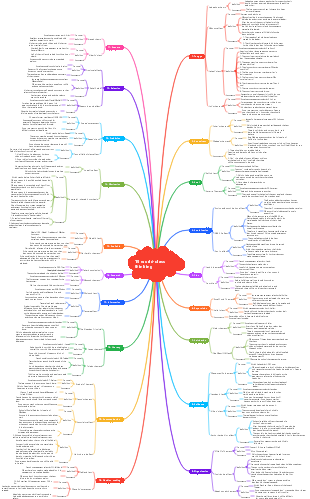
Learn to ask questions – a guide to critical thinking
13. Obstacles that interfere with critical thinking
Questions bring discomfort to people and affect relationships
System 1 quick thinking: hasty decisions without deep and comprehensive thinking
Stereotype: Formed, the assertion is made that because a person is a member of a certain group of days, they must have a definite set of characteristics.
Thinking Habits & Cognitive Bias
Halo effect: first recognize a positive or negative characteristic of a person, and then associate this characteristic with everything else about the person
Belief perseverance: The tendency to persist in one's beliefs. Belief fixation is an important cause of confirmation bias. Confirmation bias: the tendency to only regard as reliable evidence evidence that fast fish proves all of our beliefs. This results in weak critical thinking.
One cause of belief fixation is our overconfidence in our abilities. This makes us always think that what we see is the real world, and everyone else wears tinted glasses. Perhaps our greatest bias is the belief that we are the only ones who are unbiased and that those who disagree with us are biased. Resisting belief fixation requires recognizing that all judgments are temporary or context-dependent.
Availability heuristic: refers to the mental shortcuts we use repeatedly to form conclusions based only on the information most readily available at hand, rather than expending energy to obtain and process additional information. Closely connected to the recency effect, it refers to the information that is easiest to use when we think, which is often the latest information we see.
The answer is not what the question was asked: When someone asks a question, we immediately answer it without thinking. It is often easy to answer the question. Maybe we substitute our own problems for someone else’s.
Ego-centrism: The centrality we give to our own world relative to the energies and perspectives of others. This is the source of many thinking disorders. We are immersed in the world of existing knowledge and solutions and forget about the object we are facing. When communicating with those who have not systematically learned relevant knowledge, avoid the curse of knowledge: the inability to recall the situation when you did not possess the knowledge you currently have.
Wishful thinking: Preferring to believe concepts or facts that one wishes to be true rather than those that have been proven to be true. Fit facts to beliefs rather than beliefs to facts. Once you have this tendency, keep asking yourself: Do I believe this to be true because I want it to be true, or is there solid evidence that it is true? There is a kind of wishful thinking called miracle thinking: for some things, when science cannot provide a convincing explanation, people will rely on miracles to explain their ins and outs, or try to use miracles to control things that science cannot control.
Summary: Habits of a Critical Thinker
Be broad-minded and cover a wide range of topics, providing a basis for understanding assumptions from multiple perspectives.
Base decisions on reasons and evidence
Be receptive to other people's beliefs but question whether there is strong support for the belief
Force yourself to seek and respect multiple ways of thinking about the truth about your claims.
12. What reasonable conclusions can be drawn?
The same set of reasons may lead to different conclusions, and these conclusions may be valid due to different qualifications
Avoid dichotomous thinking (black and white) by limiting the conditions for conclusions
When is a conclusion accurate?
Where is the conclusion accurate?
Why or for what purpose the conclusion is accurate
11. What important information has been omitted?
Inevitability of missing information (incomplete argument)
Time and space constraints: There is not enough time to organize the argument, or there is not enough time and space to complete the argument.
Attention time limit: the argument must be completed as quickly as possible in a short period of time
The arguer’s knowledge is incomplete
to deliberately deceive
The arguer has different values, beliefs, and attitudes than you do
How to identify omitted information issues
Ask questions to help determine what additional information is needed
Ask questions to find that information
Pay attention to the potential long-term negative consequences of promoted activities - often these initiatives take place in a context where they are said to be great
10. Is the data deceptive?
There may be a deceptive willingness
Data source is unknown – find out the source of the data
Is the mean the mean, median or mode? ——Understand the numerical range and numerical distribution
measurement error
The conclusion supported by the data is not the same as the conclusion that needs to be proved - regardless of the data used by the author, compare the required statistical evidence with the actual data provided; draw direct conclusions from the data. If the conclusion drawn is inconsistent with the author's conclusion, there is probably something wrong with the argument.
Deception by omitting data – determine what information is missing, especially simultaneous comparisons of sizes and percentages
9. Is there any alternative reason?
Substitute: A plausible alternative explanation for why a particular outcome occurs.
Find alternative causes
Can you find other ways to interpret this evidence?
What other factors might trigger this behavior or lead to these findings?
If you look at it from another perspective, what factors might be considered important reasons?
If this interpretation is incorrect, what other interpretations could make sense?
When attributing, please note:
An event is most likely the product of a combination of factors
Different people may have completely different reasons for performing the same behavior
Oversimplification of causality fallacy: Relying on causal factors to explain an event that are insufficient to explain the entire event, or overemphasizing the role of one or more of these factors.
Be wary of “confirmation bias”: striving to find and rely only on evidence that is consistent with our beliefs.
Causal Confusion Fallacy: Confusing the cause and effect of an event with each other, or failing to recognize that two events may influence each other.
Ignoring the Common Cause Fallacy: Failure to recognize that two events are connected because of a third factor at play.
Post hoc fallacy: Just because event B occurs immediately after event A, assuming that event B was caused by event A.
Fundamental attribution error: We generally overestimate the importance of personal tendencies and underestimate the influence of environmental factors when explaining the behavior of others. (When we explain our behavior, we tend to overestimate the external environment)
Beware: Don't jump to the first explanation for an event you encounter. Look for alternative causes and try to compare the plausibility of different causes. Consider different perspectives on the same event. Reading different narrative versions of events helps you expand the scope of your insights.
When comparing causes, use the following criteria
logically reasonable
Consistency with other knowledge learned
Rate of success in explaining or predicting similar events
The degree to which a large number of accepted facts support an explanation compared to other explanations
Is a cause not supported by very few accepted beliefs?
Compared with other explanations, its effectiveness in explaining a large number and variety of facts
8. The validity of evidence: personal observation and research
personal observation
Personal observations are not necessarily reliable. What we “see” and say is what remains after being filtered through a set of values, biases, attitudes, past experiences, past training, and expectations. What we see and hear is what we want to see and hear, and what we remember is often those aspects that are most consistent with past experiences and backgrounds.
The most reliable ones are recent observations, the results of simultaneous observations by several people in the best environment.
Surveys and Questionnaires
Wording deviation: Different wording of questions will have a significant impact on the answers.
Contextual bias: Answers will be affected by how the questionnaire is presented and how the questionnaire is embedded in the survey (for example, a previous question will affect the answer to a later question). Questionnaire length also has an impact, with responses at the end of a longer questionnaire likely to be very different from responses at the front.
Characteristics (Advantages) of Scientific Method
Publicly proven data – repeatable
Control - Using special procedures to reduce errors in observations and interpretation of research results.
Precision in language: The scientific method strives for precision and consistency in the use of language
Shortcomings of the scientific method
Quality and artifacts vary widely between studies.
Research findings are often contradictory, and facts can change over time.
Scientific findings can only support (not prove) conclusions.
Scientific research is a human activity that is subject to distortion and is inevitably influenced by subjective factors.
Fallacy of forced certainty: Believing that a research conclusion should be discarded if it is not 100% certain.
Some clues for evaluating scientific research
What is the quality of the source of the report data?
Are there any other clues in the report that this study was well done?
How long ago was the study conducted, and is there any reason to believe that the findings might change over time?
Whether the findings have been replicated by other studies
Are the authors selective when choosing research?
Is there evidence of strong critical thinking?
Is there any reason for someone to deliberately misrepresent this study?
Are the conditions under study artificial and therefore distorted?
Based on the research sample, how broad is my generalization?
Are there any biases or distortions in surveys, questionnaires, ratings, and other measurements used by researchers?
Can sampling generalize about the whole?
It depends on the sample size, coverage and randomness of the event or population studied by the researcher.
The sample is large enough
Coverage is broad enough (sample diversity)
The more random the better
Limitations of turning to experts
If you are labeled as an expert, you will actually become more stubborn and less tolerant of things outside your own beliefs.
We tend to trust experts who share our beliefs
7. Effectiveness of evidence: personal experiences, typical cases, testimonies of parties and expert statements
Fact or opinion
There are strong and weak facts, and there are different possibilities. The high probability that everyone will experience the same thing is a measure of how certain and reliable a given fact is.
Rather than asking whether an assertion is true, ask whether they are reliable. The greater the quantity and quality of evidence supporting an assertion, the more trustworthy we can be in that assertion and the more we can call it a "fact."
Assertions we tend to endorse:
This assertion is an unquestionable attempt
This assertion follows from a watertight argument
When the assertion is well supported by reasons supported by evidence
Evidence: Clear information provided by the arguer to support or prove the reliability of a factual assertion. In a prescriptive argument, evidence is needed to prove the reasons for a factual assertion; in a descriptive argument, evidence is needed to directly prove a descriptive conclusion.
Main types of evidence:
personal experience
The fallacy of generalization: a person draws conclusions about the whole based on the experiences of only a very small portion of the group.
Typical cases
Make it easier for people to connect with the topic and have a stronger interest in it.
But it may not be considered strong evidence
Testimonials: quotes from specific parties, especially celebrities, to prove that extraordinary things did happen and are based on their personal experiences.
This type of evidence is usually of little use.
Be careful about the following related issues
Selectivity: Book covers always choose words of praise, but the real public group may not necessarily hold the same views.
Personal Benefit: Many testimonials are provided by people who stand to gain from them, such as book, movie, and TV recommendations.
Omitting information: Testimonials rarely provide enough information on which to base a judgment. For example, if a friend recommends the new movie "Once in a Century", you can ask what made him so impressed.
Human factor: People who speak with passion tend to appear credible. These people appear trustworthy, good-hearted, and honest, making it easier to gain trust.
authority or expert opinion
Some critical questions:
How much expertise, training, or special knowledge does the expert have?
Is the expert's position giving him particularly good access to relevant facts? (We should have more confidence in experts with first-hand information)
Is there any good reason to believe that experts are relatively less susceptible to distortions of all kinds? (Are the experts biased, biased, or self-interested?)
Does this expert have a reputation for making reliable assertions?
personal observation
Research results
analogy
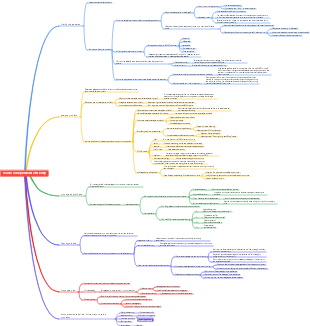
[Reading Instructions]: Blue fonts are chapter names; green fonts are executable content; purple fonts are fallacy types
1. The benefits and methods of asking correct questions
Sponge thinking: absorbing everything without judgment
Gold-digging thinking: actively choose what to absorb and what to ignore
mental checklist
Have I ever asked why others want me to believe something?
When you think there may be something wrong with what others say, do you record it?
Do you objectively evaluate what others have said?
Do you base your opinion on a certain topic on what others have said reasonably?
Weak Critical Thinking: Using critical thinking to defend your current beliefs
Strong Critical Thinking: Use critical thinking to evaluate all assertions and beliefs, especially your own beliefs
Values influence interactions between people: Try to understand the reasoning of people whose values differ from our own.
Key values held by critical thinkers:
independent decision-making
curiosity
Courteous and courteous
Genuinely respect rigorous argumentation
2. What are the thesis and conclusion?
Descriptive Thesis: The question of whether the description of the past, present, or future is accurate. -Yes or no, 1-0 question
Prescriptive issues: what should be done and what should not be done; what is right and what is wrong; what is good and what is bad. -Should it or not? Judgment
5 clues to the conclusion
1.Ask what the topic is
Title, first few paragraphs...
2. Look for indicator words
therefore consequently
indicate suggestions that
Therefore it can be seen that
thus
it follows that
The point i'm trying to make is
shows that
prove proves that
tell us indicates that
the truth of matter is
3. Look where possible
the beginning or end of an essay
4. Remember what the conclusion is not
The following cannot possibly appear as a conclusion
illustration
data
definition
background material
evidence
5. Check the communication context and author background
These may imply positions
3. What is the reason (argument)
Justification: Beliefs, metaphors, and other statements used to support or justify a conclusion.
Evidence: Another basis for supporting an assertion, consisting of a set of facts that help convince the listener or reader that your reason is sound.
Find reasons through prompt words:
as a result of
studies show studies show
because of the fact that
for the reason that
is supported by
because the evidence is
What is a good thesis and conclusion?
clear and interesting question
Focused, clearly stated conclusions
Conclusions that are supported by reasons and evidence that most people would find convincing
Conclusion that responds to the topic
Make it easy for readers to find conclusions
Organize the discussion into a [question]
When you receive a piece of writing or speaking that is not stated in a specific form, reframe it into a question. Think of the topic as one question and two questions, and be able to concentrate or use it in an easy-to-understand form to let readers or the public understand that you are troubled by a certain question and have nothing to do with other issues.
The question must inspire the audience to think and be interesting to everyone.
Make sure our conclusions are on topic, clearly stated, and easy to find.
The conclusion should not only answer the question, but also be supported by strong reasons and evidence.
How to make a statement clearly
1. Indicative words
2. Researched and focused topics
3. Clarify the reasons supporting the conclusion
4. The article has a reasonable structure and clear layout
To make our rotation clear to the listener or reader:
Put your argument in a prompt, or restate it in different words at the end.
Make sure each reason answers a why.
demonstrative word
4. Which words have unclear meanings
The more abstract a word or phrase is, the more likely it is to be interpreted multiple times.
Abstract: The further a word is from a specific, concrete instance, the more abstract it becomes.
Potentially ambiguous words can be found through reverse role-playing
If I were in the opposite position to the writer, would I define this term in the same way?
Check for ambiguity
obstacles to overcome
What I think I understand is the same as what the writer expressed.
You need to get into the habit of constantly asking "What do you mean when you say that?" rather than "I know you mean it."
Believe that words have only one obvious definition
If two or more explanations can be found, it means that the word is ambiguous.
Reduce the impact of ambiguous words or phrases on our communication (only focus on core words)
Find key words or phrases in the thesis and conclusion, and define and explain them
Find key words or phrases in the rationale and define and explain them
Identify abstract words in core arguments. The more abstract a word is, the more we need to clarify it
Ask: “How might those who disagree with me define these terms differently to support their own arguments?”
5. What are value assumptions and descriptive assumptions?
Hypothetical characteristics
Hidden or unspoken
arguer takes it for granted
Have a greater influence on the conclusion (necessary for the reasons leading to a particular conclusion)
may be deceptive
where to look for assumptions
between reason and conclusion
Reasons
Value assumption (prescriptive assumption): The unstated tendency to prefer one value over another in a given situation. This book uses value priority and value preference as synonyms.
The context and facts relevant to an argument influence people's loyalty to a value preference. (Values will change as the situation changes)
For example, one believes that free choice > collective well-being in most situations. But if he sees the enormous harm that free choice causes to collective well-being, he may instead support collective well-being.
Examples of typical values conflicts
Loyalty - Honesty: Should you tell your parents that your sister is addicted to drugs?
Competition-Collaboration: Support for grading systems as a mechanism for motivating learning
Media Freedom - National Security: Is it Wise to Hold Weekly Presidential Press Conferences?
ORDER - Free speech: Should those with racist ideas be imprisoned
Rationality-Impulse: Should you check the odds before placing a bet?
How to find values?
Use the arguer's background as a clue to finding value assumptions
Is it a company executive, a union leader, an official, a doctor?
What interests do people of this status most want to protect? -There is nothing inherently wrong with pursuing interests, but such pursuits often limit the value assumptions a person can embrace. (But not absolutely)
For example, the president of a tobacco company is unlikely to value empathy for vulnerable groups because he may lose his job if sympathy for the disadvantaged supersedes a preference for steady growth for the company.
Use possible consequences as clues to value assumptions
For example: "Nuclear power plants should not be built because contaminated nuclear waste will pollute the environment." The author of this sentence may be particularly concerned about environmental protection or public health. Another person who values efficiency might emphasize a different consequence—concern about the positive impact that nuclear power plants bring to the electricity supply.
Other ways to find values
Cross-dressing
Many disagreements arise from conflicts of values
A conflict between an individual's right to act in a particular way and the impact of that way on collective well-being.
The person making the argument should explain why the reader or audience should accept such value assumptions.
Descriptive assumptions: beliefs about how the world has been, is, and will be in the future; whereas prescriptive assumptions (value assumptions) refer to beliefs about what the world should be like.
Find clues to hypothesis
Think about the gap between conclusions and reasons
How did you come to this conclusion from this reason?
If the reasons are valid, what other conditions need to be established to draw this conclusion?
If all the reasons are valid, is it possible that this conclusion is still wrong?
Looking for unstated thoughts that support reasons
The author takes things for granted and does not explicitly state them. Are these assumptions really correct?
Put yourself in the shoes of the writer or speaker
Put yourself in the shoes of the naysayers
What really makes the difference is the ranking of values
We might have the same values, but ranked them differently
Identify value preferences
Consider different values that may lead to different conclusions about a problem. Which one best aligns with our beliefs?
Argument and context determine how we rank values
Identifying the values that underpin our conclusions gives us the opportunity to see how we see the world.
6. Are there any fallacies in the argument? #fallacy
Use questions to identify fallacies:
Ad hominem fallacy: Refers to making a personal attack on an individual without directly refuting the reasons provided.
Find fallacies in assumptions:
Narrative Fallacy: Wrongly assuming that "because we can tell a story that seems to explain a series of unfolding facts, we recognize all the connections between facts and phenomena."
Slippery Slope Fallacy: Assuming that taking a course will trigger a chain of uncontrollable adverse events, when in fact there are procedures in place to prevent such a chain of events.
Perfect Solution Fallacy: The erroneous belief that if a solution is tried and there are still unresolved problems, then the solution should not be adopted at all.
Other argument fallacies:
Appeal to the Public Fallacy: Attempting to justify an assertion by citing that many people hold that opinion. It is a mistake to assume that something that many people support is desirable.
Appeal to Questionable Authority Fallacy: To prove a conclusion by quoting an authority who has no special expertise on the topic.
Appeal to Emotion Fallacy: Using emotionally charged language to distract the reader or listener from relevant reasons and evidence. Emotions that are often exploited are: fear, hope, patriotism, pity, and empathy. [Commonly used in advertising, political debates and court debates]
Straw Man Fallacy: Misrepresenting the other party’s point of view to make it vulnerable to attack, and then attacking a point of view that does not actually exist.
False Dilemma Fallacy: Pretending that there are only two choices when there are more than two choices in reality.
Be wary of the following statements. There aren't necessarily just two options, maybe just warning signs:
Either...it's...
The only option is...
The two options are...
Because A doesn't work, only B can...
The hating fallacy: The mistaken belief that because you give a name to a specific event or behavior, you have a legitimate explanation for it. (Negative labeling)
Planning Fallacy: People or organizations tend to underestimate how long it will take them to complete a task, despite past experience showing that they have consistently underestimated how long it will take to complete something.
Be wary of distracting distractions: Arguers use arguments designed primarily to distract you from the most relevant reasons. For example, let's focus on the person, rather than whether there is a valid reason.
Whitewashing fallacy: Using vague, emotionally powerful words to describe character makes us tend to agree with something without examining the reasons for it. (opposite of the hating fallacy)
Red herring fallacy: Inserting an irrelevant topic to divert attention from the original argument in order to win the argument by shifting attention from the current argument to another argument. The sequence of fallacies is as follows: 1. Topic A is being discussed; 2. Topic B is introduced as if it is related to topic A, but in fact the two are unrelated; 3. Topic A is ignored.
Mom: Where were you and your boyfriend and why did you lie to me? Daughter: You always make things difficult for me.
Circular arguments that fool people
Circular Argument Fallacy: An argument in which one assumes that one's own conclusion is true. For example, rephrase the argument and use the conclusion as a reason.
When you find a fallacy, ask the other person if there is a better reason to support his conclusion. For example, if the red herring fallacy occurs, ask the person if you can return to the original topic.