MindMap Gallery Chapter 1 Outline of the Materiality and Development Laws of the World
The outline of Ma Zhe's first chapter summarizes and organizes the knowledge points, covering all core contents, which is very convenient for everyone to learn. Suitable for exam review and preview to improve learning efficiency. Hurry up and collect it to learn together!
Edited at 2024-10-28 11:10:46Diese Vorlage zeigt die Struktur und Funktion des Fortpflanzungssystems in Form einer Mind Map. Es führt die verschiedenen Komponenten der internen und externen Genitalien ein und sortiert das Wissen eindeutig aus, um Ihnen dabei zu helfen, mit den wichtigsten Wissenspunkten vertraut zu werden.
Dies ist eine Mind Map über die Interpretation und Zusammenfassung des Beziehungsfeldes E-Book, des Hauptinhalts: Überblick über die Essenzinterpretation und Übersicht über das Feld E-Book. "Relationship Field" bezieht sich auf das komplexe zwischenmenschliche Netzwerk, in dem ein Individuum andere durch spezifische Verhaltensweisen und Einstellungen beeinflusst.
Dies ist eine Mind Map über Buchhaltungsbücher und Buchhaltungsunterlagen.
Diese Vorlage zeigt die Struktur und Funktion des Fortpflanzungssystems in Form einer Mind Map. Es führt die verschiedenen Komponenten der internen und externen Genitalien ein und sortiert das Wissen eindeutig aus, um Ihnen dabei zu helfen, mit den wichtigsten Wissenspunkten vertraut zu werden.
Dies ist eine Mind Map über die Interpretation und Zusammenfassung des Beziehungsfeldes E-Book, des Hauptinhalts: Überblick über die Essenzinterpretation und Übersicht über das Feld E-Book. "Relationship Field" bezieht sich auf das komplexe zwischenmenschliche Netzwerk, in dem ein Individuum andere durch spezifische Verhaltensweisen und Einstellungen beeinflusst.
Dies ist eine Mind Map über Buchhaltungsbücher und Buchhaltungsunterlagen.
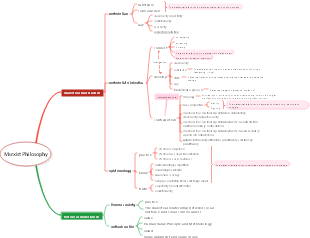
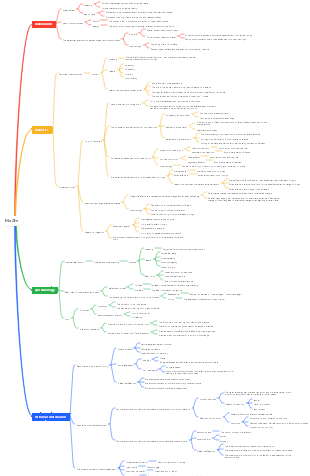
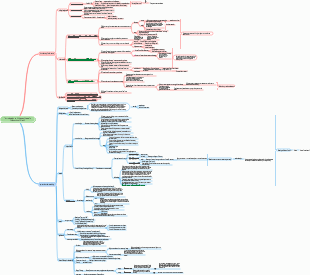
Chapter 1 The Materiality and Development Laws of the World
Section 1 World Diversity and Material Unity
1. Matter and its mode of existence
introduction
Two major phenomena
material phenomena
mental phenomena
human activities
Understand the world
Transform the world
basic philosophical questions
existence/thinking
matter/consciousness
primaryness
materialism
idealism
Identity
knowability
agnosticism
(1) The material category of philosophy
ancient simple materialism
modern metaphysical materialism
dialectical materialism
materialist monism
Reflectionism/knowability vs. agnosticism
materialism/dialectics
Materialist view of nature/Materialist view of history
(2) The way matter exists
sports Fundamental attributes
Movement is absolute
Stillness is relative
Basic form of existence: time/space
2. Dialectical relationship between matter and consciousness
(1) Material determines consciousness
concept of consciousness
three stages
low stimulus sensitivity
higher sensory psychology
human consciousness
decisive role
social practice, labor
(2) Consciousness has a counter-effect on matter
purposeful planning
creativity
Guide practice to transform the objective world
Regulate human behavior and physiological activities
(3) Dialectical unity of subjective initiative and objective laws
Respecting objectivity is a prerequisite
Only by giving full play to subjectivity can we correctly understand objectivity...
Premise 1: Start from reality
Premise 2. Fundamental approach: practice
Premise 3. Relying on certain material conditions and means
(4) Consciousness and artificial intelligence
Artificial intelligence cannot replace humans
1. Human consciousness is the unity of knowing and knowing
2. Sociality
3. Linguistic thinking
3. The material unity of the world
Nature is material
Human society is also material in nature
Human consciousness is unified with matter
Section 2. Universal connections, changes and development of things
1. Universality of connection and development
(1) Universal connection of things
Contact is objective
The connection is universal
Contact is diverse
Contact is conditional
(2) Changes and development of things
Universal connection, change and development
Essence: the emergence of new things and the demise of old things
New things are invincible
Adapt to changing environments and conditions
Deny the negative decay of old things and retain reasonable factors that adapt to new conditions
Fundamentally conform to the interests and requirements of the people
2. The law of unity of opposites is the fundamental law of the development of things essence, core
(1) The identity and struggle of contradictions and their role in the development of things
Opposition/struggle
contradictory opposites mutually exclusive, mutually separated nature, tendency
unity/identity
Contradictions and opposites are interdependent and are prerequisites for each other's existence.
The opposites of contradictions penetrate each other and transform into each other under certain conditions.
effect
Identity
Identity is the prerequisite
Absorb favorable factors from each other and achieve development through interaction
Specify the possibility of transformation and development trend of things
Fighting
Promote change and create conditions for qualitative change
The decisive force in the transition from one contradictory unity to another
Special form: harmony
(2) The universality and particularity of contradictions and their interrelationships
Main contradiction, dominant position/secondary contradiction/subordinate position
Two point theory/key point theory
universality/particularity
3. The law of quantitative change and qualitative change and the law of negation of negation
(1) The law of quantitative change and qualitative change
prescriptiveness of things
quality
quantity
Spend
dialectical relationship
Quantitative changes are necessary preparations
Qualitative change is the inevitable result
The two penetrate each other interdependence, interpenetration gradual, leap
methodology
accumulation
seize the opportunity
(2) The law of negation of negation
Positive factors/negative factors
Law connotation
three stages
Affirmation-Negation-Negation of Negation
Development trend
To advance in waves or spiral, or even to pause or regress
methodology
Refuse to affirm/deny everything, see both twists and turns and light
4. Basic links of contact and development
(1) Content and form
(2) Essence and phenomenon
(3) Causes and results
(4) Inevitability and chance
(5) Reality and possibility
Section 3: Materialist dialectics is the fundamental method to understand and transform the world
1. The essential characteristics and cognitive functions of materialist dialectics
(1) Materialist dialectics is critical and revolutionary in nature
Emancipate the mind, seek truth from facts, advance with the times, reform and open up, and self-revolution
(2) Materialist dialectics is the unity of objective dialectics and subjective dialectics
objective dialectics
subjective dialectics
(3) Materialist dialectics is a scientific method of understanding
Universal law: universal connection, eternal development
law of unity of opposites
subject/object
Emotional/rational
concrete/abstract
individual/general
The law of quantitative change and qualitative change
Understand and grasp the stages of change and development of things and the transformation of different development states
law of negation
Self-denial in the process of discovery, cyclically moving towards higher forms of existence
Methodology: Contradiction Analysis core, fundamental method
Analyze the particularity of contradictions
specific situation, specific analysis
Strengthen problem awareness
2. Dialectical thinking and modern scientific thinking
(1) Dialectical thinking method
induction and deduction
Analysis and synthesis
abstract and concrete
logic and history
(2) Modern scientific thinking methods
Control method
information method
Systematic approach
model approach
idealized approach
3. Learn materialist dialectics and continuously enhance thinking ability
(1) Dialectical thinking ability
objectively rather than subjectively
in connection rather than in isolation
developing rather than static
comprehensively rather than one-sidedly
Systematically rather than piecemeal
(2) Historical thinking ability
Use a historical perspective to understand the laws of development, grasp the direction of progress, and guide practical work capabilities
(3) Systematic thinking ability
from individual parts to the whole
Two big situations
The strategic overall situation of the great rejuvenation of the Chinese nation
The world is undergoing major changes unseen in a century
(4) Strategic thinking ability
integrity
Globality
long term
Overall development trends and directions
(5) Bottom-line thinking ability
Spend
critical point
(6) Innovative thinking ability