MindMap Gallery Education Overview
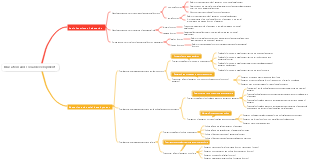
Understand the meaning, attributes and development process of education, master the components and origins of education, and be able to compare origin theories and scholars who proposed them. Education refers to all social activities that purposefully enhance people's knowledge and skills, develop people's intelligence and physical strength, and influence people's ideas and concepts.
Edited at 2024-10-27 16:05:21Diese Vorlage zeigt die Struktur und Funktion des Fortpflanzungssystems in Form einer Mind Map. Es führt die verschiedenen Komponenten der internen und externen Genitalien ein und sortiert das Wissen eindeutig aus, um Ihnen dabei zu helfen, mit den wichtigsten Wissenspunkten vertraut zu werden.
Dies ist eine Mind Map über die Interpretation und Zusammenfassung des Beziehungsfeldes E-Book, des Hauptinhalts: Überblick über die Essenzinterpretation und Übersicht über das Feld E-Book. "Relationship Field" bezieht sich auf das komplexe zwischenmenschliche Netzwerk, in dem ein Individuum andere durch spezifische Verhaltensweisen und Einstellungen beeinflusst.
Dies ist eine Mind Map über Buchhaltungsbücher und Buchhaltungsunterlagen.
Diese Vorlage zeigt die Struktur und Funktion des Fortpflanzungssystems in Form einer Mind Map. Es führt die verschiedenen Komponenten der internen und externen Genitalien ein und sortiert das Wissen eindeutig aus, um Ihnen dabei zu helfen, mit den wichtigsten Wissenspunkten vertraut zu werden.
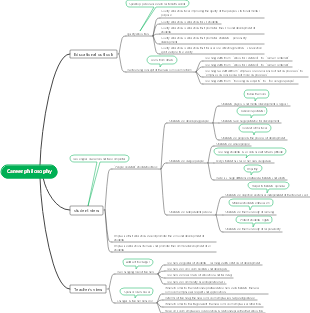
Dies ist eine Mind Map über die Interpretation und Zusammenfassung des Beziehungsfeldes E-Book, des Hauptinhalts: Überblick über die Essenzinterpretation und Übersicht über das Feld E-Book. "Relationship Field" bezieht sich auf das komplexe zwischenmenschliche Netzwerk, in dem ein Individuum andere durch spezifische Verhaltensweisen und Einstellungen beeinflusst.
Dies ist eine Mind Map über Buchhaltungsbücher und Buchhaltungsunterlagen.
Education Overview
meaning of education
The origin of the word "education"
"Mencius: Give Your Heart to Your Heart"
Obtaining the world's talents and educating them are the three joys
education definition
General sense
All social activities that purposefully enhance people's knowledge and skills, develop people's intelligence and physical strength, and influence people's ideas and concepts.
Including social education, family education, school education
Education in a broad sense is an educational activity that has existed in human society since the beginning of time.
narrow sense
refers to school education
It means that educators follow certain social requirements and the laws of physical and mental development of educated people, Purposefully, plannedly and systematically exert influence on the minds and bodies of those being educated, Activities that move them in the desired direction
elements of education
educator
The main body of teaching and playing a leading role
guide
educated
The main body of learning and mobilizing enthusiasm
subjective initiative
educational impact
intermediary, bridge
attributes of education
essential attributes of education
Education is a social activity that cultivates people with a purpose
This is the fundamental characteristic that distinguishes education from other phenomena. It is the essential attribute of education, that is, the qualitative stipulation of education
social attributes of education
Society will always stand
eternity
As long as human society exists, education will exist
historic
No matter how different societies or different historical stages of a unified society, The nature, purpose, content, etc. of education vary
relative independence
Education has its own qualitative regulations
Education has historical inheritance
Same as ancient and modern
Education is unbalanced with the development of productive forces and the development of political and economic systems
class nature
The origin of education
The origin of mythology
the oldest view
Educational Creation (Religion)
Biogenesis
Innate interest
Education originates from the biological survival instinct
Litourno (France), Percy Neng (English)
Psychological Origins
Psychological imitation of Menglu
Education originates from children’s unconscious imitation of adults
Monroe (USA)
labor origin theory
Michael loves working
Education originated from the productive labor unique to human society
Kailov (Soviet Union), Midinsky (Soviet Union)
Marxist education school
development of education
education in primitive society
Features
Education is integrated with productive labor and social life
The classless and equal nature of education
The educational content is simple and the educational means and methods are single.
ancient school education
slave society
China
Xia, Shang, Zhou
In the Western Zhou Dynasty, Chinese studies and rural studies emerged
School name: Xiang, Xu, school
Six Arts (ritual, music, archery, and number of books)
Cultivate talents to serve the slave society; integrate politics and education, and study in the government
spring and autumn
The rise of private education
Free running of schools, free study, free teaching, free competition
foreign
ancient india
Classical scriptures based on the Vedas
Religious education (Brahmanism, Buddhism)
ancient egypt
School of Scribes
Words, writing, and governance abilities
Take monks as teachers and officials as teachers
ancient greece
Sparta
Martial
Military sports: boxing, fencing, wrestling, fighting, walking
Cultivate soldiers and samurai (finally ruling class soldiers)
athens
Naofumi
Politics, philosophy, literature, art, gymnastics, etc.
Cultivate descendants of slave owners (citizens who develop harmoniously in body and mind)
feudal society
China
Warring States Period
Private education flourishes
The prevalence of prominent schools, mainly Confucianism and Mohism
Han Dynasty
Official school, private school
"Depose all schools of thought and respect only Confucianism"
inspection system, levy system
Sui and Tang Dynasties
Teaching by subject (classics, history, law, calligraphy, mathematics)
imperial examination system
Song Dynasty
Cheng Zhu Neo-Confucianism
imperial examination system
Ming Dynasty
school
Imperial examination system (eight-part essay became a fixed format for the examination)
Late Qing Dynasty
school
Chinese and Western medicine
Abolition of the imperial examination (1905)
The west
middle Ages
church school
monastic school, archbishop's school
Seven Arts
Three subjects: Grammar, Rhetoric, Dialectics
Four Studies: Arithmetic, Geometry, Astronomy, Music
Cultivate monks and rulers
parochial school
Simple reading, writing and calculation
Provide religious education to ordinary poor children
knight school
Seven skills of knight
Horse riding, swimming, spear throwing, fencing, hunting, playing chess, reciting poetry
Family education loyal to feudal lords
Characteristics of education in ancient society
Schools emerged and education became a specialized function of society
Education is separated from productive labor and is unproductive
Education is class-based and hierarchical in feudal society
Ancient education was characterized by orthodoxy, authoritarianism, rigidity and symbolism
The initial development of ancient school education formed a complex structural system
modern social education
Education in modern society (16th-19th centuries)
Public Eleven
Features
The state has strengthened its emphasis on and intervention in education, and public education has risen
Universal implementation of compulsory primary education
secularization of education
Pay attention to education legislation and teach in accordance with the law
New characteristics of education after the 20th century
Everyone shows up
lifelong education
The life of a modern person should be a life of lifelong learning and lifelong development
democratization of education
Education for all means that education must be oriented to all people, that is, everyone has the right to receive education and must receive a certain level of education.
democratization of education
The democratization of education mainly refers to the denial of the hierarchical, privileged and authoritarian nature of education.
Diversity in education
The pluralism of education mainly negates the singleness and unity of education. It is a diversification of training objectives, school running forms, management models, teaching content, evaluation standards, etc.
modernization of education
The modernization of educational technology refers to the application of modern science and technology in education