MindMap Gallery Correlation between inflammatory markers and intensive care unit mortality in critically ill patients with coronary heart disease
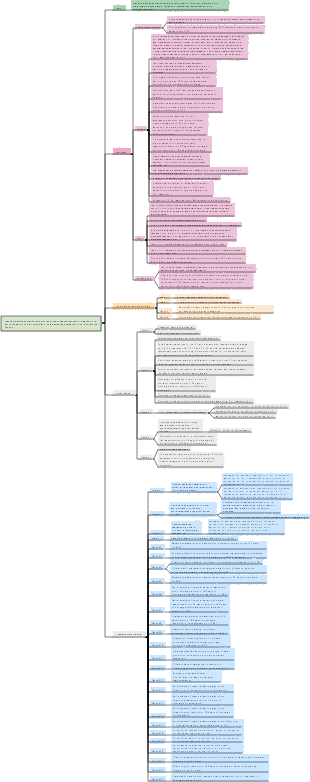
This is a mind map on the correlation between inflammation indicators and mortality in intensive care units of critically ill patients with coronary heart disease. The main contents include: the table is not as good as the picture, the words are not as good as the table, abstract, and title.
Edited at 2024-10-14 09:51:57Ceci est le chapitre 5 du livre de l'enseignant "This Is Auth to Read", qui parle principalement de ces aspects: ① L'importance de la capacité d'apprentissage ②Comment ajouter un contexte à l'information ③Comment distinguer les connaissances et les informations Je ne vous précipite pas pour remettre en question et défier ⑤Comment utiliser des notes collantes pour mettre à niveau votre capacité d'apprentissage ⑥Pour pourquoi chasser les "biens secs" un pseudo-apprentissage?
Afin d'aider tout le monde à utiliser Deepseek plus efficacement, une collection de Mind Map Deepseek Guide a été spécialement compilée! Cette carte mentale résume le contenu principal: liens liés à Yitu, analyse de profil DS, comparaison des routes technologiques Deepseek et ChatGpt, Guide de déploiement du modèle Deepseek et Qwen, comment gagner plus d'argent avec Deepseek, comment jouer Deepseek, Deepseek Scientific Research Applications Mows Inside Attendez, vous permettant de saisir rapidement l'essence de l'interaction AI. Qu'il s'agisse de la création de contenu, de la planification du plan, de la génération de code ou de l'amélioration de l'apprentissage, Deepseek peut vous aider à atteindre deux fois le résultat avec la moitié de l'effort!
Il s'agit d'une carte mentale sur les 30 instructions de niveau d'alimentation de Deepseek.
Ceci est le chapitre 5 du livre de l'enseignant "This Is Auth to Read", qui parle principalement de ces aspects: ① L'importance de la capacité d'apprentissage ②Comment ajouter un contexte à l'information ③Comment distinguer les connaissances et les informations Je ne vous précipite pas pour remettre en question et défier ⑤Comment utiliser des notes collantes pour mettre à niveau votre capacité d'apprentissage ⑥Pour pourquoi chasser les "biens secs" un pseudo-apprentissage?
Afin d'aider tout le monde à utiliser Deepseek plus efficacement, une collection de Mind Map Deepseek Guide a été spécialement compilée! Cette carte mentale résume le contenu principal: liens liés à Yitu, analyse de profil DS, comparaison des routes technologiques Deepseek et ChatGpt, Guide de déploiement du modèle Deepseek et Qwen, comment gagner plus d'argent avec Deepseek, comment jouer Deepseek, Deepseek Scientific Research Applications Mows Inside Attendez, vous permettant de saisir rapidement l'essence de l'interaction AI. Qu'il s'agisse de la création de contenu, de la planification du plan, de la génération de code ou de l'amélioration de l'apprentissage, Deepseek peut vous aider à atteindre deux fois le résultat avec la moitié de l'effort!
Il s'agit d'une carte mentale sur les 30 instructions de niveau d'alimentation de Deepseek.
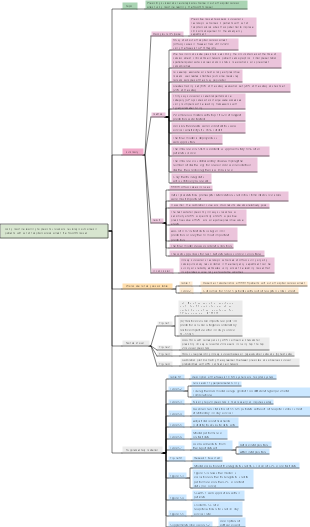
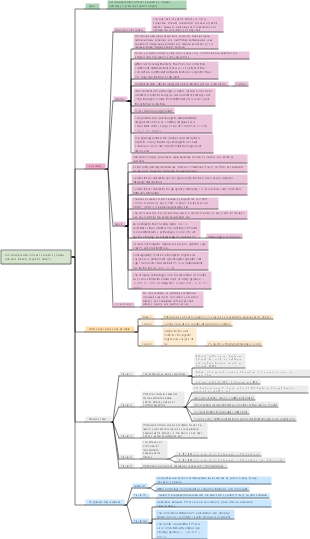
Correlation between inflammatory markers and intensive care unit mortality in critically ill patients with coronary heart disease
topic
Association of inflammatory indicators with intensive care unit mortality in critically ill patients with coronary heart disease
summary
Background/Purpose
Currently, intensive care unit (ICU) patients have a higher probability of having coronary artery disease, and the mortality rate of such patients in the ICU is receiving increasing attention.
To verify whether composite inflammation indicators are significantly associated with ICU mortality in ICU patients with coronary heart disease and to develop a simple personalized prediction model
SII
systemic inflammation index
Platelet × neutral granulocyte/lymphocytes
SIRI
Systemic inflammatory response indicators
Neutrophils × Monocytes/Lymphocytes
NLR
Neutrophil-lymphocyte ratio
Neutrophils/Lymphocytes
PLR
Platelet to Lymphocyte Ratio
platelets/lymphocytes
neutrophil to lymphocyte platelet ratio (NLPR)
Neutrophils/(Lymphocytes×Platelets)
aggregate index of systemic inflammation (AISI)
systemic inflammation clustering index
Neutrophils × Monocytes × Platelets/Lymphocytes
RDW
red blood cell distribution width
method
7115 patients with multi-parameter intelligent monitoring in the intensive care database IV were randomly assigned to the training cohort (n = 5692) and the internal validation cohort (n = 1423), and 701 patients in the eICU collaborative research database served as the external validation cohort
Determining the association between various inflammatory indicators and ICU mortality through multivariate logistic regression analysis and Cox proportional hazards model
A novel prediction model for mortality in ICU coronary artery disease patients was developed in the training cohort and performance evaluated in internal and external validation cohorts
To further assess the independent association between indicators and the primary endpoint, logistic regression models and Cox proportional hazards models were used, with different models used to adjust for potential confounders.
After grouping the indicators into quartiles, using G1 as the reference group, calculate the adjusted odds ratio (OR) or hazard ratio (HR) of the primary endpoint of other groups relative to the reference group.
Combining these 7 inflammation indicators with the widely used Sofa, a new ICU coronary heart disease patient's death risk prediction model was built
First, these inflammatory indicators were divided into elevated value group and non-elevated value group according to their respective 3rd quartile.
Divide the entire queue into a training queue and an internal validation queue at a ratio of 8:2
In the training cohort, we use univariate logistic regression analysis and stepwise forward multivariate logistic regression analysis to select variables for building a new prediction model, and calculate correlation coefficients and variance inflation factors (VIF) to detect the coherence of variables in the model. variance, and use the Hosmer-Lemeshow test to evaluate the fit of the logistic regression model
result
Logistic regression analysis and Cox proportional hazards model confirmed that various inflammatory indicators are significantly associated with ICU mortality, 30-day ICU mortality, and 90-day ICU mortality in ICU coronary heart disease patients.
The areas under the curve of the new prediction model for ICU mortality in ICU patients with coronary heart disease were 0.885 (internal validation cohort) and 0.726 (external validation cohort)
The calibration curve shows that the model's predicted probabilities match the actual observed probabilities
Decision curve analysis shows that new predictive model has high net clinical benefit
in conclusion
Among ICU patients with coronary heart disease, various inflammatory indicators are independent risk factors for ICU mortality.
A new ICU mortality risk prediction model for coronary heart disease patients was constructed, which has great potential to guide clinical decision-making.
Words are not as good as table
Table 1
Baseline characteristics of ICU patients with coronary artery disease
Positive event baseline
Table 2
Correlation between various inflammatory indicators and ICU mortality in ICU patients with coronary heart disease
OR
Model 1: Unadjusted
Model 2: Adjusting for age, gender, and race
Model 3: Adjusted for age, male gender, race, heart rate, respiratory rate, peripheral blood oxygen saturation, sequential organ failure score, acute exacerbation of chronic obstructive pulmonary disease, congestive heart failure, malignancy, dyslipidemia, acute respiratory failure, Acute renal failure, serum potassium, anion gap, blood urea nitrogen, blood glucose, serum creatinine, Hematocrit, hemoglobin, mean corpuscular volume, hematocrit, dialysis, vasopressors, invasive mechanical ventilation, coronary artery bypass grafting, angiotensin-converting enzyme inhibitors or angiotensin receptor antagonists, anti- Platelets, statins, non-vitamin K antagonist oral anticoagulants, vitamin K antagonists
Table 3
Correlation between various inflammatory indicators and 30-day ICU mortality in ICU patients with coronary heart disease
HR
Table 4
Correlation between various inflammatory indicators and 90-day ICU mortality in ICU patients with coronary heart disease
HR
Table 5
Univariate and multivariate analysis of the relationship between variables and ICU mortality
logistic regression
These inflammatory indicators were divided into elevated value groups and non-elevated value groups according to their respective 3rd quartiles.
7 X's converted into two categories
+SOFA score
Not as shown
Figure 1
Patient screening flow chart
Figure 2
Restricted cubic splines between inflammation indicators (SII, SIRI, NLR, PLR, NLPR, AISI, RDW) and ICU mortality (A), ICU 30-day mortality (B), and ICU 90-day mortality (C) function
Use RCS to explore non-linear relationships between these indicators and study outcomes when used as continuous variables
Figure 3
KM survival analysis of cumulative all-cause mortality in patients with coronary heart disease admitted to ICU within 90 days
The KM survival analysis method was used to analyze the cumulative rate of all-cause death in CHD patients within 90 days of admission to the ICU, and the cumulative distribution of deaths among the four score subgroups of patients with each index at admission was compared.
Figure 4
Correlation coefficient and variance inflation factor of each variable in the model
VIF bar chart
Figure 5
Nomogram of new model
Figure 6
ROC, calibration curve and DCA of internal validation cohort (A) and external validation cohort (B)
SOFA: Sequential Organ Failure Assessment
DCA was compared with SOFA, and the Integrated Discriminant Promotion (IDI) was calculated to verify the variability of the prediction performance of the new model between the new model and SOFA.
Figure 7
A user interface for a novel model-based online prediction tool