MindMap Gallery Machine learning-derived online prediction model for prognosis of patients with acute cholangitis due to cholelithiasis
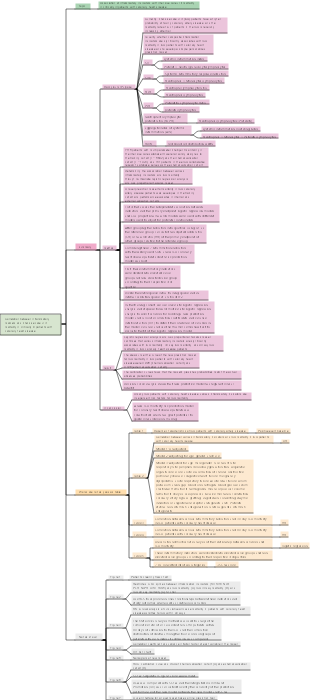
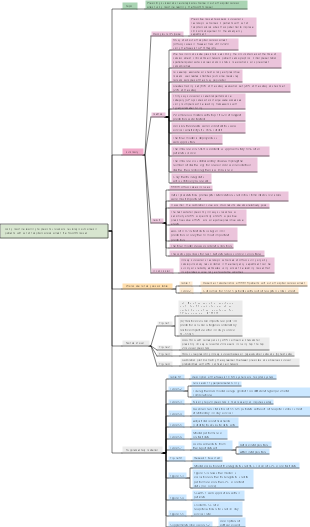
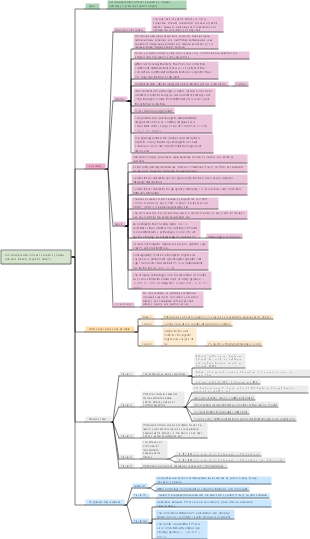
This is an article about a machine learning-derived online prediction model for the prognosis of patients with acute cholangitis caused by cholelithiasis: In the mind map, the main content includes: supplementary materials, tables are not as good as pictures, words are not as good as tables, abstract, title.
Edited at 2024-10-03 23:39:30In order to help everyone use DeepSeek more efficiently, a collection of DeepSeek guide mind map was specially compiled! This mind map summarizes the main contents: Yitu related links, DS profile analysis, comparison of DeepSeek and ChatGPT technology routes, DeepSeek and Qwen model deployment guide, how to make more money with DeepSeek, how to play DeepSeek, DeepSeek scientific research Application, how to import text from DeepSeek into MindMaster, the official recommendation of DeepSeek Wait, allowing you to quickly grasp the essence of AI interaction. Whether it is content creation, plan planning, code generation, or learning improvement, DeepSeek can help you achieve twice the result with half the effort!
This is a mind map about DeepSeek's 30 feeding-level instructions. The main contents include: professional field enhancement instructions, interaction enhancement instructions, content production instructions, decision support instructions, information processing instructions, and basic instructions.
This is a mind map about a commercial solution for task speech recognition. The main content includes: text file content format:, providing text files according to the same file name as the voice file.
In order to help everyone use DeepSeek more efficiently, a collection of DeepSeek guide mind map was specially compiled! This mind map summarizes the main contents: Yitu related links, DS profile analysis, comparison of DeepSeek and ChatGPT technology routes, DeepSeek and Qwen model deployment guide, how to make more money with DeepSeek, how to play DeepSeek, DeepSeek scientific research Application, how to import text from DeepSeek into MindMaster, the official recommendation of DeepSeek Wait, allowing you to quickly grasp the essence of AI interaction. Whether it is content creation, plan planning, code generation, or learning improvement, DeepSeek can help you achieve twice the result with half the effort!
This is a mind map about DeepSeek's 30 feeding-level instructions. The main contents include: professional field enhancement instructions, interaction enhancement instructions, content production instructions, decision support instructions, information processing instructions, and basic instructions.
This is a mind map about a commercial solution for task speech recognition. The main content includes: text file content format:, providing text files according to the same file name as the voice file.
Machine learning-derived online prediction model for patient prognosis in patients with acute cholangitis due to cholelithiasis: development and validation in two retrospective cohorts
topic
Machine-learning-derived online prediction models of outcomes for patients with cholelithiasis-induced acute cholangitis: development and validation in two retrospective cohorts
summary
Background/Purpose
Acute cholangitis due to cholelithiasis (CIAC) is an acute inflammatory disease with poor prognosis
This study aims to create machine learning (ML) models to predict outcomes in patients with CIAC
method
In this retrospective cohort and ML study, according to the International Classification of Diseases (ICD ) revised to the 9th edition, meeting the diagnosis of "cholangitis" and "gallbladder or bile duct stones" at the same time, or meeting the diagnosis of "bile duct stones with acute cholangitis with or without obstruction" during a single hospitalization according to the 10th edition of the ICD Patients were included in the Critical Care Medicine Information Mart database, which records patient admissions to Beth Israel Deaconess Medical Center in Massachusetts, USA, between June 1, 2001, and November 16, 2022.
The study focused on three primary endpoints, including in-hospital mortality, readmission within 30 days of discharge, and mortality within 180 days of discharge
To mitigate bias arising from missing data, factors exhibiting more than 20% missing values were excluded during the data collection stage
Multiple imputation (MI) techniques were employed to account for missing values in the remaining variables for analysis.
Variables independently associated with outcome were identified by univariate logistic regression in a training subset of patients with CIAC
Patients who were admitted for non-emergency admission, who did not undergo biliary drainage within 24 hours after admission, who were younger than 18 years old, and whose information loss exceeded 20% were excluded.
Nine machine learning methods were used to predict patients' in-hospital mortality, readmission rate within 30 days after discharge, and mortality within 180 days after discharge.
Select patients who were treated at Zhongda Hospital Affiliated to Southeast University from January 1, 2019 to July 30, 2023 as the external validation set
The area under the receiver operating characteristic curve is the main indicator for model performance evaluation.
A total of 1156 patients were included to construct the model
Analyzes were stratified for all patients, patients admitted to the intensive care unit (ICU), and patients who underwent biliary drainage during ICU treatment
Screen out 13~16 features from 186 variables for model training
result
The XGBoost method showed the best prediction performance, with training set AUROCs of 0.996 (in-hospital mortality rate), 0.886 (readmission rate within 30 days after discharge) and 0.988 (mortality rate within 180 days after discharge)
0.998, 0.933 and 0.988 (patients admitted to ICU)
0.987, 0.908 and 0.982 (patients undergoing biliary drainage during ICU treatment)
In the internal validation set, the AUROC for all-patient in-hospital mortality reached 0.967, the AUROC for readmission rate within 30 days after discharge reached 0.589, and the AUROC for mortality within 180 days after discharge reached 0.857
The AUROC of patients admitted to ICU reached 0.963, 0.668, 0.864
The AUROC of patients who underwent biliary drainage during ICU treatment reached 0.961, 0.669, and 0.828
The AUROC values of the external validation set composed of 61 patients were 0.741, 0.812, and 0.848 respectively.
in conclusion
The XGBoost model is expected to become a tool for predicting the prognosis of CIAC patients and has good clinical applicability.
A series of user-friendly online prediction platforms were built based on the XGBoost model, which can track multiple short-term or long-term clinical outcomes of CIAC patients, which requires further validation with multi-center cohorts and larger sample sizes.
Words are not as good as table
Table 1
Includes baseline characteristics of all patients
Table 2
Different results correspond to different patient categories
Table 3
Best machine learning algorithms for predicting various outcomes corresponding to patient categories
Table 4
Link to web tool predicting different outcomes for patients with CIAC
Not as shown
Figure 1
Overall flow chart of the study (a)
Algorithm diagram of the study (b)
Figure 2
Feature selection based on SelectFromModel algorithm
For all patients admitted to the ICU and patients who received biliary drainage during ICU treatment, 16, 13, 15 and 15, 14, and 16 variables were selected respectively when constructing the prediction model for in-hospital mortality and readmission within 30 days after admission.
After comprehensive analysis of all patients, it was found that 13 key variables have the greatest impact on the occurrence of in-hospital death.
The horizontal axis represents the name of each variable, and the vertical axis represents the importance of each variable.
Outcomes for all patients (a-c): in-hospital mortality, readmission within 30 days of discharge, and mortality within 180 days of discharge
Outcomes of patients admitted to ICU (d–f)
Outcomes of patients who underwent biliary drainage during ICU treatment (g-i)
Figure 3
ROC curves and PR curves of nine models
Outcomes for all patients: in-hospital mortality (a-c)
Readmission within 30 days of discharge (d-f)
Mortality within 180 days of discharge (g-i)
Figure 4
Decision curve analysis of XGBoost and the model with the most controversial prediction effect except XGBoost
AdaBoost, adaptive enhancement
Outcomes for all patients: in-hospital mortality (a), readmission within 30 days of discharge (b), mortality within 180 days of discharge (c)
Figure 5
Web tool usage examples
In-hospital mortality prediction by entering 15 clinical parameters from individual patients undergoing biliary drainage during ICU care indicating poor prognosis
Supplementary material
Figure S1
Receiver operating characteristic curves (a-f) and precision-recall curves (g-l) of the nine models
Outcomes for patients admitted to ICU: in-hospital mortality (a, g), readmission within 30 days of discharge (b, h), and mortality within 180 days of discharge (c, i)
Outcomes of patients who received biliary drainage during ICU care: in-hospital mortality (d,j), readmission within 30 days after discharge (e,k), mortality within 180 days after discharge (f,l)
Figure S2
Decision curve analysis of XGBoost and the model with the most controversial prediction effect except XGBoost
Outcomes (a-c) for patients admitted to ICU: in-hospital mortality, readmission within 30 days of discharge, and mortality within 180 days of discharge
Outcomes of patients who underwent biliary drainage during ICU treatment (d-f)
Figure S3
Receiver operating characteristic curve of XGBoost in the external validation set
Outcomes of patients who received biliary drainage during ICU treatment at Zhongda Hospital: in-hospital mortality (a), readmission within 30 days after discharge (b), mortality within 180 days after discharge (c)
Table S1
Baseline characteristics of patients admitted to ICU (n=652)
Table S2
Baseline characteristics of patients who underwent surgery during ICU care (n=614)
Table S3
Summary table of conversion relationship between variable data units collected by Zhongda Hospital and existing data units in MIMIC database
Table S4
Analysis of factors leading to different outcomes across all patients (n=1156)
Differences in characteristics between patients with different prognostic outcomes are detailed in Supplementary Table S4
Table S5
Baseline characteristics of patients readmitted within 30 days of discharge (n=262)
Table S6
Factor analysis of whether patients readmitted within 30 days died within 180 days of discharge (univariate logistic regression, n=262)
Table S7
Factor analysis of whether patients who were readmitted within 30 days died within 180 days of discharge (multivariate logistic regression analysis, n=262)
Table S8
Analyze whether patients readmitted within 30 days die within 180 days of discharge (excluding in-hospital deaths, n=1104)
Table S9
Analysis of factors leading to different outcomes in patients admitted to ICU (n=652)
Table S10
Analysis of influencing factors on different outcomes of patients undergoing surgery during ICU treatment (n=614)
Table S11
Variables classified according to the type of data distribution corresponding to various patient categories
Table S12
Different patient categories correspond to influencing factors of different outcomes (P<0.1)
Table S13
Summary of variables finally incorporated into each model after feature selection
Table S14
Performance of machine learning algorithms (predicting in-hospital mortality for all patients)
Table S15
Performance of machine learning algorithms (predicting readmission within 1 month of discharge for all patients)
Table S16
Performance of machine learning algorithms (predicting mortality within 180 days of discharge for all patients)
Table S17
Performance of machine learning algorithms (predicting in-hospital mortality in patients admitted to ICU)
Table S18
(Predicting readmission within 1 month of discharge for patients admitted to ICU)
Table S19
(Predicting mortality within 180 days of discharge for patients admitted to ICU)
Table S20
Performance of machine learning algorithms (predicting in-hospital mortality in patients undergoing surgery during ICU care)
Table S21
(Predicting readmission within 1 month of discharge for patients who underwent surgery during ICU care)
Table S22
(Predicting mortality within 180 days of discharge in patients undergoing surgery during ICU care)
Table S23
Variables of patients who received biliary drainage during ICU treatment in Zhongda Hospital (n=61)