 Wondershare EdrawMind
MindMap Gallery Basic psychological knowledge
- 21
Basic psychological knowledge
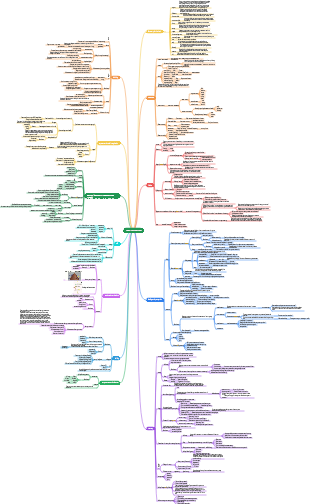
Basic psychology is the basic discipline of psychology, which studies the basic principles of psychology and the general laws of psychological phenomena. It involves basic psychological phenomena and their biological basis such as psychological essence and structure, perception and attention, learning and memory, thinking and speech, emotions and motivations, personality tendencies and abilities, personality, temperament, etc. Basic psychology also includes the study of psychological methods, such as experimental design, psychological measurement, and various specific research methods.
Edited at 2024-10-08 23:56:41
- Knowledge Map of Nezha 2 Analysis of Characters and Symbolic Elements
Dive into the world of the Chinese animated film Nezha 2: The Devil's Birth! This knowledge map, created with EdrawMind, provides a detailed analysis of main characters, symbolic elements, and their cultural significance, offering deep insights into the film's storytelling and design.
- Details of 《Nezha 2》
This is a mindmap about Nezha 2, exploring its political metaphors and cultural references. The diagram highlights the symbolism behind the Dragon Clan’s suppression, drawing parallels to modern geopolitical conflicts and propaganda manipulation. It also details Chinese historical and cultural elements embedded in the film, such as the Jade Void Palace, Ao Bing’s armor, Taiyi Zhenren’s magic weapon, and Nezha’s hairstyle.
- 《Nezha 2》Main character
This is a mindmap about the main characters of Nezha 2, detailing their backgrounds, conflicts, and symbolic meanings. It explores the personal struggles and transformations of Nezha, Ao Bing, Shen Gongbao, and Li Jing as they navigate themes of rebellion, duty, ambition, and sacrifice.
Basic psychological knowledge
- Knowledge Map of Nezha 2 Analysis of Characters and Symbolic Elements
Dive into the world of the Chinese animated film Nezha 2: The Devil's Birth! This knowledge map, created with EdrawMind, provides a detailed analysis of main characters, symbolic elements, and their cultural significance, offering deep insights into the film's storytelling and design.
- Details of 《Nezha 2》
This is a mindmap about Nezha 2, exploring its political metaphors and cultural references. The diagram highlights the symbolism behind the Dragon Clan’s suppression, drawing parallels to modern geopolitical conflicts and propaganda manipulation. It also details Chinese historical and cultural elements embedded in the film, such as the Jade Void Palace, Ao Bing’s armor, Taiyi Zhenren’s magic weapon, and Nezha’s hairstyle.
- 《Nezha 2》Main character
This is a mindmap about the main characters of Nezha 2, detailing their backgrounds, conflicts, and symbolic meanings. It explores the personal struggles and transformations of Nezha, Ao Bing, Shen Gongbao, and Li Jing as they navigate themes of rebellion, duty, ambition, and sacrifice.
- Recommended to you
- Outline



Basic psychological knowledge
psychology definition
The scientific study of behavioral and psychological processes.
Involves perception, cognition, emotion, personality, behavior and interpersonal relationships.
Basic psychology research content
psychological nature
Psychology is the function of the brain, and psychology is the active reflection of objective reality.
The emergence of psychological phenomena is linked to the emergence of the nervous system.
The signs of psychological phenomena are the responses of animals to signal stimuli with biological significance.
psychological phenomenon
mental process
Perception
visual perception
auditory perception
cognition
memory
short term memory
long term memory
thinking
problem solving
decision making
language
language acquisition
language understanding
emotion
emotion theory
James Lange Theory
Cannonball Theory
emotion regulation
mental state
awareness, attention
psychological characteristics
Psychodynamic
ability personality
stages of animal psychological development
Sensory Stage: Invertebrates
Perceptual stage: vertebrates
The budding stage of thinking: primates
human psychology
Mind/consciousness/spirit: the highest stage of psychological development
Psychology is a subjective image. The content of psychological reflection is objective and the form is subjective.
Psychology controls people's behavior and can be expressed through behavioral activities.
The nature of the subject of psychology: Psychology is an intermediate subject/edge science, that is, between nature and science.
The birth of scientific psychology
Ebbinghaus "Psychology has a long past but only a short history."
The theories of various schools of thought on human nature include: Mencius's theory of good nature, Xunzi's theory of evil nature, Shishuo's theory that there is good and evil, and Gaozi's theory that there is neither good nor evil.
The father of Western medicine: Hippocrates, the theory of temperament and humours.
Wundt: The father of modern psychology and the founder of scientific psychology. (In 1879, the University of Leipzig in Germany established the world's first psychology laboratory)
School disputes
Wundt, Titchener: Constructivist school, psychology is divided into several different elements, experimenting with introspection method.
James: Functionalist psychology, (Darwinian evolution and pragmatism) advocates that psychology is a function of adaptation to the environment.
Watson: The school of behaviorism believes that the task of psychology is to find out the regular relationship between stimuli and behavior. Stimulus-response (S→R), typical environmental determinism.
Weitheimer, Koehler, etc.: Gestalt psychology, emphasizing that the whole is greater than the sum of its parts.
Freud:School of Psychoanalysis
Human psyche: consciousness, preconscious and unconscious.
Personality structure: id, ego and superego. The balanced development of the three is the basis for normal psychological activities.
Main directions of contemporary psychological research
humanistic psychology
Humanistic psychologists represented by Rogers and Maslow are concerned about human value and dignity.
It believes that people have the need for self-realization, values people's own value, and advocates the realization of potential.
The third force of psychology mainly studies human needs and motivations.
cognitive psychology
physiological psychology
Psychology research principles and methods
Principles of psychological research
objectivity principle
dialectical development principle
The principle of integrating theory with practice
research methods
experimental method
control variables
Randomly assign
observation method
natural observation
structured observation
investigative method
Questionnaire
Interview
case study
In-depth analysis of individual cases
physiological basis of psychological operations
Neuron structure and function
neuron structure
Cell body (nucleus and cytoplasm): gray.
Dendrites: gray receive nerve impulses from the previous neuron, gray.
Axons: carry nerve impulses to other neurons, white.
synapse
The point where the previous neuron and the following neuron are in contact with each other
Neurons are divided into three types: sensory neurons (afferent neurons), motor neurons (efferent neurons), and interneurons (contact neurons).
Peripheral nervous system structure and function
peripheral nervous system
Nerves that connect the central nervous system to various sensory, motor, and internal organs.
Anatomy
12 pairs of cranial nerves
31 pairs of spinal nerves
peripheral nervous system
sensory nerves
motor nerve
Function
Somatic nerves: Nerves that reach various motor and sensory organs.
Autonomic nerves: called autonomic nerves, including sympathetic and parasympathetic nerves, the nerves that innervate internal organs. Autonomic nerves are generally not controlled by consciousness and are closely related to emotions.
Central nervous system structure and function
spinal cord
Column, middle gray matter, outer white matter, transmission and reflection.
brain(telencephalon)
The outer layer of the brain, or gray matter, refers to the densely packed bodies of nerve cells in the outer layer of the brain.
Cerebral white matter refers to the myelinated nerve fibers within the brain.
cerebral cortex
prefrontal lobe
decision making
social behavior
parietal lobe
sensory information processing
spatial positioning
Temporal lobe
auditory processing
memory encoding
Occipital lobe
visual processing
image recognition
limbic system
hippocampus
long term memory formation
spatial memory
amygdala
emotional response
fear and reward
Limbic system: visceral function and internal environment regulation control center, emotional regulation.
basal ganglia
motion control
Get used to learning
Schematic diagram of the cerebral cortex: inverted to measure conduction.
brainstem
Brain extension: center of life
pons
midbrain
Brainstem reticular formation: sleep and wakefulness
diencephalon
Thalamus (sensory center)
Epithalamus (smell and hormone regulation)
Hypothalamus (visceral organs, emotions)
Subthalamus (movement)
cerebellum
Superficial gray matter, deep white matter, body balance, regulating movement.
Asymmetry in the functions of the two hemispheres of the brain
The anatomical structure of the two hemispheres of the brain is basically symmetrical, but the functions are asymmetrical.
Broca's study: 1860, left hemisphere frontal lobe, motor aphasia.
Sperry's research: split-brain experiments.
Left hemisphere: Speech function is dominant.
Right hemisphere: spatial perception and image thinking are dominant.
Basic concepts of Pavlovian theory
Basic processes of neural activity: excitation and inhibition.
reflex arc
The neural pathway that realizes reflex activity consists of five parts: receptors, afferent nerves, reflex centers, efferent nerves and effectors.
unconditioned reflex and conditioned reflex
First signaling system and second signaling system
Pavlov: classical conditioning
Skinner: operant conditioning (instrumental conditioning)
reflection
feedback
Basic laws of advanced neural activity
Inhibition of conditioned reflexes
External inhibition, overlimit inhibition, extinction inhibition, differentiation inhibition, and generalization phenomena.
diffusion and concentration
Basic forms of cortical movement.
mutual induction
When one neurological process proceeds, another neurological process occurs.
Dynamic shaping
The response stereotype system formed by the cerebral cortex's stereotype system for stimuli.
Dynamic stereotyping is the physiological basis for habit formation.
feeling and perception
Feel
definition
The human brain's reflection of the individual attributes of objective things that are directly used in the sense organs.
Feeling is the direct response of the senses to external stimuli
The senses include sight, hearing, touch, taste, and smell.
Feeling is the first step in the perceptual process.
type
external sensation
Sight, hearing, smell, taste, pain and skin sensations.
internal feeling
Kinesthetic sense, balance sense and visceral sense (body sense).
sensory process
Stimulate
Conversion of physical energy into neural signals
light waves converted into visual signals
Sound waves converted into auditory signals
conduction
Nerve signals are transmitted through the nervous system
Signals are transmitted through sensory neurons
The signal reaches the sensory cortex of the brain
Convert
The brain interprets neural signals
Signals are converted into information we can understand
The brain processes and gives meaning to
feeling type
visual sense
Receive light information through the eyes
Recognize colors, shapes and movements
Vision
Suitable stimulation: 380-780 nanometer light waves/electromagnetic waves
Pyramidal Cells: Color Resolve Details
Rod Cells: Contour Movement
color
psychological characteristics
Value, hue, saturation
physical properties
Intensity, wavelength, purity (monochromatic light, saturation 100%)
Color and light mixing
additive mixing
Pigment mixing
subtractive blending
color blindness
Intergenerational inheritance, brightness discrimination, male > female 10 times
auditory sensation
Receive sound wave information through the ears
Identify the pitch and intensity of sounds
hearing
Suitable stimulation: 160,000-20,000 Hz sound waves, most sensitive to 1000-4000 Hz sounds.
Characteristics of reduced auditory sensitivity in the elderly: high→low→medium.
Hearing fatigue: The intensity is too high or the time is too long, and the sensitivity is reduced.
sound
psychological characteristics
pitch, loudness, timbre
physical properties
frequency, amplitude, waveform
In psychology, any sound that people don't want to hear is called noise.
tactile sensation
Receive physical contact information through skin
Sensing pressure, temperature and pain
Skin feeling
Touch pressure, vibration, temperature, pain physiological zero point (skin surface temperature).
Taste sensation
Receive chemical messages through the tongue
Distinguish between different tastes such as sweet, sour, bitter, and salty
Taste
Tasteful substances soluble in water, taste buds: sour, sweet, bitter, salty.
The tip of the tongue is most sensitive to sweetness, the front of the tongue to salty, the back of the tongue to sourness, and the base of the tongue to bitterness.
olfactory sensation
Receive odor molecular information through the nasal cavity
Identify various smells
sense of smell
The oldest, volatile odorous gas, olfactory cells
other senses
sense of balance
Three semicircular canals in the inner ear, the vestibular organ.
Kinesthetic sense
Displacement changes in muscle joints.
Receptors: muscle spindles, tendon spindles, joints.
visceral sensation
Body sensation is also called visceral sensation. When the internal organs are working in a normal state, there is no visceral sensation.
pain
It is spread all over the body, without appropriate stimulation and protective effect, and it is difficult to adapt.
Pain perception is related to a person's understanding of pain, attitude, personality and will characteristics.
Susceptibility and sensory threshold
sensory threshold
The minimum intensity required to perceive a stimulus
Absolute threshold: the smallest stimulus that can be perceived
Difference threshold: the smallest perceptible change in stimulus
sensory integration
The brain integrates information from different senses
form a unified perceptual experience
Involves cross-sensory interactions
sensory impairment
Abnormal sensory information processing
May be caused by disease, injury, or congenital factors
Affects daily life and behavioral abilities
The relationship between qualia and sensory thresholds: the inverse ratio
sensitivity
The ability of a sense organ to sense appropriate stimuli.
sensory threshold
Just the threshold value that elicits sensation.
The relationship between absolute susceptibility and absolute sensory threshold: inverse ratio
absolute susceptibility
Just the ability to detect the smallest amount of stimulation.
absolute sensory threshold
The smallest amount of stimulation that can just cause a sensation.
Differential susceptibility and differential sensory threshold
differential susceptibility
Just the ability to detect minimal differences between similar stimuli.
differential sensory threshold
Just the smallest stimulation increment that can produce a feeling of difference.
Weber's law: The threshold of differential sensation is proportional to the amount of original stimulus. In the range of medium stimulus intensity, the ratio of the difference limit to the original stimulus amount is a constant (called the Weber fraction). Formula:K=A1/I
Fechner's law: S=K log R The intensity of sensation is proportional to the logarithm of stimulus intensity. The psychological quantity increases by 1 unit and the physical quantity increases by 10 units.
sensory phenomena
Feeling adapted
Decreased sensitivity of sensory systems to sustained stimulation
Short-term adaptation: Temporarily reduced sensitivity.
Long-term adaptation: Long-term or permanent changes in sensitivity.
The continued effect of external stimuli causes changes in sensitivity.
Ming adaptation (reduced susceptibility).
Dark adaptation (increased sensitivity), red light can protect dark adaptation.
sensory afterimage
The stimulus ceases to act and the sensory impression is temporarily retained. Such as taking notes.
The sensory afterimage is divided into positive afterimage and negative afterimage, which can be transformed into each other.
The negative of a color is like the complementary color of the stimulating color.
Feeling contrast
Different stimuli act on the same sensory organ, causing changes in sensitivity.
According to time: simultaneous comparison and sequential comparison.
According to the effect: brightness contrast and hue contrast.
Feeling contrast
The interaction between different senses.
Such as color contrast, pitch contrast, etc.
sensory compensation
A loss or diminution of the function of one sense that is compensated for by an increase in the other senses.
For example, blind people have increased hearing and touch sensitivity.
synesthesia
A stimulus not only causes one feeling, but also another feeling.
sensory integration
Integrated processing of different sensory information.
form a unified perceptual experience.
limitations of feeling
physiological limitations of the senses
The structure and function of the senses limit the range and precision of sensation.
The influence of environmental factors
Environmental factors such as light, noise, temperature, etc. affect the sensory process.
The influence of psychological state
Psychological factors such as emotion, expectation, and attention affect sensory experience.
Perceptual Definitions and Characteristics
definition of perception
Perception is the process by which the brain interprets sensory information.
Perception involves the interpretation and understanding of signals received from the sense organs.
The totality of objective things that directly act on the sensory organs is reflected in the human brain.
The difference between feeling and perception
Feel
Individual, single sense, independent of knowledge and experience.
perception
Holistic, multi-sensory, influenced by knowledge, experience.
perceptual process
sensory stimulation
Light waves, sound waves, chemical substances, etc.
Stimulation is received through the senses
Sensory shift
Senses convert stimuli into neural signals
Nerve signals are transmitted to the brain
brain processing
The brain interprets neural signals
form a perception of a stimulus
basic properties of perception
Selectivity
conscious attention to certain stimuli
ignore other stimuli
Organizational
Organize sensory information into meaningful patterns
such as shapes, objects or events
constancy
Perception remains consistent even if sensory input changes
visual constancy
Comprehensibility
Attributing meaning to sensory information
Based on experience and expectations
Perceptual kind
spatial perception
Size, shape, orientation, distance perception (depth perception).
depth perception
muscle cues
Eye adjustment (ciliary muscle), convergence of visual axes of both eyes.
monocular cues
Object overlap, line perspective, aerial perspective, light and dark shadows, motion parallax.
binocular cues
Binocular parallax, stereoscopic perception
time perception
Continuity and sequence, one-dimensionality, irreversibility.
Clues: timers, day and night, seasons, physiological and psychological cycles.
Accuracy: Hearing > Touch > Vision.
Biorhythm: 24 hours.
motion perception
The perception of an object's displacement in space, such as the movement of the second hand on a watch.
Motion-like phenomenon (moving scene phenomenon): No displacement occurs, but it is perceived as motion.
illusion
Distorted perception, fixed, inevitable, insurmountable.
perceptual disorder
sensory loss
loss of certain sensory functions
Affects perception
illusion
Misinterpretation of sensory information
like optical illusion
hallucination
Perceive a sensation without a corresponding external stimulus
Such as auditory hallucinations and visual hallucinations
Factors affecting perception
individual differences
Age, gender, experience, emotional state, etc.
environmental factors
Environmental conditions such as light, sound, temperature, etc.
cultural background
Cultural differences influence perception styles and interpretations
social factors
Social environment and group influence perception
memory
memory definition
Memory is the brain's ability to store, retain, and recall information.
Memory is the reflection of past experiences in the mind.
Memory is the root of human wisdom and the cornerstone of psychological development.
memory content
image memory
episodic memory
emotional memory
Semantic memory is also called verbal logical memory
motor memory
Classification of memory
According to whether the memory is conscious or not
Explicit memory, under conscious control, past experiences contribute consciously to current tasks.
Implicit memory is also called automatic and unconscious memory.
Divided according to whether memory can be stated
Declarative memory: Memory that can be taught verbally and acquired all at once.
Procedural memory: includes memory for knowledge skills, cognitive skills and motor skills.
Memory is divided into different categories according to the process, method and length of time that the human brain encodes, stores and retrieves input information.
instant memory
Vivid imageability; hold time up to 4 seconds.
Reserve capacity 9-20; pay special attention to entering short-term memory.
Forgotten due to natural decay; information cannot be realized.
short term memory
Hold time is under one minute; capacity is 5-9 items.
Speech is primarily auditory encoding; information can be perceived.
Entered long-term memory after retelling; forgotten due to interference.
long term memory
Large capacity (unlimited); semantic encoding and image encoding.
Information is not realized; held for longer than one minute.
memory process
process
coding
Convert sensory information into memory form
storage
Retention of information in the brain
extract
Retrieve information from storage
Memory includes three links: memorization, retention, recognition or recall.
Memorization is the process of learning and acquiring knowledge and experience.
Retention is the process by which knowledge and experience are stored and consolidated in the brain.
Reproduction is the process of extracting knowledge and experience from the brain, also called recall.
Recognition is a process in which demerit material cannot be recalled, but can be confirmed when it is reproduced.
Memorization is the prerequisite for retention, recognition and recall.
Retention is the intermediate link between memorization, recognition and recall.
Recognition and recall are the results and tests of memory and retention.
Influencing factors
attention
Focused attention helps memory formation.
repeat
Repeated review can strengthen memory.
emotional state
Emotions influence the strength and persistence of memories.
sleep
Sleep is critical for memory consolidation.
memory impairment
forget
Memories fade over time.
interference
Old and new memories interact with each other causing confusion.
memory distortion
Memories change or become distorted over time.
cognitive impairment
Diseases such as Alzheimer's disease cause memory loss.
memory enhancement strategies
mnemonics
Use techniques such as associations, images, and stories to aid memory.
organize information
Group or categorize information to improve memory efficiency.
multi-sensory learning
At the same time, use the senses such as vision and hearing to strengthen memory.
Review regularly
Review information regularly to prevent forgetting.
memory and brain
hippocampus
A region of the brain closely associated with memory formation and storage.
prefrontal cortex
Involved in the encoding and retrieval process of memory.
synapse
The connections between neurons are related to the formation of memory.
neurotransmitter
Chemicals in the brain that affect memory and learning processes.
Forgetting and forgetting rules
definition
Forgetting is the inability to recognize and recall the contents of a recorded demerit.
The process of gradual loss of memory over time.
Inability to recall previously learned or experienced information.
Ebbinghaus
Memory and Forgetting Research, Founder, Nonsense Syllables, Economy.
The law of forgetting: first fast and then slow, negative acceleration type.
Ebbinghaus forgetting curve
Forgetting accelerates over time and then gradually slows down.
Memory declines rapidly in the initial stages.
The rate of forgetting gradually slows down over time.
Causes of forgetting and serial position effects
Reason for forgetting
Causes of forgetting: fading (time) and interference.
interference theory
Forgetting is due to interference between old and new information.
Proactive interference: Old information affects learning of new information.
Backward interference: New information affects recall of old information.
Proactive inhibition: The interference of previously learned material on the memory and recall of later learned material.
Retroactive inhibition: The interference effect of later learned material on the memorization and recall of previously learned material.
forgetting rules
memory trace decay theory
Memory naturally decays over time.
Decay of traces leads to forgetting.
retrieval failure theory
The information is not forgotten, but cannot be effectively retrieved.
Missing cues or incorrect retrieval of cues lead to forgetting.
motivated forgetting
Forgetting is related to personal motivation and emotional state.
Unpleasant memories may be consciously suppressed.
Memory reconstruction failed
Memories are incorrectly reconstructed over time.
Memory inaccuracies lead to forgetting.
series position effect
Serial position effect: The effect of the position of the memory material in the series on the memory effect. (Both ends are good, middle is bad)
Primacy effect: The beginning is better than the middle.
Recency effect; the end is better than the middle.
Factors affecting forgetting
time interval
Forgetting is related to the length of time that elapses after remembering.
learning level
Depth of learning affects memory persistence.
emotional state
Mood swings may affect memory stability.
information complexity
Complex information is easier to forget.
repetition frequency
Repetition strengthens memory and reduces forgetting.
physiological factors
Sleep, diet, and health conditions affect memory retention.
environmental factors
Environmental congruence during learning and recall affects memory retrieval.
benefits of forgetting
cognitive cleansing
Forgetting helps eliminate irrelevant information and reduce cognitive load.
Adaptability
Forgetting helps you adapt to new environments and avoid interference from old experiences.
emotion regulation
Forgetting helps reduce the impact of negative emotions and traumatic memories.
memory update
Forgetting promotes the storage of new information and updates the memory bank.
Thought, Speech and Imagination
concept
Concepts are the reflection of the human brain on the essential characteristics of objective things.
Express and record with words.
The results and products of thinking activities.
Thinking activities are carried out as a unit.
Conceptual connotation: the essential attributes of things.
Concept extension: the range or number of concepts included.
The deeper the connotation, the narrower the denotation.
thinking
definition of thinking
Thinking refers to the human brain’s understanding of the nature of objective things and the internal connections between things.
characteristics of thinking
indirectness
generalization
intellectual process of thinking
process
Perception
data collection
environmental scan
memory
information storage
recall ability
imagine
creative thinking
conceptualize new ideas
judge
Assessment information
make a conclusion
Influencing factors
personal experience
past knowledge
personal background
emotional state
emotional impact
emotion regulation
social culture
cultural background
social interaction
physiological factors
brain structure
physical health
thinking disorder
cognitive bias
selective perception
confirmation bias
memory impairment
forget
false memory
lack of creativity
fixed mindset
Lack of innovation motivation
Difficulty making decisions
over analysis
decision paralysis
types of thinking
According to different thinking forms in the thinking process,
action thinking
Image thinking
abstract thinking
According to the different directions of the answers to the exploration questions
Seeking common ground (convergent thinking)
Divergent thinking (divergent thinking)
According to whether the thinking is creative or not
Reconstructive Thinking
creative thinking
Problem solving and influencing factors
problem solving definition
The process of applying various cognitive activities according to certain goals and through a series of thinking operations to solve problems.
Problem space: initial state, intermediate state, final state.
Factors affecting problem solving
migrate
Refers to the impact of existing knowledge and experience on problem solving, positive and negative transfer.
prototype inspiration
Find solutions to problems from real-life examples.
Set the trend
Refers to the impact of psychological preparation before an activity on subsequent activities.
Speech, Language and Inner Speech
language and speech
Language: symbol system, communication tool, social phenomenon.
Speech: the process and psychological phenomenon of using language to communicate.
inner speech
Internal speech: supports thinking, silent, self-questioning, non-communicative.
Features: concealment, reduction and speed.
speech center
Speech motor center (speech): Broca, inferior frontal gyrus, expressive aphasia.
Speech auditory center (obedience): Wernicke, superior temporal gyrus, receptive aphasia.
Visual speech center (reading): angular gyrus, alexia.
Written speech center (writing): middle frontal gyrus, agraphia.
imagination and representation
Representation: the process of reproducing images of things that have been perceived in the past in the mind.
Imagination: The thinking process of processing and transforming existing images to create new images.
The operability of representation: The basis and material of imagination.
"Imagination is our brain's creative engine, pushing us beyond the constraints of reality."
"Appearance is just the outward expression of imagination; the real power lies in how we interpret and apply it."
types of imagination
Unintentional imagination
Unintentional imagination is imagination that occurs without a predetermined purpose or plan. Like dreams and hallucinations.
intentionally imagine
Intentional imagination is imagination with purpose and consciousness.
Reconstructing imagination: For readers, the image of Ah Q is recreating imagination.
Creating Imagination: Typical Characters in Literary Writers' Works.
Fantasy: It is an imagination that is combined with life wishes and points to the future.
awareness and attention
consciousness and unconsciousness
consciousness
definition
An individual’s perception and understanding of his or her own thoughts, feelings, and surrounding environment.
The conscious level of psychological activities.
Consciousness is the unique reflection function of the human brain. It is the product of the highest stage of material development and the highest product of the evolution of nature.
Consciousness is awareness in an awakened state, including awareness of external things and within oneself.
The psychological functions of consciousness: integration, management, and regulation.
Function
information processing
Perceive environmental stimuli
Interpret and understand information
decision making
conscious choice and judgment
planning and execution of behavior
self-monitoring
Reflect on and evaluate personal behavior
Adjust behavior to fit the environment
research methods
self-report
Individuals describe their own mental states.
behavioral experiments
Observe behavioral responses to infer states of consciousness.
brain imaging technology
Study the relationship between brain activity and consciousness.
unconscious
definition
The non-conscious level of mental activity.
Mental processes of which the individual is not directly aware.
Unaware mental activities, such as automatic behaviors, subconscious actions, etc.
Function
automated behavior
No conscious control skills or habits are required.
emotional response
Emotional and gut reactions.
memory storage
Information processing in long-term memory.
field of study
psychodynamics
Freud's theory of the unconscious.
cognitive psychology
The influence of unconscious thinking on decision-making.
social psychology
The unconscious influence of social norms and biases.
research methods
Subliminal suggestion
Influence behavior and reactions through cues.
reaction time experiment
Measuring the effects of unconscious processing on behavior.
implicit measurement technology
Assessing unconscious attitudes and beliefs.
The relationship between consciousness and unconsciousness
interaction
Unconscious processes influence conscious decision-making.
Conscious activity can modulate unconscious reactions.
Boundary ambiguity
Some unconscious processes may be made aware.
Conscious states may contain unconscious components.
research challenges
Unconscious processes are difficult to measure directly.
The subjectivity of consciousness complicates research.
sleep and dreams
sleep cycle
Non-rapid eye movement sleep (NREM)
According to changes in brain waves, sleep is divided into 4 stages.
first stage
light sleep
easy to wake up
second stage
sleep deepens
sleep spindles
The third stage
deep sleep
muscle relaxation
Stage 4
extremely deep sleep
Important recovery features
Rapid eye movement sleep (REM)
Rapid eye movement sleep stage: similar to the high-frequency and low-amplitude brain waves in the waking state, the eyeballs move up, down, left and right 60 times/min, and dreams appear.
Dream appears
Dreams appear in the rapid eye movement sleep stage and are normal physiological and psychological phenomena.
Characteristics: discontinuity, incongruity and cognitive uncertainty.
Dreaming does not prevent people from resting, but dream deprivation affects health.
increased brain activity
muscle paralysis
function of sleep
body recovery
tissue repair
energy reserve
Cognitive function
memory consolidation
Improved learning ability
emotion regulation
relieve stress
Emotionally stable
dream theory
psychoanalytic theory
Freud
Dreams are the fulfillment of wishes.
Expression of subconscious contents.
activation integration hypothesis
Random activation of brain activity.
Dreams are the way the brain processes information.
neurobiological theory
Dreams are associated with activity in specific areas of the brain.
Dreams may be related to memory processing.
sleep disorders
Insomnia
Difficulty falling asleep
sleep disruption
sleep apnea
Interrupted breathing
Frequent awakening
Night Terrors and Sleepwalking
Abnormal behavior during sleep
Most often occur in the third stage of NREM
sleep and health
Effects of lack of sleep
cognitive decline
Increased emotional problems
Effects of excessive sleep
Fatigue
Impaired cognitive function
sleep hygiene
Regular work and rest time
Comfortable sleeping environment
Notice
definition
The pointing and concentration of mental activities on a certain object.
Characteristics: Directivity and concentration.
Attention is not an independent mental process, it is a characteristic, a mental state.
Note that it does not reflect any properties of the thing.
mental process
selective concentration
information processing
Function
Optimize resource allocation
Improve efficiency
type
Divide attention according to purposefulness and volitional effort
unintentional attention/spontaneous attention
unconscious
Affected by stimulus properties
intentional attention/controlled attention
conscious
goal oriented
Attention features
Attention span (range of attention)
The number of objects that consciousness can clearly grasp is 5-9 items.
attention to stability
How long you can maintain your attention on the chosen object.
Watch for ups and downs or watch for wavering.
Distraction (distraction)
The phenomenon of attention leaving the current object that should be directed and focused, and pointing to objects that are irrelevant to the current task.
attention shift
Move from one object to another as the task changes.
Indicators of attention transfer: speed and quality.
Attentional shift is different from attentional distraction.
Pay attention to allocation
Direct attention to different objects at the same time.
Allocation of attention is possible, but allocation of attention is conditional
very skilled
inner connection
The two activities are not on the same processor
attention mechanism
selective attention
Filter information
ignore irrelevant stimuli
sustained attention
Concentrate for a long time
Anti-interference ability
allocate attention
multitasking
Pay attention to multiple sources of stimulation simultaneously
measurement of attention
reaction time
Quick response
delayed response
error rate
Correct identification
Misjudgment
theory of attention
activation diffusion model
neural network
activation and inhibition
feature integration theory
Feature binding
information integration
Attentional resources theory
limited resources
resource allocation strategy
Attention influencing factors
individual differences
age
Cognitive ability
environmental factors
stimulus complexity
The presence of interference
emotional state
The impact of emotion on attention
Pay attention to regulating emotions
attention disorder
Attention deficit hyperactivity disorder (ADHD)
lack of concentration
hyperactive
attention deficit syndrome
persistent difficulty paying attention
susceptible to interference
Other disorders that impair attention
neurodegenerative diseases
Post Traumatic Stress Disorder (PTSD)
needs and motivations
need
definition
Need is an imbalanced state within an organism, manifested as the organism's desire for internal and external environmental conditions.
mental state
The individual feels lacking something.
Drives the individual to take action to satisfy this lack.
Physiological basis
Directly related to survival and health.
It could be basic needs like food, water, sleep, etc.
feature
objectivity
developmental
cyclical
Endless
The needs of animals and humans are fundamentally different.
Needs are the sources that drive the activity of organisms.
type
Generate points as needed
biological needs
Natural needs (physiological or biological needs): Survival is closely related to race continuation.
necessary to sustain life
food and water
air and suitable temperature
related to body functions
breathe
cycle
psychological needs
Social needs (acquired needs): unique to humans and learned.
sense of security
physical safety
economic security
social needs
sense of belonging
love and be loved
Respect needs
self-esteem
social status
self-actualization needs
Realization of personal potential
Creativity and problem solving skills
According to the objects required
Material needs: the needs of society for material products.
Spiritual needs: the needs of social spiritual products.
The classification of needs is relative and needs overlap with each other.
motivation theory
Maslow's Hierarchy of Needs
Sort from low to high
Physiological needs
security requirements
social needs
Respect needs
self-actualization needs
Herzberg's two-factor theory
Motivating factors
Job satisfaction related
hygienic factors
Job dissatisfaction related
McClelland's theory of achievement motivation
achievement needs
Pursue success and excellence
need for power
Influence others and control the environment
affiliation needs
Build and maintain good interpersonal relationships
Influencing factors
cultural background
Different cultures define and satisfy needs differently
personal experience
Personal growth and experiences influence the formation and prioritization of needs
social environment
Social environment and resources influence the likelihood of need satisfaction
Satisfaction method
inner satisfaction
Realized through personal interests and hobbies
external satisfaction
Achieved through external resources and environmental conditions
needs and behaviors
Need engine
motivation drives behavior
Behavior designed to satisfy a need
Behavioral outcome feedback influence needs intensity
motivation
definition
The forces that drive individual behavior
internal or external factors
Motivation is an internal psychological process or internal motivation that motivates an individual to move towards a certain goal and maintains this activity.
produce
Motivation is the result of needs, incentives, drives and emotions.
The state of arousal that drives an individual to restore the internal balance of the body is called drive.
External conditions that cause an organism to move directionally and satisfy a certain need are called inducements.
The relationship between motivation and behavior: Consistency and incongruence relationships.
Function
guide behavior direction
maintain behavioral continuity
type
physiological motivation and social motivation
Interest is a person's psychological tendency to know something or engage in some activity.
The quality of interest: the tendency, breadth, persistence and effectiveness of interest.
Conscious and unconscious motivations
intrinsic and extrinsic motivation
Extrinsic motivation: motivation generated by people under the influence of external environment.
Intrinsic motivation: Motivation caused by an individual's inner needs.
type
intrinsic motivation
generated within the individual
Driven by satisfaction, interest and curiosity
extrinsic motivation
Driven by external circumstances or rewards
Bonuses, evaluations, social recognition
theory
Maslow's Hierarchy of Needs
Physiological needs
security requirements
social needs
Respect needs
self-actualization needs
Herzberg's two-factor theory
Motivating factors
hygienic factors
Deci and Ryan self-determination theory
autonomy
sense of competence
sense of belonging
motivation and behavior
Motivation intensity
Determine the intensity and persistence of behavior
motivational direction
Determine the goals and direction of behavior
Motivation
goal setting
Clear goals
Balance of accessibility and challenge
Incentive mechanism
Positive motivation
negative incentives
environmental factors
working environment
Sociocultural background
motivational disorder
internal barriers
emotional problems
self doubt
external obstacles
Resource limits
social pressure
motivation measurement
self-report
Questionnaire
Interview
behavioral observation
Laboratory observations
natural observation
Physiological measurements
brain imaging technology
Physiological response recording
Maslow's hierarchy of needs theory
Physiological needs
basic survival needs
food
water
sleep
physical health
breathe
sports
security requirements
physical safety
no harm
no disease
psychological safety
stable environment
Securing the future
social needs
sense of belonging
family relations
friendship
love and be loved
emotional communication
intimacy
Respect needs
self respect
confidence
sense of achievement
social respect
social status
recognized by others
self-actualization needs
personal potential
creativity
problem solving skills
personal growth
learn new skills
Continuously develop yourself
illustrate
The higher the level of need, the later it appears.
The higher the level of needs, the more it reflects human characteristics.
The lower the level of need, the stronger the need.
After the lower level needs are satisfied, the higher level appears.
Maslow believed that self-actualization is only available to a minority of people.
Deficient needs: related to individual survival, lower level needs.
Growth needs: beneficial to health and longevity, high-level needs.
Emotions, emotions and will
expression
The external expression pattern of emotional changes is called expression.
Categories: Facial expressions, body expressions and verbal expressions.
nature of expression
Sociality
biological
emotion emotion
Definition of emotions and emotions
The experience of people's attitude towards objective things is the reflection of the human brain on the relationship between objective things and people's needs.
Emotions and emotions are mediated by human needs.
Emotions and emotions are a subjective feeling, an inner experience.
External expression, i.e. expression.
Physiological changes: breathing, blood pressure, etc.
mood
definition
transient psychological and physiological state
response to a specific stimulus
Function
adaptive response
Quickly respond to environmental changes
inspire action or reaction
social communication
express personal status
convey information to others
type
basic emotions
hapiness
sad
fear
anger
surprise
disgust
mixed emotions
ashamed
guilt
envy
pride
emotion
definition
long term psychological experience
Relevant to personal values and beliefs
Function
form a personal identity
Reflect personal preferences and interests
construct self-concept
affect interpersonal relationships
build intimacy
influence social interactions
type
like
family affection
friendship
romantic love
hatred
hostility
exclude
trust
Trust in others or systems
distrust
Suspect
insecurity
The difference and connection between emotions and emotions
Emotions and emotions are two different aspects of the same psychological process.
Emotion: the reflection process of feelings and the activity process of the brain.
Emotions are volatile and situational.
Emotion: the content of emotion, that is, experience and feelings.
Emotions are stable and profound.
Emotions are expressions of emotion, and emotions are restricted by the depth of emotion.
Emotions and Emotional Functions
adaptive function
Infants communicate with adults through emotional responses in order to be nurtured by adults.
motivation function
Improve activity efficiency and amplify and enhance signals provided by internal driving forces.
organizational function
Negative moods and emotions play a disruptive and destructive role in activities.
Signal function
The function of transmitting information and communicating ideas.
Emotions and affective polarities and dimensions
Emotions and Emotional Polarities: Opposing poles exist for each dimension.
Dimensions
Dynamic: increasing/reducing force
Excitement level: excited/calm
Strength: strong/weak
Tension: tense/relaxed
Types of moods and emotions
From the perspective of biological evolution
Basic emotions: happiness, anger, fear, sadness.
Composite emotions: Derived from a combination of basic emotions.
Scores based on emotion, intensity, speed and duration
state of mind
A state of persistent, weak and diffuse emotional experience, usually called mood.
Passion
Violent outbursts, brief, agitation, impulsivity, and physiological and behavioral changes.
stress
A highly stressful emotional state caused by an unexpected emergency.
will
definition
The driving force for personal action.
Goal-directed behavioral control.
Will is to consciously establish goals, control actions, overcome difficulties, and achieve predetermined goals.
Willed behavior: behavior governed by will.
Function
decision making
Weighing options
make a choice
goal pursuit
set goals
execution plan
feature
self control
restrain impulse
delayed gratification
self motivation
maintain momentum
Overcome obstacles
self-regulation
emotion regulation
behavioral adjustment
Basic stages of volitional action
Two stages: preparation stage and execution stage,
Forms of motivational conflict (Dolarhyde and Miller)
Close to close (two-way conflict)
Avoidance and avoidance (double avoidance conflict)
approach-avoidance (approach-avoidance conflict)
Double approach-avoidance conflict (double approach-avoidance conflict)
quality of will
consciousness
The quality of consciously controlling actions and obeying the purpose of activities.
Opposite qualities: Suggestive and dogmatic.
decisiveness
The quality of taking decisions quickly and without missing an opportunity.
Opposite qualities: indecision and recklessness
toughness
The quality of perseverance and never retreating.
Opposite qualities: wavering and stubbornness.
self-control
Be good at managing and controlling your emotions and behavior.
Opposite qualities: Willfulness and cowardice
Ability and personality
Ability and intelligence
Definition of ability
Ability is the psychological characteristic that people must possess to successfully complete an activity.
According to the structure of ability, it is divided into: general ability (intelligence) and special ability.
The skills and talents of an individual to perform specific tasks
innate ability
learned ability
Including intelligence, creativity, social skills, etc.
individual differences in ability development
level difference
Type differences
morning and evening difference
Factors affecting ability development
genetics
It mainly refers to a person's quality, or talent, and the physiological and anatomical characteristics he is born with.
environment and education
Heredity determines the possible scope or limit of ability development, and the environment determines the specific degree of ability development based on heredity.
concept of intelligence
Intelligence: The most basic psychological condition that must be possessed to engage in any activity, that is, the ability to understand things and use knowledge to solve practical problems.
The components of intelligence include observation, memory, thinking, imagination, etc. Abstract thinking ability is the core.
General term for cognitive abilities in psychology
learning ability
understanding ability
Logical reasoning ability
problem solving skills
intelligence test
Intelligence Quotient (IQ) Test
Other intelligence testing methods
The relationship between ability and intelligence
Intelligence is part of ability
Intelligence affects the development of other abilities
Other abilities promote the use of intelligence
diversity of abilities
Abilities other than intelligence
emotional intelligence
physical ability
artistic ability
Cultivation and development of abilities
Improvement through education and practice
The role of school education
The importance of lifelong learning
The impact of environment on capability development
family environment
social and cultural environment
Heredity and environment of intelligence
The influence of genetic factors on intelligence
The role of genes
The transmission of family intelligence levels
The impact of environmental factors on intelligence
educational opportunities
socioeconomic status
Measurement and Assessment of Intelligence
standardized intelligence test
Test reliability and validity
Interpretation of test results
non-standardized intelligence assessment
case study
Expert assessment
Application of ability and intelligence in life
Career choice and development
Professional ability matching
The role of intelligence in career development
daily living skills
Ability to solve life problems
The application of intelligence in daily decision-making
social skills
The role of intelligence in interpersonal communication
The importance of emotional intelligence in building relationships
Personality
definition
Personality is the sum of various psychological characteristics, a stable organizational structure that affects emotions, thoughts and behaviors, and uniqueness.
Stable patterns of an individual's behavior and thoughts.
The sum of psychological characteristics and tendencies.
personality structure
Personality includes a person's temperament and character.
characteristic
uniqueness
Wholeness
stability
Functional
The unity of nature and society
Components
cognition
way of thinking
belief system
emotion
emotional response patterns
emotion regulation ability
motivation
intrinsic driving force
goal pursuit
Behavior
habitual behavior patterns
social interaction style
develop
genetic factors
The influence of genes on personality
environmental factors
family background
cultural influence
Educational experience
life experience
major events
personal choice
Assessment method
psychological test
Questionnaire
standardized testing
self-report
personal reflection
diary record
Others' evaluation
Colleague feedback
friends observe
personality theory
psychoanalytic theory
Freud's subconscious
Personality structure: id, ego, superego
trait theory
Cattell's trait theory
Five-Factor Model (Five Personalities)
behaviorist theory
Skinner's Operant Conditioning
Bandura's social learning theory
humanistic theory
Maslow's Hierarchy of Needs Theory
Rogers' concept of self-actualization
personality disorder
definition
Behavior that deviates from normal personality patterns
Classification
borderline personality disorder
antisocial personality disorder
obsessive-compulsive personality disorder
treat
psychotherapy
drug treatment
social skills training
The relationship between personality and ability
The impact of personality on ability
Motivation and goal setting
Emotion Regulation and Stress Management
The impact of ability on personality
Skill mastery and self-efficacy
Achievements and self-evaluation
temperament
definition
Commonly known as temper, temperament, and temperament, psychological activities are psychological characteristics of dynamic nature in terms of intensity, speed, stability, and flexibility.
biological basis
genetic factors
nervous system properties
psychological explanation
individual differences
emotional response patterns
Characteristics: sensitivity, tolerance, agility, plasticity, excitability, directivity.
external performance
choleric
Sanguine
Phlegm
Depression
Features
stability
long term consistency
Not easily affected by the environment
individual differences
Different temperament types
behavioral differences
type
According to Eysenck classification
Extroverted
sociability
high activity level
introversion
tendency to be alone
low activity level
According to Pavlovian classification
Intensity type
strong emotional reaction
high energy levels
Weak type
Mild emotional response
low energy levels
Influence
personality development
develop personality traits
influence behavior patterns
social adaptation
interpersonal skills
Ways to cope with stress
Research
developmental psychology
Child temperament research
long-term follow-up study
Psychometrics
Temperament Assessment Tool
Quantitative analysis methods
application
Education field
personalized teaching
Learning style adaptation
psychological counseling
Understanding individual differences
Customized treatment plan
human resources management
Employee selection
team building strategies
How to view temperament type
Temperament stability and plasticity.
There are no good or bad temperament types.
Temperament type affects work efficiency but does not determine a person's achievements.
Temperament type affects how easy it is to develop personality traits.
Temperament type affects environmental adaptation and health.
Pavlovian theory of higher neural activity
conditioned reflex theory
unconditioned reflex
innate reflex
Can be produced without learning
Newborn sucking reflex
conditioned reflex
acquired reflex
acquired through learning
A dog salivates when it hears a bell
cerebral cortex activity
excitement process
active state
increased reactivity
when concentrating
inhibitory process
inhibited state
Reduced responsiveness
as in sleep
neurotype theory
Strong and balanced type
High stability
Not easily affected by outside influences
Strong and unbalanced type
Excitable
Mood swings
weak form
Easy to fatigue
Poor endurance
Basic laws of neural activity
intensity law
Stimulus intensity is related to response intensity
Strong stimulus produces strong response
law of balance
The balance of excitation and inhibition
Keep the nervous system stable
Dynamic rules
Activity state transition
From excitement to inhibition or vice versa
conditional law
The formation and extinction of conditioned reflexes
learning and forgetting process
Experimental methods
conditioned reflex experiment
Using dogs as test subjects
Observe saliva secretion response
Recording of cerebral cortical activity
electrophysiological techniques
Record neuronal activity
application
psychology
Explain the learning and memory process
The formation of conditioned reflexes
pedagogy
Design of teaching methods
Based on the principle of conditioned reflex
medicine
Treatment of neurological disorders
Adjust the balance of excitation and inhibition
physical education
athlete training
Improve reaction speed and endurance
character
definition
Character is a person's personality characteristics expressed by his stable attitude towards reality and habitual behavior.
individual behavior patterns
stability
consistency
psychological characteristics
way of thinking
emotional tendencies
Motivation intensity
structure of character
static features
Attitudinal Characteristics of Character: The Core of Character
volitional characteristics of character
volitional activity
emotional characteristics of character
emotional activity
intellectual traits of character
awareness activities
dynamic features
Formative factors
genetic factors
family inheritance
biological inheritance
environmental factors
family environment
Educational methods
family structure
social culture
social norms
cultural background
personality type
Extroverted
sociability
High activity
introversion
tendency to be alone
depth of thinking
open type
creativity
accept new things
closed type
traditional tendency
resist change
Character and behavior
behavior
daily habits
coping strategies
behavioral impact
interpersonal relationships
career development
personality test
self-report
Questionnaire
personal statement
observation method
Behavior record
situational simulation
character development
early life
critical period
early experience
growth process
learning experience
interpersonal interaction
changes in adulthood
life events
self-adjustment
Character and health
mental health
Coping with stress
emotion regulation
In good health
living habits
disease susceptibility
Character and success
success definition
personal achievement
social recognition
character role
goal setting
Sustained motivation
personality theory
Freud's psychoanalytic theory
Id
below the level of consciousness
instinctive impulses and desires
Primitive impulses and instinctive desires, the “pleasure principle.”
Ego
reality principle
Regulate conflicts between id and superego
The "reality principle" regulates the contradiction between the id and the superego.
Superego
Moral standards and ideal self
conflict with self
Self-ideal and conscience, "moral principles."
Jungian Analytical Psychology
personal unconscious
repressed memories and experiences
collective unconscious
common, universal symbols and archetypes
Self
core of personality
goals of the individualization process
Jung's theory of extraversion and extraversion personality types
Extroversion and introversion
Allport's personality trait theory
The founder of trait theory, common traits and personal traits.
Personal traits include primary traits, central traits, and secondary traits.
Cattell's personality trait theory
factor analysis method
common and individual traits
Surface qualities and root qualities (16PF)
Eysenck's Dimensional Theory of Personality Structure
Three dimensions: extroversion, neuroticism, and psychoticism.
five-factor model of personality
Neuroticism, extraversion, openness, agreeableness, and conscientiousness.
Erikson's theory of psychosocial development
eight stage theory
eight stages of development that an individual goes through
Identity and role confusion
Key Conflicts of Adolescence
crisis of adulthood
Challenges and crises at every stage of adulthood
Adler's individual psychology
Social Interest
Individual contribution and participation in society
Life Style
Individual’s unique lifestyle and coping strategies
Inferiority Complex
The individual's feelings of inadequacy and insecurity
Skinner's behaviorist theory
operant conditioning
The effects of reinforcement and punishment on behavior
Positive reinforcement and negative reinforcement
Increase the likelihood that a behavior will occur
negative reinforcement
Increase the likelihood of a behavior occurring by removing undesirable stimuli
Rogers' humanistic theory
self-actualization tendency
Intrinsic motivation for individual development potential
unconditional positive regard
Acceptance and respect of the individual by others
conditioned self-concept
Individuals' views of themselves are affected by external evaluations
Kelly's personal construct theory
personal construction system
A framework for how individuals interpret and predict experiences
Build variability
Individual interpretations of experiences are variable
organizational structure
The individual construction system is organized
Maslow's Hierarchy of Needs Theory
Physiological needs
basic survival needs
security requirements
The pursuit of stability and security
social needs
Belonging and love needs
Respect needs
Self-esteem and respect from others
self-actualization needs
The need to realize personal potential and self-development