 Wondershare EdrawMind
MindMap Gallery Basic Psychology Exam Key Points
- 59
Basic Psychology Exam Key Points
An exam-oriented mind map of basic psychology. The knowledge is a condensed version with highlighted key points, which is helpful for final review. In addition to the key points taught by the teacher in class, there are also notes from popular courses on Station B. This thinking map is not suitable for systematic learning, but is only suitable for pre-exam rush. The focus of exams in different places is different. You can modify it according to the actual situation to create review materials that are more suitable for you.
Edited at 2023-12-03 16:09:26
- bacteria
This is a mind map about bacteria, and its main contents include: overview, morphology, types, structure, reproduction, distribution, application, and expansion. The summary is comprehensive and meticulous, suitable as review materials.
- Plant asexual reproduction
This is a mind map about plant asexual reproduction, and its main contents include: concept, spore reproduction, vegetative reproduction, tissue culture, and buds. The summary is comprehensive and meticulous, suitable as review materials.
- Reproductive development of animals
This is a mind map about the reproductive development of animals, and its main contents include: insects, frogs, birds, sexual reproduction, and asexual reproduction. The summary is comprehensive and meticulous, suitable as review materials.
Basic Psychology Exam Key Points
- bacteria
This is a mind map about bacteria, and its main contents include: overview, morphology, types, structure, reproduction, distribution, application, and expansion. The summary is comprehensive and meticulous, suitable as review materials.
- Plant asexual reproduction
This is a mind map about plant asexual reproduction, and its main contents include: concept, spore reproduction, vegetative reproduction, tissue culture, and buds. The summary is comprehensive and meticulous, suitable as review materials.
- Reproductive development of animals
This is a mind map about the reproductive development of animals, and its main contents include: insects, frogs, birds, sexual reproduction, and asexual reproduction. The summary is comprehensive and meticulous, suitable as review materials.
- Recommended to you
- Outline
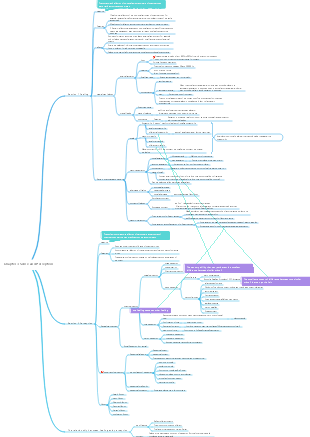
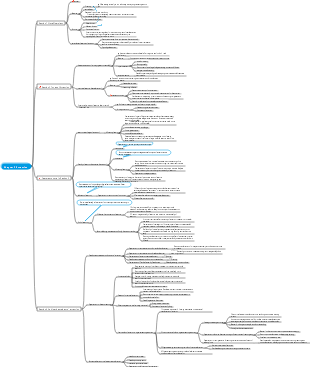
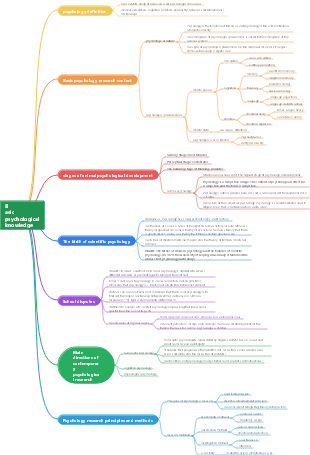

basic psychology
Summary of the book
Glossary
cognition
Cognition is the process by which people acquire knowledge or apply knowledge or process information. This is the most basic psychological activity of people, including feeling, perception, memory, thinking, imagination and other psychological phenomena. People receive information input from the outside world, process it through the brain, and convert it into internal psychological activities, which then control people's behavior. This process is cognition.
Observation
Observation method refers to a method of purposefully and plannedly observing the subject's expression, actions, speech and other external manifestations under certain conditions, so as to understand the rules of psychological activities.
Conditioned reflex
Conditioned reflexes are reflexes formed by learning and training on the basis of unconditioned reflexes in humans and animals during their acquired lives.
unconditioned reflex
Unconditioned reflex is an innate inheritance formed by animals or humans during the germline development process, and is a reflex that can be learned without learning.
Notice
Attention is the pointing and concentration of mental activity or consciousness on a certain object
memory
Memory is the psychological process of accumulating and preserving individual experiences in the mind. It is also the process of the human brain encoding, storing and retrieving information input from the outside world.
imagine
Imagination is the process in which the human brain processes and transforms existing representations to form new images of things.
Unintentional imagination
Unintentional imagination is imagination without specific purpose, unconsciously and involuntarily.
intentionally imagine
Intentional imagination is imagination carried out consciously according to a certain purpose.
mood
is a weak, calm and persistent emotional state
ability
Ability is a personality psychological characteristic that directly affects the efficiency of activities and enables the activities to be successfully completed.
Personality
A unique pattern that constitutes a person's thoughts, emotions, and behaviors. This unique pattern contains a person's stable and unified psychological qualities that distinguish him from others.
character
Personality refers to relatively stable and core personality psychological characteristics that are expressed in a person's attitude towards reality and corresponding behavior.
will
Will is the psychological process of consciously controlling and regulating personal behavior to overcome difficulties in order to achieve a certain purpose.
Overview
Concept (understanding)
The science that studies human psychological phenomena and their development laws
produce
German physiological psychologist Wundt
The world's first psychology laboratory was founded at the University of Leipzig in 1879, marking the birth of scientific psychology.
Psychology's Declaration of Independence: "Principles of Physiological Psychology"
The first treatise on various psychological phenomena:
Aristotle's "On the Soul"
school
constructivism
Wundt
Titchener
Gestalt (Holistic) Psychology
Wertheimer, Kovka, Kohler
research awareness
functionalism
Founder: James
stream of consciousness
Behaviorism
Watson
psychoanalytic school
Freud
Study abnormal behavior
humanistic psychology
Maslow
cognitive psychology
Piaget
☆The essence of psychology: The brain is the psychological organ, psychology is the function of the brain, and human psychology is the subjective reflection of the human brain on objective reality.
Research object
psychological phenomenon
mental process
cognitive process
Feel
perception
memory
imagine
thinking
speech
emotional process
mood
emotion
volitional process
act of will
personality psychology
Personality psychological characteristics (stable)
ability
temperament
Personality
Personality tendency (tendency)
need
motivation
values
Research methods
Observation
The most basic
Object: the external manifestation of behavior
Experimental Method
Under certain conditions
natural experiment method
laboratory experiment method
Strictly control conditions
Survey
indirect
Questionnaire method
conversation method
case approach
The long-term "tracking" of someone's life trajectory
continuity of time
test method
psychological response scale
Research principles
principle of objectivity
Cannot add subjective emotions
Systematic Principles/Practical Principles
educational principle
developmental principle
Notice
concept
The pointing and concentration of mental activity or consciousness on a certain object
It is not an independent psychological process and occurs together with other psychological processes.
Features
Directivity
choose
centralization
Keep
Category (⭐⭐⭐Single)
unintentionally paying attention
Dominant forms of memory in preschool children
pay no attention to
Attention without predetermined purpose and requiring no effort of will
Influencing factors (⭐ simplified)
Objective characteristics of stimuli
human subjective factors
pay attention intentionally
Casual attention Attention that has a predetermined purpose and requires a certain amount of willful effort
Intentional attention is attention with a predetermined purpose (Ⅹ)
Pay attention after intending to
Casual attention Attention that has a predetermined purpose and does not require effort of will
Intentional attention and unintentional attention can be transformed into each other. Intentional attention can be transformed into intentional attention (after proficiency)
Quality☆☆☆
attention span
One eye and ten lines
The breadth of attention, also called the scope of attention, refers to the number of objects that a person can clearly grasp at the same time.
Influencing factors
Characteristics of perceptual objects
The tasks and nature of perceptual activities
personal knowledge and experience
People's attention span is limited, but it is not fixed. Different people have different attention spans. Some people have a larger attention span, and some people have a smaller attention span.
allocation of attention
Side by side
attention to stability
The duration to stay on the object
The ups and downs of attention (wavering)
Note that it is difficult to remain fixed for a long time
The opposite is distraction
distracted
Shift of attention
Actively turn attention from one object to another, positively affecting
Related to human neurological flexibility
The more flexibility you have, the faster you can move
Pay attention to the application of rules in teaching (⭐⭐simplified)
the method of cultivating attention
1 Understand the students’ listening status based on the external manifestations of attention
2 Make full use of the rules of unintentional attention to organize teaching: In the teaching process, teachers should be good at using the characteristics of stimuli
Prevent external interference and prevent students from paying unintentional attention other than the teaching content.
Pay attention to the art of teaching, appropriately arrange teaching content, and improve students’ interest and attention in teaching content.
3 Make full use of the rules of intentional attention for teaching
Clarify purpose, mission, and meaning to attract intentional attention
Cultivate students' willpower
Reasonably organize teaching activities, cultivate indirect interest, and encourage students to maintain intentional attention
4. Use the law of alternation of attention to organize teaching
Since long-term use of unintentional attention will lead to a lack of systematic teaching activities, and long-term use of intentional attention will cause fatigue, educators should use unintentional attention and intentional attention together.
judge
external performance
adaptive exercise
Irrelevant movement stopped
changes in breathing movements
feeling and perception
Feel
Concept (understanding)
Feeling is the human brain's reflection of the individual attributes of things that directly act on the sensory organs
Past experience: memory Indirect: thinking Overall attribute: perception
Susceptibility and sensory threshold⭐⭐⭐
Susceptibility (ability)
sensory ability, sensitivity
Classification
absolute susceptibility
The ability to feel the smallest amount of stimulation
differential susceptibility
The sensory ability that can just detect the smallest difference in the amount of similar stimuli
Sensory threshold (amount)
The amount of stimulation that causes the sensation (numeric value)
Classification
absolute sensory threshold
The smallest amount of stimulation that can just cause a sensation
differential sensory threshold
The smallest amount of difference between stimuli that can just cause a differential sensation
relation
numerically inversely proportional to
The lower the sensory threshold, the higher the susceptibility
Basic rules (⭐⭐⭐single)
Feeling adapted
The phenomenon of changes in sensitivity due to the continuous action of the same stimulus on a sensory organ is called sensory adaptation.
type
olfactory adaptation
Entering Zhilan's room, you won't smell its fragrance for a long time
auditory adaptation
Workers who are exposed to noisy environments for long periods of time
visual adaptation
Ming adaptable
dark → light
Decreased sensitivity (imagining illumination will cause squinting and decreased vision)
Dark adaptation (only increased susceptibility)
light→dark
taste adaptation
People with heavy taste cannot taste the difference when eating light food.
tactile pressure adaptation
Wear a heavy down jacket in winter
repair
Pain is the hardest to adapt to
visual afterimage
After the stimulation stops, the feeling does not disappear immediately (if the sun shines on your eyes, you can still feel it after closing your eyes)
Feeling contrast
in order
Compare at the same time
Comparison between successive times (in sequence)
synesthesia
The squeaking sound of the knife scratching the glass gives people goosebumps
nature
the most elementary cognitive process
The simplest psychological phenomenon
Feeling is the basis of all advanced psychological functions
Classification: According to different analyzers
Analyzer: Human sense organs
external sensation
Pain, sight, hearing, smell, taste, skin
internal feeling
Kinesthetic (visceral), balance
perception
concept
The human brain's reflection of the overall attributes of objective things that directly act on the sensory organs
Feeling is the premise and basis of perception
Feeling and perception belong to the stage of perceptual knowledge
just stay on the surface
Features (⭐⭐Single)
the wholeness of perception
National Day military parade
Individually consistent with the whole
perceptual intelligibility
Different understandings of the same thing
Perceptual selectivity
Distinguish objects from background
perceptual constancy
Perceptual images remain relatively unchanged
Classification
Depending on the object of perception/the characteristics of the things being reflected are different
spatial perception
Such as size perception, distance perception (depth perception), orientation perception
horizon experiment
Experimental purpose: Is depth perception direct and innate?
Experimental conclusion: Perception is a direct process of extracting relevant information from the environment. Depth perception should be direct and innate.
motion perception
kinesthetic perception
Kinetic perception⭐⭐⭐single
1 Dynamic movement (street sign advertising, successively presented like movement)
2 Induced motion (moon and clouds)
3 Autonomous movement (people feel the movement after looking at the light spot)
4. Exercise after effects
The train goes to the right, the trees go to the left
social perception
social deviance perception
Primacy effect (first impression)
Recency effect least (remember the last time you saw your friend)
Halo effect (one is good and one is good)
stereotype effect
time perception
Illusion (unavoidable)
There are positive and negative effects
observe
Concept: purposeful, planned, relatively lasting
feature
Purpose
objectivity
Sophistication
Agility
Cultivation (⭐Big question)
Clarify the purpose and tasks of observation
Develop plans and methods for observing things
stimulate positive thinking
Make observations and summaries
Develop good observation qualities
memory
concept
Memory is the human brain’s reflection of things experienced in the past
The process by which the human brain remembers, retains and reproduces experiences
Information processing terms → encoding, storage and retrieval
process
Memorize
It is the most important link in the memory process
recognize and remember
Classification
Depending on whether there is a purpose and whether it requires volitional effort
Consciousness
Unconsciousness
Unconscious memory is the dominant form of memory in preschool children
Conscious memory, meaning memory, and abstract memory gradually dominate
Follow the method of memorizing (whether it is based on understanding)
Memorizing meaning (memorizing based on understanding)
Mechanical memorization (rote learning)
Keep
In order to prevent forgetting, the process of consolidating the memorized content
Change and forgetting occur along the way
Reappear
Recognize
related to memory level
remember
Things are not in front of you
forget
Concepts and rules
Ebbinghaus of Germany drew the forgetting curve, and forgetting begins immediately after learning. The process of forgetting is uneven. The pattern is first fast and then slow, first more and then less, and finally becomes stable.
factors affecting forgetting
time
The nature, quantity, significance of learning materials and the serial position of memorizing materials
Material sequence
proactive inhibition
Inhibition from front to back
Inversion suppression
(Inverted) The back inhibits the front
Application: Reading a book together in the morning can avoid proactive inhibition Reading before going to bed at night can avoid afterphotographic suppression
Individual subjective factors: interests, needs
Learning level (150% is the best)
How to avoid forgetting Final review based on forgetting rules
Review in time
Reasonably arrange the review time for each subject
Try to combine recall with repeated reading
Improve learning efficiency
Combining decentralized review with centralized review
Use a variety of memory methods to mobilize multiple senses for review
Find the most suitable memory and learning methods for each subject to achieve understanding and memory
Overlearning 150%
Reasonably arrange the number of reviews to avoid causing fatigue
To eliminate the interference of proactive inhibition and retroactive inhibition
The reason for forgetting⭐⭐
extinction theory
Presented by: Thorndike
If you don’t consolidate it, you will forget it.
interference theory
Proactive and retroactive inhibition (interference of)
repression theory/motivation theory
Presented by: Freud
Deliberately suppressing painful memories
Unable to recognize or recall the contents of the memorization or to re-recognize or recall the contents incorrectly
Classification
temporary forgetfulness
permanent forgetfulness
The application of memory rules in teaching (major topic)
Memorize
Use the rules of memorization to improve the effectiveness of classroom teaching
Let students clearly understand the purpose and tasks of recording
Make full use of unconscious memory (be louder in class)
Enable students to understand and systematize memorization content
Keep
Effectively organize review according to the rules of forgetting
Review time
Review content
Review method
Try to combine recall with repeated reading
Recognition and remembrance
Improve students’ recall efficiency
Teach students skills and techniques to use recall (such as homophony method)
Memory Mental Hygiene
A good mood
enough rest
Good nutrition, good environment
Classification
The length of time☆
Sensory memory (≤2 seconds)
Sensory memory, also called instant memory, imitation memory or sensory storage stage, refers to the memory in which the impression of the objective stimulus is only retained in the human brain for a moment after the objective stimulus stops acting.
Distinctive image
large capacity
Very short time
Short-term memory (≤1 minute)
7±2 blocks
Long-term memory (≥1 minute)
Difference in content
image memory
logical memory
Emotional memory (memory of emotional experiences such as joy, anger, sadness, and fear)
memory quality
accuracy
Preparatory
persistence
Agility
Memory Strategies⭐Big Questions
1. Nature of learning materials
2..Amount of learning materials
3. Learn the meaning of the material. Figurative material is forgotten more slowly than meaningless material.
4. Study the sequence position of the material. There are two inhibitory phenomena in forgetting: proactive inhibition and retroactive inhibition. Try to eliminate the interference of inhibition during the memory process.
5. Level of learning. The level of learning should be appropriate (150% is the best)
Methods to strengthen memory content
1. Review in time
2. Try to recall and combine repeated memorization
3. Combine overall learning with partial learning
4. Spaced learning
5. Extract multiple memory clues
temperament and character
temperament
Highly affected by genetics
Classification
Phlegm
Lin Chong
Depression
Lin Daiyu
Sanguine
Lots of ideas
choleric
brave
character
There is no good or bad temperament type, but there are good or bad personalities.
ability
Classification
Fields of activity based on abilities
general ability
special power
Amount of creativity in activities
Imitation ability
creativity
According to the different development trends of abilities throughout a person's life as well as abilities and innateness The relationship between endowment and social and cultural factors
liquid capacity
crystal ability
Function
cognitive ability
Operation ability
Social skills
intelligence
theory of intelligence
Triarchic theory of intelligence (Sternberg)
Two-factor theory (Spearman)
Intellectual Morphology (Cartel)
Theory of Multiple Intelligences (Gardner)
The Three-Dimensional Structural Theory of Intelligence (Guilford)
IQ
Dispersion IQ
Ratio IQ
Individual differences in ability development are manifested in level, type, sooner or later, and gender
needs and motivations
need
a state of physical or psychological imbalance
Classification
Need object
material needs
spiritual needs
Hierarchy theory of need☆
Knowledge needs/aesthetic needs
motivation
Motivation is the psychological tendency or motivation that inspires and maintains an individual's activity and leads the activity to a certain goal.
Generate conditions
need
inducement
Function
excitation function
Pointing function
maintain and regulate function
Classification
learning motivation
The relationship between learning motivation and learning effectiveness
There is a mutually restrictive relationship between learning motivation and learning effects. (1 point) In general, as motivation levels increase, learning results will also improve. However, the higher the motivation level, the better. If the motivation level exceeds a certain limit, the learning effect will be worse. American psychologists Yerkes and Dodson believe that a moderate level of motivation is most conducive to improving learning results. (2 points) At the same time, they also found that the optimal motivation level is closely related to the difficulty of the task: if the task is easier, the optimal motivation level is higher; if the task difficulty is medium, the optimal motivation level is also moderate; the more difficult the task, the optimal motivation level is also moderate; The lower the level (2 points)
Cultivate students' learning motivation
Create problem situations and implement heuristic teaching
Timely feedback on learning results
Appropriate praise and criticism
Correct result attribution
Proper use of competitions
will
quality of will
independence
Don’t follow blindly, don’t be arbitrary
decisiveness
Make prompt decisions without procrastination
self-control
self control
toughness
Perseverance
Cultivation of will and quality
Strengthen purpose motivation education
Set feasible action goals
Guidance in combating difficulties in practical activities
Understand the differences in will quality and adopt different educational methods
Self-training to strengthen will
meaning
1. Purpose 2. Action 3. Overcome difficulties 4. Achieve goals
feature
conscious purpose
free movement
Not casual
random
writing, long-distance running
overcome difficulties
Will action conflict
Dyadic conflict (approach-approximation conflict): both want...and want
Double-avoidance conflict (avoidance-avoidance conflict): neither want... nor want
Approach-avoidance conflict (approach-avoidance conflict)
Multiple approach-avoidance conflicts (multiple approach-avoidance conflicts)
Emotions (analogous to temperature and climate)
Function
motivation function
Signal function
organizational function
adaptive function
concept
Emotions and emotions are an attitude experience that accompanies cognition
subtopic
produced
Base
cognition
intermediary
need
composition
subjective experience
cognition
external performance
Express
physiological arousal
physiological
Relationship (⭐Big question)
the difference
Emotions: physiological needs; Emotions: social needs
Emotions: explicit, situational, changeable; Emotions: implicit, stable, persistent
Analogy: temperature, climate
(social) emotions: only people have them
Emotion: simple and basic; emotion: advanced and complex
connect
Emotions are the basis and external expression of emotions
Emotion (temporary)
basic emotions
Joy, anger, sorrow and fear
Classification
state of mind
weak, calm, lasting
Diffuse (effect)
People feel refreshed when happy events happen
I am moved to tears by the flowers, and the birds are frightened by the hate.
Passion
strong and short
stress
Emergency: Adaptive response to unexpected situations
Emotion (long-lasting, unique to people)
Classification
beauty
moral sense
responsibility
sense of reason
Knowledge
Application (major topic)
to the teacher
Enhance classroom appeal
to students
Cultivate students’ positive emotions
Teaching students to regulate their emotions
representation and imagination
Type (whether there is a purpose when imagining it)
Unintentional imagination (not random)
Dream (special form)
Dreams usually occur during the REM stage of sleep
Floating clouds resemble various animals
Intentional imagination (casual)
Reimagine
The process of forming a corresponding image in the mind based on the description of words or the suggestion of images. Brainstorming
Create imagination (made up out of thin air)
Features
independence
originality
Novelty
☆The author creates imagination when writing a book, and the reader’s imagination (imagination) when reading a book is recreating imagination The difference between recreating imagination and creating imagination: whether it is the author himself
fantasy (special form)
Concept: personal life aspirations pointing to the future
Classification
Positive: ideal
Negative: fantasy
imagine
Imagination is a special form of thinking Imagination and thinking are both advanced cognitive processes (intrinsic) Sensation and perception are low-level cognitive processes (external)
Concept: the process of processing and transforming existing images in the mind to form new images
Appearance
The image formed in the mind after closing the eyes
Materials come from objective reality
Features: Imagery and novelty
Function
foresee
Replenish
replace
Cultivate creative imagination (⭐Big question)
Enrich students’ representational reserves
Expand students’ knowledge and experience
Do imagination training
Guide students to have positive fantasies
thinking
concept
The human brain’s indirect and general reflection of objective things
feature
indirectness
Use existing knowledge and experience to understand things that cannot be directly perceived
The ground is wet → it just rained
generalization
Extract the common essential attributes of the same type of things
regular extraction
Quality of thinking (understanding)
vastness and depth
think things through
Think deeply about problems: see through the appearance to see the essence
Flexibility and agility
(Adaptability and agility): flexibly adjust plans and strategies according to changes in circumstances
independence and criticality
Not affected by other people
Pursue better answers and be critical (dare to criticize or challenge authoritative conclusions)
Logical and illogical:
step by step reasoning
Often manifested as intuition and inspiration
Cultivate students' good thinking qualities
Strengthen training in scientific thinking methods
Use heuristic methods to mobilize students' enthusiasm and initiative in thinking
Strengthen verbal communication training
Play a positive role in setting trends
Cultivate students' thinking quality to solve practical problems
Compared
sense perception
external reactions to individual attributes of things
thinking
Essential attributes, reflecting internal connections and laws
Classification
Action thinking, image thinking and abstract thinking
Action (intuitive action thinking): Action
Image (specific image)
Abstraction (logical thinking): words
Convergent thinking and divergent thinking
Convergence (unity or concentration)
Divergence (divergence or dispersion)
Intuitive thinking and analytical thinking
Conventional thinking and creative thinking
process
Analysis and synthesis (basic process)
that is, decomposition
Extract rules based on the same attributes. Fusion
Compare and classify
Compare them after decomposition (analysis) to determine their similarities, differences or relationships.
Classify the compared results
abstraction and generalization
Extract the common essential characteristics of things
Comprehensive extracted essential features
concreteness and systematization
Cultivation of thinking
Objects (Teaching Materials)
Selection and rational use of teaching materials
From easy to difficult
person(teacher)
Improvements in teaching methods