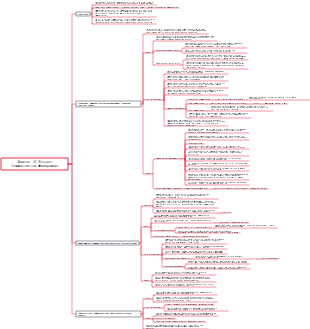
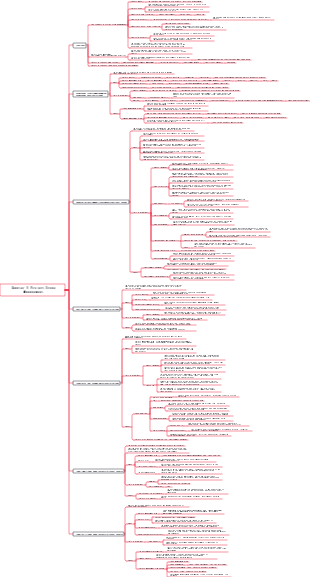
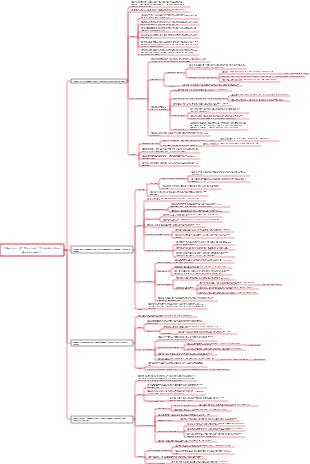
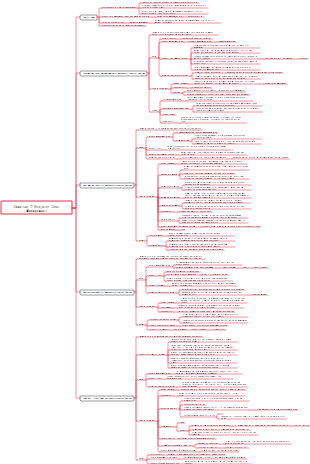
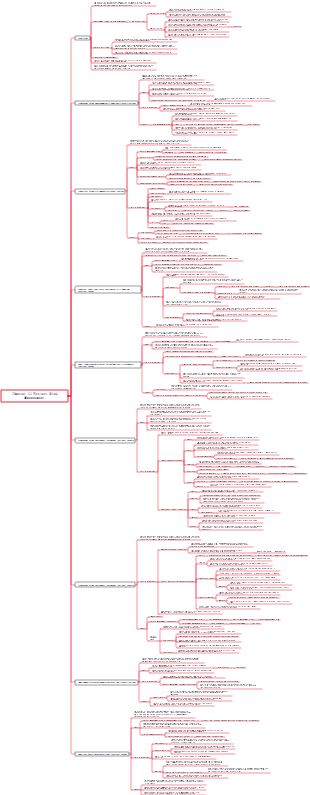
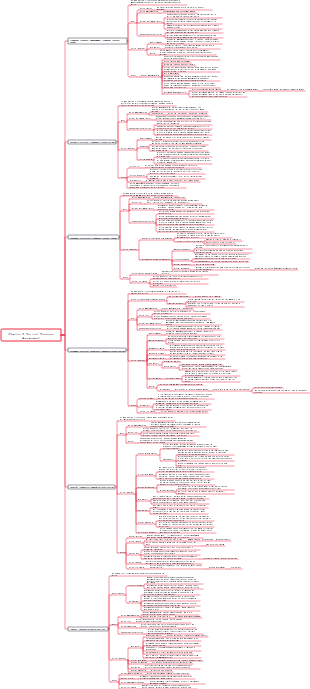
MindMap Gallery Chapter 2 Corporate Corporate Governance Structure (Intermediate Economist's Notes on Professional Knowledge and Practice of Business Administration)
The content comes from the official textbook for intermediate economists "Professional Knowledge and Practice of Business Administration" (2024). I spent almost a month organizing the notes and straightening out the logical relationships (mainly referring to Teacher Zheng Wei from Yun Private School and Teacher Sun Jing from Global). I spent two days reviewing before the exam. I didn't study the set questions because I didn't have enough time. I just studied based on my own study habits. It took me two and a half months to read the two official textbooks: Economic Fundamentals and Business Administration. Business Administration came last. When I finished reading, there were only 7 days left before the exam. I spent two days writing down my notes before the exam. Go through it again (about 20 hours, you must be at full strength), and all the questions you will encounter in the exam will be included in your notes! ! But there were several questions that I didn’t remember well, which was so uncomfortable! Give me two more days to review my notes, and I am confident that I can reach 130! It is recommended that students preparing for the exam can directly use this template as a basis and make appropriate adjustments based on next year's new textbook content. This can greatly save time (I have been typing on the computer almost every day for more than two months, and my eyes are almost blind. (very affected the learning status), this year’s teaching materials mainly changed in the company legal person part, and it is expected that there will not be much change next year. If conditions permit, it is recommended to cut the notes into several parts in A4 size and print them on one side so that they can be easily read. At the same time, make casual notes on the unprinted area on the other side. By the Way, all the notes did not draw coordinate diagrams. I am not very good at using a computer to draw curve diagrams. I printed them out and then drew them manually.
Edited at 2024-11-28 16:45:15Questo è il capitolo 5 del libro dell'insegnante Zhao Zhou "Questo è abbastanza da leggere", che parla principalmente di questi aspetti: ① L'importanza dell'abilità di apprendimento ② Come aggiungere contesto alle informazioni ③ Come distinguere la conoscenza e le informazioni Non mi affretta a mettere in discussione e sfidare ⑤Come usare note appiccicose per aggiornare la capacità di apprendimento ⑥ Perché inseguire i "merci secche" uno pseudo-apprendimento?
Per aiutare tutti a usare DeepSeek in modo più efficiente, è stata compilata una raccolta di Map Mind Mind Guide DeepSeek! Questa mappa mentale riassume il contenuto principale: collegamenti correlati a Yitu, analisi del profilo DS, confronto tra rotte tecnologiche DeepSeek e Chatgpt, Guida di distribuzione del modello DeepSeek e Qwen, come fare più soldi con DeepSeek, come giocare a DeepSeek, DeepSeek Scientific Research Application Aspetta, permettendoti di cogliere rapidamente l'essenza dell'interazione AI. Che si tratti di creazione di contenuti, pianificazione del piano, generazione di codice o miglioramento dell'apprendimento, DeepSeek può aiutarti a ottenere il doppio del risultato con metà dello sforzo!
Questa è una mappa mentale sulle 30 istruzioni a livello di alimentazione di DeepSeek.
Questo è il capitolo 5 del libro dell'insegnante Zhao Zhou "Questo è abbastanza da leggere", che parla principalmente di questi aspetti: ① L'importanza dell'abilità di apprendimento ② Come aggiungere contesto alle informazioni ③ Come distinguere la conoscenza e le informazioni Non mi affretta a mettere in discussione e sfidare ⑤Come usare note appiccicose per aggiornare la capacità di apprendimento ⑥ Perché inseguire i "merci secche" uno pseudo-apprendimento?
Per aiutare tutti a usare DeepSeek in modo più efficiente, è stata compilata una raccolta di Map Mind Mind Guide DeepSeek! Questa mappa mentale riassume il contenuto principale: collegamenti correlati a Yitu, analisi del profilo DS, confronto tra rotte tecnologiche DeepSeek e Chatgpt, Guida di distribuzione del modello DeepSeek e Qwen, come fare più soldi con DeepSeek, come giocare a DeepSeek, DeepSeek Scientific Research Application Aspetta, permettendoti di cogliere rapidamente l'essenza dell'interazione AI. Che si tratti di creazione di contenuti, pianificazione del piano, generazione di codice o miglioramento dell'apprendimento, DeepSeek può aiutarti a ottenere il doppio del risultato con metà dello sforzo!
Questa è una mappa mentale sulle 30 istruzioni a livello di alimentazione di DeepSeek.
Chapter 2 Corporate governance structure
Exam overview
For non-key chapters, only single-choice and multiple-choice tests are tested, and case analysis is not tested. The score is about 10 points.
Company owners and operators
1. Two separations of company property rights
Investor → Company → Operator
Original ownership → legal person property rights → operating rights
Separation of ownership and management rights through corporate legal person
first separation
Separation of original ownership and legal person property rights [entrustment trust]
①The objects of original ownership and legal person property rights are the same property, but they reflect different economic and legal relationships.
②Original ownership is the ultimate ownership, reflecting who ultimately owns the property, expressed as equity
③The property rights of a company's legal person reflect the actual control over the company's property, and who owns, uses, benefits from, and disposes of the property.
④The ownership of the company's investors is converted into original ownership, and they lose the actual possession and control rights over the company's assets.
⑤The corporate legal person owns legal person assets and has complete control over the assets operated, that is, legal person property rights
⑥The property rights of legal persons are a kind of derived ownership and an economic behavior of ownership.
second separation
Separation of legal person property rights and operating rights [Agency]
① The property rights of the company's legal persons are concentrated in the board of directors, while the management rights are concentrated in the hands of the managers
② Management rights are the rights to possess, use and dispose of company property. They are relative to ownership. Compared with legal person property rights, management rights have smaller connotations.
③Operation rights do not include income rights, and legal person property rights include income rights.
④The right to dispose of property in management rights is also restricted. Generally speaking, managers do not have the right to handle company assets by themselves. The board of directors determines the manager’s terms of reference
2. Relationship between owner and operator
principal-agent relationship
The board of directors, on behalf of all shareholders, selects and appoints operating personnel suitable for the company.
①The operator is the owner's designated agent and has the right to manage and agency affairs of the enterprise. Its power is limited by the scope of entrustment by the board of directors. Decisions beyond its authority and major decisions need to be reported to the board of directors.
② The company employs operating personnel on a paid basis, and the board of directors has the right to supervise and evaluate operating performance, reward or dismiss them.
The mutual checks and balances between the shareholders’ meeting, the board of directors, the board of supervisors and the operating personnel
①The shareholders’ meeting is the authority
②The board of directors is the most important representative of the company and is fully responsible for the company’s operations.
③Operators are employed by the board of directors to manage the daily business affairs of the enterprise.
④The board of supervisors exercises comprehensive supervision over the work of the board of directors and operating personnel
shareholders meeting
shareholder Classification
promoter shareholders
The promoter refers to the person who organizes the establishment of the company, signs the establishment agreement or signs and seals the company's articles of association, subscribes for capital contributions, and assumes corresponding responsibilities for the establishment of the company. 【digger】 A certain number of sponsors are required to establish a limited liability company or a joint stock company
limited liability sponsor
①1~50 people
② You can sign an establishment agreement to clarify their respective rights and obligations during the company establishment process.
③If the company is not established, the legal consequences will be borne by the shareholders. If there are more than 2 people, the claims and debts will be joint and several.
④ For civil liabilities incurred by shareholders in their personal names at the time of establishment, the third party has the right to bear liability to the shareholders at the time of establishment or the company after establishment.
⑤ At the time of establishment, if a shareholder causes damage to others due to his fault, the company or the shareholder without fault can recover compensation from the shareholder at fault after assuming responsibility.
⑥The registered capital must be paid in full within 5 years from the date of establishment of the company.
⑦ If payment is not made in full on time, in addition to full payment, the company shall also be compensated for losses, and other shareholders shall be jointly and severally liable for the insufficient capital contribution.
⑧ If the payment is not made in full on time, the company will issue a written reminder stating the grace period (not less than 60 days). If the grace period expires and the payment has not been made in full, a written notice of loss of rights will be issued.
Limited by Shares sponsor
①1 to 200 people, more than half of whom have residences within the territory
②Sign a sponsor agreement to clarify rights and obligations
③For a joint-stock limited liability company established through sponsorship, the sponsor subscribes for sufficient shares; If it is established by raising funds, the promoters must subscribe for at least 35% of the shares.
④Full payment of shares must be made before the company is established
⑤ If the subscribed capital is insufficient, the other sponsors shall bear joint and several liability for the shortfall.
general shareholders
【The person who jumps into the trap】
Share flight, transfer and restrictions
①After the company is established, shareholders are not allowed to withdraw their capital. In case of violation, a fine of 5% to 15% of the amount of evaded funds will be imposed, and the directly responsible supervisor and other responsible persons will be fined 30,000 to 300,000 yuan. At the same time, directors and supervisors bear joint liability for compensation.
② Shares that have been issued before the public issuance of shares [shares at the time of IPO] shall not be transferred within 1 year after listing.
③ Directors, senior managers and supervisors must declare their shareholdings. The shares transferred each year during their tenure shall not exceed 25% of the company's total shares. They cannot sell their shares within six months of leaving the company.
④ If the shares are used for pledge, the pledgee shall not exercise the pledge right during the above restriction period.
natural person shareholder
①Including Chinese citizens and foreigners
②The initiator must have full capacity for civil conduct
Legal person shareholder
①Shareholders who own shares of other companies in the name of the company or group
② A legal person shareholder is an organization. Through authorization procedures, shareholder representatives are sent to exercise their rights and obligations, and the consequences shall be borne by the organization.
③Who can become a legal person shareholder? Corporate legal persons (including foreign enterprises), corporate legal persons, various investment fund organizations and institutions that invest on behalf of the country
controlling shareholder
① Refers to shareholders whose capital or shares exceed 50% [absolute controlling shareholders]
②Shareholders whose capital contribution or shares are less than 50%, but whose proportion is sufficient to influence the resolution of the shareholders’ meeting [relative controlling shareholder]
non-controlling shareholder
shareholder right
①The right to attend and vote at the shareholders’ meeting
②The right to propose convening a temporary shareholders’ meeting and the right to make temporary proposals
③The right to elect and be elected of directors and supervisors
④Right of access to company information
⑤The right to participate in company dividends
⑥The right to participate in the distribution of the company’s remaining property
liquidation
⑦ Right to transfer capital contribution and shares
⑧Pre-emptive right to transfer shares
⑨Preemptive right to subscribe for new capital
⑩Shareholders’ right to litigate
shareholder obligation
①Pay capital contribution
② Limited liability for the company
Limited to the amount of capital contribution or shares subscribed
③Comply with laws, administrative regulations and company articles of association
shareholders meeting
① Nature: The highest authority of the company
②Authorities
Remember: major matters are decided by the shareholders’ meeting!
③Limited
Meeting
first meeting
The first meeting after its establishment is convened and chaired by the shareholder with the largest capital contribution
regular meeting
Convened on time as stipulated in the charter
ad hoc meeting
between regular meetings
Proposed by shareholders with more than 1/10 voting rights or more than 1/3 of directors or supervisory board [No proportional requirements for supervisors]
discuss matters vote
Ordinary decision【1/2】
General matters
Special Resolution【2/3】
Important matters [relevant to the life and death of the company, amending the Articles of Association]
④ Shares
Meeting
Founding meeting
Recruitment and establishment
Convened within 30 days, with 15 days’ notice in advance
The attendance of more than half of the voting rights shareholders is valid
Initiate the establishment
Convened in accordance with the articles of association or sponsor agreement
[Note] The charter is formulated during the initiation process
authority
Matters related to company establishment, including adoption of articles of association [Note] If the establishment is initiated, although the articles of association have been formulated, they still need to be adopted at the founding meeting.
Attend and vote
Double more than half
annual meeting of shareholders
once a year
Extraordinary shareholders meeting
An extraordinary shareholders' meeting shall be held within two months under the following circumstances: ①The number of directors is less than 2/3 as stipulated in the Company Law or the Articles of Association [less than 2/3] ②The loss reaches 1/3 of the total paid-in equity [less than 1/3 of the money] ③Request from shareholders holding 10% of shares ④The board of directors deems it necessary ⑤The board of supervisors proposes to convene
Call to host
The board of directors convenes and the chairman presides over
Chairman→Vice Chairman→Shareholders with more than 1/10 voting rights
provisional proposal
Shareholders holding more than 1% of the shares shall submit a written submission to the board of directors 10 days before the meeting.
vote
One share, one vote
cumulative voting
When appointing directors and supervisors, in order to protect the interests of small shareholders, let them concentrate their voting rights
Ordinary decision【1/2】
General matters
Special Resolution【2/3】
Important matters [relevant to the life and death of the company, amending the Articles of Association]
Board of Directors
1. Nature
Is the company’s management body
Be responsible to shareholders and represent their interests
member
Directors are elected by shareholders and may be shareholders or non-shareholders
Is the executive body of the company
Implement the resolutions of the shareholders' meeting, manage the company's internal affairs internally, and conduct trading activities on behalf of the company externally.
It is a business decision-making body
Determine non-major business-level matters (such as plans, plans, management organization setup, appointment of senior executives, important rules and regulations)
It is the external representative office of the company's legal person
It is a legal permanent establishment of the company
This is reflected in the following: ① Fixed members and fixed terms; ② Most of the resolutions are major and recurring matters; ③ There is a specialized working organization (such as an office)
2. Authority
Basic powers
①Convene the shareholders’ meeting and report work to the shareholders’ meeting;
②Implement the resolutions of the shareholders’ meeting;
③Develop various plans and basic management systems
④Determine the establishment of internal management organization, appointment of managers and remuneration matters, etc.
Keywords: convening, executing, formulating plans, internal management
New content
① The restrictions on the powers of the board of directors in the company's articles of association shall not antagonize bona fide counterparts. [For example] A company's articles of association stipulate that the board of directors must unanimously agree before signing a major contract. However, the CEO signed a contract with a supplier without the board's approval. At this time, the supplier is a bona fide counterparty and is not aware of the company's internal restrictions, so the contract is still valid.
② The resolutions made by the board of directors of a listed company related to finance and accounting must be approved by more than half of all members of the audit committee.
3.Composition
Limited liability company and joint stock company
Number of people: 3 or more
For smaller companies, there is no need to have a board of directors, but only one director.
For companies with more than 300 employees, the board of directors should have employee representatives
Chairman and Vice Chairman
Limited: Provisions in the Articles of Association
Shares: elected by more than half of the board of directors
Listed companies have independent directors
Refers to those who do not hold other positions other than directors in listed companies and have no interest in the company, its major shareholders and actual controllers [in order to maintain independent and objective judgment]
Conditions: common-sense regulations: more than 5 years of legal and economic work experience required to perform the duties of an independent director
election
The board of directors, board of supervisors and shareholders holding 1% of the shares can propose candidates, which will be elected and decided by the shareholders’ meeting.
The investor protection agency may request shareholders to entrust it to exercise the right to make nominations on its behalf.
When electing two or more independent directors, a cumulative voting system shall be implemented
term of office
Same as other directors, but shall not be re-elected for more than 6 years. If the contract is terminated early, it needs to be disclosed
If the proportion of independent directors is insufficient or there is a lack of accounting professionals, by-elections need to be completed 60 days before
Require
In principle, you can serve as independent directors in up to 3 listed companies.
Work on-site for no less than 15 days per year
Special powers
① You can independently hire an intermediary agency to conduct an audit
② May propose to the shareholders’ meeting to convene an extraordinary shareholders’ meeting
③ May propose to convene a board of directors
④Public solicitation of shareholder rights
⑤ Express independent opinions
4.Meeting
Call to host
All are: Chairman → Vice Chairman → Recommended by more than half of the directors
shares
Meetings are held at least twice a year, and directors and supervisors are notified 10 days before the meeting.
Extraordinary meeting: proposed by 1/10 shareholders with voting rights and 1/3 directors or supervisors. The chairman will hold a meeting within 10 days after receiving it.
voting
one person one vote
Not one share, one vote! Directors do not necessarily have shares!
【Double majority】More than half attend, more than half pass
Association relationship
If a matter resolved by the board of directors is related to a director personally, a written report to the board of directors shall be made in a timely manner, and voting rights or proxy votes shall not be exercised on the resolution [to avoid suspicion]
The resolution must be approved by more than half of the unrelated shareholders present. If there are less than 3 unrelated shareholders, the matter will be submitted to the shareholders' meeting for review.
5.Term of office
Each term shall not exceed three years and may be re-elected
[Note: no more than 3 years, not a fixed 3 years]
6. Obligations
duty of loyalty
Duty of diligence
Multiple selections, single selections will be distinguished!
management
1. Status
Managers are appointed or dismissed by the board of directors and are accountable to the board of directors
Terms of reference are delegated by the board of directors
The relationship between the board of directors and managers is a cooperative relationship based on the board of directors' control over managers [first control, then cooperation]
2. Authority
Granted some powers of the board of directors
Right to attend the board of directors
3. Settings
Limited: Manager can be set
Shares: Set up a manager
4. Qualifications
Same as directors
5.Others
Managers are not allowed to report directly to the shareholders' meeting, but must go through the board of directors
supervisory board
1.Election
Selected by the shareholders meeting [Shareholders elect those who work → Board of Directors; elect those who supervise → Board of Supervisors]
2. Functions
① Full-time supervision agency within the company
②The basic function is to supervise all business activities of the company, with the board of directors and general manager as the main objects of supervision
3.Composition
Number of people: 3 or more
There must be employee representatives, and the proportion should not be less than 1/3
Situation without a board of supervisors
For smaller companies, there is no need to set up a board of supervisors and elect one supervisor, i.e.
On a smaller scale, even supervisors do not need to set up
If the board of directors establishes an audit committee, there will no longer be a board of supervisors or supervisors.
4.Term of office
Each term is 3 years and can be re-elected
At the expiration of the term, if enough supervisors are not selected in time, the original supervisors must continue to perform their duties.
5. Authority
Keywords: supervision, inspection, suggestion, proposal, correction
6. Discussion
meeting time
Limited: at least once a year
Shares: at least once every six months
vote
one person one vote
Passed by more than half
Governance of state-invested companies with Chinese characteristics
1. Research and discussion by the party organization is a preparatory procedure for the board of directors and management to make decisions on major issues.
2. Major business and management matters of state-owned enterprises must first be studied and discussed by the party committee (party group), and then decided by the board of directors and management.
3. The party organization participates in the company’s decision-making on major business and management matters, but does not have the final decision-making or veto power.
4. State-funded companies implement "two-way entry and cross-appointment" to ensure that outstanding talents serve in both the party organization and management management
5. “Two responsibilities” in fighting corruption and promoting integrity
Party committee: main responsibility
Discipline Inspection Commission: Supervision Responsibilities
6. Institutions that perform the responsibilities of investors
The implementation agency authorized by the State Council or local government, namely: State-owned Assets Supervision and Administration Commission
7. Wholly state-owned enterprises
The company's articles of association are formulated by the State-owned Assets Supervision and Administration Commission.
The powers of the shareholders' meeting are exercised by the State-owned Assets Supervision and Administration Commission, and major events involving the life and death of the enterprise are directly decided by the State-owned Assets Supervision and Administration Commission.
8. Reform the state-owned capital authorized operation system to focus on managing capital. Institutions that perform the responsibilities of investors focus on managing capital layout, operation, constraints, returns and security. For wholly-owned and controlled enterprises, they mainly participate in management through equity and do not interfere with independent operations.
9.Board of Directors
Wholly state-owned
①More than half of the directors should be outside directors
Wholly state-owned: External directors are nominated and appointed by the State-owned Assets Supervision and Administration Commission in consultation with relevant departments.
Wholly state-owned: External directors are selected by the controlling shareholder in consultation with other shareholders and elected by the shareholders’ meeting.
State-owned holding: External directors are elected by the shareholders’ meeting
②There must be employee representatives
③The members of the board of directors are appointed by the State-owned Assets Supervision and Administration Commission, but the employee representatives among the board members are elected by the employees’ congress.
④The chairman and vice chairman are appointed by the State-owned Assets Supervision and Administration Commission from among the board members [Note: not elected]
⑤ Directors and senior managers are not allowed to work part-time in other companies without the consent of the State-owned Assets Supervision and Administration Commission.
⑥The chairman is the legal representative of the enterprise and has primary responsibility for the reform and development of the enterprise.
Wholly state-owned, state-controlled
Directors are recommended by relevant shareholders based on their equity shares and elected or replaced by the shareholders’ meeting.
In principle, the chairman and general manager of a wholly state-owned or wholly state-owned company are divided into internal executive directors who report their work to the board of directors on a regular basis.
10.Managerial level
① Appointed or dismissed by the board of directors
② With the approval of the State-owned Assets Supervision and Administration Commission, board members can concurrently serve as managers
③Other powers are the same as those of managers in ordinary companies.
④Manager authorization management system
Gradually implement the tenure system and contractual management. The company's board of directors grants part of the company's operating and management authority to the company's managers.
Promote the construction of the professional manager system in an orderly manner, gradually expand the team of professional managers, implement market-based compensation in an orderly manner, and explore and improve the medium and long-term incentive mechanism
Taking excellent progress and poor retreat as the goal and assessment and evaluation system
A salary distribution system compatible with the socialist market economy
11. Supervision mechanism
① From a practical point of view, the general trend is not to set up a supervisory board
② The board of directors shall set up an audit committee composed of directors to exercise the powers of the board of supervisors.
③A state-invested company may choose to retain a board of supervisors or not set up a board of supervisors
④ Improve the company’s democratic management system with the workers’ congress as the basic form
⑤ Clarify the compliance review responsibilities and boundaries of each department
⑥Further improve the rigidity of compliance review to ensure that “what should be reviewed must be reviewed”
⑦Improve closed-loop management of compliance review