MindMap Gallery Let students love to listen to you by Marilyn Page
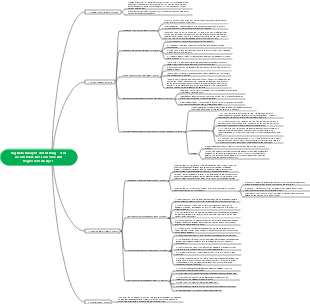
This is a mind map about "Let students love to listen to you" by Marilyn Page, the main content includes: Get started! (Omitted), Practice 6-step example in very chaotic classes, Step 6 to enhance classroom interaction: Feel the "heartbeat" of the classroom, Step 5 to promote students' civilized behavior with reminders and hints, Step 4 to avoid confusing students with giving. Unexplained guidance, step 3 clearly select and use classroom language, step 2 avoid anonymous and hanging problems P29-47, step 1 The key start: understand and use the student’s name.
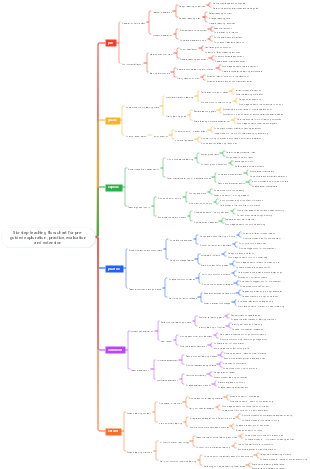
Edited at 2025-02-11 21:45:02In order to help everyone use DeepSeek more efficiently, a collection of DeepSeek guide mind map was specially compiled! This mind map summarizes the main contents: Yitu related links, DS profile analysis, comparison of DeepSeek and ChatGPT technology routes, DeepSeek and Qwen model deployment guide, how to make more money with DeepSeek, how to play DeepSeek, DeepSeek scientific research Application, how to import text from DeepSeek into MindMaster, the official recommendation of DeepSeek Wait, allowing you to quickly grasp the essence of AI interaction. Whether it is content creation, plan planning, code generation, or learning improvement, DeepSeek can help you achieve twice the result with half the effort!
This is a mind map about DeepSeek's 30 feeding-level instructions. The main contents include: professional field enhancement instructions, interaction enhancement instructions, content production instructions, decision support instructions, information processing instructions, and basic instructions.
This is a mind map about a commercial solution for task speech recognition. The main content includes: text file content format:, providing text files according to the same file name as the voice file.
In order to help everyone use DeepSeek more efficiently, a collection of DeepSeek guide mind map was specially compiled! This mind map summarizes the main contents: Yitu related links, DS profile analysis, comparison of DeepSeek and ChatGPT technology routes, DeepSeek and Qwen model deployment guide, how to make more money with DeepSeek, how to play DeepSeek, DeepSeek scientific research Application, how to import text from DeepSeek into MindMaster, the official recommendation of DeepSeek Wait, allowing you to quickly grasp the essence of AI interaction. Whether it is content creation, plan planning, code generation, or learning improvement, DeepSeek can help you achieve twice the result with half the effort!
This is a mind map about DeepSeek's 30 feeding-level instructions. The main contents include: professional field enhancement instructions, interaction enhancement instructions, content production instructions, decision support instructions, information processing instructions, and basic instructions.
This is a mind map about a commercial solution for task speech recognition. The main content includes: text file content format:, providing text files according to the same file name as the voice file.
"Let students love to listen to you" by Marilyn Page
Step 1 Key Beginning: Understanding and Using Student Names
Case 1: Failure case - Barry
Basic situation: teach civic classes to 10th grade students. The plan for class is to take it once a week, ask students to find an article before class, and ask students to come up to tell the article one by one after class, and then discuss it in class.
Barry’s question: The students who shared the story were not well prepared, the students who sat down and listened quickly got distracted, and no one responded to the questioning session. Barry also did not interact effectively with the students he shared. Barry did not establish a close connection with the students, and his control over the classroom was a failure.
Understand and use the need for students’ names
Provide intern teachers with familiarity and practical methods to use students' names
Case 2: Successful Case—Yaweitu
Basic situation: I have been teaching for 10 years of senior physical education, and now I am teaching for 3rd grade. Recently, a freshman came to Shali in the class, and it was difficult to integrate into the group. Yaweitu first allowed Shari not to force participate in team activities before feeling comfortable. At the same time, during the intervals of group activities, the classmates in the class paired up and took the initiative to introduce themselves to Shari. After two or three classes, Shari finally felt comfortable and took the initiative to join the class.
Characteristics of the academic situation of junior and high school students: the same course is only one or two classes a week, and each class is longer.
Remember the practice of students’ names:
Auxiliary tools: Use seat table and name tags
Not only teachers should remember students, but students also need to remember the names of other classmates through grouping and pairing.
Step 2 Avoid anonymous and hanging problems P29-47
Case: Dave
Basic situation: The 7th grade geography teacher, currently he is an intern teacher.
Basic situation of the classroom: Dave actively asked questions to students in the classroom, but the same students always answered the questions, and most of the students remained silent. After a long time, many students began to get distracted and had misbehavior.
Several types of questions a teacher asks:
1. Students can only answer "yes" or "no" questions, such as "Is it four-star four today?"
2. Ask a question “…Who did it?” or “Who is…”, for example, “Who is the President of the United States?”
3. Ask questions like "What is..." or "Where is", and the students can also give a short answer.
4. Ask "why" and "how", and encourage students to develop behaviors such as scattered thinking and reasoning.
The level of questions asked by teachers
Low-level problems: categories 1, 2, and 3. May cause students to please teachers rather than independent and in-depth thinking
High-level problems: Category 4
The so-called "hanging question" means that the teacher's question did not clearly point to anyone present, but simply raised the question and waited for the students to respond and answer it themselves.
Confused student
Teachers may give up giving positive answers to questions because of the correct response from a small number of people, resulting in most silent students not knowing what the answer is.
Worse consequences
Several students who always respond to the teacher will feel that they have privileges, while students who are always silent will feel abandoned, thus continuously reducing their participation in classroom activities. However, teachers are completely unaware of this because there are always students who respond to themselves. In the long run, teachers' control over the classroom will decline and students will blame the disorder of the classroom on the trouble.
What can you do
Remember everyone’s names and call their names when asking questions. This way reshapes the sense of order in the classroom.
Give students some time to think before asking questions and write down answers on paper.
Let students learn together in pairs
Clarify the rules for asking questions. It is best to call out the student’s name and explain the interaction rules before asking questions.
The benefits of doing so
Avoid giving the leadership of the classroom to the most active students, and create equal opportunities for speaking for all students.
Allow students who think slowly to keep up with the classroom progress.
What is anonymity question
The question was all students, starting with "Who can answer me..." "Has anyone done their homework?" "Does everyone understand?"
The difference from hanging problem
The hanging question starts directly with knowledge points, while the anonymous question is one step closer. Its language meaning is actually "Students, who can answer this question from the teacher...", which strengthens the sense of interaction with students, but This sense of interaction does not point precisely to any student present.
Existing problems
It will cause students to confusion about the rules and do not know whether they should shout out loud to answer questions. The classroom is chaotic, loose and disorderly.
How to solve it
If it is an assignment, it should be checked one by one. If it is a classroom interaction, then time should be set aside to ensure that every student is clear about the rules.
Step 3: Select and use classroom language explicitly
Focus on grasping
1. Avoid using mantras such as "Oh", "OK", "OK".
2. Avoid calling students "buddy" and use expressions like "dears", "students", "sirs and ladies".
3. Try to use words such as "cooperation" and "gratitude" that can reflect equal respect.
4. Teachers often say "thank you" and "please", and they should also teach students to use it. It is not possible to default that all students have the same basic qualities, regardless of the students' grades.
5. If you want students to be quiet, teachers only need to be quiet and look around the students first.
6. If you want to calm down the group discussion, you can go to groups one by one and stop the discussion group by group. The group behind will naturally follow the previous movements.
7. When trying to set rules, explain to students why you are doing this to avoid students getting into chaos
[Improper classroom language] Problems:
Students cannot keep up with the teacher's lecture rhythm.
Students do not want to be "partners" with teachers (so calling students "partners" in language does not play the expected role), but require teachers to become a guide and professor.
Those students with poor basic qualities will disrupt classroom order and inadvertently challenge teachers' classroom authority.
When using more words such as "please", "thank you", "cooperation", etc., students will feel respected in the classroom.
Case
Maria: Senior middle school teacher. Her problem was that there were too many auxiliary words in the tone and the rhythm was too slow, and the students were drowsy when they heard it.
Terry: A fifth-grade math teacher. The problem encountered is that students’ ethnic groups are complex and their basic literacy is uneven. Some do not even understand basic classroom etiquette and how to answer teachers’ questions in appropriate language.
Danae: Intern teacher, teaches university preparatory classes in Spanish in middle school. The problem encountered was that two students deliberately made fun of it and did not enter the oil and salt.
Step 4: Avoid giving guidance that puzzles students
Focus on grasping
1. Make clear to students all the rules of the task before the task begins. It also indicates that the teacher will no longer answer any questions from the students after the task begins. Explain the need to do so to the students.
2. At least 2 students present are required to repeat this rule.
3. Give task guidance. In many forms: oral expression, written on the blackboard, written on paper and sent to students' hands, etc.
4. First ask a student to repeat the rules in his own words, then ask a student to repeat the student's words just now and expand his understanding according to the rules.
5. If you feel that students still don’t understand the rules, repeat the above steps to know that all students understand the task rules.
6. After doing these, emphasize to the students again that the teacher will no longer answer any questions after the task begins. And allow students to ask questions freely before starting.
7. Special activity venues may be needed for special students. For students with learning disabilities, they can ensure that they can keep up with the teaching process by reducing their dependence on teachers and cultivating their peers’ ability to learn together.
Problems that may be caused by unclear guidance
The teacher thought that most students had clarified the task rules, but in fact only a very small number of students really understood. Even if students are allowed to ask questions freely, some students will be too lazy to ask questions.
No teaching method will play an expected role when students do not understand the rules of the game and the goals of the game.
For students who are slow to learn, they are likely to be unable to keep up with the teacher's pace, rely on the teacher, and lose confidence in independent learning.
Asking questions to all students, "Do you understand?" and "Do you still have any questions?" are both invalid questions, because teachers cannot obtain correct feedback on whether students have really mastered the rules. Don't assume that all students will cooperate with your actions.
Case
Elizabeth: Short-term teaching, internship teacher, teaching geography. Her problem is that she rashly uses the "game method" to try to liven up the atmosphere when she is not prepared enough, which leads to the classroom being out of control and students pushing, making trouble, and losing their original intention of playing. During the process, Elizabeth neither clearly defined the rules nor stopped students from misconduct. And I didn't realize that the classroom was out of control.
This: Positive case. Teach world history lessons to 9th grade students. His problem is that the rules need to be explained repeatedly during the group activities, which leads to the disruption of the classroom rhythm, and students feel that they are mediocre in gains, are depressed, and have poor interaction results.
Step 5 Use reminders and hints to promote students' civilized behavior
Focus on:
1. Before starting activities and changing activities, you must make quick and quick reminders on the civilized behavior you expect to achieve by students.
2. Choose your command words carefully. If you want students not to make sounds in class, you must use precise vague words such as "not making sounds" rather than "quiet".
3. Pay attention to feedback and randomly check individual students to express their expectations for their civilized behavior in their own words.
4. We cannot expect that all students will remember after teachers only talk about civilized behavior once. It should be repeated several times and interrupted and corrected when each inappropriate behavior occurs.
Problems arising from insufficient guidance on students' civilized behavior
The huge individual differences between students before entering learning are ignored, and some students do have problems of not being clear about civilized behavior in the classroom.
Universal classroom rules may arouse disgust for authoritarian authority, and the rules themselves are too vague to be practical.
Students need to follow different rules in different classrooms and change every day, so the lack of coherence of rules is not conducive to establishing classroom norms in students' minds. But students actually hope that teachers will give clear, clear and restrictive requirements, and students do not appreciate too loose rules.
Case
1. A class that Page once taught: a small suburban high school, a 9th grade class, with less than 17 students. Every student has some problems and needs to be intervened by formulating an Individual Education Plan.
2. Jenny: Intern teacher, American literature class for 10th grade in high school. The problem encountered was that the black and Latin American students in the class were always making trouble with each other. The solution is to first explain and clarify the classroom civilized behavior to all students, and then call the students to stop every time the student engages in uncivilized behavior.
Step 6: Enhance the interaction in the classroom: Feel the "heartbeat" in the classroom
Focus on grasping
1. Interact with each student twice per hour through name and eyes.
2. The interaction between students is also very important. The interaction between students can be guided through the following methods
Have the second student repeat the first student's answer, or answer the question asked by the first student
Let the second student communicate with the first student rather than with the teacher.
Integrate the interactive process into class-oriented activities.
During the interaction process, pay more attention to and care more about shy students and indifferent students.
When the students in the back row can hear clearly, they cannot ask, "Can you hear clearly?", but should ask questions about your lecture just now and ask students in the back row to retell.
Make good use of your course videos and reflect on your own problems from observing course videos.
Problems that may exist if you don't pay attention to the heartbeat in the classroom
It is difficult for students to develop a sense of security and belonging to the classroom, and it is further difficult to concentrate on listening, participate in interactions seriously, and truly learn knowledge.
There is no interaction between students.
The classroom is active and uneven.
Case
Julia: American history class in 11th grade high school. Her problem is that the interaction with the students in the classroom is not evenly matched.
Jack: A 9th grade student that Page taught himself. He was so shy that he cried while answering questions in class.
Targeting three types of students: students who are silent and students who are shy and students who are troubled in class
Students who are silent: Maybe they have endured the neglect of teachers for a long time and are afraid of making a fool of themselves in front of everyone. Even if they want to participate in the classroom, they will not take the initiative to propose it. If the teacher wants to intervene at this time, he must first deal with the cumulative learning habits of the student and give a correct response every time.
Shy students: First of all, targeted encouragement should be given, secondly, educate the whole class to accept and tolerate shy students, and finally, follow the characteristics of the students and follow them step by step.
Phil: A group activity on the theme of National Historical Activities Day, with a total of 150 students, and they need to form a team to participate. The problem encountered was that two students were not included in the free team, so the two became the first team. With Phil's unremitting help and promotion, the two students' sense of participation showed a surprising depth. The significance of education is not only about knowledge, but also about teachers in this process, but also pay more attention to the imparting of knowledge.
The formation of student-to-life interaction is not easy, but it is very meaningful for forming a positive classroom, forming students' independent learning, and cultivating the "heartbeat" of the classroom. It needs to be progressive step by step.
Practice 6-step example in very messy class
Case
Harry: Teach history classes in the first and second grades of high school, internship teachers. The problem encountered is that students make trouble in the classroom, and Harry cannot find a suitable way to restrict students. Later, Harry tried to write letters to each student for classroom improvement opinions and received many reply letters, which made Harry more confident and also enhanced his control over the classroom.
Clara
Internship teacher, teaches 2nd grade courses. The problem she encountered was that the students made trouble in the classroom. The punishment measures she gave had a negative effect. The students made trouble even more intense, and the classroom was out of control. Her method is to let all students draw what they like most and what they want to change most in the classroom through drawing. The feedback they receive is also surprising, but the result is that Clara knows the students better The students' classroom performance is becoming more and more appropriate.
summary
If your classroom is already disordered and many methods you have tried are not effective, it is best to first listen to students' opinions and expectations in various ways, relieve students' sense of confrontation with you, and find the source of classroom disorder from students themselves. . Only after the classroom becomes orderly can normal classroom teaching work be carried out.
Let's start acting! (slightly)