MindMap Gallery 4Ps Marketing Portfolio Model An Effective Tool for Marketers to Develop Marketing Strategy
Want to develop an effective market strategy? Don’t miss this 4Ps marketing combination model mind map! It revolves around products, prices, distribution, and promotions, deeply analyzes the connotation and application methods of each element, and also analyzes examples. Whether it is a marketing novice or a senior expert in optimizing strategies, you can draw practical knowledge from it and collect and learn quickly!
Edited at 2025-01-16 22:02:02Rumi: 10 dimensions of spiritual awakening. When you stop looking for yourself, you will find the entire universe because what you are looking for is also looking for you. Anything you do persevere every day can open a door to the depths of your spirit. In silence, I slipped into the secret realm, and I enjoyed everything to observe the magic around me, and didn't make any noise. Why do you like to crawl when you are born with wings? The soul has its own ears and can hear things that the mind cannot understand. Seek inward for the answer to everything, everything in the universe is in you. Lovers do not end up meeting somewhere, and there is no parting in this world. A wound is where light enters your heart.
Chronic heart failure is not just a problem of the speed of heart rate! It is caused by the decrease in myocardial contraction and diastolic function, which leads to insufficient cardiac output, which in turn causes congestion in the pulmonary circulation and congestion in the systemic circulation. From causes, inducement to compensation mechanisms, the pathophysiological processes of heart failure are complex and diverse. By controlling edema, reducing the heart's front and afterload, improving cardiac comfort function, and preventing and treating basic causes, we can effectively respond to this challenge. Only by understanding the mechanisms and clinical manifestations of heart failure and mastering prevention and treatment strategies can we better protect heart health.
Ischemia-reperfusion injury is a phenomenon that cellular function and metabolic disorders and structural damage will worsen after organs or tissues restore blood supply. Its main mechanisms include increased free radical generation, calcium overload, and the role of microvascular and leukocytes. The heart and brain are common damaged organs, manifested as changes in myocardial metabolism and ultrastructural changes, decreased cardiac function, etc. Prevention and control measures include removing free radicals, reducing calcium overload, improving metabolism and controlling reperfusion conditions, such as low sodium, low temperature, low pressure, etc. Understanding these mechanisms can help develop effective treatment options and alleviate ischemic injury.
Rumi: 10 dimensions of spiritual awakening. When you stop looking for yourself, you will find the entire universe because what you are looking for is also looking for you. Anything you do persevere every day can open a door to the depths of your spirit. In silence, I slipped into the secret realm, and I enjoyed everything to observe the magic around me, and didn't make any noise. Why do you like to crawl when you are born with wings? The soul has its own ears and can hear things that the mind cannot understand. Seek inward for the answer to everything, everything in the universe is in you. Lovers do not end up meeting somewhere, and there is no parting in this world. A wound is where light enters your heart.
Chronic heart failure is not just a problem of the speed of heart rate! It is caused by the decrease in myocardial contraction and diastolic function, which leads to insufficient cardiac output, which in turn causes congestion in the pulmonary circulation and congestion in the systemic circulation. From causes, inducement to compensation mechanisms, the pathophysiological processes of heart failure are complex and diverse. By controlling edema, reducing the heart's front and afterload, improving cardiac comfort function, and preventing and treating basic causes, we can effectively respond to this challenge. Only by understanding the mechanisms and clinical manifestations of heart failure and mastering prevention and treatment strategies can we better protect heart health.
Ischemia-reperfusion injury is a phenomenon that cellular function and metabolic disorders and structural damage will worsen after organs or tissues restore blood supply. Its main mechanisms include increased free radical generation, calcium overload, and the role of microvascular and leukocytes. The heart and brain are common damaged organs, manifested as changes in myocardial metabolism and ultrastructural changes, decreased cardiac function, etc. Prevention and control measures include removing free radicals, reducing calcium overload, improving metabolism and controlling reperfusion conditions, such as low sodium, low temperature, low pressure, etc. Understanding these mechanisms can help develop effective treatment options and alleviate ischemic injury.
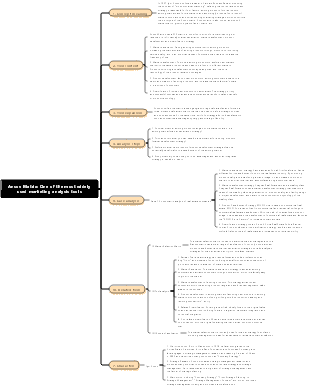
4Ps Marketing Portfolio Model: An Effective Tool for Marketers to Develop Marketing Strategy
1. Concept meaning
(I) Propose the source
In the 1940s, James Carrington compared marketing managers to "combiners of different elements", and in 1953, Neil Boden proposed the concept of "marketing combination". In 1960, Jerome McCarthy took the lead in proposing the 4Ps marketing combination element view, and in 1967, Kotler confirmed the model in his bestseller, making it widely disseminated.
(II) Main meaning
Products refer to existing products and their characteristics, updates and development innovations, and require unique selling points; prices are the economic returns pursued by the company and are priced based on brand strategy; distribution is various activities to enable products to enter the target market ;Promotion is the company that stimulates consumers and promotes sales growth by changing sales behavior.
2. Tool application
(I) Product (Product)
Products are a system, including three levels: core products, tangible products, and intangible products, as well as the breadth, length, depth and relevance of the product series combination, and also cover brand, quality, after-sales service, etc.
(II) Price (Price)
Price is a system that includes indicators such as factory price, dealer shipment price, retail price, and discounts and rebates. Pricing should be based on consumer value, not just by cost and competitors.
(III) Distribution (Place)
Distribution includes the company's channel strategy, such as channel construction methods, terminal strategies, channel chain planning, etc. Enterprises need to choose appropriate distribution methods based on their own and market conditions to meet market demand.
(IV) Promotion (Promotion)
Promotion is a promotional combination for consumers, employees, terminals, and dealers. When formulating promotional strategies, detailed plans should be formulated, data collection and analysis should be carried out, and expected results and evaluation standards should be clarified.
3. Tool meaning and defects
(I) Meaning
4Ps laid a basic theoretical framework for management marketing, summarized corporate marketing activities into four factors, which are concise and easy to understand, so that companies can adapt to the external environment and promote transactions through the planning and implementation of products, prices, distribution and promotions.
(II) Defects
The list of factors is difficult to cover all marketing variables, and there are differences between different products and industries; separating 4 Ps to the marketing department violates the original intention of the marketing combination and is not conducive to the development of marketing work; it is only applicable to guiding marketing activities for consumer goods in the manufacturing industry, and for other products and industry guidance has limited effect.
(III) Case Study
#Case 1: Analysis of 4Ps marketing combination strategy in rural supermarkets in my country
1. Product selection: Rural supermarket product selection should consider the needs of rural residents, including product structure, quality and service. In terms of product structure, in addition to daily necessities and food, agricultural supplies and seasonal New Year goods are also important; in terms of quality, rural consumers value quality, and merchants should ensure product quality; in terms of service, farmers should be the first to improve service level.
2. Product pricing: Product pricing should consider factors such as customer payment ability and sales time. There are regional differences in the income of farmers in my country. Rural areas should adopt a low-price strategy and give discounts based on sales time and purchase quantity.
3. Purchase and sales channels: Purchase and sales channels include procurement channels and transportation arrangements. Supermarkets can reduce procurement costs by reducing intermediate links, such as producing by themselves or purchasing directly from manufacturers; in terms of transportation arrangements, they can reduce costs by joining large chain enterprises, purchasing distribution services or cooperating.
4. Promotion: Rural supermarket promotions can adopt printing, sponsorship, public relations, personnel promotion and other methods. They can also combine common methods such as lottery sales, packaging promotions and price reduction to establish a corporate image and promote sales.
4. Tool development
(I) 6Ps marketing combination model
In 1986, Philip Kotler proposed Power (Power) and Public Relations (Public Relations) based on 4Ps, and proposed the concept of big marketing, aiming to break trade barriers and open up the path for corporate marketing.
(II) 7Ps marketing combination model
In 1981, Booms and Bitner added three "service Ps" based on 4Ps, namely People, Process, and Physical Evidence, to emphasize the importance of employee participation and service processes.
(III) 10Ps marketing combination model
In 1986, Kotler proposed to add strategic 4P in addition to the 6Ps of the big marketing, namely Probing, Partitioning, Prioritizing, and Positioning, to form a 10Ps marketing combination theory, including strategic elements. and tactical elements.
(IV) 11Ps marketing combination model
Philip Kotler proposed the 11P marketing concept, adding exploration, segmentation, priority, positioning and people to the 6P of the big marketing, and calling products, pricing, channels, and promotions the tactical 4P, which will explore, segment, priority, and position. Called Strategy 4P, it emphasizes the important role of employees in marketing activities.
V. Related tools
(I) 4Cs marketing combination model
In 1990, Lauterpin proposed the 4Cs marketing theory based on the problems existing in 4Ps, including customer, cost, convenience, and communication, which is centered on consumer needs, but there are also shortcomings.
(II) 4Rs marketing combination model
On the basis of 4C marketing theory, Don Schultz proposed the 4R marketing theory, including Relevance, Reaction, Relationship and Reward. It is competitive-oriented, reflects the idea of relationship marketing and emphasizes the company and Customers establish interaction and win-win relationships.
VI. Relationships and comparisons of 4Ps, 4Cs, 4Rs
(I) Relationship
4Ps are the foundation, 4Cs and 4Rs are innovation and development based on 4Ps. The three are derived from practice and guide corporate marketing practices, and cannot be separated or opposed.
(II) Comparison
4Ps focus on enterprises and products, 4Cs focus on market and customers, and 4Rs focus on win-win, relationships and competitors. They were proposed at different times, reflecting the development and evolution of marketing theory.