MindMap Gallery Get out of emotional abuse Stay away from shame in relationships and reshape your confident life
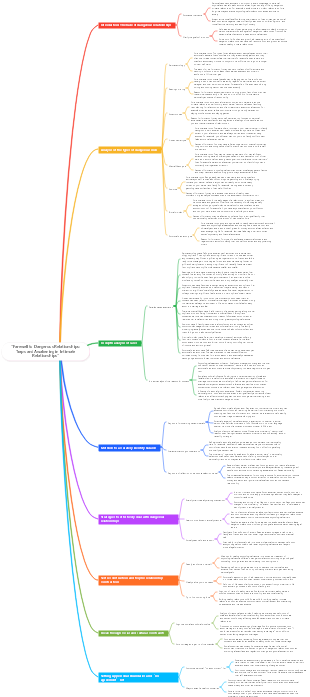
This is a mind map about "Getting Out of Emotional Abuse: Staying Away from Shame in Relationships and Reshaping a Confident Life", which mainly includes: Reviewing the past and continuing healing, reviewing and choosing intimate relationships, self-care and healing , the awareness of emotional abuse.
Edited at 2025-01-15 16:40:23Rumi: 10 dimensions of spiritual awakening. When you stop looking for yourself, you will find the entire universe because what you are looking for is also looking for you. Anything you do persevere every day can open a door to the depths of your spirit. In silence, I slipped into the secret realm, and I enjoyed everything to observe the magic around me, and didn't make any noise. Why do you like to crawl when you are born with wings? The soul has its own ears and can hear things that the mind cannot understand. Seek inward for the answer to everything, everything in the universe is in you. Lovers do not end up meeting somewhere, and there is no parting in this world. A wound is where light enters your heart.
Chronic heart failure is not just a problem of the speed of heart rate! It is caused by the decrease in myocardial contraction and diastolic function, which leads to insufficient cardiac output, which in turn causes congestion in the pulmonary circulation and congestion in the systemic circulation. From causes, inducement to compensation mechanisms, the pathophysiological processes of heart failure are complex and diverse. By controlling edema, reducing the heart's front and afterload, improving cardiac comfort function, and preventing and treating basic causes, we can effectively respond to this challenge. Only by understanding the mechanisms and clinical manifestations of heart failure and mastering prevention and treatment strategies can we better protect heart health.
Ischemia-reperfusion injury is a phenomenon that cellular function and metabolic disorders and structural damage will worsen after organs or tissues restore blood supply. Its main mechanisms include increased free radical generation, calcium overload, and the role of microvascular and leukocytes. The heart and brain are common damaged organs, manifested as changes in myocardial metabolism and ultrastructural changes, decreased cardiac function, etc. Prevention and control measures include removing free radicals, reducing calcium overload, improving metabolism and controlling reperfusion conditions, such as low sodium, low temperature, low pressure, etc. Understanding these mechanisms can help develop effective treatment options and alleviate ischemic injury.
Rumi: 10 dimensions of spiritual awakening. When you stop looking for yourself, you will find the entire universe because what you are looking for is also looking for you. Anything you do persevere every day can open a door to the depths of your spirit. In silence, I slipped into the secret realm, and I enjoyed everything to observe the magic around me, and didn't make any noise. Why do you like to crawl when you are born with wings? The soul has its own ears and can hear things that the mind cannot understand. Seek inward for the answer to everything, everything in the universe is in you. Lovers do not end up meeting somewhere, and there is no parting in this world. A wound is where light enters your heart.
Chronic heart failure is not just a problem of the speed of heart rate! It is caused by the decrease in myocardial contraction and diastolic function, which leads to insufficient cardiac output, which in turn causes congestion in the pulmonary circulation and congestion in the systemic circulation. From causes, inducement to compensation mechanisms, the pathophysiological processes of heart failure are complex and diverse. By controlling edema, reducing the heart's front and afterload, improving cardiac comfort function, and preventing and treating basic causes, we can effectively respond to this challenge. Only by understanding the mechanisms and clinical manifestations of heart failure and mastering prevention and treatment strategies can we better protect heart health.
Ischemia-reperfusion injury is a phenomenon that cellular function and metabolic disorders and structural damage will worsen after organs or tissues restore blood supply. Its main mechanisms include increased free radical generation, calcium overload, and the role of microvascular and leukocytes. The heart and brain are common damaged organs, manifested as changes in myocardial metabolism and ultrastructural changes, decreased cardiac function, etc. Prevention and control measures include removing free radicals, reducing calcium overload, improving metabolism and controlling reperfusion conditions, such as low sodium, low temperature, low pressure, etc. Understanding these mechanisms can help develop effective treatment options and alleviate ischemic injury.
"Get out of emotional abuse: Stay away from shame in relationships and reshape your confident life"
Awareness of emotional abuse
Characteristics of emotional abuse
Concealment and confusingness: Emotional abuse is often not easy to detect. The abuser is good at disguising, which makes the victim suffer from subtle harm and makes it difficult to realize that he is in an unhealthy relationship at the first time.
Complexity: It is manifested in various forms, not a single act of violence, and multiple forms of abuse may intertwin, causing the victim to fall into it.
Common ways of abuse
"Gas lamp"-style manipulation: The abuser distorts the facts and denies the victim's memories and feelings, which makes the victim doubt his own cognition and gradually loses confidence and judgment.
Restrict social activities: Control the connection between victims and their family and friends, put the victims in an isolated and helpless situation, and can only rely on the abuser, thereby deepening their control over the victims.
Verbal Attack: Frequently use insulting and derogatory language to mentally suppress victims, damaging their self-esteem and self-confidence.
Emotional blackmail: Using threats, punishments and other means to force the victim to act according to his own wishes, so that the victim can surrender due to fear.
Impact on victims
Erosion of self-esteem and self-confidence: Long-term emotional abuse, the victim will gradually internalize the negative evaluation of the abuser and believe that he is really useless as the other party said, which seriously damages self-esteem and self-confidence.
Shame: Victims often blame themselves for the abuse, believing that it is their own problems that lead to this treatment, and then they develop a strong sense of shame, feeling that they are shameful and unworthy of being loved.
Self-care and healing
Express anger
Overcome fear of anger: In an environment of emotional abuse, victims may suppress their anger by fearing the abuser’s reaction. It is necessary to realize that anger is a normal emotional reaction and should not be bound by fear.
Healthy way of venting: You can safely release your inner anger through exercise, writing a diary, confide in your trusted friends, etc., and avoid the accumulation of anger in your heart.
Reclaiming the Power: Return the shame caused by abuse to the abuser, and clearly realize that the root of the problem lies in the abuser's misconduct, not himself.
Self-care
Compassion: Develop compassion for yourself, treat yourself like your injured friend, and understand your pain and struggle in an abusive environment.
Learn relevant skills: such as deep breathing, meditation, positive self-talk, etc., to help yourself stay calm and sensible when facing negative emotions.
Understanding and Forgiveness: Understand the various choices you made to survive during the abuse, and forgive your past weakness and helplessness.
Self-forgiveness
Forgiveness of abuse experience: Let go of self-blame caused by abuse, understand that you are the victim, and should not be held responsible for the abuser's behavior.
Forgiveness for maintaining relationships: Forgive yourself for choosing to maintain for various reasons even though you know that the relationship is unhealthy, and realize that this is caused by your situation and psychological state at that time.
Forgive yourself for harm: accept the harm caused to yourself during the abuse, such as self-denial, self-depreciation, etc., and encourage yourself to start over.
Be kind to yourself
Change your view: Abandon the negative images instilled in yourself by the abuser, reexamine your strengths, values and abilities, and establish a positive self-awareness.
Practical and kindness: In daily life, buy things you like, arrange leisure time, and do things you are interested in, and reflect your care for yourself in action.
Review and choice of intimate relationships
Considerations
Severity of abuse: Assess the frequency, intensity of emotional abuse, and the extent of its impact on one's own life and psychology.
The attitude of the abuser: Observe whether the abuser has the will and actions to change, whether he admits his mistakes and is willing to seek help.
Your own feelings and needs: clarify what you really want in this relationship and whether your psychological and emotional needs can be met.
Suggestions for maintaining a relationship (if the relationship is redeemable)
Set boundaries: clearly express your bottom line and principles to the abuser, so that the other party knows which behaviors are unacceptable, and once the boundaries are touched, corresponding measures will be taken.
Communication and consultation: Communicate honestly with the abuser, express your feelings and needs, discuss how to improve relationships, and seek solutions that are acceptable to both parties.
Seek external support: such as taking couple relationship counseling courses and consulting professional psychological counselors, using professional power to help both parties better understand each other and solve problems.
Support for ending the relationship (if the decision is to end)
Develop a safety plan: For situations where the abuser may face revenge or entanglement, develop a safety plan in advance, including seeking help from relatives and friends, changing the place of residence or contact information, etc.
Emotional support: In the process of ending a relationship, you will face various complex emotions, such as sadness, fear, anxiety, etc. At this time, you need to seek emotional support from your family, friends or professional psychological counselors to help you through this difficult period.
Rebuilding life: After ending the relationship, actively engage in a new life, rebuild a social circle, cultivate new interests and hobbies, gradually regain your lost self, and reshape your confident life.
Looking back on the past and continuing healing
Explore growth experience
Early family environment: Review the relationship patterns in the family in childhood, whether there is similar emotional neglect or abuse, and analyze its impact on one's own personality and values.
Past interpersonal relationships: sort out past romantic relationships, friendships, etc., find out possible unhealthy factors, summarize experiences and lessons, and avoid repeating the same mistakes in future relationships.
Perform in the book
Self-exploration exercises: Through various self-reflection and exploration exercises provided in the book, you can gain an in-depth understanding of your inner world, including your emotional needs, fears, dreams, etc.
Emotional release exercises: Use the methods in the book, such as body relaxation exercises, emotional expression exercises, etc. to release negative emotions that have been accumulated in the heart for a long time and relieve psychological pressure.
Self-acceptance exercises: Learn the self-acceptance skills in books, learn to accept everything about yourself unconditionally, including strengths and weaknesses, and enhance your sense of self-identity.
Continue to pay attention to yourself
Cultivate self-awareness: Always pay attention to your emotional changes, thinking patterns and behavioral reactions, discover possible problems in a timely manner, and make adjustments.
Continuous learning and growth: Continuously learn knowledge about emotional health, interpersonal relationships, etc. by reading related books, participating in mental health lectures, and communicating with others, and improve your psychological literacy and coping ability.
Regular self-assessment: Regularly evaluate your psychological state and living conditions, test your progress and results in the healing process, adjust healing strategies and methods based on the evaluation results, and ensure that you can continue to move towards healing and growth.